
Politics
Peter Obi told me he’s more popular than Atiku when I begged him to work with ex-VP – Dele Momodu

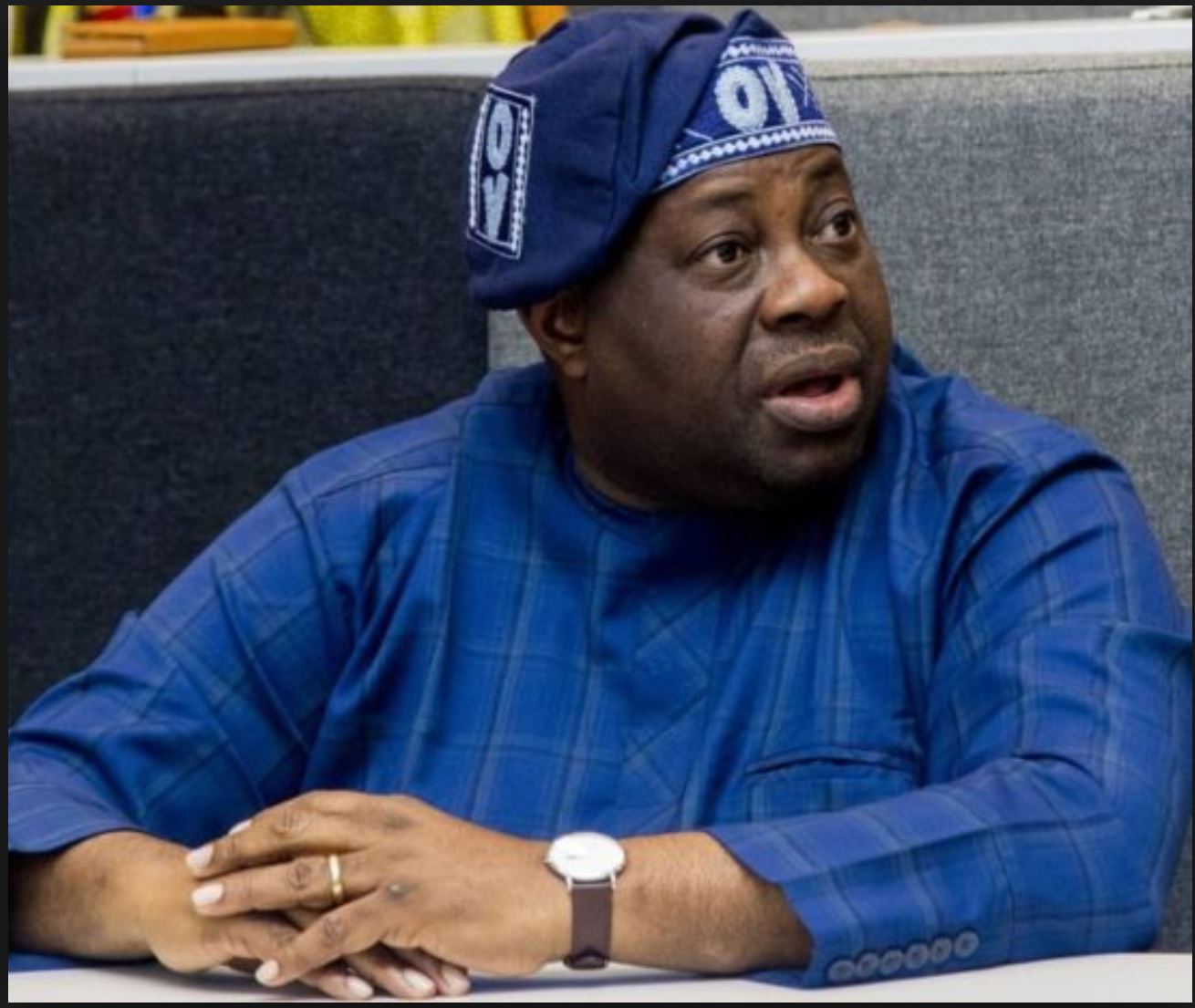
A chieftain of the African Democratic Congress, ADC, Dele Momodu, has disclosed the response he got after asking the Nigeria Democratic Congress, NDC, presidential candidate, Peter Obi to work with Atiku Abubakar.
Momodu revealed that Obi turned down his request, stressing that he was more popular than Atiku.
Recall that the former governor of Anambra State was Atiku’s running mate in 2019 under the Peoples Democratic Party, PDP.
In 2023, Obi moved to the Labour Party where he contested the presidential election and came third behind Atiku of the PDP and President Bola Tinubu of the All Progressives Congress, APC.
In an interview with Symponi TV, Momodu said: “Peter is the only politician who has visited my home in London, Ghana, and Lagos.
“In one of the visits, I told Peter, try and work with Atiku and I gave him copious examples that if Mahama was not a VP to Attah Mills, maybe he would never be President of Ghana because he came from the minority just like Jonathan of Nigeria.
“I gave him an example of America that even though Biden was much older than Obama, he still came back to become President because you are able to demonstrate your capacity.
“You have only been a governor of a state but Peter told me that he’s more popular than Atiku, I swear to God. If you see him ask him if I lied against him.”
dailypost.ng

By Omeiza Ajayi
ABUJA: The Independent National Electoral Commission INEC on Tuesday confirmed that it has filed appeals against two Federal High Court judgments that questioned aspects of its Timetable and Schedule of Activities for the 2027 General Election, insisting that the activities contained in the timetable are interrelated operational processes that cannot be arbitrarily isolated or removed without throwing the entire electoral calendar into disarray.
INEC Chairman, Prof. Joash Amupitan SAN, who disclosed this at the Commission’s Second Quarterly Consultative Meeting with leaders of political parties held in Abuja, said the Commission had carefully considered the two judgments and taken the necessary legal steps to obtain authoritative pronouncements from the appellate courts.
The first judgment, delivered on May 20, 2026, in Suit No. FHC/ABJ/CS/517/2026 — Youth Party versus INEC — questioned certain timelines contained in the Commission’s timetable. The second, delivered on May 26, 2026, in Suit No.
FHC/ABJ/CS/720/2026 — Social Democratic Party (SDP) versus INEC — produced a mixed outcome: it affirmed the Commission’s authority to issue an electoral timetable but simultaneously nullified certain timelines relating to the nomination and substitution of candidates.
Prof. Amupitan noted that in the SDP judgment, the court itself acknowledged that “an election timetable, without date for submission of parties’ membership register, timeframe for primaries, etc. is inchoate. Without this timetable, there would be chaos in our electoral system.”
“While the Commission remains fully respectful of the decisions of the Courts and of the judicial process generally, these judgments raise important legal questions concerning the extent of the Commission’s constitutional and statutory powers in coordinating and regulating electoral activities,” the INEC Chairman said.
He argued that the activities in the timetable were not isolated events but interrelated operational processes designed to ensure the orderly, transparent, and successful conduct of elections, and that while the Electoral Act prescribed timelines for certain activities, several critical electoral processes existed for which no express statutory timelines were provided but which must necessarily be accommodated within the overall electoral calendar.
Prof. Amupitan listed such activities to include the submission and verification of party membership registers; monitoring of party primaries across the federation; pre-upload of primary results on the Commission’s designated portal; the nomination process; printing of ballot papers and result sheets; quality assurance procedures; deployment of election materials; training of election personnel; voter education and sensitisation; procurement of sensitive materials; configuration of the Bimodal Voter Accreditation System (BVAS) machines; and compliance with statutory obligations such as inviting political parties to inspect samples of electoral materials pursuant to Section 42 of the Electoral Act, 2026.
“The Commission therefore considers it imperative that all electoral activities be harmonised within a coherent and workable framework that promotes certainty, transparency, administrative efficiency and equal treatment of all political parties,” he said.
Prof. Amupitan assured political parties and Nigerians that notwithstanding the pending appeals, the Commission remained firmly committed to conducting the 2027 General Election in strict compliance with the Constitution, the Electoral Act, and all lawful judicial pronouncements.
He also announced that on Friday, June 26, 2026, the Commission would issue official access codes to all political parties for the purpose of accessing the Candidate Nomination Portal, enabling designated national officers to upload the names, personal particulars, and other required information relating to nominated candidates.
Amupitan warned that the portal was fully automated and would close automatically at the expiration of the prescribed period.
The post Court judgment on election timetable threat to 2027 polls – INEC appeared first on Vanguard News.
www.vanguardngr.com

The Independent National Electoral Commission, INEC, has warned that recent court rulings affecting aspects of its timetable and schedule of activities for the 2027 general election could disrupt preparations for the polls if not urgently clarified by appellate courts.
INEC Chairman, Prof. Joash Amupitan, raised the concerns on Tuesday during the Commission’s second quarterly consultative meeting with leaders of political parties in Abuja.
Amupitan disclosed that the Commission had already filed appeals against two judgments of the Federal High Court which questioned certain timelines contained in INEC’s timetable for the 2027 elections.
According to him, while the Commission respects the decisions of the courts, the judgments raise significant legal questions regarding the extent of INEC’s constitutional and statutory powers to coordinate and regulate electoral activities.
The Federal High Court in Abuja had delivered two major rulings invalidating key compressed timelines in the 2027 general election timetable released by INEC.
The courts ruled that while INEC has the constitutional authority to issue and adjust election schedules, it cannot use administrative guidelines to shorten or override statutory windows guaranteed to political parties by the Electoral Act 2026
But Amupitan explained that in Suit No. FHC/ABJ/CS/517/2026, Youth Party v. INEC, delivered on May 20, 2026, the court questioned some timelines contained in the Commission’s timetable and schedule of activities for the 2027 General Election.
He added that in a subsequent judgment delivered on May 26, 2026, in Suit No. FHC/ABJ/CS/720/2026, Social Democratic Party (SDP) v. INEC, the court affirmed the Commission’s authority to issue an electoral timetable but nullified certain timelines relating to the nomination and substitution of candidates.
“In view of the differing conclusions reached in the judgments and in order to ensure certainty and stability in preparations for the 2027 General Election, the Commission has filed appeals against the decisions and has taken the necessary legal steps to obtain authoritative pronouncements from the appellate courts,” Amupitan said.
The INEC chairman maintained that the activities contained in the Commission’s timetable are interrelated operational processes designed to guarantee the orderly, transparent and successful conduct of elections.
He noted that while the Electoral Act prescribes timelines for certain electoral activities, several other critical processes are not expressly provided for in the law but must be accommodated within the overall electoral calendar.
According to him, these include the submission and verification of party membership registers, monitoring of party primaries across the federation, uploading the names of winners of monitored primaries on the Commission’s designated portal, candidate nominations, printing of ballot papers and result sheets, training of election personnel, voter education programmes and the deployment of election materials.
“The absence of coordinated timelines for such activities would create uncertainty, disrupt election planning and undermine the Commission’s constitutional responsibility to organise, undertake and supervise elections in an efficient and credible manner,” he said.
Amupitan argued that environmental and logistical factors, including weather conditions, terrain, procurement of sensitive materials and configuration of the Bimodal Voter Accreditation System, BVAS, require careful scheduling and coordination.
“The Commission therefore considers it imperative that all electoral activities be harmonised within a coherent and workable framework that promotes certainty, transparency, administrative efficiency and equal treatment of all political parties,” he added.
Despite the legal challenge, the INEC chairman assured political parties and the Nigerian public that the Commission remained committed to conducting the 2027 General Election in strict compliance with the Constitution, the Electoral Act and all lawful judicial pronouncements.
Speaking, National Chairman of the Inter-Party Advisory Council, IPAC, Dr. Yusuf Mamman Dantalle, said the exclusion of indirect primaries from Nigeria’s electoral framework contributed significantly to disputes, tensions and administrative challenges experienced by political parties during their just-concluded primaries for the 2027 general election.
Dantalle said the implementation of Section 84(2) of the Electoral Act 2026, which limited political parties to consensus or direct primaries, created operational difficulties for parties and triggered avoidable internal conflicts.
According to him, the absence of indirect primaries removed a flexible option that previously allowed parties to manage internal competition and reduce tensions among aspirants.
“The experience of the just-concluded nomination exercise demonstrates that the removal of indirect primaries created considerable constraints for political parties,” he said.
He explained that many political parties were forced to adopt consensus arrangements despite having multiple aspirants who had already obtained nomination forms and expressed interest in contesting elections.
Dantalle noted that in several cases, aspirants were persuaded or in some instances pressured to step down after party leaders had already aligned behind preferred candidates, leading to dissatisfaction and subsequent legal disputes.
He said while some aspirants accepted the outcomes in the interest of party unity, others challenged their exclusion, arguing that genuine consensus must be voluntary and inclusive.
According to him, in some cases, parties limited access to nomination forms or failed to adequately publicise primary election schedules, steps he said were taken to avoid the complications associated with direct primaries.
Dantalle said these developments reflected unintended consequences of the current legal framework governing party nominations.
He urged the National Assembly to urgently review the Electoral Act 2026 to restore flexibility in the conduct of party primaries and strengthen internal democracy within political parties.
The IPAC chairman further expressed concern over the tight timeline given to parties to submit updated membership registers, including National Identification Number, NIN, saying some genuine members were excluded due to logistical challenges.
He said IPAC had earlier warned about the implications of certain provisions of the Electoral Act during its February 2026 General Assembly in Abuja, where it urged lawmakers to reconsider the ban on indirect primaries.
Dantalle said recent developments had validated those earlier concerns and called for urgent reforms to the electoral legal framework.
He claimed that in certain instances, parties restricted access to nomination forms or did not sufficiently publicize primary election schedules, actions he asserted were taken to circumvent the complications linked to direct primaries.
Dantalle indicated that these occurrences represented unintended outcomes of the existing legal structure governing party nominations.
He called upon the National Assembly to promptly reassess the Electoral Act 2026 to reinstate flexibility in the execution of party primaries and enhance internal democracy within political parties.
dailypost.ng

The Nigeria Democratic Congress, NDC, has clarified that official results of the party’s recently concluded primary elections are yet to be released nationwide.
The party made the clarification in a statement issued on Tuesday by its National Publicity Secretary, Osa Director, while reacting to reports of removal of some candidates from the list of winners in Kano State.
Reports had emerged on Monday purporting that some candidates loyal to the NDC vice presidential candidate, Rabiu Kwankwaso, were removed.
Clearing the air, NDC said it has not “released any official results of primary elections in any state”, urging the public and party members to “disregard any such list in circulation”.
The statement also confirmed that a “delegation of the national leadership of the Kwankwasiya Movement last night met with the national leader, His Excellency Senator Henry Seriake Dickson and the leadership of the NDC.
“The close door meeting was aimed at resolving the issues between the Kwankwasiya Movement and the legacy officials of NDC in Kano State.
“Senator Dickson and the NDC leadership are mediating in the process in order to enhance inclusion and participation by every party member.
“The NDC leadership will not impose candidates in Kano State, and indeed across the nation as the party cherishes the virtues of internal democracy.
“The meeting which lasted several hours was productive,” the statement added.
dailypost.ng


Real Madrid Make Contact to Sign Arsenal Star Calafiori
Court judgment on election timetable threat to 2027 polls – INEC
Warri–Itakpe train derailment: Death toll rises to five

Simi Sanya and Femi Dapson Are Now Legally Married and It Is Beautiful to See

FCT Area Council Election: Live results from polling units

Premier League Set-Piece Goals (2025/2026)
-
 Sports1 day ago
Denmark FA Announce Special Measures For Players After Christian Eriksen Collapses
-
 Sports1 day ago
FIFA Referee ‘Denied Entry’ into the US Ahead of 2026 World Cup
-
 Sports6 hours ago
Ian Wright’s Reaction to Ref Being Denied Entry to the US Goes Viral
-
 Sports2 days ago
Why Liverpool ‘Edited’ Rio Ngumoha Out of Training Ground Footage
-
 Sports1 day ago
George Russell’s Mercedes Contract Could Soon Be ‘Void’
-
 Sports1 day ago
Iran World Cup Stars Arrive in the US With ‘168’ Pinned to Shirts
-
 Sports2 days ago
Kim Kardashian Blasted Over Treatment of Martin Brundle at Monaco GP
-
 Metro2 days ago
Fire guts building in Osun [VIDEO]