
Politics
Court rulings threaten 2027 elections – INEC raises alarm


The Independent National Electoral Commission, INEC, has warned that recent court rulings affecting aspects of its timetable and schedule of activities for the 2027 general election could disrupt preparations for the polls if not urgently clarified by appellate courts.
INEC Chairman, Prof. Joash Amupitan, raised the concerns on Tuesday during the Commission’s second quarterly consultative meeting with leaders of political parties in Abuja.
Amupitan disclosed that the Commission had already filed appeals against two judgments of the Federal High Court which questioned certain timelines contained in INEC’s timetable for the 2027 elections.
According to him, while the Commission respects the decisions of the courts, the judgments raise significant legal questions regarding the extent of INEC’s constitutional and statutory powers to coordinate and regulate electoral activities.
The Federal High Court in Abuja had delivered two major rulings invalidating key compressed timelines in the 2027 general election timetable released by INEC.
The courts ruled that while INEC has the constitutional authority to issue and adjust election schedules, it cannot use administrative guidelines to shorten or override statutory windows guaranteed to political parties by the Electoral Act 2026
But Amupitan explained that in Suit No. FHC/ABJ/CS/517/2026, Youth Party v. INEC, delivered on May 20, 2026, the court questioned some timelines contained in the Commission’s timetable and schedule of activities for the 2027 General Election.
He added that in a subsequent judgment delivered on May 26, 2026, in Suit No. FHC/ABJ/CS/720/2026, Social Democratic Party (SDP) v. INEC, the court affirmed the Commission’s authority to issue an electoral timetable but nullified certain timelines relating to the nomination and substitution of candidates.
“In view of the differing conclusions reached in the judgments and in order to ensure certainty and stability in preparations for the 2027 General Election, the Commission has filed appeals against the decisions and has taken the necessary legal steps to obtain authoritative pronouncements from the appellate courts,” Amupitan said.
The INEC chairman maintained that the activities contained in the Commission’s timetable are interrelated operational processes designed to guarantee the orderly, transparent and successful conduct of elections.
He noted that while the Electoral Act prescribes timelines for certain electoral activities, several other critical processes are not expressly provided for in the law but must be accommodated within the overall electoral calendar.
According to him, these include the submission and verification of party membership registers, monitoring of party primaries across the federation, uploading the names of winners of monitored primaries on the Commission’s designated portal, candidate nominations, printing of ballot papers and result sheets, training of election personnel, voter education programmes and the deployment of election materials.
“The absence of coordinated timelines for such activities would create uncertainty, disrupt election planning and undermine the Commission’s constitutional responsibility to organise, undertake and supervise elections in an efficient and credible manner,” he said.
Amupitan argued that environmental and logistical factors, including weather conditions, terrain, procurement of sensitive materials and configuration of the Bimodal Voter Accreditation System, BVAS, require careful scheduling and coordination.
“The Commission therefore considers it imperative that all electoral activities be harmonised within a coherent and workable framework that promotes certainty, transparency, administrative efficiency and equal treatment of all political parties,” he added.
Despite the legal challenge, the INEC chairman assured political parties and the Nigerian public that the Commission remained committed to conducting the 2027 General Election in strict compliance with the Constitution, the Electoral Act and all lawful judicial pronouncements.
Speaking, National Chairman of the Inter-Party Advisory Council, IPAC, Dr. Yusuf Mamman Dantalle, said the exclusion of indirect primaries from Nigeria’s electoral framework contributed significantly to disputes, tensions and administrative challenges experienced by political parties during their just-concluded primaries for the 2027 general election.
Dantalle said the implementation of Section 84(2) of the Electoral Act 2026, which limited political parties to consensus or direct primaries, created operational difficulties for parties and triggered avoidable internal conflicts.
According to him, the absence of indirect primaries removed a flexible option that previously allowed parties to manage internal competition and reduce tensions among aspirants.
“The experience of the just-concluded nomination exercise demonstrates that the removal of indirect primaries created considerable constraints for political parties,” he said.
He explained that many political parties were forced to adopt consensus arrangements despite having multiple aspirants who had already obtained nomination forms and expressed interest in contesting elections.
Dantalle noted that in several cases, aspirants were persuaded or in some instances pressured to step down after party leaders had already aligned behind preferred candidates, leading to dissatisfaction and subsequent legal disputes.
He said while some aspirants accepted the outcomes in the interest of party unity, others challenged their exclusion, arguing that genuine consensus must be voluntary and inclusive.
According to him, in some cases, parties limited access to nomination forms or failed to adequately publicise primary election schedules, steps he said were taken to avoid the complications associated with direct primaries.
Dantalle said these developments reflected unintended consequences of the current legal framework governing party nominations.
He urged the National Assembly to urgently review the Electoral Act 2026 to restore flexibility in the conduct of party primaries and strengthen internal democracy within political parties.
The IPAC chairman further expressed concern over the tight timeline given to parties to submit updated membership registers, including National Identification Number, NIN, saying some genuine members were excluded due to logistical challenges.
He said IPAC had earlier warned about the implications of certain provisions of the Electoral Act during its February 2026 General Assembly in Abuja, where it urged lawmakers to reconsider the ban on indirect primaries.
Dantalle said recent developments had validated those earlier concerns and called for urgent reforms to the electoral legal framework.
He claimed that in certain instances, parties restricted access to nomination forms or did not sufficiently publicize primary election schedules, actions he asserted were taken to circumvent the complications linked to direct primaries.
Dantalle indicated that these occurrences represented unintended outcomes of the existing legal structure governing party nominations.
He called upon the National Assembly to promptly reassess the Electoral Act 2026 to reinstate flexibility in the execution of party primaries and enhance internal democracy within political parties.
dailypost.ng
The Independent National Electoral Commission, INEC, says it has invalidated 2,103 double registrations from the Ekiti voter register ahead of the June 20, 2026 governorship election in the state.
INEC Chairman, Prof Joash Amupitan, disclosed this on Tuesday in Abuja during the commission’s second quarterly consultative meeting with leaders of political parties at its headquarters.
Amupitan stated that removal of the duplicate entries was part of INEC’s strict commitment to maintaining integrity of the electoral process as the country begins early preparations for the 2027 General Elections.
According to the chairman, the final Register of Voters for the Ekiti governorship poll now stands at 1,059,360.
“This figure reflects the addition of 66,664 new voters registered during the first and second phases of the Continuous Voter Registration (CVR) exercises to the 2023 register of 987,647 voters.
“In line with our commitment to maintaining integrity of the register, 2,103 registrations identified as cases of double registration were invalidated,” Amupitan said.
He assured stakeholders that logistics arrangements, deployment of election technology, training of officials, and security plans were progressing satisfactorily and on schedule for the election.
Amupitan expressed the commission’s commitment to opening of all 2,445 Polling Units across the 16 Local Government Areas of Ekiti at 8:30 a.m. on election day.
On the recently signed Peace Accord by political parties in the state, Amupitan urged party leaders to comply with the agreement.
“I urge political parties to ensure that its principles are fully internalised and observed by party officials, candidates, agents, and supporters throughout the electoral process,” he added.
The chairman maintained that the same operational standards, technological safeguards, and security frameworks being deployed in Ekiti would apply to the by-elections holding the same day across six states where vacancies had occurred.
The affected areas include Enugu North in Enugu state, Nasarawa North in Nasarawa-, Rivers South East in Rivers, and Ondo South Senatorial District in Ondo state;
Others are Dawakin Kudu/Warawa Federal Constituency in Kano state; and the Zuru state Constituency in Kebbi.
“Even as we finalise preparations for Ekiti, our attention is equally focused on the Osun governorship election scheduled for Saturday, August 15.
“The timetable and schedule of activities for the election are already being implemented.
“I urge all political parties to comply strictly with the prescribed timelines and regulatory requirements.
The lessons learned from Ekiti will further strengthen our preparations and enhance the efficiency of our operations in Osun ,” he said.
dailypost.ng

The Independent Electoral Commission, INEC, has removed the names of Ahmed Yayari and Daniel Woyengikuro from its portal as Peoples Democratic Party, PDP, National Treasurer and National Financial Secretary, respectively.
A check by DAILY POST shows that both names have also been replaced with Odeyemi Mackson Oladiran and Eyim Donatus Henry as the new executives.
Yayari and Woyengikuro who are part of the Makinde-backed Turaki faction while Odeyemi and Eyim are members of the FCT Minister Nyesom Wike’s faction, which is also the recognised faction of the PDP.
INEC had earlier recognised Wike’s faction by putting the names of Abdulrahman Mohammed as the National Chairman and Samuel Anyanwu as the National Secretary, but had left the names of Yayari and Woyengikuro as part of the executives.
With the recent update on its portal, all executives of the PDP on INEC’s portal are now aligned with FCT Minister Nyesom Wike.

dailypost.ng
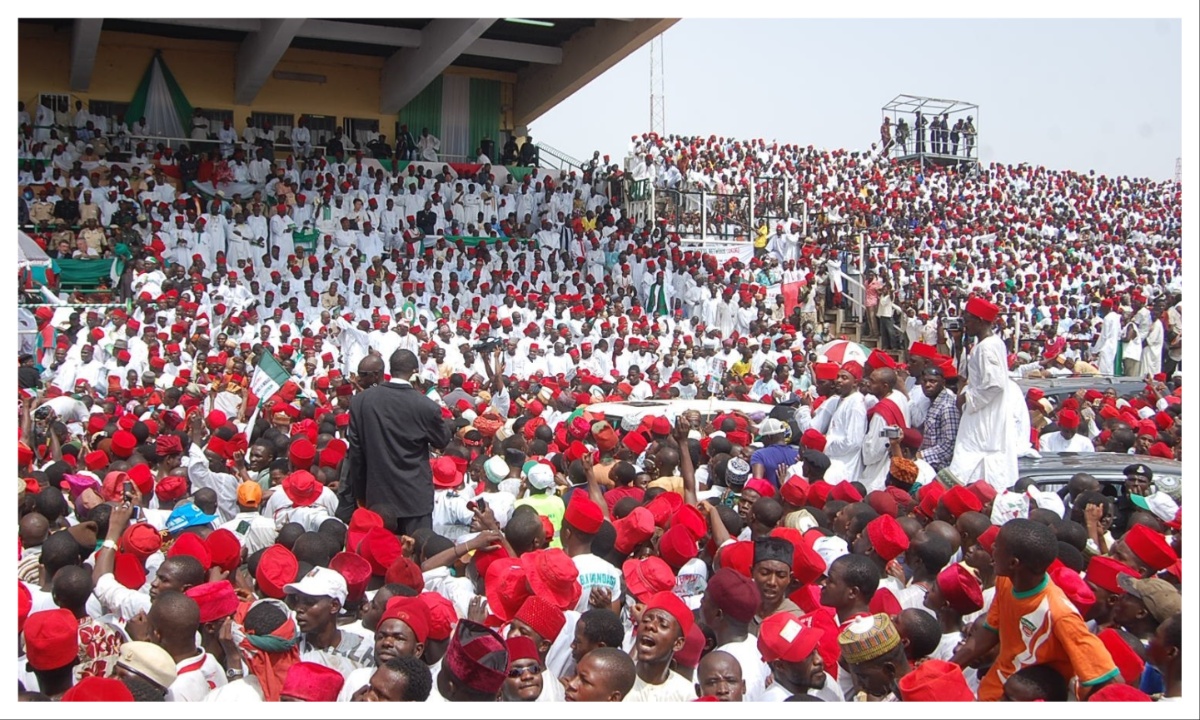
The Kwankwasiyya Movement has dismissed reports of the exclusion of of its members as candidates for the 2027 election by the Kano State chapter of the Nigeria Democratic Congress, NDC.
Spokesperson for the group, Habibu Mohammed, made this rebuttal on Tuesday in an interview on Trust TV.
Mohammed said no candidates, including those from the Kwankwasiyya Movement and other groups, complained of exclusion.
“When there is contestation, naturally there are going to be a lot of issues with certain people that might not actually find their ways, but I believe that a process was built where consensus candidate emerged across the state, and within that particular process, there were never a candidate from anywhere that have complained of any kind of exclusion.
“All candidates, including those from the Kwankwasiyya Movement, and those who recently come from other political parties, partook into that process.
“We are seeing how other candidates that recently joined the party were part of the consensus, and the real aim is to actually ensure that candidates that have the capacity to win election, bring in votes and help the party develop are the ones that have emerged through that particular process.
“Until the end of the process, there were never any complaint from anybody, and to us, we believe that we have complied both with the party guidelines and at the same time with that of the INEC,” he said.
dailypost.ng


Guber Poll: INEC removes 2,103 double voter registrations in Ekiti

PDP crisis: INEC updates portal, names new treasurer, financial secretary

Commercial bus driver dies in Lagos auto crash

Simi Sanya and Femi Dapson Are Now Legally Married and It Is Beautiful to See

FCT Area Council Election: Live results from polling units

Premier League Set-Piece Goals (2025/2026)
-
 Sports1 day ago
Denmark FA Announce Special Measures For Players After Christian Eriksen Collapses
-
 Sports1 day ago
FIFA Referee ‘Denied Entry’ into the US Ahead of 2026 World Cup
-
 Sports7 hours ago
Ian Wright’s Reaction to Ref Being Denied Entry to the US Goes Viral
-
 Sports1 day ago
George Russell’s Mercedes Contract Could Soon Be ‘Void’
-
 Sports1 day ago
Iran World Cup Stars Arrive in the US With ‘168’ Pinned to Shirts
-
 Metro2 days ago
Fire guts building in Osun [VIDEO]
-
 Sports1 day ago
Lewis Hamilton Seriously Slammed For ‘Hypocritical’ Billionaire Comments
-

 Sports1 day ago
Tyson Fury’s Final Opponent Before Facing Anthony Joshua ‘Leaked’