
Business
CBN restricts mobile banking app operation to one device



By Elizabeth Adegbesan
The Central Bank of Nigeria, CBN, on Friday restricted the operation of mobile banking applications (apps) to one device.
This means that a customer cannot operate the same bank mobile application on two different devices simultaneously in Nigeria.
This was contained in a circular to all banks and other financial institutions and payment service providers (PSP) announcing additional guidance for the operations of instant payments (IP) in Nigeria.
The circular signed by the CBN’s Director of Payments System Policy Department, Musa Jimoh, read: “The Central CBN in line with its mandate of promoting financial system stability hereby issues additional guidance for the operations of Instant Payments in Nigeria:
“All Financial Institutions (FIs) offering Instant Payment (IP) shall provide the following additional functionalities: Mandatory device binding: Mobile financial services applications (apps) shall only be enabled on one device at a time, and customers cannot operate the apps concurrently on multiple devices.
“Migration to another device shall trigger automatic re-activation and authentication.
“Customers shall have the option to opt-out of opt-in to IP service at any time and for any given period. This process shall be subject to Multi-Factor Authentication (MFA) control. Default setting shall be Opt-in upon on-boarding a new customer.
“In the opt-out mode, a customer shall not be able to carry out online instant transfer of funds (intra or inter) from his/her account to another customer.
“However, customers can physically visit the financial institution to effect transfer during this period.
“Voluntary Transaction Limit: Subject to the existing maximum limits of N25 million for individuals and N250 million for corporates, customers shall have the option to adjust the limits as needed.
“Any such adjustment shall be subject to enhanced due diligence and appropriate risk assessment by the financial institution.
“The new transaction limit shall take effect immediately upon successful completion of multi-factor authentication (customer consent).
“Enterprise Fraud Monitoring functionality: All FIs shall implement and activate Enterprise Fraud Monitoring for both inflows and outflows to facilitate fraud detection and restriction of suspicious transactions.
“Liveliness Checks for online account opening/account reactivation: Accounts opened online shall be subjected to liveliness check; All online account opening / online reactivation, shall be validated real-time with the BVN/NIN database; and Enhanced authentication mechanisms (such as MFA, biometric authentication, soft token, hard token, liveliness check etc.) shall be adopted for online account reactivation.
“For new accounts, transaction limits (inflow and outflow) shall be imposed on a newly activated mobile financial services app in the first 24-hours of activation.
“The limit shall be as determined by the financial institution, subject to a maximum transaction limit of N20,000.00.
“For existing accounts, transaction limits (outflow) shall be imposed on a newly activated mobile financial services app in the first 24-hours of activation.
“The limit shall be as determined by the financial institution, subject to a maximum transaction limit of N20,000.00.
“For internet banking access, first-time log on a new device shall require additional MFA.
“The above are the minimum standard requirements for instant payments in Nigeria.
“Implementation of the above provisions shall take effect from July 1, 2026.”
The post CBN restricts mobile banking app operation to one device appeared first on Vanguard News.

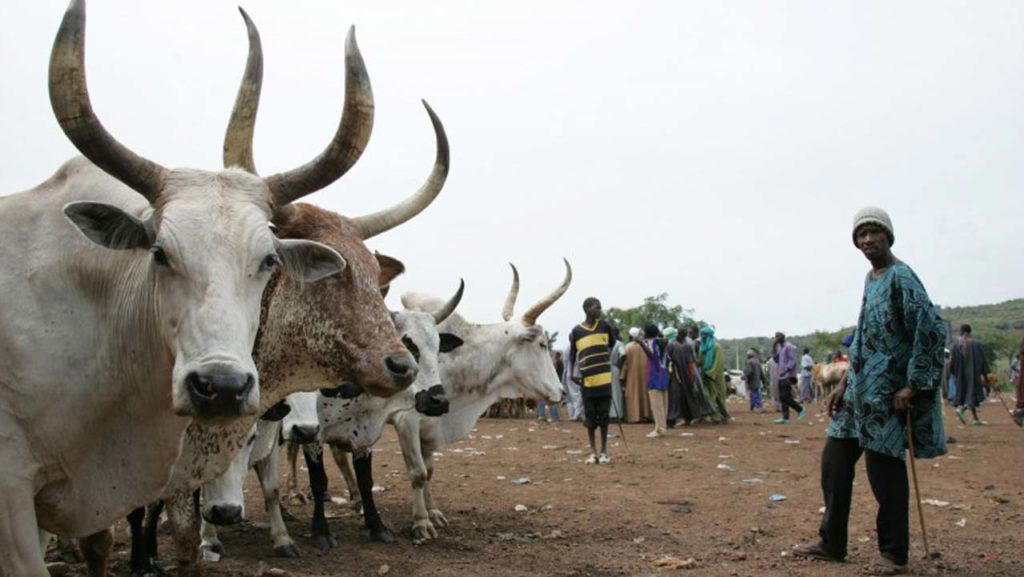
•Stakeholders lament structural challenges, make recommendations
By Gabriel Ewepu
Amidst efforts to diversify Nigeria’s economy, there are indications that dominance of foreign imported livestock products has been extended.
Financial Vanguard’s findings from the National Bureau of Statistics, NBS, show that livestock and related products imports rose to N1.71 trillion in 2025, up by 14.5 per cent from N1.49 trillion in 2024.
Sector stakeholders said Nigeria is suffering from wide diary gap which necessitated imports to bridge the gap.
Financial Vanguard learnt that the country currently hosts 273 million animals but it is contending with about 60 percent diary gap.
The breakdown of the estimated 273 million animals shows goats dominating at a population of 138.95 million, sheep 64.93 million and cattle 54.81 million.
Poultry numbers is estimated at 250 million birds.
Dairy gap fuels import surge
Further investigation showed that the dairy subsector remains the weakest link. The Ministry of Livestock Development, confirmed that Nigeria spends over $1.5 billion annually on dairy imports.
According to the Food and Agriculture Organisation, FAO, about 60 per cent of dairy products consumed locally are imported, as domestic production of roughly 0.5 million tonnes falls short of the estimated annual demand of 1.3 million tonnes.
FAO further noted that average milk yield per cow in Nigeria is about 213 litres per year — less than one-tenth of the global average — reflecting low productivity levels.
GDP contribution masks fragility
Despite the import surge, the livestock sector remains economically significant. According to the NBS, the sector contributed N11.9 trillion or 5.6 per cent to the nation’s Gross Domestic Product, GDP, in 2024 and it is expected to show further increase when the 2025 GDP figures are released.
However, experts warn that contribution to GDP does not equate to competitiveness or export strength.
Brazil, with over 238 million cattle, contributed about $185.7 billion to GDP from livestock in 2024 and is a global export powerhouse.
Nigeria’s largely informal and low-productivity structure, analysts say, leaves it trailing far behind.
Stakeholders who spoke to Financial Vanguard said Nigeria’s growing dependence on imported livestock products stems from deep-rooted structural weaknesses that continue to undermine domestic production.
Chief among these are entrenched cultural practices, low productivity, insecurity, policy inconsistencies, and prolonged neglect of the livestock value chain.
Traditional nomadic grazing, largely practiced by Fulani herders who control a significant share of the nation’s cattle population, has slowed the transition to settled ranching systems that enable controlled feeding, scientific breeding, and higher yields.
The migratory system disrupts feeding patterns, weakens animal health supervision, and limits productivity, according to FAO.
The sector operators also noted that rising feed costs, driven by currency depreciation and reliance on imported inputs, have forced many operators to scale down.
Govt must invest in ranching, others — NABG
To stem the rising tide of livestock import, President, Nigeria Agribusiness Group, NABG, Arc Kabir Ibrahim, called for massive government investment in ranching, improved breeds, feed stock development, and inclusive economic reforms to support livestock businesses, warning that poorly assessed foreign investments could pose risks.
He stated: “The weak purchasing power of the citizenry is a factor militating against businesses in Nigeria and the livestock sector is not immune to this.
“The high cost of animal feed impedes productivity too. The poultry industry, which is supposed to provide the cheapest form of protein, is almost moribund to the extent all livestock business is simply crawling.
“Unless you are able to adequately scale productivity you cannot become sustainable.
“The most important intervention is the provision of sustainable feed stock and some form of good breed of livestock that combines efficiency and resilience.
“The government must invest in ranching, veritable breed generation as well as creation of fodder or grassing for large and small ruminants while improving the purchasing power of the Naira as well as growing the economy in an inclusive manner to enhance productivity in the livestock sector.
“The poultry sector strategy needs reappraisal as some of the efforts in attracting foreign direct investment from Brazil may be counterproductive if due diligence is not done.
“The fish or aquaculture sector needs proper attention in terms of investment and reawakening.”
Sector held back by weak policies, insecurity — FGDRI
The President-General of the Fulbe Global Development and Rights Initiative, FGDRI, Dr Salim Umar, said Nigeria’s livestock sector suffers from inconsistent policies, poor institutional coordination, underinvestment, insecurity, cattle rustling, and poor infrastructure.
Umar urged the government to reposition livestock as an economic asset, not merely a security issue, and called for evidence-based policymaking, stronger financing mechanisms, and development-driven interventions to curb insecurity.
He said: “Nigeria’s livestock sector is constrained by weak and inconsistent policies, limited institutional coordination, and prolonged underinvestment. Insecurity, farmer–herder conflicts, and cattle rustling disrupt production systems and deter private investment.
“Productivity remains low due to poor genetics, inadequate feed and water resources, weak veterinary and animal health services, and minimal adoption of modern husbandry practices.
“These challenges are compounded by poor infrastructure, limited access to finance and insurance, market inefficiencies, and negative narratives that marginalize pastoral communities”.
However, he expressed optimism that if the right thing is done, the sector will become a huge money spinner and employment generation.
“The business environment is promising but not yet fully enabling. While rising demand for animal protein and renewed policy attention present strong opportunities, insecurity, infrastructure deficits, regulatory uncertainty, and financing gaps continue to constrain growth”.
Political will for right policies, implementation needed – Enahoro
In his appraisal of the state of Nigeria’s livestock industry, a member of Governing Board, Veterinary Council of Nigeria, who is also a Senior Animal Health Specialist at the Food and Agriculture Organization, FAO, Dr Gani Enahoro, said sustainable progress requires robust, inclusive, corruption-free policies, a bottom-up approach, and measurable progress metrics, citing Sudan’s livestock reform experience as an example of structured transformation.
“What we need to do to change for good is currently being done with a presidential commitment in words and deeds to support livestock development programmes. President Bola Tinubu has consistently emphasized this. But beyond the talk is the walk, and the political will to put the right barometer for determining the progress in timelines.
“The Minister is a practical livestock farmer who understood the terrain so well. But beyond all of these, some fundamentals must still be addressed if we are to get to El Dorado”.
Strengthen veterinary systems — Vet Konect
The Founder of Vet Konect, Dr Terese Shadrach Akpem, highlighted inadequate veterinary infrastructure, poor disease surveillance, climate pressures, weak extension services, and lack of coordination as pressing threats.
She recommended stronger veterinary systems, digital animal health platforms, youth and women empowerment, One Health approaches, and improved financing to unlock productivity and resilience.
“Major constraints include inadequate animal health infrastructure, skills gaps, poor extension services, limited market access, weak disease surveillance systems, climate pressures, and insufficient coordination across animal, human, and environmental health sectors.”
She also said the solution to most of the challenges facing the sector is to scale up “digital animal health solutions, strengthening veterinary systems, enforcing quality standards for veterinary medicines, investing in youth and women-led enterprises, and embedding One Health approaches can unlock productivity and sustainability.
“The environment is improving but remains constrained by fragmented policies, weak veterinary service coverage, limited financing for livestock SMEs, and insufficient digital integration across the sector.
“However, growing government interest in livestock development presents an opportunity for reform.”
The post LIVESTOCK ECONOMY: Importation extends dominance, rises 14.5% to N1.7trn appeared first on Vanguard News.


By Efe Onodjae
Visa International Service Association otherwise known as Visa Inc, has partnered with Zenith Bank to introduce the Visa Signature Card, a premium payment solution designed to meet the lifestyle and financial needs of affluent customers in Nigeria.
The card was unveiled during a media briefing held at the Zenith Bank headquarters in Victoria Island, Lagos, where executives from both organisations said the initiative forms part of efforts to expand premium banking offerings for high-net-worth individuals and internationally mobile customers.
Speaking at the event, General Manager, Retail Group, Zenith Bank, Emmanuel Oladimeji, said the product represents an upgrade of the bank’s existing premium card offerings targeted at affluent customers.
According to him, the bank already offers Gold and Platinum cards to its high-end clientele, but the introduction of the Visa Signature Card marks another level in its strategy to deepen engagement with the segment.
“What we are launching today is a scale-up of what we already have in the market for affluent customers. We have existing products like the Gold and Platinum cards designed for them, but the Visa Signature Card takes it further in terms of connecting with customers who value convenience and international mobility,” he said.
Also speaking, Marketing Director, West Africa at Visa, Seun Aderamola, said the card was developed based on research into the lifestyle patterns of affluent customers, particularly their interest in travel, shopping, and premium services.
She explained that the Visa Signature Card combines global and local lifestyle benefits through partnerships with merchants across major travel destinations and within Nigeria.
According to her, the card offers access to airport lounges worldwide, travel assistance services and exclusive discounts at partner merchants across key travel corridors including the United Kingdom, the United States and South Africa.
Kingdom, the United States and South Africa.
“With this product, it is not just about payments. It is about unlocking a lifestyle. These customers travel frequently and have premium lifestyle expectations, so the card is designed to support those needs with global offers and local benefits,” Aderamola said.
She added that cardholders would also enjoy discounts and special offers at selected restaurants, spas and lifestyle outlets in Nigeria through partnerships with local merchants.
Head of Card Services at Zenith Bank, Celestina Appeal, described the bank’s affluent segment as customers with significant financial capacity and high spending patterns.
“These customers are known for high spending and international travel. You can identify them by where they shop and the type of lifestyle they maintain. They value convenience and premium services, which is why products like the Visa Signature Card are designed for them,” she said.
On her part, Director, Business Development, West Africa at Visa, Badeji Oluwatoyin, said the partnership reinforces Visa’s commitment to supporting banks with innovative payment solutions for affluent and high-net-worth individuals.
She noted that beyond payment functionality, the card also provides concierge services, travel support and other lifestyle assistance designed to enhance convenience for customers.
The card which is denominated in foreign currency to enable seamless international transactions would be formally rolled out to the wider market later in March as part of its strategy to strengthen premium banking services for its high-value customers, the bank stated.
The post Visa partners Zenith Bank to launch signature card for affluent customers appeared first on Vanguard News.


By Elizabeth Adegbesan
The Central Bank of Nigeria, CBN, today mandated banks to establish and maintain a temporary watchlist for Bank Verification Numbers (BVNs) implicated in suspected fraudulent transactions reported by a financial institution, effective May 1, 2026.
The apex bank gave this directive in a circular to all banks and other financial institutions and payment service providers (PSP).
The circular titled “Addendum to the revised Regulatory Framework for BVN operations and watchlist for the Nigerian Banking Industry 2021” and signed by the Director of Payments System Policy Department at CBN, Musa Jimoh, also stated, among other things, that amendments to phone numbers linked to a BVN shall be allowed only once.
“The Central Bank of Nigeria (CBN), in line with its mandate of promoting financial system stability, hereby issues the following amendments to the Revised Regulatory Framework for Bank Verification (BVN) and Watch-List for the Nigerian Banking Industry 2021.
“Financial Institutions are mandated to establish and maintain a temporary watchlist for BVNS implicated in suspected fraudulent transaction(s) reported by a financial institution.
“A BVN may remain on this temporary Watchlist for a maximum period of twenty-four (24) hours, during this period, the BVN owner shall be contacted to provide clarification regarding the identified transaction(s).”
On age requirement for BVN enrolment and restrictions on phone number amendment, CBN said: “Enrolment for BVN is restricted to individuals who have attained the age of eighteen (18) years and above.
“Amendments to phone numbers linked to a BVN shall be allowed only once.
“Access to the BVN databases shall be exclusively granted to Central Bank of Nigeria (CBN) licensed financial institutions.
“Notwithstanding this provision, the Central Bank of Nigeria (the Bank) reserves the right to approve access to the BVN databases in extenuating circumstances and in accordance with the provisions of extant laws.
“Implementation of the above provisions shall take effect from May 1, 2026. Please be guided accordingly.”
The post Banks to establish temporary watchlist for BVNs implicated in suspected fraud appeared first on Vanguard News.


2027: Fear of ADC beginning of wisdom for APC – Salihu

Oscars 2026: From Michael B. Jordan to Jessie Buckley, Here Are All the Big Winners

APC confirms zoning for NWC position ahead of National Convention

FCT Area Council Election: Live results from polling units

Premier League Set-Piece Goals (2025/2026)

Simi Sanya and Femi Dapson Are Now Legally Married and It Is Beautiful to See
-
 Sports2 days ago
The ‘Unbelievable’ Reason Max Dowman is Not Allowed in Arsenal’s Dressing Room
-
 Sports22 hours ago
Jack Grealish Praises Bruno Fernandes After Performance in Man Utd 3-1 Aston Villa
-
 Sports2 days ago
Jamie Redknapp Slams VAR Over Kai Havertz Penalty Call vs Everton
-
 Sports2 days ago
Lameck Banda Collapses on Pitch During Napoli 2-1 Lecce
-
 Sports2 days ago
Thierno Barry Accuses Everton Fans of Attacking Friends at Arsenal
-
 Sports1 day ago
Crazy Fernando Alonso Onboard Footage From China Grand Prix Goes Viral
-
 Metro13 hours ago
Troops arrest TikTok bandits promoter, Sule Yellow
-
 Sports1 day ago
Rio Ngumoha Verdict Given After First Premier League Start in Liverpool v Spurs