
Business
New satellite plan nears execution stage ahead of 2028, 2029 takeoff —FG


By Progress Godfrey
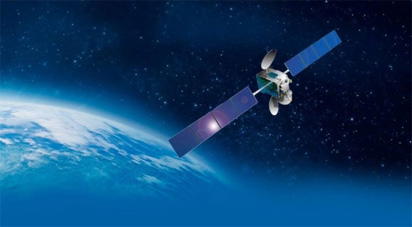
ABUJA-The Federal Government has moved Nigeria’s next-generation satellite programme into the execution phase, with NIGCOMSAT-2A and 2B scheduled for launch in 2028 and 2029 to boost connectivity, security and digital economy growth.
Managing Director of NIGCOMSAT Limited, Mrs Jane Nkechi Egerton-Idehen, disclosed this at the opening of the 2026 Satellite Week in Abuja. She said the programme underscores Nigeria’s commitment to leveraging space technology for national development, sovereignty and security, noting that the sector is entering a phase of accelerated growth.
Egerton-Idehen explained that the satellites will enhance real-time communication, intelligence gathering and connectivity in remote areas, supporting applications such as precision agriculture and rural broadband expansion. She added that procurement processes had been concluded and the project had moved into financing and implementation.
“When operational, the satellites will strengthen security within Nigeria and neighbouring countries, while supporting agencies with critical data and intelligence,” she said.
The event, themed “Harnessing Space for an Extraordinary Nigeria,” brought together government officials, industry experts, researchers and technology innovators to explore opportunities in space and digital infrastructure.
Also speaking, Minister of Communications, Innovation and Digital Economy, Dr Bosun Tijani, said the initiative reflects a shift from approvals to delivery, backed by investments in fibre networks, towers and space infrastructure.
He described satellites as central to bridging connectivity gaps and strengthening national resilience.
Tijani noted that Nigeria remains the only West African country with its own communication satellite, positioning it as a regional hub for digital services, particularly in underserved areas. He stressed that satellite technology plays a critical role in expanding internet access, supporting agriculture and driving economic growth.
He added that beyond infrastructure, the government is focused on building an ecosystem that promotes innovation, research and practical applications across sectors.
The post New satellite plan nears execution stage ahead of 2028, 2029 takeoff —FG appeared first on Vanguard News.

By Obas Esiedesa, Abuja
The Federal Government’s inability to meet its financial obligations to power generation companies has deepened the crisis in the already struggling electricity sector, with fresh data showing it paid only N76.95 billion (about four percent) of the N1.928 trillion subsidy required in 2025.
Although the government budgeted N958 billion for electricity subsidies in 2025, only N76.95 billion was released, leaving an outstanding liability of about N1.85 trillion.
A quarterly analysis of data from the Nigerian Electricity Regulatory Commission (NERC) shows that subsidy obligations stood at N536.40 billion in the first quarter of 2025, declined slightly to N514.36 billion in the second quarter, dropped further to N458.76 billion in the third quarter, and settled at N418.79 billion in the fourth quarter.
NERC also disclosed that the electricity subsidy for January 2026 alone stood at N126.48 billion, underscoring the persistent funding gap.
Industry analysts say the government’s failure to meet its obligations has worsened the sector’s fragile financial state, leaving generation companies (GenCos) unable to pay gas suppliers for fuel used in power plants.
As a result, gas companies have reduced supply volumes to the sector, leading to a significant decline in electricity generation and supply nationwide.
Experts also attributed the crisis to inadequate funding of the Nigerian Bulk Electricity Trading Plc (NBET), the market’s central offtaker.
Former Managing Director of the Niger Delta Power Holding Company (NDPHC), Mr. Chiedu Ugbo, criticised ongoing public disagreements over the actual debt figures, describing them as unhelpful.
“At a time when Nigerians are grappling with intense heat, reduced productivity, and the real economic and social consequences of inadequate electricity supply, it is difficult to justify public disputes over figures instead of focusing on practical solutions,” he said.
“This is a time for leadership and collaboration, not blame-shifting. We must confront our realities with honesty and a shared sense of responsibility.
“NBET cannot deny that there is significant outstanding indebtedness to GenCos and, by extension, to gas suppliers and other creditors.
“However, GenCos must also recognise that this situation is not entirely of NBET’s making. NBET essentially plays a clearing house role within the market. The debt is a sector-wide issue arising from long-standing collection inefficiencies, tariff shortfalls, and structural gaps.”
Ugbo warned that public disputes between NBET and GenCos would only worsen the situation.
“There is no scenario in which GenCos will be paid on unreconciled amounts, just as there is no viable electricity market where GenCos, NBET, gas suppliers, and regulators operate as adversaries rather than partners,” he added.
Also speaking, former Managing Director of NBET, Mr. Rumundaka Wonodi, emphasised the importance of timely payments to GenCos.
“NBET was established as a creditworthy central offtaker and load aggregator. Its partnership with GenCos is built on full and timely settlement of invoices, and that is what will best serve the sector.
“A similar partnership between NBET and DisCos will also benefit both the sector and consumers.
“I do not agree with the notion that GenCos should be understanding because the situation is not NBET’s fault. NBET is effectively a proxy for the government.
“To the extent that the government has failed to make critical investments in transmission and gas infrastructure, enable sustainable tariffs, and ensure effective regulation, it must step up and adequately fund NBET to meet its obligations,” he said.
The post ELECTRICITY: Liquidity crisis worsens as FG pays 4% of N1.9trn subsidies appeared first on Vanguard News.

•Signals revolution in Nigeria’s trade value chain
By Emeka Anaeto, Business Editor
A major shift in Nigeria’s trade modernization journey may have started as global logistics giant DHL, alongside the Standard Organisation of Nigeria (SON) the Nigeria Agricultural Quarantine Service (NAQS) and National Environmental Standards and Regulations Enforcement Agency NESREA), successfully commenced the electronic submission and transmission of cargo manifests on the National Single Window (NSW) platform.
The milestone marks a bold step forward in Nigeria’s ambition to digitize its trade ecosystem, following the official go-live of the platform last weekend.
At a coordinated live demonstrations held at DHL’s Lagos Airport facility and the NSW operations hub in Apapa, stakeholders across government and the private sector witnessed the system in action, processing cargo documentation in real time, transmitting data seamlessly across border systems, and generating rotation numbers with precision.
Despite minor initial technical hitches at DHL and temporary network latency in Apapa, the system recorded a successful launch, reinforcing confidence in its resilience and readiness in the NSW Go-live.
The Director of the NSW project, Tola Fakolade, declared that the initiative has now moved decisively from development into full-scale operations.
“This is no longer a concept, it is live, active, and delivering results,” Fakolade stated, noting that the demonstration underscored the platform’s core capabilities: “electronic submission, transmission to border systems, and the generation of rotation numbers.”
He described the DHL activation as a critical proof point in demonstrating how logistics operators and regulatory agencies can leverage the platform to simplify cargo clearance, eliminate delays, and deepen transparency across Nigeria’s trade value chain.
Fakolade further emphasized the strength of collaboration driving the project, explaining: “In the beginning, we could have some issues here and there, but what is important is that the technical teams are there to resolve them. We saw clear evidence of collaboration among stakeholders, and that collaboration is what has brought us to this point.”
He urged stakeholders nationwide to remain patient and committed as the system scales, noting that such teething challenges are typical of major digital transformations globally.
The Deputy Comptroller-General of the Nigeria Customs Service in charge of ICT and Modernisation, Oluyomi Adebakin, reinforced this position, describing the Go-live as a landmark success of the President Bola Ahmed Tinubu administration that seeks to empower the trade community in a way yet to be experienced.
She assured stakeholders that integrated technical teams, including the Customs Single Window unit, NSW engineers, and Trade Modernisation Project personnel, are working round the clock to ensure seamless functionality.
Adebakin highlighted the broader economic implications, noting that the NSW, alongside the B’Odogwu system, will significantly improve efficiency for traders and unlock measurable gains for the Nigerian economy.
Also lending institutional backing, the Managing Director of the Nigerian Ports Authority, Abubakar Dantsoho, described the initiative as a transformational leap for port operations.
Represented by General Manager Oladapo Fatai, Dantsoho noted that the NSW will drastically reduce bureaucratic bottlenecks and eliminate the need for port users to shuttle between multiple offices for documentation.
At the aviation end, the Director of Cargo Development and Services at the Federal Airports Authority of Nigeria, Lekan Thomas, projected significant gains in cargo efficiency, security, and data-driven planning.
He emphasized that the platform will tackle longstanding inefficiencies in cargo handling while reducing dwell time; a critical factor in improving Nigeria’s logistics competitiveness.
On the private sector front, the Managing Director of DHL, Muyiwa Adejeyoju, expressed pride in the company’s early adoption of the platform.
He noted that the initiative aligns with DHL’s global mission of connecting people and improving lives, while reaffirming the company’s commitment to regulatory compliance and trade facilitation.
With its successful first transactions now completed, the National Single Window signals the dawn of a new era, one defined by speed, transparency, coordination, and global competitiveness.
The post DHL, SON, NAQS, NESREA launch cargo manifest, licenses & permits transmission on NSW appeared first on Vanguard News.

By Peter Egwuatu
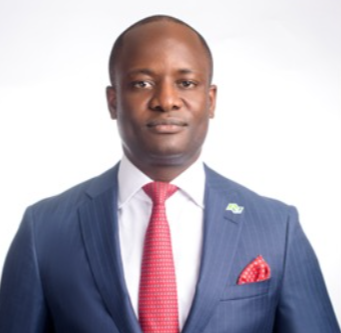
The Group Managing Director/Chief Executive Officer of Nigerian Exchange Group Plc, Temi Popoola, has said Nigeria’s ongoing economic reforms are already strengthening domestic capital formation and positioning the country for deeper global investment partnerships.
Popoola made this known while speaking at the Nigeria–United Kingdom Investment Roundtable organised by the Nigerian Investment Promotion Commission in collaboration with the Commonwealth Enterprise and Investment Council in London.
Drawing comparisons with countries such as Indonesia, Brazil and India, Popoola noted that economies that implemented structural reforms often witnessed strong domestic capital mobilisation and strengthened corporate balance sheets.
According to him, Nigeria is currently experiencing a similar trend as local investors and corporates increasingly respond to policy reforms. “The real test of reforms is what local capital does and how domestic corporates respond,” Popoola said.
“In Nigeria today, local capital is playing a very strong role. Markets were up more than 50% last year, issuers are raising new capital, retail investors are returning to the market, and corporate balance sheets and governance standards are improving” he added .
He also highlighted the strong capital market relationship between Nigeria and the United Kingdom, noting that collaboration between the Nigerian Exchange Group and the London Stock Exchange has helped facilitate cross-border capital raising for corporates in both jurisdictions.
Looking ahead, Popoola said Nigeria’s capital market is positioning itself to support larger transactions and broader wealth creation opportunities. “We see a future where capital markets go beyond facilitating capital raising to supporting business expansion and wealth creation for Nigerians,” he said, adding that continued market modernisation and digital transformation are strengthening the country’s financial ecosystem.
Popoola further said Nigeria’s capital market is undergoing a re-rating as global investors begin to reassess the country’s economic trajectory and investment potential.
Meanwhile, speaking during a live interview on BBC Newsday in London, as part of broader investor and stakeholder engagements during President Bola Tinubu’s state visit to the United Kingdom, Popoola noted that recent market performance, combined with greater policy clarity, is contributing to a shift in how Nigeria is perceived within the global investment community.
“What we are seeing is a gradual re-rating of Nigeria. Investors are beginning to look at the data more closely, the returns, the reforms, and the improving macroeconomic direction and that is changing sentiment,” he said.
He explained that Nigeria’s equity market has delivered strong returns in recent months, positioning it more competitively among emerging and frontier markets. According to him, this performance is helping to recalibrate long-held risk perceptions and attract renewed interest from international investors.
He added that improvements in Nigeria’s energy landscape, including increased domestic refining capacity and ongoing sector reforms, are helping to reduce the economy’s exposure to external oil price shocks, further strengthening investor confidence.
Popoola emphasized that beyond short-term market movements, consistency in policy implementation will be critical in sustaining this shift in perception. “Global capital responds to clarity and consistency. As those elements become more evident, Nigeria naturally becomes more investable.”
He also highlighted the importance of sustained engagement with global financial centres, noting that platforms such as London play a key role in connecting Nigeria’s capital market to international pools of capital.
According to him, Nigeria’s evolving market structure, combined with ongoing reforms, is strengthening its position as a viable destination for long-term investment. “There is a broader recognition that Nigeria offers significant opportunities. The focus now is ensuring that this recognition translates into sustained capital flows.”
Also speaking at the roundtable, Nigeria’s Minister of Finance and Coordinating Minister of the Economy, Wale Edun, highlighted the Federal Government’s reform agenda aimed at restoring macroeconomic stability, strengthening fiscal sustainability and attracting long-term investment into the country.
Meanwhile, the Governor of Lagos State, Babajide Sanwo-Olu, emphasized Lagos’ role as a leading economic hub in Africa and spoke about the state government’s collaboration with TheCityUK to further develop Lagos as a global financial and investment centre. He also invited participants to the upcoming Lagos Investment Forum scheduled to take place in June.
Earlier in her welcome remarks, the Chief Executive Officer of the Nigerian Investment Promotion Commission, Aisha Rimi, noted that the roundtable was aimed at strengthening investment partnerships between Nigeria and the United Kingdom.
She was joined by Lord Marland of the Commonwealth Enterprise and Investment Council, who underscored the importance of collaboration between governments, investors and private sector institutions in unlocking new investment opportunities across the Commonwealth.
The Nigeria–United Kingdom Investment Roundtable brought together policymakers, investors and business leaders to explore opportunities for deeper investment collaboration between both countries as Nigeria continues to implement wide-ranging economic reforms.
The post Nigeria’s reforms driving strong domestic capital mobilisation – NGX Group CEO appeared first on Vanguard News.


Marc Cucurella Slams Chelsea For Sacking Maresca and Questions Transfer Policy

Kano High Court sentences four armed robbers to 10 years imprisonment

Zamfara: Troops rescue five kidnapped victims, repel bandits

FCT Area Council Election: Live results from polling units

Simi Sanya and Femi Dapson Are Now Legally Married and It Is Beautiful to See

Premier League Set-Piece Goals (2025/2026)
-
 Sports2 days ago
Max Verstappen’s Reaction to Being Passed by Gasly at Japanese GP Goes Viral
-
 Metro2 days ago
Apostle chibuzor’s autistic son gets married 3 days after viral video [PHOTOS]
-
 Sports2 days ago
Maycee Barber’s Partner Posts Update on UFC Fighter’s Condition After UFC Seattle KO
-
 Sports1 day ago
Jose Mourinho Drops Portugal and Cristiano Ronaldo Verdict After Mexico Draw
-
 Sports2 days ago
Former Hooligan Names Man Utd Fans as England’s Toughest
-

 Metro2 days ago
Father of boy killed by truck in Aramoko-Ekiti seeks justice
-
 Sports2 days ago
Piero Hincapie Becomes 9th Arsenal Star to Withdraw from International Duty
-

 Politics2 days ago
Kwankwaso resigns from NNPP, cites ‘strategic realignment’