
Sports
West Ham Consider Safe Standing Areas at London Stadium

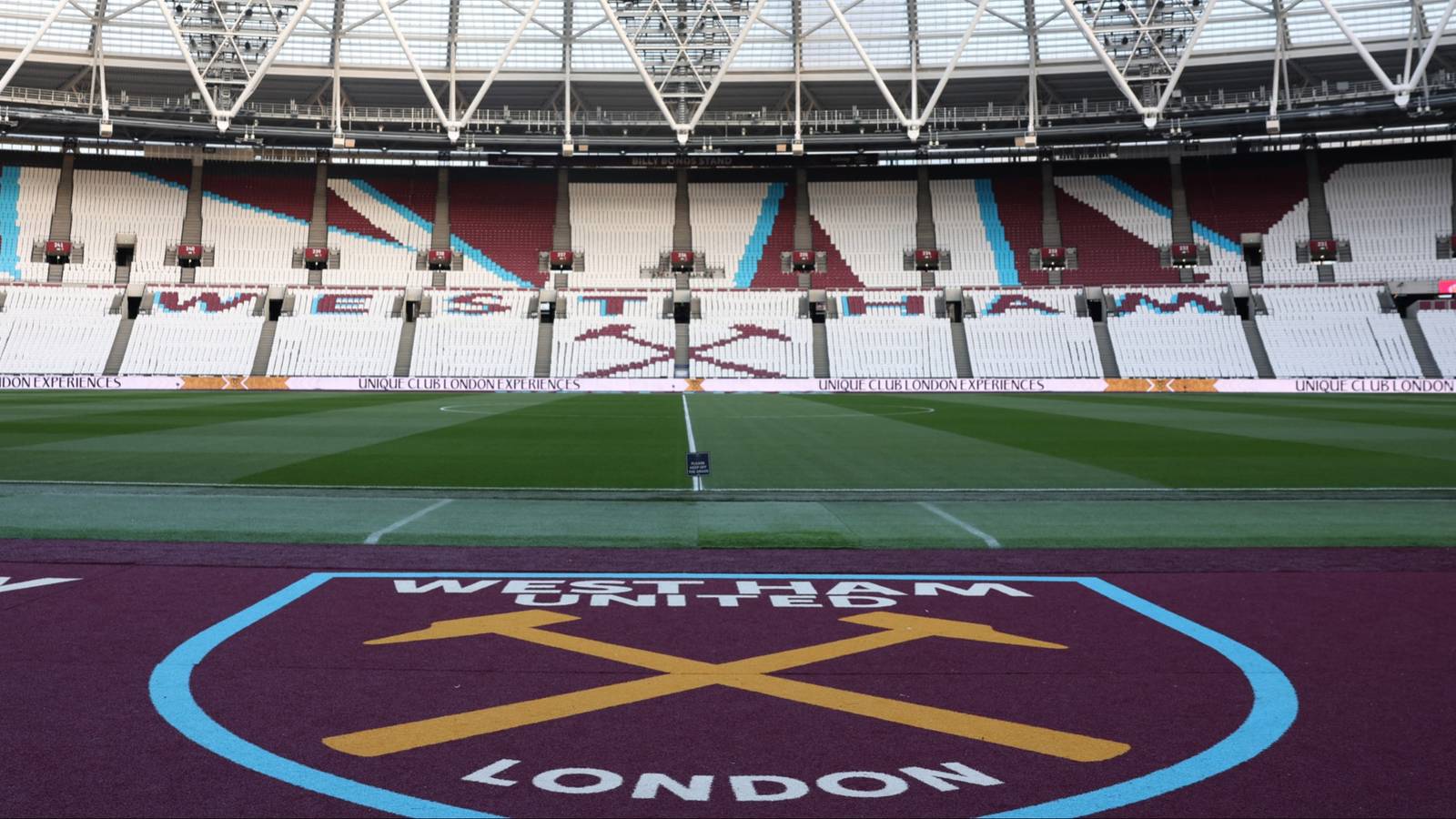
West Ham United will look into installing safe standing in key areas at London Stadium as a peace gesture in their war with the fans.
Matchday experience and lack of atmosphere has been a huge criticism of the Hammers’ home, which was originally built to host the 2012 Olympic Games.
Hierarchy Aiming to Appease Hammers Supporters

The bowl-like shape and wide open spaces of an arena constructed to house track and field events has been a long-standing complaint by match-going West Ham United supporters.
Following a meeting with pressure groups in the past 10 days, the Hammers board has agreed to launch a feasibility study into providing rail seating at the 62,500-capacity stadium.
Some rail-seating already exists in the upper tier of the Sir Trevor Brooking Stand at West Ham’s ground, but it is a long way from the pitch.
Fans are not supposed to stand up during games at all-seater grounds as it is considered dangerous. All-seat stadia were introduced by Law into English football in the wake of the 1989 Hillsborough disaster that killed 97 Liverpool fans. But it is allowed if the seats have protective barriers in front of them.
In the new year, West Ham will look into constructing more rail seating in the lower tiers at both ends of the ground in a bid to generate more noise during home games. It is the latest move by the Hammers’ hierarchy to stem the growing anti-board sentiment that is overshadowing the season.
The east Londoners won their first home game since February on Sunday, with a 3-1 victory over Newcastle United. Even so, several thousand people stayed behind as part of a sit-in protest to demand the resignation of chairman David Sullivan and his vice-chair Karren Brady.
There have been match boycotts and marches to voice discontent at the way West Ham is being run. Despite last weekend’s win, the Hammers remain in the bottom three of the Premier League.
They face fellow strugglers Burnley this Saturday, when the latest protest march is scheduled to take place in the run-up to the 3pm kick-off.
Around 20,000 West Ham supporters stayed away from last month’s 2-0 home defeat by Brentford. A protest rally was staged before the game against Crystal Palace earlier in the season.
Some fans are concerned that transfer policy, ticket pricing and the general running of their club is heading for disaster under Sullivan, who took over in 2010. But since then, West Ham have won their first major trophy in 43 years with the 2023 UEFA Conference League triumph.

Penalty shootouts are football’s ultimate psychological battle. While power and placement remain crucial, many of the world’s best penalty takers now rely on deception just as much as technique. One of the most common methods is the stutter or stop-start run-up — a style that divides opinion every time it appears on the biggest stage.
From World Cups to the Premier League, players such as Jorginho, Bruno Fernandes and Neymar have made the technique famous, while tournaments like Euro 2024 and the World Cup have again sparked debates over whether the tactic gives shooters too much of an advantage. So, why is it legal, how do players execute it, and which penalties have become the most memorable examples?
What is the Stutter Run-Up in Penalties?

A stutter run-up is exactly what it sounds like: rather than running continuously towards the ball, the penalty taker briefly slows down, hesitates or changes rhythm before striking it.
The objective is simple: before committing to a corner before the kick, the taker waits to see whether the goalkeeper moves first. If the keeper dives early, the striker can calmly place the ball in the opposite direction.
It differs from the illegal feint because the hesitation happens during the run-up, before the kicking leg begins its final swing towards the ball.
It is legal, provided it is performed correctly. The IFAB Laws of the Game state that players are allowed to feint during the run-up to confuse the goalkeeper. However, once the player has completed the run-up and starts the kicking motion, they cannot stop completely or perform another exaggerated feint before striking the ball.
If a player illegally feints after completing the run-up, they are cautioned for unsporting behaviour and the penalty is recorded as missed if the ball enters the goal.
The rule attempts to balance the contest between the taker and goalkeeper whilst preventing attackers from gaining an unfair advantage at the very last moment.
How do players perform a stutter penalty?

Most players follow a similar process, taking a controlled rather than explosive run-up, slowing slightly one or two strides before reaching the ball. They watch the keeper’s movement rather than focusing solely on the ball, and strike into the opposite corner if the goalkeeper commits early. Issues can arise should the goalkeeper remain firm and not commit, meaning the taker must pick a side and execute clearly.
The technique demands exceptional composure. If the goalkeeper refuses to move, the taker still needs to generate enough power and accuracy despite interrupting their own momentum.
Former England goalkeeper Ben Foster has repeatedly explained why the tactic is so hard to face, saying: “Don’t dive too early because, while he’s running up, you don’t want to be moving in the direction you’re going to go because the better players will just roll it in the opposite corner.”
He recently said on The Two Robbies & Friends Podcast: “The second you stutter, you can’t get the same amount of purchase on the ball. I can wait and still save it.”
Notable Stutter Run-Up Penalties

There have been plenty of penalties during the 2026 World Cup campaign. Justin Kluivert noticeably missed his stutter penalty during the Netherlands’ penalty shootout against Morocco, which resulted in the Dutch being eliminated.
Kai Havertz and Nick Woltemade also had their stutter penalties saved during Germany’s penalty shootout against Paraguay, although Joshua Kimmich’s similar technique was successful.
The technique was made popular by ex-Chelsea midfielder Jorginho, whose penalty routine took the Premier League by storm, with the Italian scoring 51 penalties during his whole career. However, even he hasn’t been immune to mistakes, missing a penalty during Chelsea’s EFL Cup final loss to Manchester City in 2018, as well as missing two penalties against Switzerland, which would have seen Italy bag qualification to the 2022 World Cup.
You scored
out of 20
The Stutter run-up remains controversial because it shifts part of the contest away from pure striking ability and towards psychology. Some argue that the technique unfairly forces goalkeepers to move first, especially given modern interpretations requiring keepers to keep at least part of one foot on the goal line until the ball is kicked.
Penalties arguably already heavily favour attackers, and varying the run-up simply represents another legitimate skill. Reading a goalkeeper’s body language, maintaining balance and still finding the corner requires exceptional technical quality under immense pressure.
As long as the players stay within IFAB’s laws, the stutter run-up is likely to remain a feature of football’s biggest occasions. Whether loved or hated, it has become one of the defining penalty techniques of the modern game — and one that continues to test the nerve of both takers and goalkeepers whenever a match hangs in the balance.

15 Best Penalty Takers in Football History (Ranked)
Here are the 15 players you can rely upon the most from 12 yards.

Turkish women’s tennis player, Zeynep Sonmez, has revealed what she asked the Wimbledon bosses after they banned her from wearing her usual pro-Palestine pin while competing at SW19 this year.
Sonmez is currently ranked number 51 in the world, and she made it through from the first round of the women’s singles by defeating Ann Li, before losing to American Claire Liu in the following round.
Despite her singles woes, Sonmez returned to the court earlier this week to compete in the women’s doubles event, alongside Jessica Maneiro. However, the duo were eliminated in round one in three sets.
Player Banned From Displaying Pro-Palestine Symbol at Wimbledon

During her three-match run at this year’s edition of Wimbledon, Sonmez showed her support for Palestine through the use of a vibration dampener, which has the symbol of a watermelon.
A watermelon is grown in Palestine, and the fruit has often been used as a substitute for the flag.
Throughout her career, Sonmez has regularly attached a watermelon pin to her dress when competing, but she revealed that she was banned from wearing it at this year’s Wimbledon.
“I used to wear a pin. Tournaments no longer allow me to wear it,” she told members of the media, before revealing what she had asked tournament bosses about the decision.
Why Wimbledon Bosses Banned Pro-Palestine Symbol
“We discussed with the organisers. [I asked why] the Ukrainian flag is allowed, but the Palestinian is not. They ultimately told us they definitely won’t allow it. So, I can’t wear the pin.”
Organisers are reported to have cited the tournament’s strict dress code as the reasoning behind the decision.
“I can use the vibration dampener, and they can’t object to that. That’s why I put the watermelon symbol on my racket.”
The watermelon, which features the same colours as the Palestinian flag, has become a widely-used symbol of Palestinian resilience against Israeli oppression and occupation
In response to her stance, Osman Askin Bak, who is the Turkish minister of Youth and Sports, supported her in her brave efforts by writing a post on the social media app ‘X’ which read:
“By refusing to remain silent in the face of the humanitarian tragedy unfolding in Palestine, she has once again demonstrated with her honourable stance that sport is not merely about competition; it is also a carrier of universal values.
“For this meaningful sensitivity, we wholeheartedly congratulate our athlete and respectfully salute every conscientious voice that stands with the oppressed.”
When previously asked about her support towards Palestine and her choice to wear a pin when in competition, Sonmez told the WTA about how it affects her emotionally:
“It’s a sensitive area for me. People in Palestine are suffering. I see videos and photos and feel like there’s not so much we can do.
“But we can always do our best, it’s like I was saying, you can be the best version of yourself. I want everyone to know that I’m standing with them.”

Tottenham Hotspur have been the busiest club in the transfer market so far this summer, but they aren’t done yet.
The north London club finished 17th in the Premier League for a second consecutive season, but manager Roberto De Zerbi has been given a war chest to rebuild the squad and make them competitive again.
So far the Italian has added Andy Robertson, Marcos Senesi, Martin Dubravka, Jan Paul van Hecke, and Mateus Fernandes, while a £100m deal for Sandro Tonali has also been agreed to bring him in from Newcastle. The club are now believed to be looking at their forward line next, and the top target has been revealed.
Tottenham Prioritise Savinho Transfer

Spurs have shown a strong interest in a number of forward options in the market, with Crysencio Summerville among the names touted as possible options to make the switch.
But while speaking on talkSPORT, GIVEMESPORT senior correspondent Ben Jacobs has revealed that there is a man above the Netherlands international on their shortlist, following Man Utd opening talks for the West Ham star.
“Talks are now underway directly between West Ham United and Manchester United for Crysencio Summerville, who’s just getting back from the World Cup, and don’t forget that Tottenham have looked at him in the past as well,” he said.
“Their primary focus is Savinho. Let’s see whether the Manchester City board choose to sanction that deal or not.”
Savinho has already agreed personal terms ahead of a move to north London and wants to join, but talks continue between the two clubs over a fee. It’s understood that City want around £60m to let the Brazilian leave.
⚽
England World Cup Quiz
You scored
out of 20
Savinho Could Be Next In The Door

Savinho arrived at Man City from Troyes in 2024 after a terrific spell in La Liga on loan at Girona, and immediately excited fans with his tricky footwork, pace and creativity.
It’s not easy to get compliments from Pep Guardiola, but he called the youngster ‘extraordinary’, showing just how talented he is. A lack of regular game time saw his form dip, but De Zerbi is the perfect manager to get that out of his system and get him back to his best.
Spurs are ready to splash the cash, and Savinho is a player who could make a big difference to their attack next season. They’ve set their sights on the deal, and it’s one to pay attention to in the coming weeks as they look to close it.
Deal Off: Tottenham Pull Out of Move to Sign ‘One of the Best’ Midfielders
Tottenham have pulled the plug.


2027: ADC chieftains, Malami, Amaechi in closed door meeting in Abuja [VIDEO]

Kano Hisbah arrests man over alleged trafficking of two girls

Bandits abduct residents, burn house in Zamfara attack

Simi Sanya and Femi Dapson Are Now Legally Married and It Is Beautiful to See

FCT Area Council Election: Live results from polling units

Premier League Set-Piece Goals (2025/2026)
-
 Sports2 days ago
Gary Neville Names Only Team That Can Stop France From Winning the 2026 World Cup
-
 Sports1 day ago
VAR Expert Casts Clear Verdict on Folarin Balogun Red Card vs Bosnia
-
 Sports10 hours ago
FIFA Release Statement After VAR Call During Portugal 2-1 Croatia
-
 Sports1 day ago
Real Reason Serena Williams Broke Strict Rule as $50,000 Fine Decision Made
-
 Sports8 hours ago
Croatia’s Igor Matanovic Praised For Interview After Goal v Portugal is Ruled Out
-
 Sports9 hours ago
Piers Morgan Slams BBC Commentators For Cristiano Ronaldo Treatment
-
 Sports1 day ago
US Icon Brad Friedel Blasts Mexico Ahead of England Match
-
 Sports2 days ago
Roy Keane Names the Two Teams That Will Contest the 2026 World Cup Final