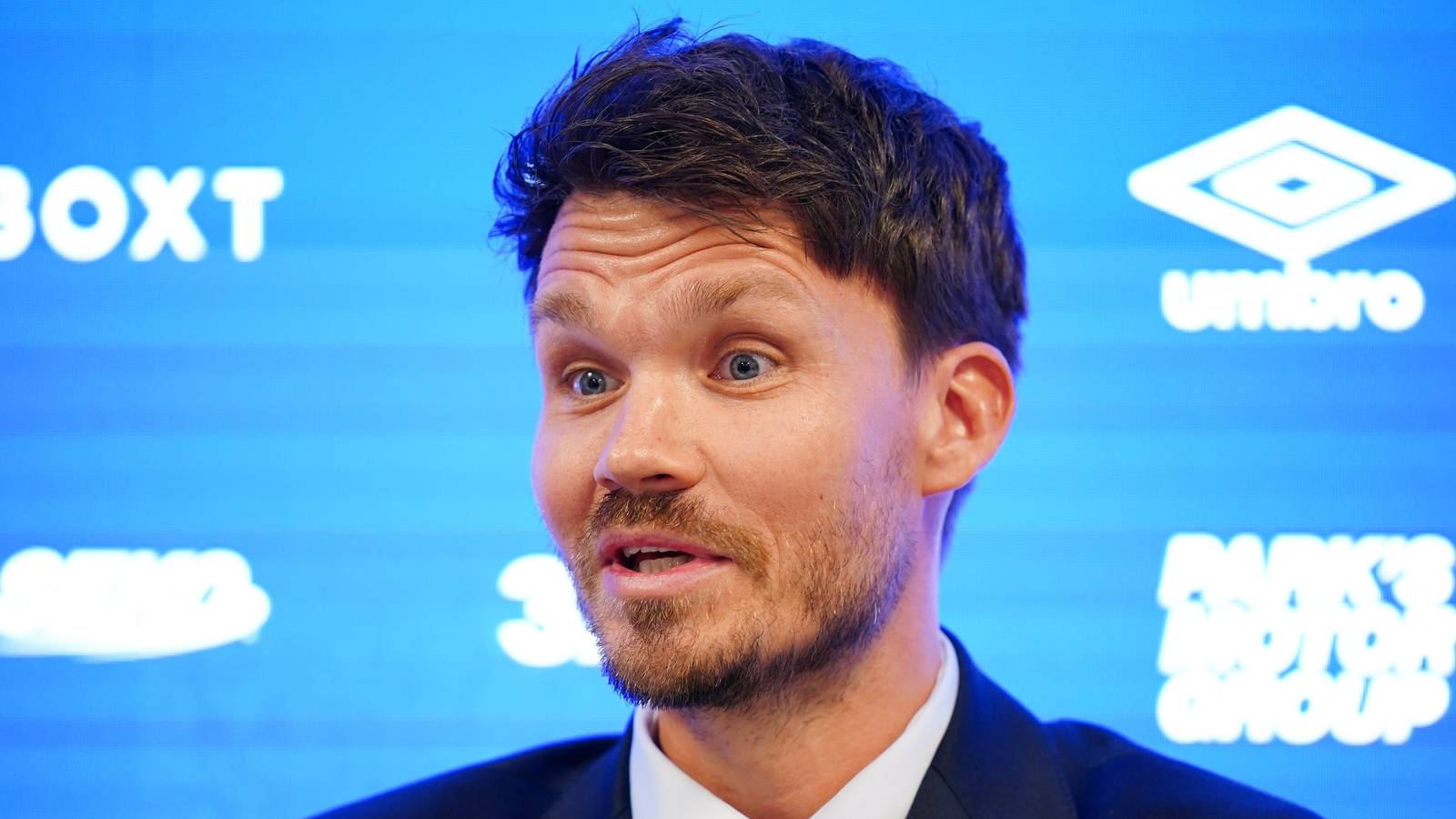
Rangers manager Danny Rohl has confirmed that Nedim Bajrami’s injury is worse than initially feared as his squad prepare to face Ferencvaros in the Europa League on Thursday.
The Gers are looking to rescue something from what has been a disastrous Europa League campaign so far. Rohl’s side currently sit in 33rd position having failed to win a game in the competition this season, picking up just one point. The Glasgow giants have conceded nine goals, scoring just twice.
A win this week could see them climb up to 28th if results go their way, but it’s looking like they are going to fail to qualify as it stands.
Danny Rohl: Bajrami Injury Worse Than First Feared
Speaking ahead of Rangers’ game against Ferencvaros, Rohl has provided an update on the injury situation of his squad. The Rangers boss has confirmed that Bajrami’s injury is worse than initially feared after a scan revealed a muscle problem, while Lyall Cameron is a doubt.
It’s unclear how long Bajrami is going to be out for, but it’s more positive news for Dujon Sterling. Rohl went on to say that Sterling is a ‘special’ guy, and he expects the defender to get some minutes against Ferencvaros.
Focus Surely on Premiership for Rangers
With Rangers picking up some decent form under Rohl in the Scottish Premiership, the boss will surely be focusing their efforts on domestic action, with their Europa League campaign such a struggle at the moment. Rangers are currently just six points behind Glasgow rivals Celtic, and despite their difficulties, they have only lost once in the league this season.
With the 2026 World Cup housing more teams than ever before, the inflated competition brings more games than ever and new situations to consider.
That is particularly evident in the group stages, where the complications surrounding the new format means an extra knockout round and the added ‘best third-placed teams’ section.
Plus, there’s also confusion when it comes to group ties. How does it work? What metric is used to separate teams? Don’t worry: we’ve got all the answers.
World Cup Group Stage Tie-Breakers
Reuters/Kyle Ross
The most important question is: what happens if teams finish level on points? As we know, the end of the group stage is determined by points. However, where two or more teams are tied on points, tiebreakers come into effect and are applied until a winner is found. This takes on greater importance due to the extension of the format and the best third-placed team addition.
For the 2026 competition, the new addition is that the head-to-head record now comes before overall goal difference as the first tiebreaker. However, for the third-placed teams all competing against each other, goal difference is the key factor in progressing to the Last 32.
If teams were to tie both head-to-head and overall goal difference, they would then move down the list of tiebreakers — of which there are eight in total — to find the winner. Here’s the full list:
World Cup Tie-Breaker Rules
Step 1
Head-to-head points
Step 2
Head-to-head goal difference
Step 3
Head-to-head goals scored
Step 4
Overall goal difference
Step 5
Overall goals scored
Step 6
Team conduct score
Step 7
FIFA ranking
History of World Cup Tie-Breakers
Kai Pfaffenbach via Reuters
Over the history of the World Cup, the tournament has evolved over time to include more teams and different formats. For example, the first two editions in 1934 and 1938 had no group stages.
In fact, the first time tie-breakers were used was in 1958. Playoff matches were used alongside goal average (an outdated concept) to decide which teams would advance from the group stages. Goal difference wasn’t introduced until 1970; the same tournament that utilised drawing lots.
Only once was drawing lots used. In 1990, the Netherlands and Ireland were inseparable on every conceivable metric — goals, goal difference and head-to-head — and drawing lots was needed to decide who finished second and third. FIFA’s Sepp Blatter oversaw a live, televised draw in which Ireland finished second but Oranje progressed as the best third-placed side.
You scored
out of 20
1994 saw the introduction of head-to-head as a deciding factor — and the most extraordinary group in World Cup history. Group E saw Mexico, Ireland, Italy and Norway all tied on four points as well as having identical goal difference across the board.
Mexico topped the group by virtue of scoring the most goals. Ireland and Italy each netted twice and were separated due to the Irish one-nil victory, but the Azzurri progressed as the best third-placed team. Norway were eliminated due to the fact that they netted just once.
After that, the next notable mention of tiebreakers was the usage of the ‘fair play’ ruling that was demonstrated for the first time in the 2018 World Cup in Russia. Japan advanced over Senegal on fair play after both teams were level on points, goal difference, goals and head-to-head. The Asian side progressed due to them recording lower cards, minus four versus the six that the African side managed. 2022 also saw the removal of drawing lots as the final tiebreaker.
Returning to the present, the addition of head-to-head as primary is important given the nature of the extended competition and perceived disparity between teams. Take Germany‘s 7-1 win over Curaçao as a prime example; rewarding teams for winning matches matters most, rather than totaling dominant victories against weaker opponents.
All eyes are on the 2026 World Cup, but that doesn’t mean that club managers are taking a break for some much-needed R&R. With the season now over, the football merry-go-round turns its attention to the drama of the summer transfer window.
The World Cup will no doubt make stars of a few obscure names, as well as add to the legacy of some household ones. But major tournaments also tend to add a few zeroes to a player’s value, forcing managers to get creative with their recruitment strategy.
The 2026-27 season is a growing dot on the horizon, so the focus is now moving towards the next group of players whose contracts have expired this summer. But which free agents are definitely worth a gamble for bargain-sniffing managers?
Official confirmation of each summer transfer deal, with the window set to close on September 1.
John Stones
The Manchester City veteran has won everything during his decade at the club, clocking up just shy of 300 appearances under Pep Guardiola. However, injuries and new arrivals have limited the England international’s playing time. At 32, Stones may not be the player he once was, but he definitely still has a lot to offer to the right club.
Dušan Vlahović
More than a few Juventus fans will argue that Dušan Vlahović never reached the same form he showed at Fiorentina. But with 48 league goals in 122 appearances, the Serbian’s output has still been solid. His 2025-26 season has been hampered by injury, and at just 26, he offers an incredible free transfer should he regain fitness and form.
Robert Lewandowski
The Polish striker is one of the greatest goalscorers of his generation, and even at 37, still offers plenty of firepower. Lewandowski recorded 14 goals in 31 games for Barcelona in La Liga. The former Bayern Munich man is one of the club’s highest earners and getting him off the books might help Barca to put their funds into a younger model.
Arthur Avom
Action Images
The 21-year-old has become an integral part of Lorient’s revival. Avom helped the club win Ligue 2 in the 2024-25 season, and has become a mainstay in the Cameroon national side since debuting at just 19. The box-to-box midfielder already has plenty of experience and could present a great long-term project for many of Europe’s top teams.
Franck Kessie
The former AC Milan and Barcelona midfielder was one of the first to join the lucrative Saudi Pro League. But now, his contract is set to expire at the end of the month with no sign of a renewal. At 29, Kessie is a proven option with plenty of mileage left in the tank. His experience could be useful in many dressing rooms.
Dani Carvajal
Dani Carvajal in the Champions League
Managers will be hard pushed to find a player with the quality, experience, and success that Dani Carvajal possesses. The Real Madrid captain will leave the club after 23 years when his contract expires this summer. At 34, he is in his twilight years. But as a free transfer, he can still provide a level of quality and a well of wisdom to younger players.
Neymar
The Brazilian’s situation is an interesting one. His current deal with Santos will expire at the end of the year, with no contract negotiations underway. And whilst his best years are behind him at 34, he still poses a deadly threat in front of goal. If Neymar can have a fruitful World Cup, interest in the attacker could increase as his current deal edges closer to expiry.
Raphaël Guerreiro
The Portuguese defender has over 200 Bundesliga appearances under his belt, having plied his trade for Germany’s two biggest teams, Bayern Munich and Borussia Dortmund. But Bayern have confirmed he will leave as a free agent this summer. Beyond experience, his biggest asset is his versatility. Predominantly a left back, he has been utilised in midfield by Bayern boss Vincent Kompany, even operating in the no.10 role. As a squad member, he could prove invaluable if injuries pile up.
Jadon Sancho
After five difficult years at Manchester United, Jadon Sancho will leave as a free agent this summer, having never really hit the heights of his Dortmund days. The former England man made 39 appearances during his loan spell at Aston Villa this season, and they could be tempted by a free transfer to boost their squad ahead of their Champions League campaign. However, Sancho’s exorbitant wage demands could throw a spanner in the works.
Luka Modrić
The 2018 Ballon d’Or winner turns 41 in September, but he is still racking up appearances for AC Milan. The Croatia captain played 37 times for the Serie A side last season, but his current deal will expire this summer. Modric is reportedly yet to make a decision on whether to activate his one-year extension at the Rossoneri. Perhaps new boss Ruben Amorim can convince him to stay, but if not, he could be an incredible pickup for many sides.
Tracking the leading contenders to win the prestigious Ballon d’Or award in 2026.
Oscar Mingueza
The 27-year-old Spaniard has been a consistent starter for Celta Vigo, having joined the club from Barcelona in 2022. But with his contract expiring, he is reportedly on the wishlist of a few Premier League clubs. The left back’s injury record is impressive, having missed just one league match through injury in the last three seasons. Mingueza could add solid depth to any Premier League squad.
Fabinho
The veteran Brazilian will be very familiar to Liverpool fans, and at 32, can still do a good job in the holding midfielder role. Contract renewal talks with Al-Ittihad are reportedly on hold, which should grab the attention of teams seeking proven, experienced midfielders on a free. A good outing at the World Cup could remind managers of the quality he possesses.
Yves Bissouma
Tottenham’s signing of Yves Bissouma from Brighton in 2022 looked like an impressive swoop at the time, but the Mali midfielder has failed to deliver on his promise. After already being linked with a move away from Spurs last summer, he has now left the North London side upon the expiry of his contract. The prospect of reviving a Brighton-era Bissouma will definitely earn him a few suitors this summer.
Leon Goretzka
The Germany international has been a mainstay of Bayern Munich since joining from Schalke in 2018. But Leon Goretzka now finds himself on the precipice of a new challenge, having left the German giants. The midfielder has been linked with AC Milan since leaving Bayern, but he should be on the wishlist of many more clubs. Versatile, disciplined, and very experienced, he would be a welcome addition to any side — especially without a price tag.
Julian Brandt
Underrated is a word that springs to mind when describing Julian Brandt. The Dortmund playmaker has hit double figures in Bundesliga goal contributions in his past five seasons with the German side, so it’s surprising to see the playmaker leaving on a free. Brandt is one of the Bundesliga’s brightest creative sparks and is still only 30. Brandt’s next destination, another Bundesliga side, or something a little more exotic, continues to be a mystery.
With the 2026 World Cup making history due to the inclusion of 48 teams — the most ever in the tournament’s history — there are more team nicknames than ever to wrap your head around.
A key piece of the culture of bringing all of these different nations together is experiencing their traditions all at once, and one form of that is through team nicknames.
Every nickname brings a unique flavour, a different story and a distinct identity. GiveMeSport has charted all 48 teams and their individual nicknames — covering the imaginative and the not-so-imaginative in all of their glory.
Group A
Henry Romero via Reuters
Team
Nicknames
Mexico
El Tri
South Korea
Taegeuk Warriors
Czech Republic
Narodak (The National Team)
South Africa
Bafana Bafana (The Boys)
Many will know the words ‘Bafana Bafana‘ thanks to Peter Drury’s iconic commentary of their opening goal at the 2010 World Cup. Its history is rich given that in 1992 it was adopted following their return to international football after the end of apartheid.
South Korea‘s ‘Taegeuk Warriors‘ refers to the symbol at the centre of their flag, ‘Taegeuk’, which represents balance and cosmic harmony in their culture, whereas Warriors is an add-on to describe their playing style.
The host nation, Mexico, boasts ‘El Tri‘ (short for El Tricolor), which is a reference to the three colours of their national flag. It is a theme that repeats itself often across this list.
Lastly, the Czech Republic’s ‘Narodak‘ is a shorthand for the national team.
Group B
Siphiwe Sibeko via Reuters
Team
Nicknames
Canada
The Canucks
Switzerland
Nati/Rossocrociati (Red Crosses)
Bosnia-Herzegovina
Zmajevi (The Dragons)
Qatar
Al-Annabi (The Maroons)
For Canada, the term ‘Canucks‘ will be well-known due to its usage in the NHL Ice Hockey franchise with Vancouver.
‘Zmajevi‘ translates to ‘The Dragons‘ for Bosnia and Herzegovina, which stands as a powerful symbol of strength and ferocity in their folklore.
Qatar’s nickname references the colour of their national kit, with ‘Al-Annabi‘ translating into ‘The Maroons‘.
Switzerland go by ‘Nati‘ or ‘Rossocrociati‘ and the former reflects the Swiss’ German linguistic community (the country’s largest) with the latter meaning “Red Crosses”, which is a direct reference to their flag.
The battle for the World Cup Golden Boot is already heating up, with a number of familiar faces and a few surprise standouts in contention.
Group C
Reuters via Ueslei Marcelino
Team
Nicknames
Brazil
Selecao / Canarinho (Little Canary)
Morocco
The Atlas Lions
Scotland
The Tartan Army
Haiti
Les Grenadiers / Le Rouge et Bleu
For Brazil, there’s “Selecao” and “Canarinho“. The first refers to ‘The Selection’ of the national team, which is holy for a country that celebrates football as a religion. Whereas “Little Canary” refers to the yellow in their kit.
Morocco‘s ‘Atlas Lions’ tag refers to the Atlas Mountains that run across Northern Morocco and the Barbary Lion, a now-extinct subspecies.
History is the key reference point for Haiti as ‘Les Genadiers’ honours the grenadier soldiers who fought in the country’s revolutionary war, which paved the way for it to become the first black republic in the world in 1804.
Scotland‘s ‘Tartan Army‘ refers to its incredible fans rather than the team itself.
Group D
Kiyoshi Mio via Reuters
Team
Nicknames
United States
The Stars and Stripes
Australia
The Socceroos
Paraguay
Los Guaranies / La Albirroja (The White and Red)
Turkey
Ay-Yildizhlar (The Crescent-Stars)
The host nation, the United States, has a clear and distinct name — ‘The Stars and Stripes‘ — which is an almost universally known reference to their national flag.
For Paraguay, their name, ‘Los Guaranies‘, honors the indigenous Guaraní people, the largest indigenous group in the country whose language is still spoken by the majority of the population today.
Perhaps the most enjoyable name to say, ‘The Socceroos‘ of Australia is a combination of soccer and kangaroo which dates back to the 1960s.
Turkey‘s reference to ‘The Cresent-Stars‘ of their flag translates to ‘Ay-Yildizhlar‘ — which is rooted deeply in Turkish and Islamic cultural identity.
Group E
Thomas Mukoya via Reuters
Team
Nicknames
Germany
Die Mannschaft (The Team)
Ivory Coast
Les Elephants (The Elephants)
Ecuador
La Tri (The Tri)
Curaçao
The Blue Family / The Blue Wave
Germany‘s name ‘Die Mannschaft’ is a truly flamboyant way to say “The Team”, but it has been mocked for its bluntness.
‘The Blue Family‘ and ‘The Blue Wave‘ paint an exotic image of Curaçao.
Another brilliant name is ‘Les Elephants’. Named after the African elephant, the Ivory Coast is a major hub of the ivory trade, and it also links to wisdom and longevity.
Ecuador’s nickname mirrors Mexico, as ‘La Tri’ defines the three colours of their flag for yellow, blue and red.
Group F
Pawel Andrachiewicz/PressFocus via Reuters
Team
Nicknames
Netherlands
Oranje (Orange)
Japan
Samurai Blue
Sweden
Blagult (The Blue and Yellow)
Tunisia
Eagles of Carthage
Japan‘s ‘Samurai Blue‘ is synonymous with honour, discipline and skill — and the nation certainly embodies that message.
Another African name from Tunisia brings rich history as the ‘Eagles of Carthage‘ refers to the eagle, a symbol of power, and Carthage, the ancient North African civilization.
A colourful addition is the Netherlands‘ ‘Oranje‘, which is derived from the house of Orange-Nassau, the Dutch royal family who led the country’s struggle for independence in the 16th century.
Rounding off this bold group is Sweden‘s ‘Blagult‘, which describes their Blue and Yellow. No fuss — very Scandinavian.
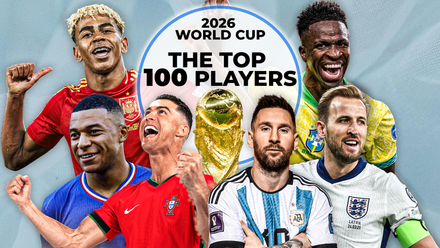
GIVEMESPORT ranks the best 100 footballers involved in this summer’s World Cup, from Neymar to Kylian Mbappe.
Group G
Ken Blaze (IMAGN IMAGES via Reuters)
Team
Nicknames
Egypt
The Pharaohs
Iran
Team Melli (The National Team)
Belgium
Red Devils
New Zealand
All Whites
‘The Pharaohs‘ links Egypt to one of the greatest civilisations in human history.
New Zealand’s ‘All Whites‘ is a play on the All Blacks — New Zealand’s iconic rugby union team, which is a clear contrast to separating themselves from the sport.
‘Team Melli’ for Iran simply means National, which is widely used and deeply felt.
For Belgium, the ‘Red Devils‘ are inspired by the red kit and is shared by England’s Manchester United, which refers to a fearsome reputation.
Group H
Team
Nicknames
Spain
La Roja (The Red One)
Uruguay
La Celeste / Los Charruas
Cape Verde
Tubaroes Azuis (Blue Sharks) / Crioulos (Creoles)
Saudi Arabia
The Green Falcons
Both Spain and Uruguay relate to their kits, with ‘La Roja‘ describing the Spanish red and ‘La Celeste‘ referring to the Sky Blue in their kit. However, ‘Los Charruas‘ has a deeper meaning as it honours the indigenous Charraui people.
Saudi Arabia’s ‘The Green Falcons‘ is a symbol of nobility and power in Saudi culture.
And Cape Verde’s ‘Tubaroes Azuis‘ (Blue Sharks) and ‘Ciroules‘ refers to the country’s mixed cultural heritage.
Group I
Burt Granofsky/Cal Sport Media/Sipa USA via Reuters
Team
Nicknames
France
Les Bleus (The Blues)
Norway
Red, White and Blue
Senegal
The Lions of Teranga
Iraq
Lions of Mesopotamia
For France, ‘Les Blues‘ is an obvious one. The historic blue kit.
Senegal‘s is a beautifully layered nickname; ‘Teranga‘ refers to the Wolof word meaning hospitality and generosity. The lion is a symbol of courage and strength.
Iraq also refers to lions — the ‘Lions of Mesopotamia‘ refers to the land between the rivers in ancient Greek. And the lion was the royal symbol of ancient Mesopotamian culture.
Norway keeps it simple — red, white and blue to reflect the kit.
You scored
out of 20
Group J
Action Images
Team
Nicknames
Argentina
La Albiceleste (The White and Sky Blue)
Austria
Das Team/Unsere Burschen (Our Boys)
Algeria
Les Fennecs (Fennec Foxes)
Jordan
Al Nashama (The Chivalrous Ones)
For Argentina, ‘La Albiceleste‘, reflects the ‘The White and Sky Blue’ of the kit, with its inception dating back to 1812.
Algeria is named after the fennec fox, which is a small, nocturnal desert fox native to North Africa.
Whereas Austria’s ‘Das Team‘ and ‘Unsere Burshen‘ translate to ‘The Team‘ and ‘Our Boys‘.
For Jordan, ‘Al Nashama‘ refers to ‘The Noble Ones.’
Group K
Troy Taormina (IMAGN IMAGES via Reuters)
Team
Nicknames
Portugal
Selecao das Quinas (The Selection of the Shields)
Colombia
Los Cafeteros (The Coffee Growers)
DR Congo
The Leopards
Uzbekistan
White Wolves
Portugal‘s ‘Seleco das Quinas‘ are the five blue shields on the Portuguese flag, dating back to the 12th century.
DR Congo’s ‘The Leopards‘ has long been a symbol of strength in Congolese culture.
The Uzbekistan ‘White Wolves’ tag is a sacred animal in Turkic mythology.
For Colombia, ‘Los Cafeteros‘ is a direct translation of ‘The Coffee Growers‘.
Group L
Kai Pfaffenbach via Reuters
Team
Nicknames
England
The Three Lions
Croatia
Vatreni (Fiery Boys) / Kockasti (The Chequered Ones)
Ghana
Black Stars
Panama
Los Canaleros (The Canal Men)
England‘s ‘The Three Lions‘ dates back to the 12th century, first used by King Richard 1 and later immortalised by the famed song, released ahead of Euro 96.
Croatia‘s ‘Vatreni‘ refers to the passionate and intense style of the country, translating into ‘Fiery Ones‘.
The ‘Black Stars‘ for Ghana has a deep political and cultural resonance.
Lastly, Panama’s ‘Los Canaleros‘ refers to ‘The Canal Men‘, a proud callback to the Panama Canal, respected as one of the greatest engineering achievements in human history.