
Sports
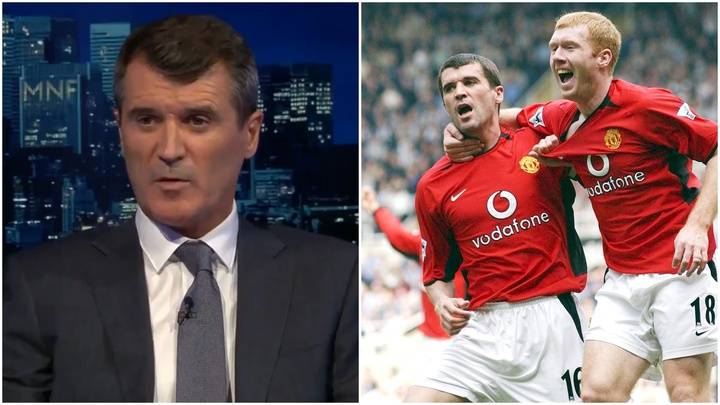
Roy Keane Thinks he Only Played With 5 World-Class Players at Man United

Summary
- Roy Keane is as guarded as a pundit as he was during his playing days, claiming he only ever shared the same dressing room with five ‘world-class’ players during his 18-year career.
- David Beckham, Rio Ferdinand, Cristiano Ronaldo, and Wayne Rooney didn’t make the cut.
- The Irishman believes ‘world-class’ status lies within longevity, so Paul Scholes and Ryan Giggs were obvious choices.
Roy Keane was key to Manchester United’s dominance over English football in the 1990s and early 2000s. The Irishman was an absolute warrior in midfield throughout his career, and, on top of that, he was a genuinely world-class footballer. Known for his fierce tackles and combative nature, ‘Keano’ was a vital cog in Sir Alex Ferguson’s reign of terror, winning seven Premier League titles, four FA Cups, and a Champions League for his efforts.
Owing much to these achievements on the pitch, Keane’s football career has continued to be embellished off it. Nowadays, you can see him disparaging the modern game as a pundit for Sky Sports. For those who loved his business-like manner back in his heyday, that same no-nonsense approach has been carried into his media work, and when he was asked back in 2019 about which players he played with he would consider to be world-class, the answer was just five.
It put Keane in a nutshell. He rarely lets anything slip, and back in his day (which he so often likes to reflect upon), there was no such thing as the term ‘world-class’. There were good players, there were bad players, and then there was a grey area between the two ends of the scale. But such is his scrupulous core, the Irishman genuinely believes he only ever played alongside five players who fit the newfangled term, with Wayne Rooney and Cristiano Ronaldo both missing from his selection, which he made in 2019 on Sky Sports.

Manchester United’s 25 Greatest Players Ever (Ranked)
Manchester United’s 25 greatest players ever have been ranked, featuring Sir Bobby Charlton, Cristiano Ronaldo, Wayne Rooney, George Best & Roy Keane.
Ryan Giggs
Career span: 1990 – 2014

In Keane’s opinion, for someone to be labelled ‘world-class’, they must have played at a consistently high level for many years. Perhaps, then, there is no surprise that Ryan Giggs got a mention first. He is one of the most decorated footballers of all time; he is one of only 44 players to have made over 1,000 career appearances, and played a part in all 13 of his manager’s Premier League title-winning campaigns.
“If I look back now, you’d have to class Giggsy. I always class the world-class players as lads who were doing it for nine, 10, 11 [years] – obviously, Giggsy’s done it for a lot longer. To me, that’s the key to being a really good player: you’ve got to be consistent,” Keane said about his former teammate.
“We see players now, they’ve had a good month and patting themselves on the back. You have to be good for years and years, and Giggsy would have been a prime example.”
|
Ryan Giggs – Manchester United stats |
|
|---|---|
|
Years |
1990-2014 |
|
Matches |
963 |
|
Minutes |
71,635 |
|
Goals |
168 |
|
Assists |
270 |
|
Yellow Cards |
50 |
|
Red Cards |
0 |
|
Trophies |
35 |
Mark Hughes
Career span: 1980 – 2002

Keane’s explanation behind choosing Mark Hughes was put pretty plainly, even by his standards. All he said was: “Listen, Mark Hughes was a brilliant striker.” Of course, a lot of the United players back in his day liked to do their talking on the pitch, and that’s something listeners needed to pay attention to after this quote to get a better understanding as to why Hughes was picked.
Hughes was the first player to win the PFA Players’ Player of the Year award twice, in 1989 and 1991, as well as having been the only person to have scored in the Community Shield, League Cup final, and FA Cup final in the same season, doing so in the 1993/94 campaign. Finishing his playing career in 2002, after scoring 154 goals in 432 appearances for the Red Devils, Hughes won two Premier League titles, three FA Cups, and a European Cup Winners’ Cup.
|
Mark Hughes – Manchester United stats |
|
|---|---|
|
Years |
1988-1995 |
|
Matches |
462 |
|
Minutes |
40,097 |
|
Goals |
161 |
|
Assists |
19 |
|
Yellow Cards |
22 |
|
Red Cards |
4 |
|
Trophies |
11 |
Eric Cantona
Career span: 1983 – 1997

Through picking Eric Cantona, Keane continued in his uncommunicative manner, as he said: “Eric [Cantona] was a brilliant player. I know people say ‘Eric didn’t do it on this stage and that stage – the international stage… but a brilliant player to play with.” But, again, the charismatic Frenchman didn’t need much introduction.
To a significant extent, Cantona’s arrival from Leeds United in 1992 changed everything for Manchester United. The Marseille-born forward was Sir Alex Ferguson’s key to igniting a lasting and triumphant tenure with the Red Devils as the two would go on to win five Premier League titles together, alongside two FA Cup triumphs. Often the pantomime villain, his maverick ways forced him into an early retirement just a year before he could have been crowned with France. But the fact that he impressed Keane as much as he did in such a short time says a lot.

10 Greatest Manchester United Attackers in History [Ranked]
Wayne Rooney, Cristiano Ronaldo and Eric Cantona all feature on Manchester United’s greatest attacker list.
|
Eric Cantona – Manchester United stats |
|
|---|---|
|
Years |
1992-1997 |
|
Matches |
185 |
|
Minutes |
16,347 |
|
Goals |
82 |
|
Assists |
63 |
|
Yellow Cards |
21 |
|
Red Cards |
4 |
|
Trophies |
9 |
Paul Scholes
Career span: 1993 – 2013

“Scholesy was brilliant,” Keane said after picking Paul Scholes as the penultimate world-class player he shared the pitch with. However, in a one-club career that spanned 718 appearances, United’s fanbase would have a lot more to say about the Englishman. Scholes came through the Man United academy as one of ‘Fergie’s Fledglings’, a group of players recruited by the club under the management of Ferguson, before going on to become one of the best Premier League midfielders of all time.
Though he played mostly as a striker in his youth and early professional career, Scholes matured into a well-rounded, tenacious, and versatile playmaker capable of playing in any midfield position, often alternating between defensive, offensive, wide and box-to-box roles, due to his stamina, vision, work-rate, and positional sense, and this is something likely to have earned him brownie points in the eyes of Keane and the masses.
|
Paul Scholes – Manchester United stats |
|
|---|---|
|
Years |
1993-2011, 2012-2013 |
|
Matches |
716 |
|
Minutes |
51,837 |
|
Goals |
155 |
|
Assists |
82 |
|
Yellow Cards |
146 |
|
Red Cards |
9 |
|
Trophies |
25 |
Denis Irwin
Career span: 1983 – 2004

A theme within Keane’s selection was that each player could put up an argument about being one of – if not the – best in their position. This is, again, the case with Denis Irwin, who emerged as a serious contender as one of the best Premier League left-backs ever during his long and successful residency in the north-west. Keane rarely does this, but he couldn’t help wax lyrical about his compatriot, saying:
“Denis Irwin… My god, imagine if Denis Irwin was playing now. He could play left-back, right-back, get you a goal, knew how to defend, never injured, a brilliant guy in the dressing room. Denis would be world-class to me – and he’s a Corkman!”
Irwin has also been regarded by Alex Ferguson as, pound for pound, his greatest ever signing, coming in for a fee of just £650,000. This was certainly repaid after the Irishman went on to win the Premier League seven times between 1991 and 2002.
|
Denis Irwin – Manchester United stats |
|
|---|---|
|
Years |
1990-2002 |
|
Matches |
529 |
|
Minutes |
44,764 |
|
Goals |
33 |
|
Assists |
27 |
|
Yellow Cards |
32 |
|
Red Cards |
1 |
|
Trophies |
18 |
All statistics in this article via Transfermarkt. Correct as of 17-12-25.

Every World Cup scoreboard carries the same shorthand: three letters that stand for a nation and most are instantly recognizable.
England, for example, is ENG, Brazil is clearly BRA and GER stands for Germany, and so on. However, it isn’t as black and white for every country in the tournament.
Some seem to make little to no sense at all. There are those that possess codes that don’t match how English-speaking fans say their name — and the logic behind it is surprisingly more interesting than it looks.
Here’s a look into some World Cup trivia.
Every World Cup 2026 Team Nickname Explained
Forty-eight teams bring unique cultures, history and different nicknames to the 2026 World Cup: here’s all of them explained.
Why Are Spain ESP?

This one is easily explained, but Spain features an ESP rather than SPA. In this case, it comes from the country’s own name for itself: España.
The FIFA country codes are typically built from a nation’s official name rather than the English translation. Spain is one of the clearest examples of this. Yet, if FIFA had gone with the English word, the code would more plausibly read SPA.
Why Are Switzerland SUI?

Switzerland‘s case is a little deeper. The country has four national languages (German, French, Italian and Romansh), but FIFA’s code doesn’t borrow any of the obvious options.
SUI comes from Suisse, which is the French name for the country. It also isn’t SWI, the English-based abbreviation that fans would assume, and it isn’t CHE either (Switzerland’s separate ISO code taken from the Latin title and used mainly for postal and diplomatic purposes rather than sport). Hence, why Switzerland is SUI.
List of World Cup 2026 Team Abbreviations

|
Nation |
Code |
Confederation |
|---|---|---|
|
Algeria |
ALG |
CAF |
|
Argentina |
ARG |
CONMEBOL |
|
Australia |
AUS |
AFC |
|
Austria |
AUT |
UEFA |
|
Belgium |
BEL |
UEFA |
|
Bosnia and Herzegovina |
BIH |
UEFA |
|
Brazil |
BRA |
CONMEBOL |
|
Canada |
CAN |
CONCACAF |
|
Cape Verde |
CPV |
CAF |
|
Colombia |
COL |
CONMEBOL |
|
Croatia |
CRO |
UEFA |
|
Curaçao |
CUW |
CONCACAF |
|
Czechia |
CZE |
UEFA |
|
DR Congo |
COD |
CAF |
|
Ecuador |
ECU |
CONMEBOL |
|
Egypt |
EGY |
CAF |
|
England |
ENG |
UEFA |
|
France |
FRA |
UEFA |
|
Germany |
GER |
UEFA |
|
Ghana |
GHA |
CAF |
|
Haiti |
HAI |
CONCACAF |
|
Iran |
IRN |
AFC |
|
Iraq |
IRQ |
AFC |
|
Ivory Coast |
CIV |
CAF |
|
Japan |
JPN |
AFC |
|
Jordan |
JOR |
AFC |
|
Mexico |
MEX |
CONCACAF |
|
Morocco |
MAR |
CAF |
|
Netherlands |
NED |
UEFA |
|
New Zealand |
NZL |
OFC |
|
Norway |
NOR |
UEFA |
|
Panama |
PAN |
CONCACAF |
|
Paraguay |
PAR |
CONMEBOL |
|
Portugal |
POR |
UEFA |
|
Qatar |
QAT |
AFC |
|
Saudi Arabia |
KSA |
AFC |
|
Scotland |
SCO |
UEFA |
|
Senegal |
SEN |
CAF |
|
South Africa |
RSA |
CAF |
|
South Korea |
KOR |
AFC |
|
Spain |
ESP |
UEFA |
|
Sweden |
SWE |
UEFA |
|
Switzerland |
SUI |
UEFA |
|
Tunisia |
TUN |
CAF |
|
Turkey |
TUR |
UEFA |
|
Uruguay |
URU |
CONMEBOL |
|
USA |
USA |
CONCACAF |
|
Uzbekistan |
UZB |
AFC |
Spain and Switzerland aren’t the only outliers; they are two among a group that follow a similar pattern. Take Morocco (MAR) and Ivory Coast (CIV) as examples. Those two follow the same French-derived logic as SUI, taken from Maroc and Côte d’Ivoire, respectively.
Then there are some codes that exist purely to avoid collisions. Austria becomes AUT rather than the more obvious AUS due to the fact Australia claimed the code first.
A third group also exists; it leans into formality rather than geographic. Saudi Arabia (KSA) and South Africa (RSA) both use codes from their full official titles. The Kingdom of Saudi Arabia and the Republic of South Africa — rather than the shorthand for the country name alone.
⚽
World Cup History Quiz
You scored
out of 20

Penalty shootouts are football’s ultimate psychological battle. While power and placement remain crucial, many of the world’s best penalty takers now rely on deception just as much as technique. One of the most common methods is the stutter or stop-start run-up — a style that divides opinion every time it appears on the biggest stage.
From World Cups to the Premier League, players such as Jorginho, Bruno Fernandes and Neymar have made the technique famous, while tournaments like Euro 2024 and the World Cup have again sparked debates over whether the tactic gives shooters too much of an advantage. So, why is it legal, how do players execute it, and which penalties have become the most memorable examples?
What is the Stutter Run-Up in Penalties?

A stutter run-up is exactly what it sounds like: rather than running continuously towards the ball, the penalty taker briefly slows down, hesitates or changes rhythm before striking it.
The objective is simple: before committing to a corner before the kick, the taker waits to see whether the goalkeeper moves first. If the keeper dives early, the striker can calmly place the ball in the opposite direction.
It differs from the illegal feint because the hesitation happens during the run-up, before the kicking leg begins its final swing towards the ball.
It is legal, provided it is performed correctly. The IFAB Laws of the Game state that players are allowed to feint during the run-up to confuse the goalkeeper. However, once the player has completed the run-up and starts the kicking motion, they cannot stop completely or perform another exaggerated feint before striking the ball.
If a player illegally feints after completing the run-up, they are cautioned for unsporting behaviour and the penalty is recorded as missed if the ball enters the goal.
The rule attempts to balance the contest between the taker and goalkeeper whilst preventing attackers from gaining an unfair advantage at the very last moment.
How do players perform a stutter penalty?

Most players follow a similar process, taking a controlled rather than explosive run-up, slowing slightly one or two strides before reaching the ball. They watch the keeper’s movement rather than focusing solely on the ball, and strike into the opposite corner if the goalkeeper commits early. Issues can arise should the goalkeeper remain firm and not commit, meaning the taker must pick a side and execute clearly.
The technique demands exceptional composure. If the goalkeeper refuses to move, the taker still needs to generate enough power and accuracy despite interrupting their own momentum.
Former England goalkeeper Ben Foster has repeatedly explained why the tactic is so hard to face, saying: “Don’t dive too early because, while he’s running up, you don’t want to be moving in the direction you’re going to go because the better players will just roll it in the opposite corner.”
He recently said on The Two Robbies & Friends Podcast: “The second you stutter, you can’t get the same amount of purchase on the ball. I can wait and still save it.”
Notable Stutter Run-Up Penalties

There have been plenty of penalties during the 2026 World Cup campaign. Justin Kluivert noticeably missed his stutter penalty during the Netherlands’ penalty shootout against Morocco, which resulted in the Dutch being eliminated.
Kai Havertz and Nick Woltemade also had their stutter penalties saved during Germany’s penalty shootout against Paraguay, although Joshua Kimmich’s similar technique was successful.
The technique was made popular by ex-Chelsea midfielder Jorginho, whose penalty routine took the Premier League by storm, with the Italian scoring 51 penalties during his whole career. However, even he hasn’t been immune to mistakes, missing a penalty during Chelsea’s EFL Cup final loss to Manchester City in 2018, as well as missing two penalties against Switzerland, which would have seen Italy bag qualification to the 2022 World Cup.
You scored
out of 20
The Stutter run-up remains controversial because it shifts part of the contest away from pure striking ability and towards psychology. Some argue that the technique unfairly forces goalkeepers to move first, especially given modern interpretations requiring keepers to keep at least part of one foot on the goal line until the ball is kicked.
Penalties arguably already heavily favour attackers, and varying the run-up simply represents another legitimate skill. Reading a goalkeeper’s body language, maintaining balance and still finding the corner requires exceptional technical quality under immense pressure.
As long as the players stay within IFAB’s laws, the stutter run-up is likely to remain a feature of football’s biggest occasions. Whether loved or hated, it has become one of the defining penalty techniques of the modern game — and one that continues to test the nerve of both takers and goalkeepers whenever a match hangs in the balance.

15 Best Penalty Takers in Football History (Ranked)
Here are the 15 players you can rely upon the most from 12 yards.

Turkish women’s tennis player, Zeynep Sonmez, has revealed what she asked the Wimbledon bosses after they banned her from wearing her usual pro-Palestine pin while competing at SW19 this year.
Sonmez is currently ranked number 51 in the world, and she made it through from the first round of the women’s singles by defeating Ann Li, before losing to American Claire Liu in the following round.
Despite her singles woes, Sonmez returned to the court earlier this week to compete in the women’s doubles event, alongside Jessica Maneiro. However, the duo were eliminated in round one in three sets.
Player Banned From Displaying Pro-Palestine Symbol at Wimbledon

During her three-match run at this year’s edition of Wimbledon, Sonmez showed her support for Palestine through the use of a vibration dampener, which has the symbol of a watermelon.
A watermelon is grown in Palestine, and the fruit has often been used as a substitute for the flag.
Throughout her career, Sonmez has regularly attached a watermelon pin to her dress when competing, but she revealed that she was banned from wearing it at this year’s Wimbledon.
“I used to wear a pin. Tournaments no longer allow me to wear it,” she told members of the media, before revealing what she had asked tournament bosses about the decision.
Why Wimbledon Bosses Banned Pro-Palestine Symbol
“We discussed with the organisers. [I asked why] the Ukrainian flag is allowed, but the Palestinian is not. They ultimately told us they definitely won’t allow it. So, I can’t wear the pin.”
Organisers are reported to have cited the tournament’s strict dress code as the reasoning behind the decision.
“I can use the vibration dampener, and they can’t object to that. That’s why I put the watermelon symbol on my racket.”
The watermelon, which features the same colours as the Palestinian flag, has become a widely-used symbol of Palestinian resilience against Israeli oppression and occupation
In response to her stance, Osman Askin Bak, who is the Turkish minister of Youth and Sports, supported her in her brave efforts by writing a post on the social media app ‘X’ which read:
“By refusing to remain silent in the face of the humanitarian tragedy unfolding in Palestine, she has once again demonstrated with her honourable stance that sport is not merely about competition; it is also a carrier of universal values.
“For this meaningful sensitivity, we wholeheartedly congratulate our athlete and respectfully salute every conscientious voice that stands with the oppressed.”
When previously asked about her support towards Palestine and her choice to wear a pin when in competition, Sonmez told the WTA about how it affects her emotionally:
“It’s a sensitive area for me. People in Palestine are suffering. I see videos and photos and feel like there’s not so much we can do.
“But we can always do our best, it’s like I was saying, you can be the best version of yourself. I want everyone to know that I’m standing with them.”

World Cup Shortened TV Names Explained
Police arrest four suspects over robbery of 36 NYSC members in Adamawa

2027: APC afraid, we’ll wax stronger under David Mark, Atiku – ADC chieftain warns

Simi Sanya and Femi Dapson Are Now Legally Married and It Is Beautiful to See

FCT Area Council Election: Live results from polling units

Premier League Set-Piece Goals (2025/2026)
-
 Sports2 days ago
Gary Neville Names Only Team That Can Stop France From Winning the 2026 World Cup
-
 Sports11 hours ago
FIFA Release Statement After VAR Call During Portugal 2-1 Croatia
-
 Sports1 day ago
VAR Expert Casts Clear Verdict on Folarin Balogun Red Card vs Bosnia
-
 Sports1 day ago
Real Reason Serena Williams Broke Strict Rule as $50,000 Fine Decision Made
-
 Sports9 hours ago
Croatia’s Igor Matanovic Praised For Interview After Goal v Portugal is Ruled Out
-
 Sports10 hours ago
Piers Morgan Slams BBC Commentators For Cristiano Ronaldo Treatment
-
 Sports1 day ago
US Icon Brad Friedel Blasts Mexico Ahead of England Match
-
 Sports2 days ago
Roy Keane Names the Two Teams That Will Contest the 2026 World Cup Final