
Business
Private sector, financial experts raise alarm over multiple budget system

By Emeka Anaeto, Business Editor and Peter Egwuatu, Assistant Business Editor
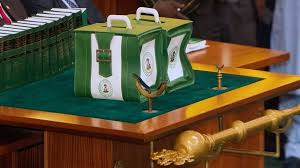
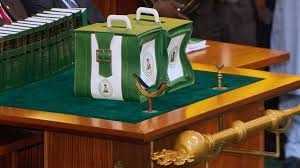
Private sector operators and financial analysts have stepped up criticism of multiple budget system run by the Federal Government, pointing at the grave consequences to transparence, financial discipline and fiscal responsibility.
Recall that in a major move to resolve Nigeria’s persistent “overlapping budget” crisis, the Federal Government, last week, officially announced a massive 70% rollover of the 2025 capital budget into the 2026 fiscal year.
This comes amidst on-going implementation of the capital component of the 2024 budget which will likely enter into 2026.
Also the decision on 2025 budget effectively means that the 2025 budget implementation has been extended, and its uncompleted projects will form the foundation of the 2026 spending plan.
The announcement was made through the 2026 Abridged Budget Call Circular and further clarified by the Minister of Finance, Wale Edun, during sessions with the National Assembly.
It undermines credibility, discipline- Dada
Speaking to Saturday Vanguard on the development, Mr Oluropo Dada, President of the Chartered Institute of Stockbroker, CIS, said: “Having multiple budgets within one fiscal year carries grave implications for Nigeria’s economy.
‘‘First, it undermines fiscal credibility and discipline. Frequent revisions often reflect weak planning assumptions particularly around oil prices, exchange rates, and revenue projections, thereby reducing investor confidence.
‘‘Second, it creates uncertainty for businesses, making it difficult for the private sector to plan investments, employment, and pricing decisions.
‘‘Third, it exacerbates implementation challenges. Executing even a single budget is already difficult in Nigeria; multiple budgets further slow project delivery and increase the risk of abandoned or duplicated projects.
‘‘Fourth, it typically widens fiscal deficits and increases borrowing, raising debt-service costs and crowding out private sector credit.
“While budget revisions may be necessary during major economic shocks, making them routine points to structural weaknesses in fiscal planning and coordination. Nigeria’s priority should be more realistic budgeting, stronger medium-term planning, and better execution, rather than frequent budget rewrites”.
Irregular budget implementation calls for fundamental rethink- Yusuf
Commenting, Dr Muda Yusuf, Chief Executive Officer, Centre for the Promotion of Private Enterprise said: “Nigeria’s persistent challenge of irregular budget implementation, particularly in capital expenditure, calls for a fundamental rethink of the budgeting process.
‘‘The proposal by the President should be understood as an attempt to regularise years of uneven and incomplete budget execution, rather than an abandonment of past commitments.
‘‘Rather than discarding projects that were approved but not implemented, it is more prudent to consolidate outstanding projects, clear the accumulated backlog, and re-present them within a more coherent and credible framework.
‘‘This approach provides an opportunity to reset the system and break the recurring cycle of rolled-over budgets, especially capital budgets that undermine development outcomes and public confidence’’.
Addressing this challenge, Yusuf said it requires a holistic reform of the budget process, not ad hoc adjustments.
He stated: ‘‘Central to this reform is the need to ensure that budget assumptions are realistic, particularly with respect to revenue projections; Align expenditure plans strictly with credible revenue expectations; Avoid overly optimistic projections that inevitably lead to weak implementation and mounting arrears and align expenditure priorities with critical developmental and productivity aspirations.
“Without realism at the foundation, budgets will continue to exist largely as academic exercises rather than instruments for delivering tangible outcomes.”
The CPPE boss also said that Nigeria needs a budget that inspires trust, one that citizens, investors, and Ministries, Departments and Agencies (MDAs) can regard as a genuine commitment to delivery.
He stated: ‘‘Budget credibility is essential for improving compliance by MDAs; Strengthening legislative oversight, and enhancing public confidence in fiscal governance. A credible budget must be perceived not merely as an appropriation document, but as a realistic promise of outcomes’’.
Yusuf added, “The Appropriation Act is a law and carries full legal significance. Compliance with it is not optional. ‘‘However, legal compliance is only meaningful when the budget itself is anchored on solid foundations and realistic assumptions. A law that is structurally flawed or fiscally unrealistic will inevitably face implementation failures.
“What is required is not just a one-off adjustment, but a comprehensive overhaul of Nigeria’s budget framework. ‘‘The President’s proposal represents a step in the right direction, but its success will depend on ensuring that budget rollovers do not become a permanent feature, Non-implementation is decisively addressed, Fiscal realism, credibility, and sustainability guide future budgets. Only then can the budget function as a true instrument of development, trust, and effective governance.
Multiple budget subverts appropriation law- Adonri
Also commenting, David Adonri, Analyst and Vice Executive Chairman at High Cap Securities Limited, an investment firm said: “It is a misnomer for any organization to run multiple budgets in the same appropriation period. For a statutory authority, running multiple budgets in the same appropriation period subverts the appropriation law for such period. It is an impeachable offence.
He stated further: “This kind of malpractice is commonly referred to as fiscal indiscipline. It is a very chaotic situation”.
Budget overlap weakens constitutional principle of annual budgeting- Egbomeade
Speaking to Saturday Vanguard on the matter, Clifford Egbomeade, Public Affairs and Communications expert, said: “Having more than one budget operating within a single fiscal year has well-documented fiscal and institutional consequences, and these concerns are grounded in Nigeria’s recent public finance experience rather than conjecture. In Nigeria, delayed passage of annual budgets and late releases of capital funds have meant that capital components of one year’s Appropriation Act often spill into the next fiscal year. ‘‘This overlap has been acknowledged repeatedly by the executive and the National Assembly, including during debates around the repeal and re-enactment of the 2024–2025 budget framework in December 2025. Such overlap weakens the constitutional principle of annual budgeting, under which revenues and expenditures are meant to be planned, approved, and executed within a clearly defined twelve-month period.
“A central consequence is reduced fiscal clarity and weaker accountability. When ministries, departments, and agencies are authorised to spend under different appropriation laws at the same time, tracking performance against approved allocations becomes more difficult for legislators and auditors.
‘‘Nigeria’s budget implementation reports and Auditor-General reviews over recent years consistently show that delayed releases and extended capital rollovers complicate oversight and blur responsibility for project delays or cost overruns.
‘‘This challenge does not imply illegality, but rather administrative opacity, which makes it harder to assess whether spending outcomes align with legislative intent.
“Multiple budgets within one fiscal year also complicate cash management and debt planning. Nigeria’s debt service obligations have risen steadily in recent years, with official budget documents showing allocations of over N8 trillion for debt service in the 2025 fiscal framework.
‘‘When spending authorities overlap across fiscal periods, treasury managers must meet clustered obligations while revenues remain uncertain and unevenly distributed through the year.
‘‘This situation increases short-term financing pressures and makes expenditure prioritisation more difficult, even when borrowing decisions remain within approved legal limits.
“Finally, overlapping budgets weaken policy signalling and public confidence in the budget process. Investors, development partners, and citizens rely on a clear budget cycle to understand government priorities and assess fiscal sustainability.
‘‘The Tinubu administration’s request in December 2025 to repeal and re-enact the existing appropriation framework explicitly recognised that running multiple budgets concurrently has historically undermined budget clarity and implementation discipline.
‘‘A single, consolidated budget cycle improves transparency, strengthens legislative oversight, and allows capital projects to be planned and executed within a more predictable fiscal environment, which is essential for macroeconomic stability and effective public financial management”.
It gives room for unreliability of policies, erode investor confidence- Adenagbe
Commenting on the multiple budget relating to the impact on the capital market, Sehinde Adenagbe, Chairman, Association of Stockbroking Houses of Nigeria, ASHON, said: “In the Nigerian capital market, revised budgets usually mean unplanned increases in government securities issuance.
‘‘Higher yields on Treasury bills and bonds can crowd out private sector participation, divert funds away from equities, and raise the cost of capital for listed companies.
‘‘Over time this weakens market depth and limits the ability of the stock market to support economic growth.
“Policy predictability enables the capital to play its rightful role in mobilising long-term fund and supporting economic growth and development.
‘‘A credible and well-structured annual budget is one of the assurances the government can give investors.
‘‘In addition, running multiple budgets within a fiscal year, invariably gives room for unreliability of policies. It easily erodes investor confidence and increases apprehension. It leads to scarce investable funds among the local investors”.
The post Private sector, financial experts raise alarm over multiple budget system appeared first on Vanguard News.

•Says Nigeria’s development hinges on gas utilisation
By Ediri Ejoh
The Federal Government has reaffirmed its commitment to expanding gas utilisation, saying it is targeting five million households to transition from firewood, kerosene and other biomass fuels to Liquefied Petroleum Gas (LPG) as part of efforts to cut carbon emissions and improve public health.
Speaking at the 2026 Nigeria Oil and Gas (NOG) Conference and Exhibition, the Minister of State for Petroleum Resources (Gas), Ekperikpe Ekpo, said Nigeria’s economic development depends largely on harnessing its vast gas resources.
According to him, “Nigeria sees gas as its transition fuel. We are not opposed to the global energy transition, but every country must transition based on its available resources. For Nigeria, that resource is natural gas.”
He added, “Gas is essential because its utilisation cuts across power generation, industrialisation, fertiliser production, household energy and transportation. Gas is the solution for Nigeria. That is why Mr. President created the office of the Minister of State for Gas and provided incentives under the Petroleum Industry Act (PIA) to deepen gas utilisation.”
Ekpo said, “In the past, gas was undervalued, but today it has become central to addressing climate change. We are intentionally deploying technologies that reduce carbon emissions through greater gas utilisation.”
He further stated, “Under the Decade of Gas Initiative, we have identified key projects that will bring gas closer to Nigerians. We are targeting about five million homes to switch from firewood, kerosene and biomass to LPG. This will improve household health while reducing carbon emissions. We are driving this because Nigeria has enormous gas reserves.”
Also speaking, the Minister of State for Petroleum Resources (Oil), Heineken Lokpobiri, said ongoing fiscal and sector reforms have strengthened investor confidence.
He said, “Nigeria is strategically positioned for growth. Investors can be assured that their capital is safe and will generate returns. We are positioning the country for global competitiveness.”

By Progress Godfrey
The Federal Government has suspended the enforcement of new regulations affecting internet platforms, online intermediaries and other cross-cutting digital economy issues pending the completion of a national policy review.
The directive was contained in a statement issued by the Minister of Communications, Innovation and Digital Economy Dr Bosun Tijani, on Tuesday, after a strategic meeting with the leadership of the Nigerian Communications Commission (NCC), National Information Technology Development Agency (NITDA), and Nigeria Data Protection Commission (NDPC).
Tijjani said the decision aimed to maintain the current regulatory position while work continues on a harmonised national policy and governance framework for the digital economy.
He explained that the rapid growth of the digital economy has created overlaps in the responsibilities of sector regulators, making closer coordination necessary to provide legal certainty and support investment, innovation and consumer confidence.
As part of the directive, agencies have been asked to defer the implementation or enforcement of any recently issued regulation, code, guideline, framework, directive or administrative requirement relating to internet platforms, online intermediaries and other cross-cutting digital economy issues that are under policy harmonisation.
Tijani said: “The existing regulatory status quo shall be maintained with respect to matters relating to internet platforms, online intermediaries and other cross-cutting digital economy issues currently undergoing inter-agency policy harmonisation under the Ministry’s coordination.
“Relevant agencies are to defer the implementation or enforcement of any recently issued regulation, code, guideline, framework, directive or administrative requirement relating to Internet platforms, online intermediaries or other cross-cutting digital economy matters, to the extent that such provisions concern areas currently undergoing policy harmonisation under the Ministry’s coordination.
“The above direction is without prejudice to the statutory responsibilities of the respective institutions. Accordingly, all other provisions of existing regulations, guidelines, codes and directives that fall squarely within the express mandates of the relevant agencies under extant laws shall remain fully operational and enforceable, provided they are consistent with the policy direction issued by the Minister.” The minister also announced the establishment of a Joint Technical Coordination Committee comprising representatives of the NCC, NITDA and NDPC under the Office of the Minister.

By Yinka Kolawole
Dangote Cement Plc has unveiled plans to cut net carbon dioxide (CO‚ ) emissions intensity by 20 per cent while expanding production capacity to 80 million tonnes per annum (mtpa) by 2030, as it pursues its ambition of becoming Africa’s most sustainable and globally competitive cement producer.
Presenting the company’s 2025 Sustainability Scorecard at its 17th Annual General Meeting in Lagos, Chairman, Emmanuel Ikazoboh, said sustainability has become a core business strategy driving growth, competitiveness and long-term value creation across its African operations.
He disclosed that the company has approved a new decarbonisation roadmap, including migrating virtually its entire Nigerian truck fleet to Compressed Natural Gas (CNG) by 2027, excluding the Gboko plant, while electric trucks will be introduced from 2026.
Ikazoboh also said the company is expanding port infrastructure at Apapa, Onne and Lekki to strengthen export capacity, while pursuing investments that will increase installed production capacity to 80mtpa by 2030, including new operations in Botswana and Zimbabwe.
On environmental performance, he said Dangote Cement has reduced CO‚ emissions intensity by 6.5 per cent from its 2021 baseline, cut energy intensity by 1.7 per cent, lowered overall energy consumption by four per cent and reduced water use by eight per cent through increased deployment of alternative fuels, energy-efficient technologies and lower clinker production.
According to him, the company also co-processed over 437,000 tonnes of waste as alternative fuel, reducing dependence on fossil fuels and improving resource efficiency.
Ikazoboh added that Dangote Cement created 625 direct green jobs during the year, increased social investment spending by 56 per cent, raised graduate trainee recruitment by 74 per cent and invested N2.1 billion in employee training.
He said the company also strengthened its ESG framework with new Artificial Intelligence Risk Management, Biodiversity and Disability Inclusion policies, while integrating 297 local vendors into its ESG-focused supply chain programme, positioning it for sustainable growth and supporting Africa’s low-carbon industrial transition.


Carli Lloyd Responds to Christian Pulisic ‘Rest’ Comment With Tweet

Defection: ‘Aslam Aliyu was not our registered member’ — Zamfara ADC

Suspected Bello Turji-led bandits raid Sokoto community, kill five, abduct several women

Meaning Behind Egypt Manager’s ‘X’ Gesture vs Argentina

Simi Sanya and Femi Dapson Are Now Legally Married and It Is Beautiful to See

Premier League Set-Piece Goals (2025/2026)
-
Sports15 hours ago
Meaning Behind Egypt Manager’s ‘X’ Gesture vs Argentina
-
 Sports2 days ago
Rodri Addresses Bernardo Silva Incident During Spain 1-0 Portugal
-
 Sports1 day ago
‘Real Reason’ Why Sami Zayn Lost His Title to CM Punk
-
 Sports2 days ago
Ball Boy and Girls Salaries Revealed
-
 Sports2 days ago
World Cup Fans Claim Bernardo Silva Player ‘Cost’ Portugal vs Spain
-
 Sports16 hours ago
VAR Expert Claims Egypt Should Have Had Penalty vs Argentina
-
 Sports2 days ago
Martin Odegaard Speaks on Neymar Clash After Norway 2-1 Brazil
-
 Sports2 days ago
Wimbledon Commentator Slammed Over ‘Disgraceful’ Remarks During Live Match