
Business
CBN: Building sound, resilient banking sector as recapitalisation gains momentum

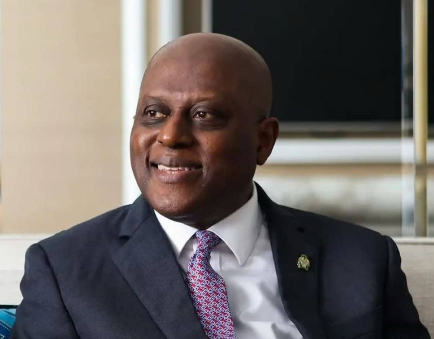

By Peter Egwuatu, Assistant Business Editor
Nigeria’s banking system remains fundamentally stable, sound and resilient, a cornerstone of financial stability.
At the same time, the Central Bank of Nigeria (CBN) Governor, Olayemi Cardoso says it remains vigilant to emerging risks, including cyber threats, credit-concentration pressures, and operational vulnerabilities.
These are being addressed through strengthened risk-based supervision and ongoing transition to Basel III, which will further bolster resilience, improve capital quality, and strengthen liquidity monitoring as banking sector recapitalisation gathers momentum.
Nigerian banks are facing one of their most interesting moments in history. Very significantly, they have been acknowledged by the Central Bank Nigeria (CBN)-led Monetary Policy Committee (MPC) members to be safe and sound.
At the 303rd MPC meeting in Abuja, it was noted with satisfaction, the sustained resilience of the banking system, with most financial soundness indicators remaining within regulatory thresholds.
The committee members also acknowledged the substantial progress in the ongoing recapitalization programme, with 16 banks achieving full compliance with the revised capital requirements.
They further urged the CBN to ensure a successful implementation and conclusion of the recapitalisation programme.
With nearly four months to the conclusion of the recapitalisation exercise, the CBN Governor, Olayemi Cardoso has reported that the process is firmly on track.
Speaking at the recently held Bankers’ Dinner in Lagos, he reiterated that several banks have already met the new capital thresholds, while others are advancing steadily and are well positioned to comfortably meet the March 31, 2026 deadline.
“To date, 27 banks have raised capital through public offers and rights issues, and sixteen have already met or exceeded the new requirements a clear testament to the depth, resilience, and capacity of Nigeria’s banking sector,” he said.
“As we strengthen the capacity of our banks, stress-testing this year confirms that Nigeria’s banking sector remains fundamentally robust. Key financial soundness indicators overwhelmingly satisfied prudential benchmarks during the year,” he added.
The banks are also recording giant strides in the pursuit of their recapitalisation, with 16 already met the requirement ahead of the March 31, 2026 deadline.
Redesigning credit‑risk framework
The CBN is redesigning banking sector’s credit‑risk framework to protect approximately N4.14 trillion new capital being raised in the ongoing bank recapitalisation programme.
Cardoso , said , the apex bank will be enforcing stronger governance, greater transparency, and firmer accountability to protect raised funds.
The CBN, he said, has equally established a dedicated Compliance Department, now fully operational, with mandates covering financial crime supervision, market conduct, enterprise security, corporate governance, and Environmental, social, and governance (ESG).
According to the CBN boss, the process enforcing stronger controls on raised funds is ongoing with the redesigning of the credit‑risk framework expected to ensure that raised funds are well managed by financial institutions.
Cardoso stated: “As recapitalisation progresses, we are redesigning the credit‑risk framework to enforce stronger governance, greater transparency, and firmer accountability across the sector. We are determined to break the boom‑and‑bust cycle that has accompanied past recapitalisation efforts”.
He said the upward review of banks’ capital base from N50 billion to N500 billion depending on the type of licence held by the bank, remains an essential action required to boost capital adequacy needs of the Nigerian financial industry.
Nigeria banks’ capital adequacy, the report says, has been significantly impacted by macroeconomic challenges such as high inflation and interest rates, currency volatility and forex illiquidity.
“The upward revision will ensure that Nigerian banks have the capacity to take on bigger risks and stay afloat amid both domestic and external shocks. It also means increased liquidity position of banks, which will help broaden their loss-bearing capabilities,” the report said.
Continuing, Cardoso said Nigeria’s banking system remains fundamentally sound and resilient, a cornerstone of our financial stability.
“At the same time, we remain vigilant to emerging risks, including cyber threats, credit-concentration pressures, and operational vulnerabilities. These are being addressed through strengthened risk-based supervision and our ongoing transition to Basel III, which will further bolster resilience, improve capital quality, and strengthen liquidity monitoring,” he said.
Road to $trillion economy
These developments point to sound regulatory oversight, and determination of the Oleyemi Cardoso-led CBN to support government in achieving $1 trillion Gross Domestic Product (GDP) target by 2030.
The Policy Advisory Council report on the national economy, had set an ambitious goal of achieving a GDP of $1 trillion, with clearly defined priority areas and strategies.
It is believed that a well-recapitalised banking sector is undeniably crucial in achieving the GDP growth plan. Hence, Cardoso, advised banks to prepare for a new round of recapitalisation to ensure they have the necessary capital to support the economic growth.
Cardoso asked: “Will Nigerian banks have sufficient capital relative to the financial system’s needs in servicing a $1tr economy in the near future? In my opinion, the answer is “No!” unless we take action. That action was the ongoing recapitalisation of banks, meant to prepare them for expansion and attract big ticket transactions to support economic growth”.
Road to recapitalisation
The CBN had, on March 28, 2024 announced a two-year bank recapitalisation exercise which commenced on April 1, 2024.
The recapitalisation plan requires minimum capital of N500 billion, N200 billion and N50 billion for commercial banks with international, national and regional licenses respectively.
Others included merchant banks N50 billion; non-interest banks with national license N20 billion and non-interest banks with regional license will now have N10 billion minimum capital. The 24-month timeline for compliance ends on March 31, 2026.
Cardoso said the recapitalisation policy not only strengthens financial stability but also serves as a catalyst for inclusive growth.
“By enabling banks to extend more credit to MSMEs, we enhance job creation and productivity. Furthermore, with increased capital, banks can invest in technology and innovation, crucial for driving digital financial services such as mobile money and agent banking. These technologies are important to breaking down geographic and economic barriers, bringing financial services to even the most remote areas,” he stated.
Banking sector remains robust
Under the ongoing recapitalisation programme, the apex bank adopted a distinctive definition of minimum capital base, in addition of paid up share capital and share premium, excluding other reserves and retained profits.
The distinctive definition implied that nearly all banks have to raise new capital, despite the fact that most banks have shareholders’ funds in excess of the minimum capital base.
Cardoso explained that the banking sector remains robust, with key indicators reflecting a resilient system.
“The non-performing loan ratio remains within the prudential benchmark of five per cent, showcasing strong credit risk management. The banking sector liquidity ratio comfortably exceeds the regulatory floor of 30 per cent, a level which ensures banks are maintaining adequate cash flow to meet the needs of customers and their operations. The recent stress test conducted also reaffirmed the continued strength of our banking system,” he said.
The CBN Deputy Governor, Corporate Services, Ms. Emem Usoro, said the journey to a $1 trillion economy requires structured planning, clearly defined policies, unwavering implementation, and an inclusive approach that aligns public and private sector interests.
Usoro said that one of the key components of the $1 trillion ambition is the recapitalisation of Nigerian banks.
She noted that banks must be sufficiently capitalised to meet the financial demands of a larger and more dynamic economy.
“As we work towards building a $1 trillion dollar economy, we must consider the recapitalisation of our banks to be able to fund, finance and power the economy, and to favourably compete globally,” Usoro said during a media engagement in Abuja.
The Group Managing Director of United Bank for Africa (UBA), Oliver Alawuba described the ongoing CBN bank recapitalisation policy as both timely and essential in positioning the financial system to meet the demands of a growing and globally competitive economy.
According to Alawuba, the initiative is expected to boost the resilience of the banking sector by strengthening its capacity to withstand economic shocks such as inflation, currency volatility and global geopolitical disruptions. He noted that the policy will also place Nigerian banks on a stronger footing to finance the country’s long-term economic transformation, including funding of large-scale infrastructure and industrial projects.
What the law says
The 2007 Central Bank of Nigeria (CBN) Act mandates the apex bank as one of its objectives to promote financial system stability.
The CBN ensures the safety and soundness of the financial system in Nigeria through banking sector reforms, improved access to finance, adequate institutional capacity building and implementation of good corporate governance practices.
Analysts said ensuring financial and banking system stability is important because the failure of financial institutions, particularly banks, is capable of undermining public confidence, precipitate unanticipated contraction in money supply, reduce savings and investments, and induce payment system collapse with adverse effects on the real economy.
More so, the stability of the financial system is very imperative since its achievement ensures effective monetary policy transmission mechanism. As such, ensuring financial system stability will help monetary authorities in achieving the primary objective of price stability.
The post CBN: Building sound, resilient banking sector as recapitalisation gains momentum appeared first on Vanguard News.

***Foreign investments nose-dive
***We’re battling unprecedented cost pressures — Operators
By Progress Godfrey
Nigeria’s Information and Communication Technology (ICT) sector recorded its first decline in Company Income Tax (CIT) in four years, reflecting a reversal of fortune in the sector.
The National Bureau of Statistics (NBS) Company Income Tax report showed that CIT from the ICT declined to N63.62 billion in the first quarter of 2026, Q1’26, from N65.52 billion in the corresponding period of 2025, ending a three-year streak of double-digit growth.
Sector stakeholders disclosed that sector has been hit by rising operating costs, dwindling foreign investment, soaring energy costs, rising infrastructure expenses, rising borrowing costs, which, according to them, squeezed operators’ profitability despite sustained growth in demand for digital services.
The ICT sector had posted robust growth in tax remittances over the previous three years.
In first quarter 2023, Q1’23, CIT in ICT rose 21.8 per cent to N35.75 billion in from N29.35 billion in Q1’22. The upward trend continued in Q1’24 increasing by 35.79 per cent to N48.54 billion, and rising further by 34.97 per cent to N65.52 billion in Q1’25.
The reversal in Q1’26 has raised concerns over the profitability of one of Nigeria’s fastest-growing sectors.
Foreign investments
nose-dive
Foreign capital imported into telecommunications sector plunged by 91 per cent year-on-year to a four-year low of $7.24 million in Q1’26 from $80.78 million in Q1’25.
The investment drought persisted despite the 50 per cent tariff adjustment approved by the Nigerian Communications Commission (NCC) in early 2025 to cushion operators against soaring diesel prices and rising financing costs, amongst other operational constraints.
Operators battling
unprecedented
cost pressures
Commenting on the development, Chairman of the Association of Licensed Telecoms Operators of Nigeria (ALTON), Engr. Gbenga Adebayo, said the decline in the sector CIT should be viewed within the context of the industry’s challenging operating environment rather than as evidence of weakening demand for telecommunications services.
According to him, broadband penetration, fintech, e-commerce, digital services and the Federal Government’s digital transformation agenda continue to drive strong demand across the industry.
He, however, noted that growing revenues have not translated into higher taxable profits because operators are battling unprecedented cost pressures.
He stated: “The industry has experienced significant increases in energy costs arising from the removal of fuel subsidies, inflationary pressures on maintenance and logistics, rising security costs, and the substantial capital investments required to expand and modernise network infrastructure to meet growing consumer demand.
“These factors have compressed operating margins and, consequently, taxable profits, even as operators continue to invest heavily in expanding network coverage and improving quality of service.”
Adebayo maintained that the decline reflects structural and transitional economic challenges rather than any weakening of the telecommunications industry.
He added, “The Nigerian telecommunications industry remains one of the strongest enablers of economic growth and digital inclusion. Traffic volumes, data consumption and demand for digital connectivity continue to increase.
“The current environment reflects an adjustment period in which operators are absorbing significantly higher operating and capital costs while continuing to maintain nationwide network availability and invest in future capacity.”
He emphasised that ongoing economic reforms by the Federal Government are expected to strengthen the investment climate over the medium to long term, although they have imposed short-term adjustment costs on businesses.
The ALTON chairman also commended the Federal Government for recognising telecommunications infrastructure as a strategic national asset, while urging policymakers to implement additional measures to improve the industry’s operating environment.
Middle-east crisis,
a major contributor
— CPPE
The Chief Executive Officer of the Centre for the Promotion of Private Enterprise (CPPE), Dr. Muda Yusuf, also attributed the decline in ICT sector Company Income Tax to rising operating costs, geopolitical tensions, weak consumer spending and insecurity, saying the industry’s profitability came under significant pressure during the period.
According to him, the industry’s heavy reliance on diesel-powered generators, occasioned by unreliable grid electricity, has made energy one of its largest operating costs.
“Consequently, the sharp escalation in diesel, petrol and gas prices—triggered by the geopolitical tensions and conflict in the Middle East—significantly increased operating costs, compressed profit margins, and weakened overall sector profitability,” he highlighted.
Yusuf added that demand conditions were also less favourable during the quarter.
He stated further, “The first quarter is typically a relatively slow business period, with lower transaction volumes following the year-end surge in economic activity.
“This seasonal effect was compounded by elevated inflation, high transportation costs and a sustained erosion of household purchasing power. As a result, consumers became more cautious in their spending, moderating demand for telecommunications services, data consumption and other discretionary digital services.”
He identified insecurity as another major challenge confronting operators.
“Vandalism and destruction of telecommunications infrastructure in conflict-prone areas, particularly in parts of Northern Nigeria, have disrupted network operations and increased maintenance and replacement costs.
“In many instances, security constraints delay access to affected sites, prolonging service outages, reducing network efficiency and limiting operators’ ability to expand service coverage.
“The combined impact of rising operating costs, weaker consumer demand and security-related disruptions inevitably weighed on sector profitability.”
Despite the current challenges, Yusuf expressed confidence that the sector would return to stronger earnings growth as macroeconomic conditions improve.
“As macroeconomic conditions improve and the challenges of energy costs and insecurity are progressively addressed, the sector is well positioned to restore stronger earnings growth and sustain its role as a key driver of economic transformation,” he said.
FX exposure,
regulatory burden
hurting local firms
Offering a technology entrepreneur’s perspective, Founder and Chief Executive Officer of Unitellas Edge Cloud, Mr. Smith Osemeke, said the decline in the sector CIT reflected the impact of foreign exchange exposures, rising infrastructure costs and the transition to Nigeria’s new tax framework.
According to him, while operators continued to generate revenue, the sharp depreciation of the naira significantly increased the cost of imported infrastructure and technology inputs, leaving many firms with lower taxable profits.
His words: “A large part of the gap is outstanding foreign exchange exposure, as telecom and tech infrastructure such as servers, network equipment, tower leases, software licensing and cloud capacity are overwhelmingly dollar-priced, while revenue is earned in naira. When the naira depreciates, a company can have strong operating revenue and still report little or no taxable profit.
“The second factor is timing: the new Nigeria Tax Act framework took effect in January 2026, right at the start of the quarter under review, and some of the dip possibly reflect firms’ and the tax authority’s adjustments to new filing and remittance structures rather than a genuine collapse in earnings.”
Osemeke noted that indigenous technology companies have borne the impact of the current macroeconomic environment more severely than multinational operators with better access to foreign capital and hedging instruments.
He said soaring infrastructure and energy costs have significantly increased operating expenses, while multiple taxes and regulatory obligations continue to weigh heavily on smaller indigenous firms.
“Smaller indigenous operators typically lack the balance sheet to hedge or renegotiate dollar-linked contracts the way the larger telcos have done with tower companies.
“Regulatory burden compounds both. ALTON has repeatedly stated that telecom operators face around 54 separate taxes and levies across federal, state and agency lines—a burden that falls disproportionately on smaller indigenous ISPs and tech firms with thinner compliance and legal teams—and which the association’s leadership has publicly called to be reduced and harmonised, alongside Right-of-Way charges that continue to obstruct infrastructure rollout,” Mr Osemeke stated.
Call for policy
reforms
To strengthen the industry’s long-term contribution to government revenue, Osemeke urged the Federal Government to reduce the cost of doing business through comprehensive policy reforms.
He recommended the harmonisation of taxes and levies, clearer implementation of the new tax framework, targeted foreign exchange support and incentives for local production of telecommunications infrastructure.
Pushing forward the way out, Osemeke stated: “First, government should move decisively to harmonise the current patchwork of taxes and levies into a single, predictable framework, retire multiple taxation and eliminate Right-of-Way charges nationally. A simplified structure would likely improve both compliance and net remittances rather than reduce them.
“Second, telecom and digital infrastructure such as data centres, fibre networks and base stations should be formally classified and protected as Critical National Infrastructure, both to curb the recurring vandalism and theft that have rightly been flagged as major operating costs and to qualify operators for more reliable power access or gas-to-power incentives rather than continued diesel dependence.”
He also advocated tax credits linked to research, innovation and skills development, arguing that such measures would deepen investment, expand the tax base and strengthen Nigeria’s digital economy over the long term.
Also making recommendation for restoration of ICT growth, ALTON boss, Adebayo, said priority should be given to effective implementation of the Critical National Information Infrastructure (CNII) framework to protect telecommunications infrastructure from vandalism and service disruptions.
He also called for greater harmonisation of taxes, levies and regulatory charges across all tiers of government to eliminate multiple taxation, faster approval of Right-of-Way permits, more stable fiscal and regulatory policies, and stronger collaboration between government, regulators and industry stakeholders to support long-term investment and industry sustainability.

By Babajide Komolafe
United Bank for Africa, UBA Plc, has announced the retirement of its Group Chairman, Tony Elumelu and the appointment of Mr. Emmanuel Nnorom as his successor.
In a statement announcing the board leadership change filed with the Nigerian Exchange, NGX, the bank stated: “Mr. Tony O. Elumelu, Group Chairman of UBA, will retire from the Board of Directors of UBA with effect from 21 August 2026, upon the completion of the maximum 12-year tenure prescribed for Non-Executive Directors of Banks by the Central Bank of Nigeria.
“At its meeting held on 6 July 2026, the Board accepted Mr. Elumelu’s retirement letter and elected Mr. Emmanuel N. Nnorom, a Non-Executive Director of the Bank, as his successor, with effect from 21 August 2026.
“The Board places on record its profound appreciation to Mr. Elumelu for his visionary leadership and exceptional contribution to the growth, transformation and institutional strength of the UBA Group.
“Mr. Nnorom is a chartered accountant with over forty years’ experience in banking, finance and audit. He brings to the role, extensive leadership experience and deep institutional knowledge of UBA.”
Commenting on his retirement, Mr. Tony O. Elumelu said: “Serving United Bank for Africa has been one of the great privileges of my career. UBA has a unique competitive position, across Africa and globally, and I leave the Board with great confidence in UBA’s future. Emmanuel Nnorom is a leader of integrity, experience and sound judgement, and I am confident that the Bank will continue to thrive under his leadership.
Speaking on his appointment, Nnorom said: “I am honoured by the trust the Board has placed in me and deeply conscious of the legacy I inherit. I look forward to working with my colleagues on the Board, Management and our staff across all our markets to sustain UBA’s momentum and continue delivering long-term value to our shareholders, customers and stakeholders.”

•IPMAN targets sub-N800/litre
By Udeme Akpan & Obas Esiedesa
Nigeria’s downstream petroleum market witnessed another round of price reductions on Monday, with the Dangote Petroleum Refinery and several major fuel marketers lowering depot prices for Premium Motor Spirit (PMS), popularly known as petrol, and diesel.
This development comes at the backdrop of pressures from the Federal Government (FG) as well as growing competition and improving product availability.
Earlier yesterday before the price adjustments, the Minister of State for Petroleum Resources (Oil), Senator Heineken Lokpobiri, told a stakeholders’ meeting that the current retail price of petrol does not reflect the sharp decline in price of crude oil.
The meeting, convened by the Nigerian Midstream and Downstream Petroleum Regulatory Authority (NMDPRA), was attended by representatives of the Dangote Refinery, Major Energy Marketers Association of Nigeria (MEMAN), IPMAN, Depots and Petroleum Products Marketers Association of Nigeria (DAPPMAN), Nigerian Association of Road Transport Owners (NARTO), and Petroleum Products Retail Outlets Owners Association of Nigeria (PETROAN).
The latest mid-day depot price report showed that Dangote Refinery reduced it’s ex-depot petrol price in Lagos by N3 per litre, from N1,079 to N1,076 per litre, while maintaining its diesel price at N1,500 per litre.
The reduction comes as several marketers also adjusted their prices downward in an apparent bid to remain competitive in an increasingly price-sensitive market.
Among the major Lagos depots, NIPCO cut its petrol price by N2 to N1,076 per litre, while Pinnacle lowered its price by N3 to N1,075 per litre. Sahara, AIPEC, and African Terminal each reduced prices by N4, bringing their petrol prices to N1,075 per litre.
Aiteo maintained its petrol price at N1,075 per litre.
Diesel prices also softened across several depots. Rain Oil reduced it’s AGO price by N15 to N1,430 per litre, while Ibeto, Duport, and Ibachem all cut prices to N1,430 per litre. Dangote Refinery, however, retained its diesel price at N1,500 per litre.
In Port Harcourt, marketers recorded even steeper reductions. Matrix slashed its petrol price by N8 to N1,087 per litre and cut diesel by N55 to N1,465 per litre, representing the biggest diesel price reduction recorded during the trading session.
Sigmund also reduced its petrol price by N12 to N1,082 per litre, although it raised its diesel price slightly by N2 to N1,463 per litre.
The downward trend extended to other regions. In Calabar, Fynfield reduced its petrol price by N7 to N1,090 per litre, while Soroman lowered its price by N5 to the same level.
In Warri, Matrix and Prudent both reduced petrol prices by N5 to N1,085 per litre. On the diesel side, Prudent cut its price by N25 to N1,475 per litre, while A.Y.M. Shafa lowered its diesel price by N3 to N1,455 per litre.
Industry analysts said the latest adjustments reflect heightened competition among suppliers following increased domestic refining capacity and relatively stable international crude oil prices.
Speaking after a stakeholders’ meeting on Cost-Reflective Pricing of PMS Lokpobiri said while the government did not interfere when petrol prices rose in response to higher crude oil prices, there was now no justification for maintaining current pump prices with Brent crude trading below $70 per barrel.
“NMDPRA never faulted anybody as far as the price was concerned because we are operating a fully deregulated economy.
“But deregulation doesn’t mean excessive profiteering. The Petroleum Industry Act also places responsibility on NMDPRA to ensure that steps are taken to prevent unnecessary profiteering.
“When Brent crude was about $118 per barrel, prices adjusted rapidly. Now that crude prices have dropped significantly, why has the pump price not come down in the same way?” he asked.
The Minister said discussions with marketers were constructive and would continue until a framework was agreed to ensure petrol prices better reflected developments in the global crude oil market.
“We had very fruitful and frank discussions with the marketers and leaders of the downstream sector with a view to driving down the price of PMS. The engagements are still ongoing.
“We told them the concerns of Nigerian consumers, and they have agreed to go back and think of what concrete steps can be taken. Discussions are ongoing, and we believe we are getting somewhere,” he said.
Also speaking, Chief Executive of NMDPRA, Mallam Rabiu Umar, said the current disconnect between falling international crude prices and sustained domestic retail PMS prices made the engagement with marketers necessary.
He noted that previous consultations with stakeholders had helped ease prices in the domestic Liquefied Petroleum Gas (LPG) market and expressed confidence that similar dialogue would deliver positive results for petrol consumers.
“Deregulation is not a licence for market distortion or unfair consumer pricing. Sustainable profitability for marketers and consumer welfare are not mutually exclusive,” Umar said.
Meanwhile, IPMAN said petrol prices could decline below N800 per litre as independent marketers begin purchasing products directly from the Dangote Petroleum Refinery.
IPMAN National President, Abubakar Garima, said the association had already reduced petrol prices by about N125 per litre across the country and would continue to lower prices whenever product acquisition costs decline.


Leeds to Open Contract Talks with Key Star Brenden Aaronson

Egypt Manager Accuses FIFA of Favouring Lionel Messi and Argentina

Manchester United Eye £51m Bid for World Cup Midfielder Felix Nmecha

Simi Sanya and Femi Dapson Are Now Legally Married and It Is Beautiful to See

Premier League Set-Piece Goals (2025/2026)

FCT Area Council Election: Live results from polling units
-
 Sports2 days ago
Neymar’s Comment to Norway Goalkeeper Orjan Nyland After Scoring Penalty
-
 Sports2 days ago
Mexican Media Cast Verdict on England After Chaotic World Cup Win
-
 Sports2 days ago
England Fans Praise ‘Animal’ Anthony Gordon vs Mexico
-
 Sports2 days ago
Wayne Rooney Blasts FIFA’s Decision to Suspend Folarin Balogun’s Red Card
-
 Sports2 hours ago
Meaning Behind Egypt Manager’s ‘X’ Gesture vs Argentina
-
 Sports24 hours ago
Rodri Addresses Bernardo Silva Incident During Spain 1-0 Portugal
-
 Sports1 day ago
World Cup Fans Claim Bernardo Silva Player ‘Cost’ Portugal vs Spain
-
 Sports11 hours ago
‘Real Reason’ Why Sami Zayn Lost His Title to CM Punk