
Business
62.5% rise in electricity sector debt threatens FG’s N1.2trn bond

By Obas Esiedesa
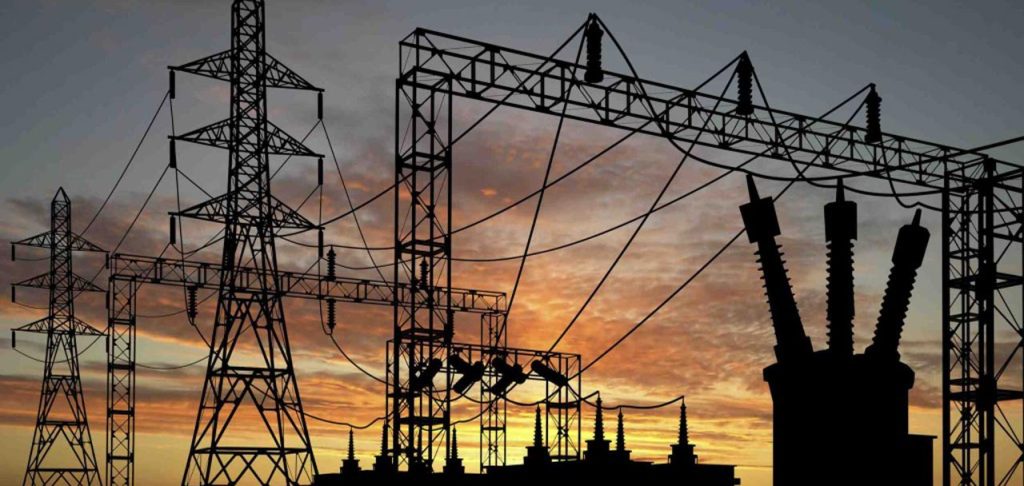
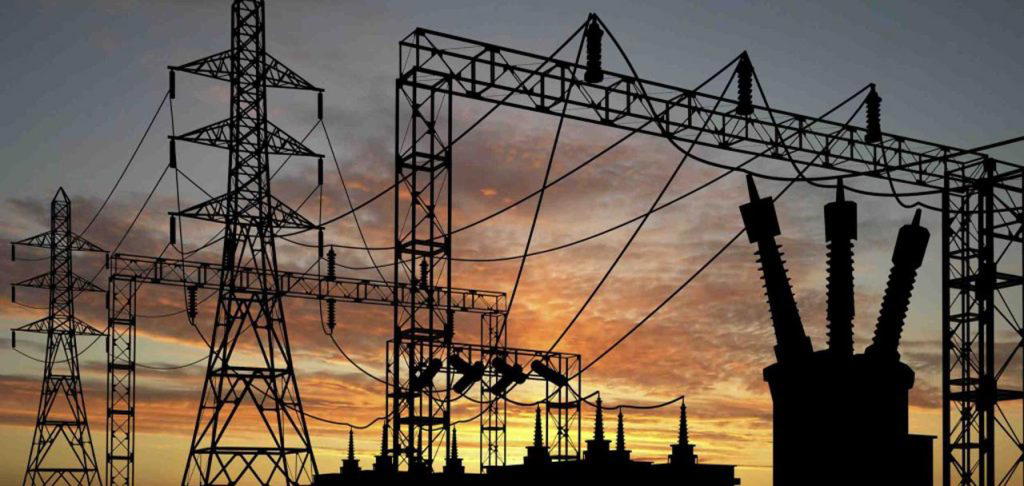
Efforts by the Federal Government (FG) to address debts owed electricity generation companies (GenCos) may be facing increasing challenges as the debt burden rose 62.5% to N6.5 trillion at end 2025, up from N4trillion recorded at the beginning of the year.
The government had flagged off the funding program through the issuance of N590 billion Series 1 Power Sector Bond in mid-December 2025, as part of a plan to raise N1.23 trillion by the end of the first quarter of 2026 to improve system liquidity in 2026.
The power sector has been shackled in decades by huge debts which hampered investment in critical infrastructure needed to boost power supply in the country.
However, the first part issuance, comprising N300 billion Tranche A and N290 billion Tranche B, has raised concerns over transparency and the overall performance of the sector liquidity.
With the Federal Government failing to meet its financial obligations, industry data obtained exclusively by Financial Vanguard showed that GenCos were paid just 35 per cent of their invoices for electricity supplied to the national grid, further compounding the liquidity crisis in the Nigerian Electricity Supply Industry (NESI).
Plants receive N547bn for N1.531trn invoices in 6 months
The data, covering six payment cycles from May to October 2025, revealed that 25 generation companies issued invoices totaling N1.531 trillion for power supplied to the grid but received only N547.369 billion, representing 35.74 per cent. The balance of N984.3 billion is expected to be paid by the government as electricity subsidies.
A breakdown of the figures showed that GenCos issued invoices of N282.139 billion in May and received N96.402 billion (34.17 per cent). In June, invoices amounted to N257.261 billion, while payments stood at N91.357 billion (35.51 per cent). July invoices totaled N267.999 billion, with payments of N96.287 billion (35.93 per cent). In August, GenCos invoiced N245.956 billion and received N88.593 billion. For September and October, invoices were N226.665 billion and N251.649 billion, while payments were N81.783 billion (36.08 per cent) and N92.947 billion (36.94 per cent), respectively.
Why GenCos receive low payments – NERC
In 2024, the Nigerian Electricity Regulatory Commission (NERC) introduced the DisCos Remittance Obligation (DRO), which requires electricity distribution companies (DisCos) to remit about 40 per cent of invoices received from the Nigerian Bulk Electricity Trading (NBET) Plc for power taken from the national grid.
“The FGN policy on subsidy and electricity tariffs provides for a gradual transition to cost-reflective end-user tariffs, with safeguards for less-privileged electricity consumers. Accordingly, the Federal Government has committed to funding the revenue gap arising from the difference between cost-reflective tariffs approved by the Commission and the actual end-user tariffs during the transition period,” NERC stated in an order issued to Benin Electricity Distribution Company (BEDC) in May 2025.
In its third-quarter 2025 report released a few days ago, NERC noted:
“Market remittance to NBET: In the absence of cost-reflective tariffs, the government undertakes to cover the resultant gap (between the cost-reflective and allowed tariff) in the form of tariff subsidies. For ease of administration, the subsidy is applied only to the generation cost payable by DisCos to NBET at source in the form of a DisCo’s Remittance Obligation (DRO). The DRO represents the total GenCo invoice billed to DisCos by NBET based on what the allowed DisCo tariffs can cover. Furthermore, DisCos are expected to remit 100 per cent of invoices received from the Market Operator for transmission and administrative service costs.”
The NERC third-quarter report showed that total revenue collected by all DisCos in Q3 2025 stood at N570.25 billion, out of N706.61 billion billed to customers, representing a collection efficiency of 80.7 per cent. The revenue was boosted by the continued migration of customers to the Band A tariff category, despite widespread blackouts across the country.
Issues with N1.23trn bond
Despite objections from GenCos over the structure of the bond and contractual arrangements governing payments from bond proceeds, the Federal Government has pressed ahead with the policy. The companies, however, continue to demand transparency in the process.
An advisory document commissioned by the Association of Power Generation Companies (APGC), and obtained exclusively by Financial Vanguard, described some clauses in the bond documentation as “death warrants” for GenCos.
The document raised serious concerns about the overall structure of the bond and urged the companies to proceed with caution.
“Structure and mechanics of the bond: Investigations show that there is no bankable structure underpinning the bond. What is being offered is verbal good faith and Federal Government backing by the Coordinating Minister of the Economy, the Debt Management Office (DMO) and the Special Adviser on Energy.
This makes the bond extremely risky, given that the issuer, NBET Finance Company, is an orphan special purpose vehicle (SPV).
“Financial, operational and regulatory implications for GenCos: For this bond to be successfully issued, it must comply with approvals from critical regulatory bodies such as the National Assembly, Bureau of Public Procurement and PENCOM.
In addition, the issuer, the SPV, is not recognised by the regulator, NISO, either as a licensee or a market participant.
“Risk exposures and mitigation strategies: The bond designers claim the Federal Government has put in place a sinking fund to cover potential shortfalls. However, inquiries show that the proposed sources-DisCo collections and revolving funds-are questionable. ”If such funds exist, why not use them directly to pay GenCos?”, some of the operators wondered.
Moreover, DisCo collections have historically been poor. GenCos should also recall that similar revolving funds promised through NBET stopped after the first Eurobond payment.”
Subsidies without cash backing blamed for rising debt
Stakeholders have blamed the Federal Government’s failure to back its electricity subsidy policy with actual cash payments for the rising debt in the sector.
Speaking on the issue, Chairman of the Electricity Consumers Association of Nigeria, Chijoke James, said that despite the sector’s poor performance, the government must honour its commitments.
“Consumers are unhappy with power sector operators, especially at the distribution level, because of poor service delivery.
”However, the government must keep its promises. Subsidies cannot simply be removed, as the experience of Band A customers shows that higher tariffs do not necessarily translate into improved supply.
“DisCos migrate customers to Band A arbitrarily without meeting their obligations. Many Band A customers do not receive the minimum 20 hours of daily supply required, yet continue to pay the higher tariff,” he said.
Energy expert, Prof. Yemi Oke, said the current subsidy regime is unsustainable.
“This is clearly unsustainable. It is undermining national development. Nigeria already owes GenCos over N4 trillion; adding another N2 trillion annually in electricity subsidies is not prudent.
“With these trends, how do we develop and sustain economic growth? This is not the path to prosperity. As an informed Nigerian, I will continue to oppose unsustainable electricity and energy subsidies, including the unresolved N4 trillion DisCo debts,” he said.
Speaking to Vanguard, Managing Director of Azura Power West Africa, Mr. Edu Okeke, said: “At the end of the day, it is still about money. GenCos are receiving about 38 per cent of their invoices. Has anything changed? The answer is no. As long as suppliers are not paid, no new investment will come in.”
Okeke warned that even with the proposed bond, debt will continue to accumulate if fundamental issues remain unresolved.
“As President Tinubu announced the N4 trillion bond, it is only a matter of time before another N4 trillion emerges. Last year, collections were around 40 per cent; this year, they are about 38 per cent,” he added.
The post 62.5% rise in electricity sector debt threatens FG’s N1.2trn bond appeared first on Vanguard News.
By Yinka Kolawole, with agency report
The International Monetary Fund (IMF) has disclosed that the Federal Government (FG) failed to capture public expenditure equivalent to about two per cent of Nigeria’s Gross Domestic Product (GDP) in recent national budgets, creating a mismatch between the country’s reported fiscal deficit and its actual financing needs.
IMF’s Resident Representative in Nigeria, Christian Ebeke, made the disclosure on Wednesday during a meeting with business executives in Lagos.
Vanguard Newspaper’s findings indicate that in 2025, Nigeria’s nominal GDP was N441.5 trillion. Government expenditure accounted for approximately 11.73% of this GDP. However, an additional N8.83 trillion in public spending—equivalent to about 2% of the GDP—was unrecorded in official budgets, distorting the country’s actual fiscal deficit and borrowing needs
According to Ebeke, the omission has made Nigeria’s fiscal deficit appear lower than its true borrowing requirement, as some capital expenditure was excluded from budget documents and implementation reports.
Ebeke explained that the unreported spending was largely tied to major government projects executed outside the budget framework, making it more difficult to accurately assess the country’s fiscal position and the scale of public investment.
“So far, we think that there are about two per cent of GDP of expenditure that were not reported that should be reported and should be recorded, so that this statistical discrepancy will disappear,” he said.
He noted that incomplete fiscal reporting also complicates coordination between fiscal and monetary authorities, as policymakers may be working without a complete picture of the government’s financing obligations.
The IMF official said the Nigerian authorities had begun addressing the gap by revising budget legislation to accommodate previously unrecorded expenditure. However, he stressed that updated budget implementation reports would be required to fully reflect the changes.
Ebeke emphasised that greater fiscal transparency is critical to strengthening public financial management, warning that off-budget spending raises concerns over procurement practices, accountability and oversight.
His remarks come on the heels of the IMF’s latest Article IV consultation on Nigeria, which commended the Federal Government’s macroeconomic reforms for improving economic stability and boosting investor confidence.
The Fund, however, cautioned that while the reforms have stabilised the economy, they are yet to deliver broad-based improvements in living standards and remain vulnerable to external shocks, including the ongoing conflict in the Middle East.

By Yinka Kolawole
The Lagos Chamber of Commerce and Industry (LCCI) has urged the Nigeria Revenue Service (NRS) to immediately extend the June 30, 2026 deadline for filing Company Income Tax (CIT) returns by one month.
This, according LCCI, follows what it saw as widespread technical failures on the newly deployed Rev360 tax platform that left thousands of companies unable to comply with the statutory deadline.
In a statement, yesterday, Director General of LCCI, Dr. Chinyere Almona, argued that while some businesses waited until the final day to file their returns, the prolonged disruption of the portal on the deadline day made compliance impossible for many taxpayers.
According to her, Rev360, which was launched barely two months ago, suffered prolonged downtime on June 30, triggering login failures, validation errors and unsuccessful submissions as companies raced to meet the filing deadline.
“The failure was that of the platform, not the taxpayers,” she said, stressing that deploying a new digital tax system shortly before a major compliance deadline inevitably comes with operational challenges, particularly under heavy traffic.
Almona noted that the predictable surge in last-minute filings exposed the platform’s inadequate capacity, leaving many businesses locked out of the system at a critical period.
She called on NRS to take three immediate steps to restore confidence in the tax administration process: extend the CIT filing deadline by one month; waive all penalties for companies that attempted to file on or before June 30 but were prevented by the system outage; and urgently strengthen the capacity and stability of the Rev360 platform before the next filing cycle.
The LCCI DG said a prompt announcement of the deadline extension and penalty waiver would calm growing anxiety within the business community and prevent unnecessary disputes arising from a failure beyond taxpayers’ control.

By Providence Ayanfeoluwa
The Africa Association of Professional Freight Forwarders and Logistics of Nigeria (APFFLON) has challenged the Minister of Power, Joseph Tegbe, to translate recent assurances on electricity sector reforms into visible improvements in power supply.
The group maintained that Nigerians can no longer afford the economic consequences of persistent electricity failures.
In a statement signed by its National President, Otunba Frank Ogunojemite, on Tuesday, APFFLON described the electricity crisis as one of the biggest impediments to Nigeria’s economic growth, industrialisation and investment drive. According to him, no nation can build a globally competitive economy while grappling with chronic power shortages.
He stated: “No nation can build a globally competitive economy while operating in darkness. Stable electricity is not a luxury—it is the foundation upon which industries grow, investors gain confidence, jobs are created and businesses flourish.
“The cost of inadequate electricity is being paid daily by manufacturers, freight forwarders, importers, exporters and ordinary Nigerians. Businesses are shutting down, investors are relocating to countries with more reliable infrastructure, and unemployment continues to rise.”
Ogunojemite lamented that businesses across the country still rely heavily on diesel and petrol generators to sustain operations, a situation that has significantly increased production costs and weakened the competitiveness of Nigerian enterprises. He noted that the cost of doing business in Nigeria remains among the highest on the African continent, largely because of inadequate electricity supply.
“The Minister has an opportunity to leave a lasting legacy. Nigerians will judge this administration not by the number of conferences held or policies announced, but by whether electricity becomes stable, affordable and accessible”.


Harry Kane Points Out ‘Huge Advantage’ Mexico Have vs England
‘Hell no’ — Atiku’s aide slams Shehu Sani over comment on ADC court victory

Court affirms Mark-led leadership of ADC, dismisses Abejide’s suit

Simi Sanya and Femi Dapson Are Now Legally Married and It Is Beautiful to See

FCT Area Council Election: Live results from polling units

Premier League Set-Piece Goals (2025/2026)
-
 Sports2 days ago
Rayan Cherki Appears to Ignore Didier Deschamps After 3-0 Win vs Sweden
-
 Sports2 days ago
Diego Maradona Slammed New FIFA and USA World Cup Rule in 2018
-
 Sports1 day ago
Gary Neville Names Only Team That Can Stop France From Winning the 2026 World Cup
-
 Sports14 hours ago
VAR Expert Casts Clear Verdict on Folarin Balogun Red Card vs Bosnia
-
 Sports2 days ago
Lamine Yamal Names 3 Most Impressive 2026 World Cup Players
-
 Sports1 day ago
Serena Williams Slammed For Actions After Losing to Maya Joint
-
 Sports22 hours ago
Roy Keane Names the Two Teams That Will Contest the 2026 World Cup Final
-
 Sports2 days ago
FIFA Issue Statement After Controversial Germany vs Paraguay VAR Call