
Business
EPILEPTIC POWER: Stranded generation capacity hits 2,275MW in 5 years

…As GenCos frown over 33.6% deficiency in evacuation
By Mariam Eko
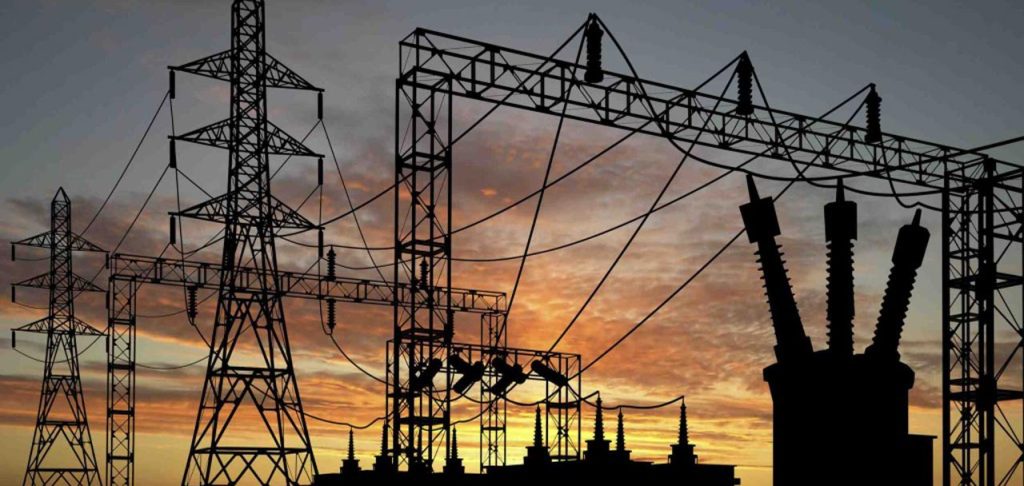
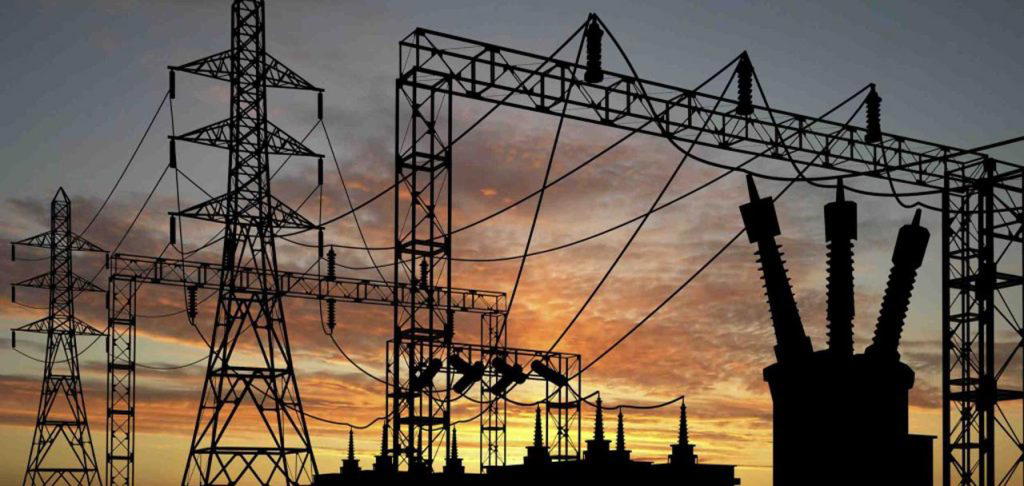
Nigeria’s power supply crisis seems to be unabated as stranded electricity generation capacity rose by 1.19 per cent to 2,275 megawatts, MW, over a five-year period, highlighting persistent weaknesses in the country’s transmission infrastructure and worsening liquidity challenges across the power value chain.
Operational data obtained from electricity generating companies, GenCos, show that despite available generation capacity, a significant portion of power remains unevacuated (unutilized) due to transmission constraints, resulting in widespread load shedding and unstable electricity supply nationwide.
The data indicate that stranded generation capacity stood at 2,248.50MW in 2021, dropped to 1,816.49MW in 2022, rose to 2,226.96MW in 2023, declined slightly to 2,180.31MW in 2024, before climbing to 2,275.67MW in December 2025—the highest level recorded within the period under review.
Reacting to the development, GenCos expressed concern over what they described as a 33.60 per cent deficiency in power evacuation, attributing the shortfall largely to obsolete transmission infrastructure and limited grid capacity.
According to industry operators, the inability to evacuate generated power has not only led to revenue losses for GenCos but has also discouraged fresh investments in generation capacity, even as electricity demand continues to outstrip supply.
DisCos, TCN trade blames
Meanwhile, electricity Distribution Companies, DisCos, have attributed the epileptic power supply to load limitations imposed by the Transmission Company of Nigeria, TCN, which they say has forced them to implement load shedding across their networks.
The situation was worsened in December 2025 following reported vandalisation of gas pipelines supplying key power plants, resulting in reduced electricity generation during the Christmas period. The disruption plunged several homes and businesses into darkness at the height of the festive season.
Confirming the incident, the Nigerian Independent System Operator, NISO, an arm of TCN, said electricity generation on the national grid dropped due to gas supply constraints caused by vandalism within the upstream gas supply network.
NISO explained that the incident affected gas availability to several power generation facilities, with several gas-fired plants recording low output, leading to reduced available generation capacity on the grid.
However, weeks after the festive season, NISO announced an improvement in generation levels following the repair of the vandalised Lagos–Escravos–Lagos gas pipeline by the Nigerian Gas Infrastructure Company, NGIC, and the restoration of gas supply to key thermal power plants across the country.
Despite the improvement, power supply remains unstable across many parts of the country.
When contacted by Vanguard, the Lagos Regional Operations Manager of NISO, Engr. Yusuf Gbadamosi, said there was no generation shortfall affecting supply, noting that “what is available has been fully allocated.”
Experts say problem is systemic
Power sector experts insist that the challenges go beyond gas supply disruptions, pointing instead to systemic constraints including weak transmission infrastructure, frequent grid instability, inadequate gas transportation capacity and load rejection by DisCos due to distribution network limitations.
They also identified the sector’s chronic liquidity crisis as a major factor limiting the ability of GenCos to maintain plants optimally and secure firm gas supply.
Speaking to Vanguard, the Managing Director and Chief Executive Officer of the Association of Power Generation Companies, APGC, Dr. Joy Ogaji, said GenCos are ready to generate more power but are constrained by failures in other segments of the value chain.
“Generation cannot be sustained in isolation. Without reliable gas supply, a stable transmission network, efficient distribution and full payment for electricity supplied, available capacity will continue to be stranded,” she said.
Transmission, tariffs under spotlight
On the broader reform challenges, the Chief Executive Officer of the Centre for the Promotion of Private Enterprise, CPPE, Dr. Muda Yusuf, said the power sector remains one of the most politically sensitive and technically demanding components of Nigeria’s economic reform programme.
According to him, the sector’s tightly interconnected value chain—gas, generation, transmission and distribution—means that inefficiencies in one segment quickly undermine the entire system.
He noted that the inability to implement cost-reflective electricity tariffs has worsened the sector’s liquidity crisis, forcing government to repeatedly intervene financially to prevent system collapse.
Govt intervention inevitable
Yusuf explained that government financial intervention has become inevitable in the short term, citing recent bond issuances to settle outstanding obligations to gas suppliers and GenCos as necessary to keep the electricity system afloat.
Meanwhile, efforts to reach the General Manager, Public Affairs, TCN, Ms. Ndidi Mbah, were unsuccessful as calls and text messages sent to her were not responded to as at press time.
The post EPILEPTIC POWER: Stranded generation capacity hits 2,275MW in 5 years appeared first on Vanguard News.
By Yinka Kolawole, with agency report
The International Monetary Fund (IMF) has disclosed that the Federal Government (FG) failed to capture public expenditure equivalent to about two per cent of Nigeria’s Gross Domestic Product (GDP) in recent national budgets, creating a mismatch between the country’s reported fiscal deficit and its actual financing needs.
IMF’s Resident Representative in Nigeria, Christian Ebeke, made the disclosure on Wednesday during a meeting with business executives in Lagos.
Vanguard Newspaper’s findings indicate that in 2025, Nigeria’s nominal GDP was N441.5 trillion. Government expenditure accounted for approximately 11.73% of this GDP. However, an additional N8.83 trillion in public spending—equivalent to about 2% of the GDP—was unrecorded in official budgets, distorting the country’s actual fiscal deficit and borrowing needs
According to Ebeke, the omission has made Nigeria’s fiscal deficit appear lower than its true borrowing requirement, as some capital expenditure was excluded from budget documents and implementation reports.
Ebeke explained that the unreported spending was largely tied to major government projects executed outside the budget framework, making it more difficult to accurately assess the country’s fiscal position and the scale of public investment.
“So far, we think that there are about two per cent of GDP of expenditure that were not reported that should be reported and should be recorded, so that this statistical discrepancy will disappear,” he said.
He noted that incomplete fiscal reporting also complicates coordination between fiscal and monetary authorities, as policymakers may be working without a complete picture of the government’s financing obligations.
The IMF official said the Nigerian authorities had begun addressing the gap by revising budget legislation to accommodate previously unrecorded expenditure. However, he stressed that updated budget implementation reports would be required to fully reflect the changes.
Ebeke emphasised that greater fiscal transparency is critical to strengthening public financial management, warning that off-budget spending raises concerns over procurement practices, accountability and oversight.
His remarks come on the heels of the IMF’s latest Article IV consultation on Nigeria, which commended the Federal Government’s macroeconomic reforms for improving economic stability and boosting investor confidence.
The Fund, however, cautioned that while the reforms have stabilised the economy, they are yet to deliver broad-based improvements in living standards and remain vulnerable to external shocks, including the ongoing conflict in the Middle East.

By Yinka Kolawole
The Lagos Chamber of Commerce and Industry (LCCI) has urged the Nigeria Revenue Service (NRS) to immediately extend the June 30, 2026 deadline for filing Company Income Tax (CIT) returns by one month.
This, according LCCI, follows what it saw as widespread technical failures on the newly deployed Rev360 tax platform that left thousands of companies unable to comply with the statutory deadline.
In a statement, yesterday, Director General of LCCI, Dr. Chinyere Almona, argued that while some businesses waited until the final day to file their returns, the prolonged disruption of the portal on the deadline day made compliance impossible for many taxpayers.
According to her, Rev360, which was launched barely two months ago, suffered prolonged downtime on June 30, triggering login failures, validation errors and unsuccessful submissions as companies raced to meet the filing deadline.
“The failure was that of the platform, not the taxpayers,” she said, stressing that deploying a new digital tax system shortly before a major compliance deadline inevitably comes with operational challenges, particularly under heavy traffic.
Almona noted that the predictable surge in last-minute filings exposed the platform’s inadequate capacity, leaving many businesses locked out of the system at a critical period.
She called on NRS to take three immediate steps to restore confidence in the tax administration process: extend the CIT filing deadline by one month; waive all penalties for companies that attempted to file on or before June 30 but were prevented by the system outage; and urgently strengthen the capacity and stability of the Rev360 platform before the next filing cycle.
The LCCI DG said a prompt announcement of the deadline extension and penalty waiver would calm growing anxiety within the business community and prevent unnecessary disputes arising from a failure beyond taxpayers’ control.

By Providence Ayanfeoluwa
The Africa Association of Professional Freight Forwarders and Logistics of Nigeria (APFFLON) has challenged the Minister of Power, Joseph Tegbe, to translate recent assurances on electricity sector reforms into visible improvements in power supply.
The group maintained that Nigerians can no longer afford the economic consequences of persistent electricity failures.
In a statement signed by its National President, Otunba Frank Ogunojemite, on Tuesday, APFFLON described the electricity crisis as one of the biggest impediments to Nigeria’s economic growth, industrialisation and investment drive. According to him, no nation can build a globally competitive economy while grappling with chronic power shortages.
He stated: “No nation can build a globally competitive economy while operating in darkness. Stable electricity is not a luxury—it is the foundation upon which industries grow, investors gain confidence, jobs are created and businesses flourish.
“The cost of inadequate electricity is being paid daily by manufacturers, freight forwarders, importers, exporters and ordinary Nigerians. Businesses are shutting down, investors are relocating to countries with more reliable infrastructure, and unemployment continues to rise.”
Ogunojemite lamented that businesses across the country still rely heavily on diesel and petrol generators to sustain operations, a situation that has significantly increased production costs and weakened the competitiveness of Nigerian enterprises. He noted that the cost of doing business in Nigeria remains among the highest on the African continent, largely because of inadequate electricity supply.
“The Minister has an opportunity to leave a lasting legacy. Nigerians will judge this administration not by the number of conferences held or policies announced, but by whether electricity becomes stable, affordable and accessible”.


Man Utd Eyeing Carlos Baleba After Mateus Fernandes

Liverpool Watching ‘Amazing’ Kevin As Big Transfer Prediction Could Come True

APC unveils Sharafadeen Ali as Oyo guber candidate

Simi Sanya and Femi Dapson Are Now Legally Married and It Is Beautiful to See

FCT Area Council Election: Live results from polling units

Premier League Set-Piece Goals (2025/2026)
-
 Sports2 days ago
Leon Goretzka Slammed For Not Taking Penalty in Germany vs Paraguay
-
 Sports1 day ago
Rayan Cherki Appears to Ignore Didier Deschamps After 3-0 Win vs Sweden
-
 Sports2 days ago
Diego Maradona Slammed New FIFA and USA World Cup Rule in 2018
-
 Sports17 hours ago
Gary Neville Names Only Team That Can Stop France From Winning the 2026 World Cup
-
 Sports1 day ago
Lamine Yamal Names 3 Most Impressive 2026 World Cup Players
-
 Sports2 days ago
‘Real Reason’ Why Van Dijk Didn’t Take Penalty vs Morocco
-
 Sports1 day ago
Serena Williams Slammed For Actions After Losing to Maya Joint
-
 Sports2 days ago
What Miroslav Klose Said About Kylian Mbappe Breaking World Cup Record