
Business
How CBN is building bigger, resilient banks through recapitalisation


By Babajide Komolafe, Economy Editor
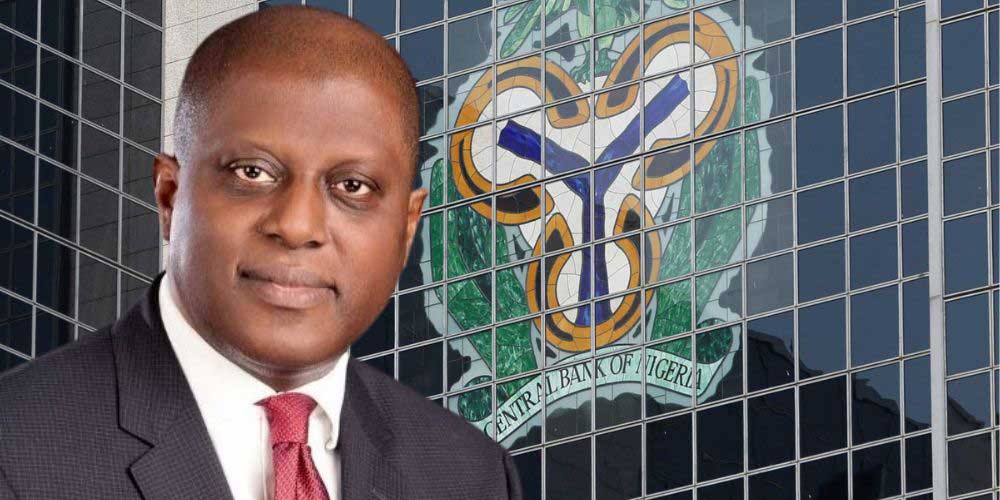
The Governor of the Central Bank of Nigeria (CBN), Mr. Olayemi Cardoso, has continued to drive his vision of regulatory excellence aimed at strengthening Nigeria’s financial system. The ongoing bank recapitalisation exercise, with about 20 banks already meeting the new minimum capital requirements, underscores the apex bank’s resolve to entrench a stronger, safer and more resilient banking system aligned with global best practices.
Analysts say the recapitalisation programme, anchored on capital raising and stricter supervision, is critical to safeguarding Nigeria’s financial ecosystem and positioning the banking sector to support sustainable economic growth.
The CBN believes that the emergence of bigger and stronger banks is central to achieving the Federal Government’s vision of economic expansion and a $1 trillion economy. According to the apex bank, sustainable growth cannot be achieved without a resilient financial system capable of supporting businesses, infrastructure development and long-term investments.
Under Cardoso’s leadership, the CBN has prioritised regulatory compliance, risk management and transparency as core pillars for protecting the financial sector and enhancing its credibility both locally and internationally.
Recapitalisation milestones
Ahead of the March 31, 2026 deadline, Cardoso, in his last public update on the recapitalisation programme, confirmed that 16 banks had met the new capital requirements, while 27 others were actively raising funds.
Similarly, the Deputy Governor, Economic Policy, CBN, Dr. Muhammad Abdullahi, disclosed at a Nigeria Economic Summit Group (NESG) forum that no fewer than 20 banks had already met the new thresholds.
Nigeria currently has 44 deposit-taking banks operating across different licence categories. Industry checks indicate that at least seven banks are considering scaling down their licences from national to regional banking, reflecting the concentration of their operations and the expanding reach of digital banking platforms across the country.
One bank holding an international banking licence also indicated recently that it may scale down to a national licence ahead of the deadline, while pursuing further recapitalisation to strengthen its capital base and potentially regain international authorisation.
The CBN classifies banks into three categories — international, national and regional — based on capital strength. Under the recapitalisation guidelines, banks are required not only to raise new capital but also to subject the funds to a rigorous capital verification process before allotment clearance and final inclusion in their capital base.
The apex bank is the final signatory in a tripartite Capital Verification Committee comprising the CBN, the Securities and Exchange Commission (SEC) and the Nigeria Deposit Insurance Corporation (NDIC). The committee is tasked with scrutinising funds raised under the recapitalisation programme to ensure integrity and compliance.
N4.14tr new capital expected
With about N4.14 trillion in new capital expected to be raised and 20 banks already meeting minimum requirements, the recapitalisation exercise represents a significant milestone for the Nigerian economy.
The CBN formally announced the two-year recapitalisation programme on March 28, 2024, with implementation commencing on April 1, 2024. The framework stipulates minimum capital requirements of N500 billion for international banks, N200 billion for national banks and N50 billion for regional banks. The compliance window closes on March 31, 2026.
Cardoso has repeatedly assured stakeholders that the apex bank will enforce strong governance, transparency and accountability to protect funds raised through the exercise.
“Banks meeting or exceeding the new requirements is a clear testament to the depth, resilience and capacity of Nigeria’s banking sector,” Cardoso said.
To strengthen oversight, the CBN has established a dedicated Compliance Department with responsibility for financial crime supervision, market conduct, enterprise security, corporate governance and environmental, social and governance (ESG) issues.
According to the CBN Governor, the regulator is redesigning the credit-risk framework to ensure that funds raised through recapitalisation are prudently managed.
“As recapitalisation progresses, we are redesigning the credit-risk framework to enforce stronger governance, greater transparency and firmer accountability across the sector. We are determined to break the boom-and-bust cycle that has accompanied past recapitalisation efforts,” Cardoso stated.
In the past, analysts had warned that banks often emerged from recapitalisation flush with liquidity, raising the risk of misapplication through poorly structured or risky loans. The CBN says new controls are being put in place to avoid a repeat.
Already, the CBN Credit Risk Management System (CRMS) is web-enabled, allowing banks and stakeholders to submit statutory returns and conduct borrower status enquiries. The apex bank is also integrating the CRMS with internal banking systems to improve efficiency and monitoring.
In a report titled Nigeria’s macro headwinds trigger bank recapitalisation, global audit firm Deloitte estimated that total funds to be raised by March 31, 2026 would amount to N4.14 trillion. The firm noted that the upward review of minimum capital requirements is essential to strengthening the banking industry’s capital adequacy.
According to Deloitte, Nigerian banks’ capital buffers have been weakened by macroeconomic headwinds such as high inflation, rising interest rates, currency volatility and foreign exchange illiquidity.
“The upward revision will ensure that Nigerian banks have the capacity to take on bigger risks and remain resilient amid domestic and external shocks. It will also improve liquidity and enhance banks’ loss-absorbing capacity,” the report said.
Strengthening resilience
Cardoso maintained that Nigeria’s banking system remains fundamentally sound and resilient, serving as a cornerstone of financial stability.
“At the same time, we remain vigilant to emerging risks, including cyber threats, credit-concentration pressures and operational vulnerabilities. These are being addressed through strengthened risk-based supervision and our ongoing transition to Basel III, which will further bolster resilience, improve capital quality and strengthen liquidity monitoring,” he said.
With only months to the end of the recapitalisation window, Cardoso said the programme remains firmly on track.
“As we strengthen the capacity of our banks, stress testing this year confirms that Nigeria’s banking sector remains fundamentally robust. Key financial soundness indicators overwhelmingly satisfied prudential benchmarks during the year,” he added.
The apex bank is also reinforcing operational discipline across the system to ensure that financial services are delivered efficiently to Nigerians.
“Our starting point was a comprehensive, end-to-end review of the entire cash lifecycle — from production and transportation to distribution and access by consumers. This holistic assessment enabled us to address root causes rather than symptoms,” Cardoso explained.
He said the CBN recalibrated its cash-printing models, issued guidelines on optimal ATM-to-card ratios, strengthened approval requirements before ATM or branch closures, enforced sanctions on banks with non-dispensing ATMs, and intensified supervision of payment agents and POS operators nationwide.
Ethics, professionalism
Addressing bankers recently, Cardoso said the ethics and professionalism of bankers and treasurers remain under constant scrutiny. He disclosed that the CBN has introduced the FX Global Code for all authorised dealers and market participants to ensure compliance with regulations.
He urged the Chartered Institute of Bankers of Nigeria (CIBN) to take the lead in enforcing professional standards across the industry.
“At the Central Bank, we have intensified surveillance of market activities to ensure compliance and eliminate bad actors who attempt to undermine the system. Together, we must build a market based on strong governance and transparency. As regulators, we will maintain a zero-tolerance approach to compliance violations,” he said.
Banks back policy
The Group Managing Director of United Bank for Africa (UBA), Mr. Oliver Alawuba, described the recapitalisation policy as timely and essential in positioning Nigeria’s financial system for growth and global competitiveness.
He said the policy would strengthen banks’ capacity to withstand economic shocks such as inflation, currency volatility and geopolitical disruptions, while enabling them to finance large-scale infrastructure and industrial projects.
According to Alawuba, the initiative goes beyond regulatory compliance and represents a forward-looking strategy to equip Nigerian banks for a trillion-dollar economy.
“Nigerian banks need adequate capital buffers to meet the evolving demands of sectors such as oil and gas, agriculture, manufacturing, fintech, green energy and infrastructure. Without this, the industry cannot effectively rise to the challenge,” he said.
Sector remains robust
Cardoso reiterated that key indicators show the banking sector remains robust.
“The non-performing loan ratio remains within the prudential benchmark of five per cent, showcasing strong credit risk management. The liquidity ratio comfortably exceeds the regulatory floor of 30 per cent, ensuring banks can meet customer and operational needs. Recent stress tests also reaffirmed the continued strength of our banking system,” he said.
He expressed optimism that the sector is well positioned to support Nigeria’s economic recovery.
“I am pleased to note that a significant number of banks have raised the required capital through rights issues and public offerings well ahead of the 2026 deadline. The banking sector is in a strong position to support economic recovery by enabling access to credit for MSMEs and supporting investment in critical sectors,” Cardoso added.
The post How CBN is building bigger, resilient banks through recapitalisation appeared first on Vanguard News.

The Federal Competition and Consumer Protection Commission (FCCPC) has warned oil marketers against exploiting consumers, saying the current retail prices of petrol do not reflect the sharp decline in global crude oil prices.
In a statement issued on Sunday, the Commission said its ongoing surveillance of the downstream petroleum sector had uncovered indications of consumer exploitation, as recent reductions in petrol prices by refiners, depot operators and marketers remain insignificant despite the sustained fall in crude oil prices.
According to the FCCPC, global crude oil prices have dropped to about 73 dollars per barrel following the ceasefire between the United States and Iran and the reopening of the Strait of Hormuz. The agency noted that crude prices had climbed to about 120 dollars per barrel at the height of tensions in the Middle East between April and May, prompting a swift increase in petrol pump prices across Nigeria.
The Commission observed that while crude oil prices have now returned to levels recorded in February, retail fuel prices have remained relatively high.
It recalled that petrol sold for between ₦800 and ₦900 per litre in February, but rose sharply to between ₦1,350 and ₦1,500 per litre during the period of heightened geopolitical tensions. Despite the subsequent drop in crude oil prices, petrol is still being sold at an average of about ₦1,200 per litre, while some local refiners have fixed ex-depot prices between ₦1,025 and ₦1,075 per litre.
The Commission acknowledged that domestic fuel prices are influenced by several factors, including refining costs, foreign exchange fluctuations, logistics, financing and distribution expenses. However, it maintained that consumers should benefit from lower crude oil prices through competitive market pricing.
Executive Vice Chairman and Chief Executive Officer of the FCCPC, Tunji Bello, said although the Commission does not regulate petrol prices in Nigeria’s deregulated downstream petroleum sector, it has a statutory responsibility to ensure consumers are protected from unfair and exploitative practices.
“To be clear, the Commission does not regulate or approve petroleum prices in a deregulated downstream market. Our responsibility under the Federal Competition and Consumer Protection Act, 2018, is to promote competitive markets, prevent anti-competitive conduct and protect consumers from unfair, deceptive and exploitative business practices,” Bello said.
He questioned why marketers often respond immediately by increasing pump prices whenever crude oil prices rise, yet delay passing on the benefits to consumers when prices fall.
“We are concerned that while dealers often respond swiftly by hiking pump prices whenever crude prices rise, it is curious that it is taking forever for consumers to benefit significantly when crude prices fall. Competitive markets must work fairly in both directions,” he added.
Bello warned that deregulation does not absolve businesses of the responsibility to compete fairly or respect consumer rights.
According to him, the Commission will investigate and sanction any company found engaging in anti-competitive conduct, consumer exploitation or any practice that violates the Federal Competition and Consumer Protection Act.
“Where credible evidence indicates conduct that undermines competition, exploits consumers or otherwise contravenes the Federal Competition and Consumer Protection Act, the Commission will investigate and take appropriate enforcement action,” he said.
He also urged Nigerians to continue reporting suspected price manipulation, anti-competitive practices and other unfair market behaviour through the Commission’s official complaint channels.
The FCCPC’s warning comes days after the Dangote Refinery reduced its ex-depot petrol price from ₦1,175 to ₦1,125 per litre, following the continued decline in international crude oil prices. Brent crude, the global oil benchmark, recently fell to about 72.97 dollars per barrel, its lowest level since February.

By Godwin Oritse
The Association of Nigerian Licensed Customs Agents (ANLCA) has called on the Federal Government (FG) to suspend the implementation of the Green Tax Policy, scheduled to take off from July 1st, 2026, citing inadequate stakeholder engagement by the implementing agency, the Nigeria Customs Service (NCS).
The association argued that key stakeholders, particularly licensed customs agents and importers, who will be directly affected by the policy were not sufficiently sensitised or consulted before its rollout.
In a statement signed by ANLCA President, Emenike Nwokeoji, yesterday, the association expressed concern that a fiscal policy with such far-reaching implications for import duty, cargo valuation, contractual obligations, shipping arrangements and business planning was communicated to only a section of the critical trading community in Lagos barely 72 hours before its proposed implementation.
“Even more astonishing was the extremely late invitation extended to stakeholders for the consultation meeting. Such an approach is insensitive, procedurally defective and inconsistent with the principles of fairness, inclusiveness, stakeholder engagement and due consultation that should ordinarily guide the implementation of major public policies.
“Fiscal policies of this magnitude ought to be preceded by adequate notice, extensive consultations with all relevant stakeholders across the country, comprehensive sensitisation and sufficient transitional periods to ensure seamless compliance.
Anything short of this undermines confidence in government policies, exposes legitimate businesses to avoidable financial losses and ultimately erodes the confidence of both local and foreign investors in Nigeria’s trade environment.”
The group also raised concern about the decision to subject shipments already in transit to Nigeria to the new levy.
“This amounts to a retrospective fiscal burden on importers and licensed customs agents who had already entered into binding commercial contracts based on the existing tariff regime. Such a development will inevitably result in severe financial losses and unnecessary disputes within the international trading community.
“Furthermore, the stakeholders’ meeting failed to adequately address critical implementation issues. For instance, there was no clear methodology provided for determining engine capacities for the purpose of Green Tax assessment.
“This ambiguity is capable of creating confusion, inconsistent assessments, avoidable disputes and ultimately leaving the trading public at the discretion of individual assessment officers.
“ANLCA remains committed to constructive engagement with the Federal Government and the Nigeria Customs Service in pursuit of policies that promote legitimate trade while achieving national objectives,” he said.
The association also made it clear that it is not challenging the authority of the Federal Government to formulate or implement fiscal policies. It, however, demanded the immediate suspension or postponement of the implementation of the Green Tax Policy until adequate stakeholder consultations have been conducted nationwide.

By Elizabeth Adegbesan
The national average Cost of a Healthy Diet (CoHD) rose by 3.12 percent month-on-month (MoM) to N1,589 per adult per day in April from N1,541 per adult per day in March 2026.
The National Bureau of Statistics (NBS) disclosed this yesterday in its CoHD Report for April 2026, noting that the increase was driven by rising prices across all food groups except starchy staples.
it stated: “The national average Cost of a Healthy Diet was N1,589 in April 2026. This shows an increase of 3.12% when compared to the amount recorded in the previous month (March 2026 was N1,541).”
The Bureau noted that the CoHD rose faster than both general inflation and food inflation during the period.
On the cost of food share groups, the Bureau said animal source foods were the most expensive food group recommendations to meet in April, accounting for 40 percent of the total CoHD while providing 13 percent of the total calories.
“Fruits and vegetables were the most expensive food groups in terms of price per calorie; they accounted for 16 percent and 14 percent, respectively, of the total CoHD while providing only 7 percent and 5 percent, respectively, of the total calories in the Healthy Diet Basket.
“Legumes, Nuts, and Seeds were the least expensive food group on average, accounting for 7 percent of the total cost.”
On national, state and zonal trends, the NBS said: “The national average Cost of a Healthy Diet was N1,589 per adult per day in April 2026.
“At the state level, Ekiti, Imo and Bayelsa states recorded the highest costs at N2,036, N2,018 and N1,909, respectively. Adamawa, the Federal Capital Territory and Akwa Ibom State recorded the lowest costs at N1,143, N1,278 and N1,314, respectively.
“At the zonal level, the average CoHD was highest in the South-East Zone at N1,830 per day, followed by the South-West Zone at N1,753 per day.
“The lowest average Cost of a Healthy Diet was recorded in the North-East Zone at N1,415 per day.”


Celtic and Rangers Battle for English Defender Michael Parker

Tottenham Handed Boost To Complete Tonali Transfer

Iran Slam ‘One of Donald Trump’s Key Allies’ For Comments After Their World Cup Exit

Simi Sanya and Femi Dapson Are Now Legally Married and It Is Beautiful to See

FCT Area Council Election: Live results from polling units

Premier League Set-Piece Goals (2025/2026)
-
 Sports5 hours ago
Virgil van Dijk Slammed For Comments After Netherlands’ World Cup Exit v Morocco
-
 Sports2 days ago
Jesse Marsch’s Full Speech After Canada vs South Africa
-
 Sports2 days ago
Statement Released as Lucas Trejo’s Wife and Children Die in Earthquake
-
 Sports7 hours ago
Zlatan Ibrahimovic Blames Netherlands’ Shock World Cup Exit on Ronald Koeman
-
 Sports1 day ago
How Much Emma Raducanu Will Earn Despite Withdrawing Through Injury
-
 Sports17 hours ago
FIFA Make Decision on Investigating 2026 World Cup ‘Match-Fixing’
-
 Sports23 hours ago
Roger Federer Names His Top 5 Tennis Players of All Time
-
 Sports2 days ago
Christina Unkel’s Verdict on Penalty Controversy