
Business
CBN: Oil prices rally brightens naira, foreign reserves’ prospects

By Peter Egwuatu, Assistant Business Editor
With Brent crude trading around $69 per barrel above Nigeria’s 2026 federal budget benchmark of $64.8, the price rally would largely bolster the country’s fiscal revenues, foreign exchange reserves and promote exchange rate stability.
Analysts posit that a full-scale conflict disrupting the Strait of Hormuz, a chokepoint for about 20 per cent of global oil flows could send Brent prices surging to $91 or even $150 per barrel in weeks.
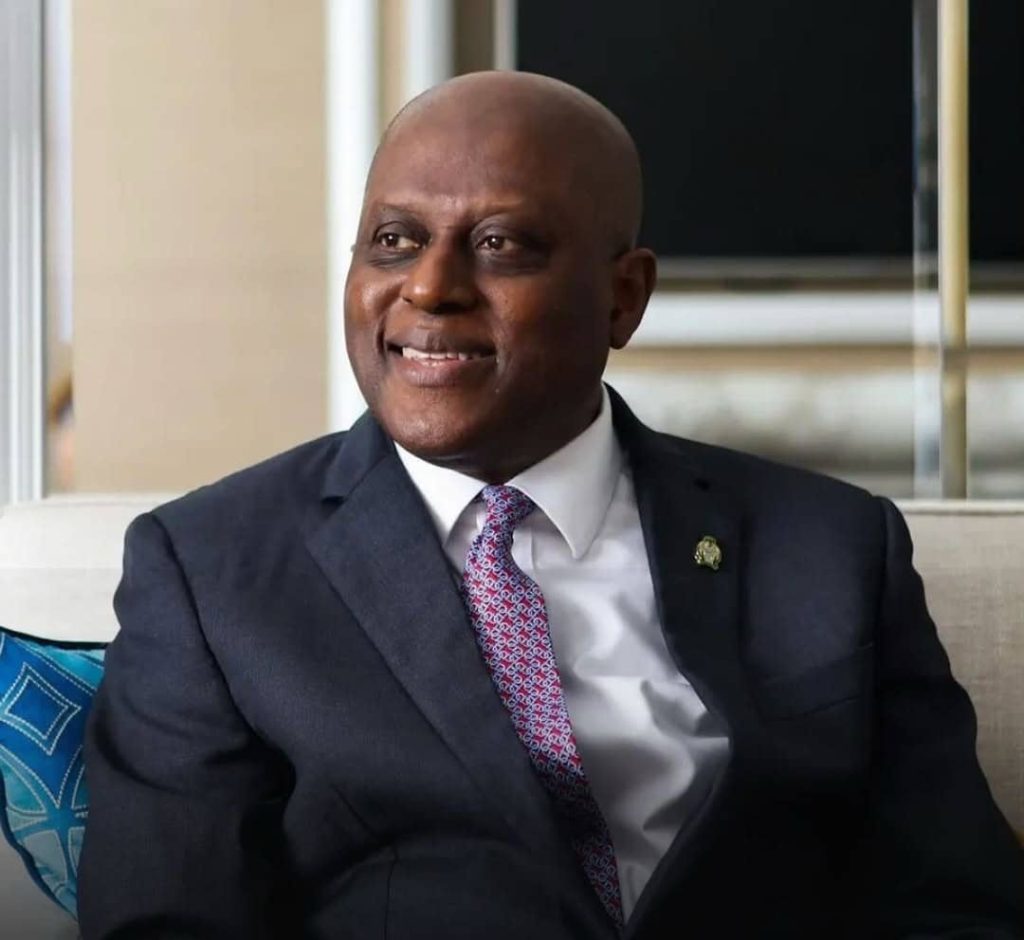
With the naira and foreign reserves already gaining more grounds following key reforms instituted by the Olayemi Cardoso-led Central Bank of Nigeria (CBN), the ongoing oil prices rally presents an opportunity for the local currency and external reserves to consolidate gains in the coming weeks.
Oil prices rose on Thursday, extending gains for a third consecutive day as concerns grew that the United States could take military action against Iran, a key Middle Eastern oil producer potentially disrupting regional supplies.
Brent crude futures rose by 94 cents, or 1.4 per cent, to $69.34 a barrel, US West Texas Intermediate (WTI) crude also jumped 1.5 per cent to $64.13 per barrel.
The oil prices rally is driven mainly by geopolitical risk premium surrounding Iran and the Middle East, though unplanned outages in Kazakhstan and U.S. (Winter Storm Fern) has had a temporary impact as well.
Rising threats of US–Iran military action have led analysts to project that oil prices may remain high amid heightened geopolitical risks, US restrictions on Russian oil purchases, and sustained Chinese demand, even as markets entered the year expecting a large oversupply
For Nigeria, oil prices increase comes with significant gains in. terms of revenue, and economy stability given that over 80 per cent of the country income are from petrodollars.
Already, the naira has traded below the N1,400/$1 level on the official market for the first time in over a year, marking a notable psychological and market milestone for the currency.
Data from the Central Bank of Nigeria show that the Nigerian Foreign Exchange Market rate, the determining benchmark for the official market, strengthened to N1,396.99/$1 on Thursday, up from N1,400.48/$1 on Wednesday. This move confirms the naira’s return below N1,400/$1 after an extended period of trading above that level.
The NFEM rate had been as weak as N1,422.07/$1 on 22 January and N1,421.63/$1 on 23 January before easing to N1,418.95/$1 on Monday and N1,401.22/$1 on Tuesday. It improved to N1,400.47/$1. The break below N1,400/$1 on Thursday, therefore, represents a clear improvement in official market pricing.
2.5Mox Naija: Nigerians lament poor circulation of new naira botes
At the parallel market, the naira also appreciated. According to Cowry Asset Management Limited, the naira strengthened by 1.06 per cent to N1,454/$ in the parallel market, “reflecting improved currency sentiment across both the regulated official segment and the informal foreign exchange market.”
President, Association of Bureaux De Change Operators of Nigeria (ABCON), Aminu Gwadabe, said the naira has remained stable across market for several months, ending years of volatility in the market.
Additionally, Managing Director of Financial Derivatives Company (FDC), Bismarck Rewane, estimated the fair value of the naira at about N1,257 to the US dollar.
Rewane posits that the local currency is undervalued by approximately 11 per cent when assessed using the purchasing power parity (PPP) model.
Rewane made the submission during his keynote address at the 2026 Economic Outlook organised by the Association of Corporate Treasurers of Nigeria (ACTN), where he anchored the session and offered a detailed analysis of the structural and cyclical factors influencing Nigeria’s exchange-rate movements.
He noted that currencies typically converge towards their PPP-implied values over a five-year horizon.
According to him, the appropriate exchange rate based on current PPP estimates stands at N1,256.79 to the dollar, reinforcing the view that the naira remains below its fair valuation level.
A weak dollar is dislocating many markets, but it is good for Africa, as we are seeing with the naira,” Charlie Robertson, author of The Time Travelling Economist, said.
The rally in the naira also reflects rising confidence in Nigeria’s macroeconomic direction, supported by stronger foreign exchange inflows, rising external reserves and improved market governance.
Reserves also upbeat
Nigeria’s external reserves have also continued to rise, increasing by $5.82 billion or 14.45 percent to $46.11 billion as of January 28, 2026, from $40.29 billion recorded on December 2, 2024, according to data on the CBN website.
Nigeria’s external reserves crossed the $46 billion mark for the first time in about eight years, highlighting the steady growth the reserve has been recording since 2025.
According to the latest data from the Central Bank of Nigeria (CBN), the country’s external reserve has increased by about $510 million in 22 days, moving from $45.502 billion on December 31, 2025, to $46.012 billion on January 22, 2026.
Other industry data shows that Nigeria’s external reserves were last at this level on August 27, 2018, when it stood at $45.9 billion.
The reserve build-up signals stronger buffers for import cover and currency stability, reflecting steady inflows and improved foreign exchange management since the forex reforms began, as the country prepares for a general election.
The CBN data also suggests a notable turnaround from the volatility experienced during the early phase of the new forex regime, with the reserves closing at about $45.5 billion in 2025, having opened the year at roughly $40.8 billion.
Analysts have expressed optimism that the steady growth of Nigeria’s external reserve for several months will be sustained this year.
They said that the various reforms by the government have brought stability and confidence, thereby causing improvement in the country’s external reserves.
They, however, noted that while the reserves can be sustained in the short term, sustaining the momentum throughout the election year will depend on discipline on the part of the government.
Foreign capital inflows rise
Foreign capital inflows reached US$20.98 billion in the first 10 months of 2025, a 70 per cent increase over total inflows for 2024 and a 428 per cent surge compared to the US$3.9 billion recorded in 2023, reflecting a clear resurgence in investor confidence.
The Central Bank of Nigeria (CBN) Governor, Olayemi Cardoso explained that naira now trades within a narrow, stable range. The huge gap between the official and parallel markets has shrunk to under two per cent, from over 60 per cent.
For him, macroeconomic indicators show that Nigeria is more resilient to external shocks today than at any point in our recent history.
For instance, Nigeria’s external sector strengthened decisively in 2025, with the current account balance rising over 85 per cent to US$5.28 billion in Q2, up from US$2.85 billion in Q1. Bolstering our external buffers, foreign reserves reached US$46.7 billion by mid-November, the highest in nearly seven years, providing over 10 months of forward import cover and significantly enhancing the economy’s resilience.
Cardoso explained that what is most important here is that our FX reserves are being rebuilt organically, not by borrowing, but through improved market functioning, stronger non‑oil exports, and robust capital inflows.
“While oil production improved modestly to an average of 1.45–1.52 million barrels per day in 2025, the truly encouraging development is the strong performance of non-oil exports. Supported by ongoing reforms and greater exchange-rate flexibility, non-oil exports have grown by more than 18 per cent year-on-year, reflecting rising competitiveness under a truly market-driven FX framework,” he said.
He disclosed that as with foreign investor inflows, diaspora remittances have also strengthened with confidence returning to official channels following enhancements in transparency, settlement efficiency, and reporting. Remittances increased by approximately 12 per cent this year, and we expect this momentum to continue as the Non-Resident BVN, launched earlier this year, becomes more widely adopted in 2026.
Major policy shifts lifting economy
Prof. ‘Abiodun Adedipe, founder and Chief Consultant of B. Adedipe Associates Limited (BAA Consult), listed major policy shifts yielding positive results for the economy. He said that the CBN has eliminated strange arbitraging and roundtripping opportunity through the forex market reforms; through petrol subsidy removal, the Federal Government Remove crippling annual waste of US$10.7 billion and created environment for competition; bank recapitalisation is creating stronger and more capable banks to fund US$1 trillion economy while fiscal consolidation is plugging leakages, deploying technology and making government agencies more accountable and expanding fiscal space at sub-national.
Continuing, Adedipe said the real game changer remains the tax reforms, capable of igniting regional competition (the secret behind Chinese economic renaissance) while the Nigerian Education Loan Fund, Consumer Credit Corporation, Recapitalized Bank of Agriculture, National Credit Guarantee Company Ltd, Single digit interest rate mortgage loans are major steps that should be taken to support sustainable economic growth.
Support for domestic economy
Adedipe said that Nigeria’s economy is supported by large, youthful and rapidly growing population (estimated at 237.53 million in July 2025 and sixth largest in the world, median age at 18.1 years).
The country, he said, also benefits from rapid urbanization with 54.28 per cent in December 2023, up from 46.12 per cent in 2013 and 51.96 per cent in 2020, deepening internet penetration which is at 48.15% in April 2025, up from 45.57 per cent in August 2023 and 31.48 per cent in December 2018.
Nigeria’s tele-density at 79.65 per cent in May 2025, from 76.08 per cent in December 2024 and 102.97 per cent in Dec 2023, due to data cleanup at end of April 2024.
“On global internet users, shows that Nigeria with 123 million ranks 11th and 7th with over 84 per cent on mobile devices. Local oil refining continues to expand and prospects of new refineries, manufacturing is reviving and there is expanding interest in non-oil exports. Improvement in infrastructure will begin to positively impact the cost of doing business,” he said.
He added that sustained deep reforms will enhance global competitiveness and Ease of Doing Business, plug leakages and shrink the space for economic rent.
Fiscal‑monetary coordination
The CBN explained that monetary reform cannot be effective in a vacuum. Alignment with fiscal policy has strengthened Nigeria’s macro stability and yielded tangible results including reduced domestic borrowing costs, improved liquidity conditions, and more predictable fiscal operations.
For instance, the discontinuation of direct deficit financing signals one prong in our commitment to discipline.
“This stance is unequivocal as there will be no return to the practice of financing fiscal deficits by the Central Bank. In parallel, the fiscal authorities have embarked on key institutional reforms – including the implementation of a Revenue Optimisation (RevOp) framework, the establishment of a new National Revenue Agency, and upgrades to the Treasury Single Account (TSA) – to strengthen revenue mobilisation and public financial management,” Cardoso said.
“As we transition towards a full‑fledged inflation‑targeting framework, this partnership will deepen, ensuring fiscal and monetary policies reinforce each other in delivering durable price stability,” he added.
Oil/gas output, revenue position
The Nigerian National Petroleum Company Limited (NNPC Ltd) reported a significant surge in revenue, hitting N5.08 trillion in October 2025, up from N4.27 trillion recorded in September. The figures are contained in the company’s Monthly Report Summary for October 2025.
According to the report, NNPC Ltd’s profit after tax (PAT) rose sharply to N447 billion in October, compared to N216 billion in September, stronger operational efficiency, improved market conditions, and enhanced cost optimisation strategies deployed by the national oil company.
The report shows that production hit 6,997 million standard cubic feet per day (mmscf/d) in October, up from 6,284 mmscf/d in September.
Gas sales, reported on an M-2 basis, climbed to 4,713 mmscf/d, marking a significant increase from 3,443 mmscf/d recorded in the previous month.
Crude oil production experienced a slight dip, falling to 1.58 million barrels of oil per day (mmbopd) in October from 1.61 mmbopd in September.
NNPC Ltd also stated that it will continue to sustain industry-wide collaboration and drive production recovery initiatives.
The post CBN: Oil prices rally brightens naira, foreign reserves’ prospects appeared first on Vanguard News.

The World Bank has said Nigeria’s biggest fiscal challenge is weak revenue mobilisation rather than excessive borrowing, urging the government to prioritise efforts to boost revenue generation to support sustainable economic growth.
Speaking during an interview on Channels Television on Friday, the World Bank Country Director for Nigeria, Mathew Verghis, said Nigeria’s debt profile remains moderate by international standards and is significantly different from countries experiencing debt distress.
“From our assessment, Nigeria doesn’t have a high indebtedness problem; it has a low revenue problem,” Verghis said.
He explained that Nigeria’s debt-to-GDP ratio is lower than that of many comparable countries, stressing that concerns should focus on improving government revenue rather than limiting borrowing.
“When we looked at the numbers, Nigeria is a moderately indebted country, meaning it has less debt relative to its economy than most of its neighbours and many other countries,” he said.
“Nigeria is in a very different situation than Ghana, for example, which is going through a debt restructuring.”
Verghis defended government borrowing as a necessary tool for financing long-term investments that stimulate economic growth and improve living standards.
“Nigeria borrows for the same reasons that all countries borrow. If you want to deliver results to people, the money available on an annual basis is not enough. So you borrow, deliver results, and that improves your ability to repay,” he said.
He cited the expansion of electricity access as an example, noting that providing power to about 32 million Nigerians requires substantial upfront investment.
“To be able to connect and provide energy to 32 million Nigerians, Nigeria needs to borrow money now. But with increased access to energy, the country will become wealthier and better positioned to repay the loans,” he added.
The World Bank official, however, warned that low government revenue poses a greater threat to Nigeria’s fiscal sustainability than its current debt level.
“Nigeria’s debt is not particularly high, and in fact, it’s quite moderate by international standards. Its revenues are very low by international standards, and unless those revenues are raised, it will not be able to pay back debt,” Verghis said.
According to him, strengthening revenue mobilisation would enable the government to increase investments in infrastructure, healthcare, education and other sectors that drive job creation, improve human capital and reduce poverty over the long term.
The remarks come as the World Bank recently unveiled a new six-year Country Partnership Framework for Nigeria, which places job creation at the centre of its support for the country through investments in infrastructure, healthcare, agriculture and digital connectivity.

By Elizabeth Adegbesan
As part of the Federal Government (FG) borrowing plan for the 2026 budget, the Central Bank of Nigeria, CBN, has issued Treasury Bills, TBs, to raise N5.8 trillion in the third quarter of 2026 (Q3’26).
This represents a 241 percent year-on-year (YoY) increase when compared to N1.76 trillion sold in Q3’25.
CBN disclosed this in its Nigeria Treasury Bills Issue programme for Q3’26.
Treasury Bills are short term (less than one year) debt instruments used by the apex bank to borrow money from the Nigerian public on behalf of the federal government. CBN also uses TBs to control money supply in the economy.
The TB issue programme commenced on July 1st, and ends on September 23rd, 2026. The settlement date began yesterday and ends on September 24th, 2026.
During the period, the apex bank will issue TBs worth N900 billion on 91 days tenor, N900 billion on 182 days and N4 trillion on 364 days.
A breakdown of the programme revealed that in July, the apex bank plans to issue N2 trillion worth of TBs, comprising N300 billion worth of 91 days bills, N300 billion worth of 182 days bills and N1.4 trillion worth of 364 bills.
In August, the apex bank issued N2.1 trillion worth of TBs, comprising N300 billion worth of 91 days bills, N300 billion worth of 182 days bills, and N1.5 trillion worth of 364 days bills.
In September, CBN plans to sell N1.7 trillion worth of TBs comprising N300 billion worth of 91 days bills, N300 billion worth of 182 days bills and N1.1 trillion worth of 384 days bills.

By Emma Ujah
President and Chairman of the Board of the African Export-Import Bank (Afreximbank), Dr. George Elombi, has tasked African nations to stop the export of Lithium, the main raw material used in the production of electric vehicle (EV) batteries. Nigeria is a major exporter of Lithium in Africa, though most of the quantity is illegally exported.
Speaking at the bank’s Mid-Year Media Roundtable in Abuja on Wednesday, he said that rather than exporting raw lithium, African countries should use it to manufacture EV batteries on the continent.
He also said Afreximbank has sufficient funds to finance the production of EV batteries and is ready to provide the necessary funding to any individual or organisation willing to venture into the industry.
In his words, “African mineral resources must work for Africa’s development. EVs are the future of transportation, and the use of lithium to produce EV batteries is taking centre stage in the EV industry.
“Africa must take its position in the EV industry. We have lithium. We should produce EV batteries at home. We simply have to produce them here. There is enough money in Africa to manufacture batteries in Africa.
“If you know anyone who is interested in EV battery production, bring them to me. But if you see someone looking for funding to export lithium, don’t bring them to me.”
Dr. Elombi also said African leaders and institutions must work together to ensure that African funds held outside the continent are repatriated to support the region’s development.
Some rating agencies biased against Africa
Speaking on the bank’s credit ratings, Dr. Elombi, who advocated for African rating agencies, said some global rating agencies initially dismissed Afreximbank as too small and insignificant to drive Africa’s development, while questioning the bank’s trade finance mandate.
According to him, one agency’s 2014 assessment suggested that trade finance could not serve as a foundation for development and implied that the bank’s core mandate lacked relevance.


Neymar’s Comment to Norway Goalkeeper Orjan Nyland After Scoring Penalty

Belgian FA React to FIFA Suspending Folarin Balogun World Cup Ban

Zlatan Ibrahimovic Causes Big Stir With Reaction to FIFA Suspending Folarin Balogun’s One-Game Ban

Simi Sanya and Femi Dapson Are Now Legally Married and It Is Beautiful to See

Premier League Set-Piece Goals (2025/2026)

FCT Area Council Election: Live results from polling units
-
 Sports23 hours ago
Joe Hart Slams ‘Disgrace’ France vs Paraguay Referee
-
 Sports1 day ago
Vozinha Reveals What Lionel Messi Told Him After Argentina 3-2 Cape Verde
-
 Sports14 hours ago
Mexico vs England Referee Already Made World Cup Blunder
-
 Sports2 days ago
20 Players in England’s 2026 World Cup Squad Could’ve Represented Other Nations
-
 Sports2 days ago
Footage Shows What Happened After Lionel Messi’s Post-Match Interview v Cape Verde
-
 Sports2 days ago
Explanation Emerges as Ref Accused of Breaking FIFA Rule to Favour Argentina v Cape Verde
-
 Sports1 day ago
Paraguay Legend Chilavert Sparks Uproar With ‘Disgraceful’ Comments About France
-
 Sports2 days ago
Why Mexico vs England Kick Off Time Will Remain Unchanged Despite Talks