
Business
Nigeria’s money supply drops slightly to N123trn


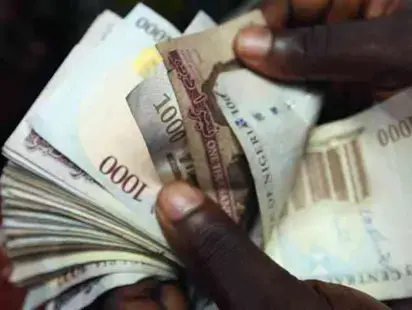
…as currency outside bank drops 3%
•Credit to govt, private sector shrinks
By Elizabeth Adegbesan
Nigeria’s money supply (M²) fell by 0.8 percent month-on-month (MoM) to N123.4 trillion in January 2025 from N124.4 trillion in December 2025, indicating low liquidity in the banking system despite a decline in interest rate.
Central Bank of Nigeria (CBN) Open Market Operations (OMO) details for January 2026 showed that interest rate on OMO declined by 2.2 percentage points MoM to 17.2 percent as at January 30th 2026 from 19.4 percent as at December 2025.
Data from the CBN’s Money and Credit Statistics for January 2026 released yesterday showed that all M² components declined during the period except narrow money and demand deposits.
Quasi money (highly liquid, non-cash assets that can be quickly converted into cash) fell by 1.2 percent to N81 trillion in January 2026 from N82 trillion in December 2025.
Similarly, currency outside bank declined by 3.7 percent to N5.2 trillion in January 2026 from N5.4 trillion in December 2025.
Likewise, Demand Deposit also increased by 1.14 percent to N37.12 trillion from N36.7 trillion in December 2025.
The decline in M² was also reflected in the net domestic credit as credit to government and private sector which declined during the period.
Further breakdown of the data showed that credit to government fell by 0.11 percent to N34.18 trillion from N34.22 trillion in December 2025.
Credit to the private sector also recorded 0.79 percent fall to N75.2 trillion in January 2026 from N75.8 trillion in December 2025.
This resulted in a net domestic credit of N109.4 trillion in January 2026, representing a 0.59 percent decline from N110.06 trillion in December 2025.
Recall that Nigeria’s public debt stock stood at N153.3 trillion as at September 2025 according to data from the Debt Management Office, DMO.
Borrowing has been a legitimate fiscal financing mechanism but the quality and productivity of debt utilisation ultimately determine sustainability.
Analysts opined that the critical issue is whether borrowed funds are channelled into value-generating capital expenditure capable of expanding the productive base of the economy.
They however reiterated that borrowing should be strategically deployed toward growth-enhancing investments, while governments at all levels strengthen internal revenue mobilisation, leverage areas of comparative economic advantage, and avoid excessive debt accumulation that could heighten medium-term fiscal vulnerability.
The post Nigeria’s money supply drops slightly to N123trn appeared first on Vanguard News.

By Progress Godfrey
Galaxy Backbone (GBB) has intensified its engagement with banks, fintech firms, and other financial institutions as the Central Bank of Nigeria (CBN) moves to enforce the local storage of payment transaction data.
The digital infrastructure and shared services provider, in a statement yesterday, brought together Chief Information Officers, fintech leaders, and technology stakeholders at its second-quarter webinar to discuss digital trust, regulatory compliance, and resilient infrastructure for the financial sector.
The webinar followed the CBN’s directive to banks, fintech companies, mobile money operators and other payment service providers to store payment transaction data generated in Nigeria on local servers to strengthen regulatory oversight, improve transparency and ensure critical financial data remains within the country.
The company highlighted its comprehensive digital infrastructure, saying, “Galaxy Backbone’s value proposition is further strengthened by its Uptime certified Data Centres, Payment Card Industry Data Security Standard (PCI DSS) certification, sovereign cloud platform and nationwide fibre infrastructure.’
“Together, these capabilities provide banks, fintechs and payment service providers with trusted platforms for secure data hosting, payment security, regulatory compliance, business continuity and disaster recovery.
“They also support the growing need for data sovereignty by ensuring that critical financial data is securely hosted, readily accessible and remains within Nigeria’s jurisdiction in line with regulatory expectations,” it added.
Opening the webinar, Executive Director, Finance, Ibrahim Sani, said Nigeria’s financial sector was evolving rapidly, making trusted digital infrastructure essential for secure and reliable financial services.
He noted that GBB already provides secure connectivity, cloud and data centre services to several public and private sector institutions, including financial organisations.
GBB’s Head of Automation and Integration, Thomas Oghenebhumhe, also highlighted the role of the company’s sovereign cloud in helping financial institutions improve efficiency, protect sensitive information and meet regulatory requirements.
Head of Data Centre Operations, Samuel Olusola Oyeleke, said Galaxy Backbone’s globally certified Tier III and Tier IV data centres provide the resilience, reliability and high availability needed to support uninterrupted digital services, disaster recovery and business continuity for critical financial operations.
He said the infrastructure is designed to help financial institutions maintain continuous operations while meeting growing regulatory and operational demands.

By Emma Ujah, Abuja Bureau Chief
The Director-General of the National Pension Commission (PenCom), Omolola Oloworaran, has said the proposed Pension Industry Infrastructure Fund is in the final stages of implementation as part of efforts to channel a portion of the industry’s over N32 trillion assets into infrastructure and the capital market.
She said: “The pension industry infrastructure fund is now in advanced stages for implementation. We already have a framework which has been deliberated upon, and we will go back and review it.”
According to her, “We also considered initiatives aimed at strengthening the industry’s participation in the capital market. The pension fund industry has probably the largest pool of passive, long-term capital in the country, so we need to be more engaged. The PFAs will return to their boards and stakeholders, and within the next one or two months we should be able to take a position on how to proceed.”
On contributors’ welfare, she said: “One of the key objectives we want to achieve is improving retirement outcomes for retirees. We continue to examine initiatives, both locally and globally, that can help us put more money in the hands of ordinary Nigerians while also improving pension literacy and awareness.”
Announcing the maiden National Pension Week, Oloworaran said: “It will hold from September 15 to 19. The initiative is designed to draw attention to the pension industry, bring stakeholders together, improve accountability and transparency, deepen pension literacy, and drive the Personal Pension Plan.”
On expanding pension coverage, she said: “Our target is to enrol one million market women under the Personal Pension Plan, but we are still far from that goal. We are engaging market women associations, the National Union of Road Transport Workers and other groups across the country. We have not reached our target yet, but it is work in progress, and we are getting there.”

By Obas Esiedesa, Abuja
The Group Chief Executive Officer of NNPC Limited, Engr. Bayo Ojulari, yesterday disclosed that the company remitted N19.5 trillion to the Federation Account between April 2025 and June 2026.
Speaking during the 2026 Nigeria Oil and Gas Energy Week in Abuja, Ojulari said the company also achieved $3.4 billion in cost savings over the period through contract restructuring and optimisation.
He said oil production increased by six per cent year-on-year to 569.7 million barrels, while gas production rose by 8.1 per cent year-on-year to 2.576 billion standard cubic feet.
Ojulari disclosed that NNPC recorded an average recovery rate of 98 per cent across its five crude oil export terminals between April 2025 and May 2026, compared with operational lows of about one per cent at the Bonny Oil and Gas Terminal in June 2022.
He also announced that Nigeria’s crude oil production had risen to 1.71 million barrels per day, the highest level in five years, while NNPC Exploration and Production Limited (NEPL) recorded a historic production of 365,000 barrels per day.
According to him, gas production has climbed to 7.5 billion standard cubic feet per day, driven by the successful completion of the River Niger crossing on the Ajaokuta-Kaduna-Kano (AKK) Gas Pipeline and the commissioning of the ANOH Gas Processing Plant.
Ojulari further stated that NNPC maintained 100 per cent compliance with all Joint Venture cash call obligations throughout 2025 and up to June 2026, while sustaining efforts to achieve the national crude oil production target of two million barrels per day.
In her keynote address, the Special Adviser to the President on Energy, Olu Verheijen, said Nigeria’s energy reforms were beginning to restore investor confidence, with more than $10 billion in Final Investment Decisions (FIDs) secured over the past three years and over $50 billion worth of investments currently in the project pipeline.
Verheijen said the administration was repositioning Nigeria as a competitive destination for global energy capital through regulatory reforms, fiscal incentives and improved policy certainty.
She said the government was targeting crude oil production of three million barrels per day and 10 billion standard cubic feet of gas per day by the end of the decade.
“Capital is no longer sentimental. It is not moved by speeches, slogans or sympathy. It follows credibility and asks one question: can this country turn resources into bankable projects and bankable projects into reliable returns?” she said.


Tottenham Star Cristian Romero Considers La Liga Move Amid Transfer Speculation
CBN Data Localisation: Galaxy Backbone moves to capture banks, fintechs

Osun police probe Ijebu-Jesa killing

Meaning Behind Egypt Manager’s ‘X’ Gesture vs Argentina

Simi Sanya and Femi Dapson Are Now Legally Married and It Is Beautiful to See

Premier League Set-Piece Goals (2025/2026)
-
Sports11 hours ago
Meaning Behind Egypt Manager’s ‘X’ Gesture vs Argentina
-
 Sports2 days ago
Mexican Media Cast Verdict on England After Chaotic World Cup Win
-
 Sports2 days ago
Wayne Rooney Blasts FIFA’s Decision to Suspend Folarin Balogun’s Red Card
-
 Sports1 day ago
Rodri Addresses Bernardo Silva Incident During Spain 1-0 Portugal
-
 Sports21 hours ago
‘Real Reason’ Why Sami Zayn Lost His Title to CM Punk
-
 Sports1 day ago
World Cup Fans Claim Bernardo Silva Player ‘Cost’ Portugal vs Spain
-
 Sports2 days ago
Martin Odegaard Speaks on Neymar Clash After Norway 2-1 Brazil
-
 Sports12 hours ago
VAR Expert Claims Egypt Should Have Had Penalty vs Argentina