
Sports
AI Names and Ranks the 20 Greatest American Athletes of All Time


Throughout the years, the United States has been known as the home of some of the finest athletes across all sports. From basketball to athletics, baseball to American football, the country’s sporting identity is as strong as any other.
There have been so many stellar athletes to come from the home of the brave that determining who is the best is a near-impossible task. Numerous factors go into such a decision, meaning opinions will always vary. That is why GIVEMESPORT has enlisted the help of ChatGPT to name and rank the 20 greatest American athletes, removing any potential emotional bias from the discussion.
Kicking things off with those who missed out on the top 10, the list starts with basketball icons Kobe Bryant and Larry Bird, both of whom were the faces of the NBA at various points in their careers. Meanwhile, Venus Williams ranks 18th, far behind her sister (spoiler).

© USA TODAY-USA TODAY NETWORK
We return to basketball with Wilt Chamberlain at 17th, before Mia Hamm becomes the only soccer player to make the list, highlighting her status as one of the greatest women’s players of all time.
Olympic heroes Carl Lewis and Jesse Owens are sandwiched around arguably the greatest point guard in NBA history, Magic Johnson. Meanwhile, Jim Brown and Bo Jackson round out the bottom half of the list, just narrowly missing out on the top 10.
|
AI Ranks 20 Greatest American Athletes in History (20-11) |
|
|---|---|
|
Rank |
Athlete |
|
20. |
Kobe Bryant |
|
19. |
Larry Bird |
|
18. |
Venus Williams |
|
17. |
Wilt Chamberlain |
|
16. |
Mia Hamm |
|
15. |
Carl Lewis |
|
14. |
Magic Johnson |
|
13. |
Jesse Owens |
|
12. |
Jim Brown |
|
11. |
Bo Jackson |
10
Michael Phelps

Michael Phelps is widely regarded as one of the greatest athletes period due to his unprecedented success in swimming and his impact on global sport. With 28 Olympic medals, including 23 golds, he stands as the most-decorated Olympian of all time, surpassing legends across disciplines.
His dominance in the pool, spanning five Olympics, showcased unmatched versatility and endurance, redefining excellence in swimming. Beyond his medal haul, Phelps elevated the sport’s visibility worldwide, inspiring countless athletes and expanding swimming’s global appeal. However, the fact that as a whole, swimming does not appeal to the mainstream in the same way other sports do, harms Phelps’ standing.
9
Billie Jean King

Billie Jean King’s impact extends far beyond the trophies she lifted. Winner of 39 Grand Slam titles, she dominated tennis during the 1960s and 1970s with fierce competitiveness and remarkable skill. Her famous “Battle of the Sexes” victory against Bobby Riggs became a cultural milestone, advancing women’s fight for equality and expanding tennis’ global audience.
King’s tireless advocacy for gender pay equity and LGBTQ+ rights further cemented her as a transformative figure. Without her, other trailblazers, including one that is set to feature later on in this list, may never have impacted women’s tennis in the way they did.
8
LeBron James

LeBron James’ career stands as a model of versatility, longevity, and cultural influence in American sports. A four-time NBA champion and multiple-time MVP, he has consistently excelled across two decades, adapting his game while remaining a dominant force on the court.
His ability to elevate teammates and deliver in critical moments has placed him alongside legends such as Michael Jordan and Kareem Abdul-Jabbar in basketball history. Beyond statistics and championships, LeBron’s influence reaches globally, with his advocacy for social justice and initiatives, a prime example of how athletes with such power should use it.
7
Jackie Robinson

By breaking baseball’s colour barrier in 1947, Jackie Robinson became far more than an athlete — he became a symbol of progress in American life. As the first black player in modern Major League Baseball, he endured relentless hostility with resilience, reshaping both the sport and the nation.
His brilliance on the field was undeniable: Rookie of the Year, National League MVP, World Series champion, and six-time All-Star. Those accolades are just short insight into his talent, but the hardships he faced to even get to the point prove Robinson’s mental toughness and only add to his inspiring tale.
6
Tiger Woods

Few athletes have changed the game in an entire sport the way Tiger Woods has transformed golf. Emerging in the late 1990s, he quickly became a global icon, winning 15 Major championships and 82 PGA Tour titles, achievements that rank him among the most successful golfers in history. His dominance combined power, precision, and mental toughness, changing perceptions of the game and inspiring a new, more diverse generation of players.
Despite personal and physical setbacks, his comebacks underscored resilience even if he didn’t always make it back to the top. That said, his 2019 Masters victory after one of the most difficult periods of his life, only adds to the urban legend surrounding the greatest golfer there ever was.
5
Simone Biles

Redefining what is possible in gymnastics, Simone Biles has become a global symbol of excellence and resilience. With 37 World and Olympic medals, she is the most-decorated gymnast in history, her routines marked by difficulty and innovation that few can match. Biles’ dominance has elevated gymnastics’ global profile, inspiring young athletes worldwide and expanding interest in the sport beyond traditional audiences.
Just as significant is her openness about mental health, reshaping conversations around athlete wellbeing and challenging stigma. While many athletes bury their heads in the sand when it comes to the mental toll the pressure on them takes, Biles made it clear exactly what she needed to do to be healthy across all aspects of her life. That, in itself, is perhaps the best lesson she could’ve given any of her young fans.
4
Tom Brady

Dominance in American football is often fleeting, yet Tom Brady sustained it across two decades, becoming a symbol of longevity and competitive drive. As quarterback, he led teams to seven Super Bowl titles and earned three league MVP awards, achievements unmatched in NFL history. His ability to perform under pressure, exemplified by dramatic comebacks, set him apart from peers and solidified his reputation as the ultimate leader on the field.
Brady’s influence extended globally, helping to grow the NFL’s audience and reputation abroad. As a household name, people from across the world would tune in to Super Bowls if his name was remotely linked with it. People joke about American football being for one nation, but Brady’s value is proof that is not the case.
3
Muhammad Ali

Few athletes have combined skill, charisma, and social impact as effectively as the world’s most famous heavyweight boxer of the 20th century. Known for his lightning-fast footwork, powerful punches, and unmatched showmanship, he dominated the ring and won three world heavyweight titles.
Muhammad Ali became a global symbol of courage and conscience, challenging racial inequality and opposing the Vietnam War draft, inspiring millions worldwide. And while footage and memories of his fights may fade over time, what won’t are some of his unique catchphrases. Rarely outside of the world of professional wrestling do you see athletes with such a gift of the gab. Yet, Ali could talk all day and keep a crowd entertained all night with his fights.
2
Serena Williams

Transforming women’s tennis with power, precision, and unmatched competitiveness, the sport saw a global icon emerge in Serena Williams. Dominating for over two decades, she has won 23 Grand Slam singles titles — the most in the Open Era — alongside 14 Grand Slam doubles titles, showcasing her versatility and longevity. Williams has inspired countless young athletes worldwide, breaking barriers for women and people of colour in sport.
As has been referenced so many times on this list already, the true art of being a great athlete is sustained dominance, and if that was the only criteria for the AI to consider on this list, perhaps Williams would top the charts. However, one man instead has been given the nod.
1
Michael Jordan

Elevating basketball to an international spectacle, the sport found its defining figure in Michael Jordan. His extraordinary athleticism, precision, and competitive intensity propelled the Chicago Bulls to six NBA championships and earned him five league MVP awards, cementing a legacy unmatched in professional basketball.
Jordan’s influence extended far beyond the court: he transformed sports marketing, inspired generations of athletes, and helped popularise basketball worldwide. Known for his clutch performances and relentless drive, he became a cultural icon whose impact resonates across sport and society.

When Cristiano Ronaldo steps onto a football pitch, expect him to stand out.
And one thing that has stood out, besides the Portuguese star’s consistency on the pitch, is his fondness for long sleeves. The five-time Ballon d’Or winner has played in contrasting climates, from the cold of Manchester to the unforgiving cauldron of Real Madrid’s Santiago Bernabéu, but the long sleeves have stood the test of time.
But what is the reason behind CR7’s enduring style choice?
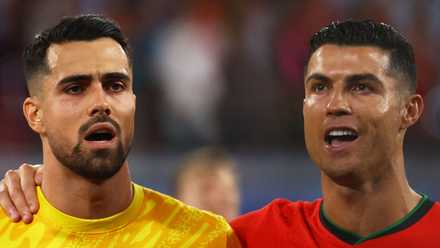
Why Cristiano Ronaldo Stands Sideways During Portugal’s National Anthem
It’s a habit he’s had for many years now.
Why Cristiano Ronaldo Wears Long Sleeves

Whilst Ronaldo has never provided an explanation for his sartorial sporting choice, there are a number of hypothetical reasons that could provide an answer.
Firstly, Ronaldo has played predominantly in Europe, having represented Sporting Lisbon, Manchester United, Real Madrid, and Juventus across the continent. The European winters can be brutal, even in countries that tend to have higher temperatures throughout the year.
Ronaldo spent the early years of his career in the United Kingdom, building his reputation under Sir Alex Ferguson at Manchester United. The contrast in temperature between Portugal and England is significant. Perhaps Ronaldo adopted his long sleeves as a defence against the cold, becoming a subconscious habit of his youth that he never discarded.
It should be noted that Ronaldo has continued to wear long sleeves in the hottest locations he has played in too. CR7 sported long sleeves during his tenure at Real Madrid, regardless of the time of year. He also notably maintained a longer sleeve during a Euro 2020 match in the United Kingdom. England is well known for its humid summers, but the heat still wasn’t enough to force the Portuguese attacker into a short-sleeve shirt on this occasion.
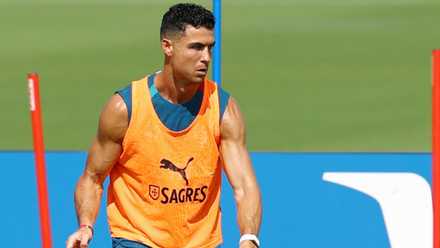
Cristiano Ronaldo Diet, Exercise & Workout Routine
Cristiano Ronaldo has always been known for his dedication to his body, whether it his diet or his gym routine, he has always looked like an athlete.
Does Cristiano Ronaldo Ever Wear Short Sleeves?

Despite becoming a signature part of his look, Cristiano has on occasion dispensed with the long sleeves.
During Euro 2020, Ronaldo did change his shirt during a fixture in Munich. Starting the game against Germany in long sleeves, the former Real Madrid star changed into a short-sleeve shirt for the second half.
But maybe Ronaldo should’ve kept his long-sleeve shirt on. After scoring in the first half, Ronaldo failed to have the same impact in short sleeves in the second half as Portugal went on to lose 2-4. However, fans might want to forgive the attacker for his wardrobe change as temperatures exceeded 30 degrees Celsius during the group stage game.
The fact that Ronaldo has predominantly worn long sleeves during the latter stages of his career may be a case of superstition. The Portugal star donned short sleeves for his country’s Euro 2004 and World Cup 2006 campaigns, which both ended in tears for CR7. Ronaldo was, however, in long sleeves for his country’s Euro 2016 triumph, suggesting that they may be his good luck charm.
But beyond superstition or weather conditions, it could simply be a case of brand. Ronaldo’s image as a football superstar has been built around a specific iconography. The prolific forward has built a signature style that extends beyond the football pitch and the long sleeves may just be another contribution to his distinct image.

Football in the VAR era has conjured up more than a few controversies, with the 2026 World Cup providing no exception. But for the most part, co-hosts the United States had managed to sidestep any unwanted technological interventions — until their knockout fixture against Bosnia-Herzegovina.
The in-form USMNT striker Folarin Balogun was sent off after a video review during his team’s Last 32 match. But stranger still was the nature of the red card’s reversal. Under Article 27 of FIFA’s Disciplinary Code, Balogun was spared the pain of a one-match suspension during the tournament despite the red card.
The ruling has been utilised similarly in the World Cup before, but how does it prevent a punished player from serving their suspension?

Alexi Lalas’ Lionel Messi Tweet Goes Viral After Folarin Balogun Red Card For USA vs Bosnia
Outspoken World Cup pundit Alexi Lalas posted a tweet involving Messi after USMNT star Balogun was sent off against Bosnia
What Happened With Folarin Balogun?

The former England U21 striker was sent off for an accidental, but dangerous challenge on Bosnia-Herzegovina defender Tarik Muharemovic. Balogun had earlier scored the first goal in what would be the USA’s 2-0 Last 32 victory.
Referee Raphael Claus had not even awarded a free kick for Balogun’s challenge despite standing just a few yards away from the incident. But after being advised to review the incident by the video assistant referee, slow-motion replays showed Balogun’s foot landing high on the ankle of the Bosnian defender. The USA international was shown a straight red card in a decision that was widely criticised.
What is the FIFA Rule That Allows Red Cards to Be Suspended?

Article 27 of FIFA’s Disciplinary Code has been the subject of close attention in light of Balogun’s red card. The code does not allow appeals against straight red cards, with US Soccer representatives confirming this after the game when questioned about a possible appeal.
However, FIFA decided to enact Article 27 in the context of Balogun’s red card, rescinding it and therefore making him available for the Last 16 tie against Belgium.
Section 1 of Article 27 states that FIFA’s judicial committee has the power to “fully or partially suspend the implementation of a disciplinary measure.” However, the red card will stay on the Monaco forward’s record for a probationary period of one year, as stated in Section 2 of Article 27.
“By suspending the implementation of the sanction, the judicial body subjects the person sanctioned to a probationary period of one to four years.” Essentially, if Balogun commits another similar violation, he will serve his one-match ban.
FIFA Article 27 in Full
- The judicial body may decide to fully or partially suspend the implementation of a disciplinary measure.
- By suspending the implementation of the sanction, the judicial body subjects the person sanctioned to a probationary period of one to four years.
- If the person benefiting from a suspended sanction commits another infringement of a similar nature and gravity during the probationary period, the suspension shall be revoked by the judicial body and the sanction enforced without prejudice to any additional sanction imposed for the new infringement.
- Disciplinary measures relating to match manipulation cannot be suspended.
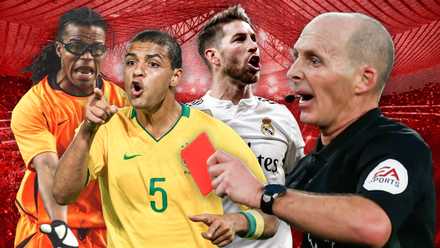
15 Players with the Most Red Cards in Football History
The 15 players with the most red cards in football history have been named and ordered with Sergio Ramos second.
Has Article 27 Been Used Before?

Interestingly, Article 27 has already played a major role in the 2026 World Cup. Cristiano Ronaldo was sent off in a World Cup qualifier against the Republic of Ireland in November 2025 that resulted in a three-match ban. This would’ve ensured that he missed the first two group games of Portugal’s tournament.
However, FIFA used the ruling to reduce the ban to one match, which he served in another qualifier against Armenia. This allowed Ronaldo to participate in the group games against the DR Congo and Uzbekistan, with the 41-year-old scoring twice against the latter.
Perhaps more controversially, Brazilian great Garrincha was permitted to play in the 1962 World Cup Final despite receiving a red card in the preceding game. Garrincha was sent off against Chile in the semifinal but no suspension was enforced. Brazil would go on to defeat Czechoslovakia 3-1 in the final.
Did Donald Trump Play a Role in Balogun’s Red Card Suspension?

Considering his nation are co-hosts and performing impressively in the World Cup, the US President has been unusually quiet on social media. However, that all changed with one post following the cancellation of Balogun’s suspension.
This post came after Trump reportedly made calls to FIFA, asking for Balogun’s ban to be lifted. There were further reports following Trump’s social media post that the White House World Cup taskforce had brought a challenge against Balogun’s suspension, specifically citing the use of slow-motion replays to support VAR decisions. Beyond the debate around Article 27, the knock-on effect of this appeal could lead to further legal challenges against professional football’s disciplinary approach.
The United States’ next opponents, Belgium, were understandably vexed by the decision. In a damning statement, the Royal Belgium Football Association (RBFA) were “astonished” by FIFA’s decision-making, accusing them of contradicting their own rules and regulations.
“In order to safeguard the legitimate rights of all participating teams and to protect the fundamental principles of fair play in our sport, both at this World Cup and at future editions of the tournament, the Belgian FA is investigating all potential options,” the RBFA concluded.
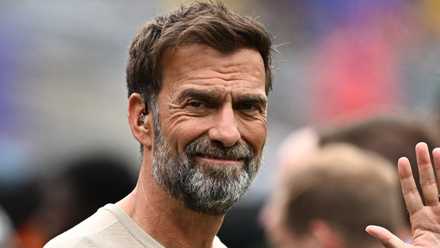
Klopp’s Comments After ‘Trump Asked Infantino to Revoke Balogun’s Red Card’ Go Viral
Klopp has reacted to the news.

In what was an absolutely engrossing encounter, Norway have knocked Brazil out of the World Cup. Erling Haaland stole the show with two goals in the 2-1 victory, but there were plenty of other talking points as well.
The Manchester City forward rose highest to head in the opener after 79 minutes, before then essentially putting the game to bed with a stunning strike to make it 2-0 in the 90th minute. From here, Brazil substitute Neymar would net a late penalty, but this wasn’t enough to keep his team in the tournament.
In the dying stages of the game, Norway put on a masterclass in keeping the ball away from their opponents, with Arsenal star Martin Odegaard dancing around the pitch. Usually the one pulling off the tricks, Neymar took issue with the midfielder and they were involved in a little coming together late on.
Neymar Loses it With Odegaard During World Cup Defeat
Numerous clips have gained traction online, showing Odegaard and his teammates keeping possesion with great technical skill, while the Brazilian players failing to win the ball back. In an act of both frustration and desperation, Neymar then brought the Arsenal ace down with a cynical foul.
Shortly after the resulting free-kick, the pair clashed once again, with Neymar shoving the Norway captain in the chest, prompting a number of other players to rush to get involved in the minor melee. The Brazilian was then booked. Watch the footage below:
Neymar did get on the scoresheet for Brazil, but his tempered even flared up in that moment as well, as he had a verbal spat with Norweigan goalkeeper Orjan Nyland before scoring his penalty. Despite the antagonisation, Odegaard and his teammates did well to keep their cool and have the last laugh as they won the game to set up a quarter-final encounter against England.
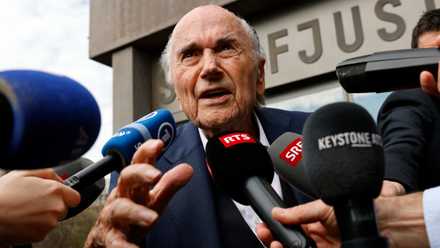
World Cup: Sepp Blatter Makes Feelings Clear After FIFA Suspend Balogun’s Red Card
FIFA’s decision to suspend USMNT star Folarin Balogun’s one-game ban has sparked outrage, and now Sepp Blatter has given his strong views.
Neymar Waited For Odegaard As Norway Captain Speaks Out
As the full-time whistle was blown, Neymar was seen bursting into tears with this almost certainly his final shot at World Cup glory. Now aged 34, he may also never play for Brazil again.
In fairness to the Santos star, however, having calmed down a little, he then showed good sportsmanship as he was seen waiting for Odegaard to pull out of a hug with teammate Sander Berge. He then embraced the Premier League-winning midfielder as the pair appeared to make amends while sharing a quick conversation.
It’s unclear what exactly was said between the two stars, but Odegaard has commented more generally on his little spat with Neymar, revealing to the press how he really felt about the Brazilian after full-time:
“Yes, it got a little awkward. But there was a good atmosphere afterwards. So it ended well.”
Brazil have now failed to win the World Cup since 2002, with 2026 marking the Selecao’s sixth consecutive tournament without lifting the trophy. Norway will hope to make positive headlines again when they now take on the Three Lions on 11 July.

Why Cristiano Ronaldo Always Wears Long-Sleeve Shirts

Police apprehend newly initiated cultist, two others in Akwa Ibom
Article 27 of FIFA Disciplinary Code

Simi Sanya and Femi Dapson Are Now Legally Married and It Is Beautiful to See

Premier League Set-Piece Goals (2025/2026)

FCT Area Council Election: Live results from polling units
-
 Sports17 hours ago
Neymar’s Comment to Norway Goalkeeper Orjan Nyland After Scoring Penalty
-
 Sports1 day ago
Mexico vs England Referee Already Made World Cup Blunder
-
 Sports2 days ago
Joe Hart Slams ‘Disgrace’ France vs Paraguay Referee
-
 Sports2 days ago
Vozinha Reveals What Lionel Messi Told Him After Argentina 3-2 Cape Verde
-
 Sports18 hours ago
Zlatan Ibrahimovic Causes Big Stir With Reaction to FIFA Suspending Folarin Balogun’s One-Game Ban
-
 Sports8 hours ago
Mexican Media Cast Verdict on England After Chaotic World Cup Win
-
 Sports19 hours ago
Mario Balotelli Names One Footballer Better Than Lionel Messi
-
 Sports9 hours ago
England Fans Praise ‘Animal’ Anthony Gordon vs Mexico