
Politics
Nigeria facing one-man rule, not one-party rule — Adewole Adebayo, ex-SDP presidential candidate


By Olalekan Bilesanmi
As insecurity deepens across Nigeria and political tensions begin to shape the road to 2027, former presidential candidate and Social Democratic Party (SDP) leader, Prince Adewole Adebayo, offers a candid and wide-ranging perspective on the state of the nation. Fresh from a visit to crisis-hit communities in Plateau State, Adebayo speaks on the humanitarian realities often ignored beyond media headlines, raising concerns about what he describes as widespread but under-reported violence across the country.
He reflects on leadership failures, the weakening trust between citizens and government, and the urgent need to rebuild national confidence. In this interview, he also addresses speculations about his political ambitions ahead of 2027, weighs in on the fragility of opposition parties, and warns against what he calls a growing drift toward “one-man rule” rather than a one-party state under President Bola Ahmed Tinubu. From electoral participation to the collapse of political ideology, Adebayo argues that Nigeria’s biggest challenge is not just structural, but deeply rooted in leadership and values.
You have been travelling round the country. You visited Jos. What were you hoping to find out when you visited Plateau State?
I visited Plateau to find out the plight, particularly of the people of Angua and Rubuka, who were meted out with the worst kind of humanitarian crisis you can think of. For invaders to visit a community like that and, in a flash, render many families bereaved, kill many people, disturb the peace of the community, injure many people, and traumatise the entire community — it was devastating. So, I thought that we needed to go there and restore the hope of the people in the country, for them not to lose hope, as they were already feeling like stateless people — people unprotected by any government. People were beginning to question the humanity of fellow human beings. They were wondering if they were left alone, and I thought it was good to be with them, to restore their faith and confidence in Nigeria — to know that Nigeria is an ongoing project that has good prospects, as it is the greatest country anybody can be born in. Despite all the problems we are facing, the failure of our government does not mean the bankruptcy of the country as a whole, and I think we did a bit of that. I also wanted to know from the first responders, the security personnel, if they thought they could deal with these issues — if they were abreast of them. I wanted to know why they couldn’t respond to the killings and disaster, and what they were doing to engage with the community and the youths; what they thought could have been done differently, and their views about law enforcement. I met with the community leaders and heard their views and perceptions about government, both at the state and federal levels. I then met with families of the victims. Since leaving the town, other people have been calling and mentioning their own issues. I essentially learnt that, apart from the publicly known, notorious, and sensational killings, there are several low-key killings going on in every part of the country that people have taken for granted. They feel: “What’s the point of talking? Let’s find local solutions, as nobody will listen to us.” So they have been calling us and giving different instances that can make one ashamed.
Is this act of yours for optics, especially for the office you want to contest in 2027, or just as an ordinary Nigerian?
Politics is not on my mind at this stage; it’s just about the survival of the country. I was thoroughly embarrassed that the president failed in his leadership by going to the airport and complaining that there was no electricity, looking at his watch as if it was an ordeal, instead of taking the 18-minute drive to the epicentre and using that opportunity to talk to the families one-on-one and survey the area where the people are living. I thought we needed to show the people that we are not all like that. Not only did I go there, I spoke with many of the faith leaders and realised that people are beginning to lose that sense of solidarity. The opportunity afforded me a way to see how to be a better commander-in-chief — to know how to gather intelligence, how to work with communities, and to realise that Nigerians can actually live up to their responsibilities if they have just a little support. Speaking with the law enforcement agents there, I gained more knowledge and more confidence in them, even as I sympathised with them that they are under poor leadership.
You could see the governor, who appears not to be part of the community in a way. If he were to be a good commander-in-chief whose priority is the safety and protection of communities, our law enforcement agents have the capacity to do it. Unfortunately, they are not being supported. When I went there, even after the event had occurred, I first understood why the police station in Agbarukuba couldn’t respond — nobody could respond in the kind of situation they found themselves in. Since then, not much has been done to increase capacity. I see that the intelligence is there; however, I don’t know why it failed. I think we need to take advantage of these experiences to craft our community protection system, and I have learnt a lot from that.
Are you running for president in 2027?
Yes, of course. But you can be a politician and still be a decent human being who genuinely wants to mourn with those who are mourning. You can be a politician and be a decent Christian and family member. I went there as a brother to the community. That, of course, is not the loudest podium for politicians at that time, but I needed to be with them. That job has been done, and I will continue to be with them even behind the cameras. The point is, it is a political season, and I am running for president under the SDP. I ran last time with the slogan “Farewell to poverty and insecurity.” It is all linked together. Poverty has increased and insecurity has worsened. One must speak about it from time to time, develop better solutions than those presently available, and get the community to buy into those solutions.
The opposition parties appear to be in shambles, especially with the crisis rocking the ADC, where different factions have emerged.
I am a politician, but primarily I am a lawyer. As a lawyer, I have professional ethics. When a matter is before the court, whether it affects my party, my interest, or other people, I usually pay attention to what goes on in court, because when you get newspaper reports or third-party renditions, they often do not align with what actually happens in court. What I understand in the case of the ADC is that they changed leadership, and there is a tussle as to who is the leader or whether the leadership was properly transitioned, and the matter is in court. INEC is a party to the suit, and INEC has an interpretation of the court order that says they should observe the status quo. It is legitimate for leaders of the ADC to disagree with INEC’s interpretation. It is their right to protest, but in reality, it is much easier if all the parties go back to court and clarify the actual meaning of ante bellum. In politics, you don’t teach the other person how to play politics. If the matter is in court, and INEC is a party to the proceedings, and the ADC — including Nafiu Bala — is part of the same proceedings before a judge, then if the interpretation of the order is the only issue, that can be resolved in court. However, it does not mean that leaders of the ADC do not have the right to express their frustration. If they think INEC is their problem, they can go there to protest, but in reality, until the matter is defined by the court, none of the parties can claim finality.
With what is happening, people think Nigeria may not have a formidable opposition in the country.
All of these concerns are valid. You can address the overbearing nature of the government and the fact that it is using its incumbency to gain advantage over other contestants in an electoral situation. You can see how they misuse their majority to pass unpopular, unfair, and restrictive electoral acts.
You can also be concerned about political parties taking care of their internal systems. People join political parties knowing they are in opposition, so they should try as much as possible to minimise errors, reduce internal wrangling, and remain united. Every party has one or two elements that act like saboteurs, but with wisdom and proper management, these issues can be controlled. If you don’t have internal crises, it is easier to stand and challenge effectively. There is also a misconception people often express — the fear that Nigeria is moving towards a one-party state under the APC. In my candid observation, based on evidence, Nigeria is not moving towards a one-party state. What Nigeria is at risk of is one-man rule. If anyone in the APC thinks that Bola Ahmed Tinubu is trying to build a dominant one-party state, that is not the agenda. The real danger is a concentration of power in one individual. The first victim of such a system would be the APC itself, because as they get used to not having internal democracy and being dictated to by their leader — who is the president — they will lose institutional strength. They will not be like parties such as the ANC, where internal processes are strong and members are stronger than those in government. So, the APC itself becomes the first casualty. It is not going to be a one-party state, but rather a one-man rule, and the APC will struggle to function properly under such a system. Looking at the 2023 elections, none of the presidential candidates secured a dominant share of the vote. Out of about 89 million registered voters, the largest bloc did not vote at all. This shows that our politics has become that of a self-interested elite, leaving the electorate behind. No country can continue holding presidential elections with such low turnout and remain satisfied. It shows that the issues dominating media narratives and political agendas are not addressing the real concerns of the people. That is why people are effectively boycotting the process. Nigerians should not abandon democracy to politicians or the ruling party. Democracy remains the best means to ensure that issues like security, social welfare, infrastructure, employment, rule of law, and accountability are addressed. Citizens must remain active — watching those in power, holding them accountable, rewarding good performance, and voting out failure. If the electorate withdraws and focuses only on personal survival, then the system deteriorates further. We need a reset. More people must join politics with better character, and those who cannot change will eventually be pushed out.
Talking about one-man rule, cross-carpeting in this republic is quite rampant. This is a big challenge. Why is the judiciary always the solution to party internal wrangling?
I think it is about leadership recruitment. The difference between now and the past is that we used to have politicians in politics. As Aminu Kano noted during the transition to the Second Republic, we began to see businessmen entering politics. During military rule, contractors, apologists, and agents of the military realised that politics had become the most profitable business, so they entered it. That is how money politics took over.
Today, many politicians behave like merchants. There is no ideology or guiding principle. Like traders, they go where the price is lowest to buy and where it is highest to sell. There is no principle involved anymore. The mistake people make is assuming that anyone who dresses like a politician is actually one. That is not the case. We need to reinvent the political class.
Today, many in the political class are not leaders. They do not represent anyone, they are not leading anyone, and they have no direction. They simply struggle for positions.
If the system does not change, whenever power shifts, the same people will migrate to the new ruling party. Those who followed previous leaders now follow Bola Ahmed Tinubu. Tomorrow, they will follow someone else.
Even if — hypothetically — a deeply unfit person comes to power but controls resources, contracts, and patronage, people will still align with that person. That is the reality. What we need to do is return to the people and build a new political class. The current one is unlikely to change.
In light of the recent killings in some states, do you think the state police initiative can address insecurity?
Anything that is sincerely implemented will work. Even the current system can work if there is sincere leadership — a good commander-in-chief and security officers who are not motivated by money or politics. State police can also work, but only if the same principles are applied. If state police operates under the same style of leadership we currently see in some states, it will fail. The problem is not the structure — it is leadership. There is a leadership deficit at the federal, state, and local government levels, and even at the community level, leaders lack support. If you change the system, you must also change the leadership. Otherwise, nothing will improve.
www.vanguardngr.com

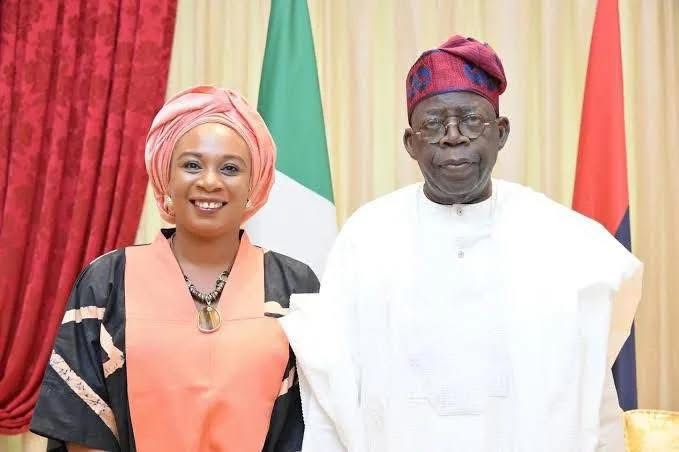
The All Progressives Congress, APC, has named Damilola Sonayon-James as Lagos deputy governorship candidate for the 2027 general elections.
Sonayon-James, who hails from Badagry, will be the running mate to Dr Obafemi Hamzat.
Princess Sonayon-James is a politician, sustainability specialist, and business leader, widely recognised for her grassroots mobilisation and advocacy for women’s empowerment.
She serves as the Deputy State Chairman of the APC in Lagos State.
She rose to prominence as the State Assistant Woman Leader and was later elevated to the role of Deputy State Chairman of the APC in Lagos State. She has also served as a Supervisory Councillor for Agriculture and Social Services in Badagry West LCDA.
Sonayon-James holds a Master’s degree in Social Work from Ladoke Akintola University of Technology, LAUTECH, and a degree in Business and Human Resources Management from the University of Hull in the UK.
She has built a dynamic career in human resources, logistics, and sustainability, operating as CEO of DGS Chauffeurs & Logistics.
The post Lagos APC picks Sonayon-James as Hamzat’s running mate appeared first on Vanguard News.
www.vanguardngr.com

By Emmanuel Okogba
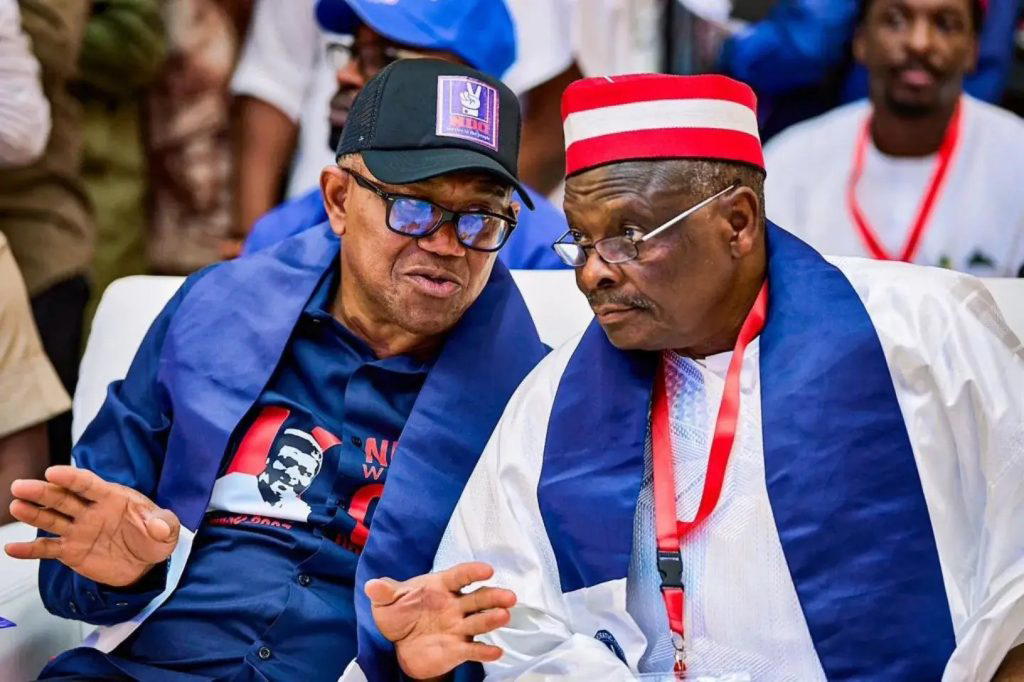
The presidential candidate of the Nigeria Democratic Congress (NDC), Peter Obi, has named former Kano State Governor Rabiu Musa Kwankwaso as his running mate for the 2027 presidential election.
Obi announced the decision on Saturday shortly after he was officially confirmed as the party’s presidential candidate ahead of the general election.
The announcement followed the NDC’s presidential primary, where Obi emerged as the party’s flagbearer.
Obi and Kwankwaso recently joined the NDC after leaving the African Democratic Congress (ADC), citing internal disagreements and prolonged legal disputes within their former party.
The emergence of the Obi-Kwankwaso ticket is expected to alter the dynamics of the 2027 presidential race by bringing together two influential opposition politicians with strong support bases in different parts of the country.
Obi is widely regarded as popular among young voters and enjoys significant support in the South-East and parts of the South-South, while Kwankwaso remains a major political force in Kano State and across sections of Northern Nigeria through his political network.
Party leaders expressed optimism that the alliance would boost the NDC’s prospects in the next presidential election, describing the ticket as a strategic combination capable of attracting broad national support.
Further details of the party’s campaign strategy are expected to be unveiled in the coming months as preparations for the 2027 polls gather momentum.
The post 2027 Presidency: Peter Obi picks Kwankwaso as running mate appeared first on Vanguard News.
www.vanguardngr.com

By Omeiza Ajayi
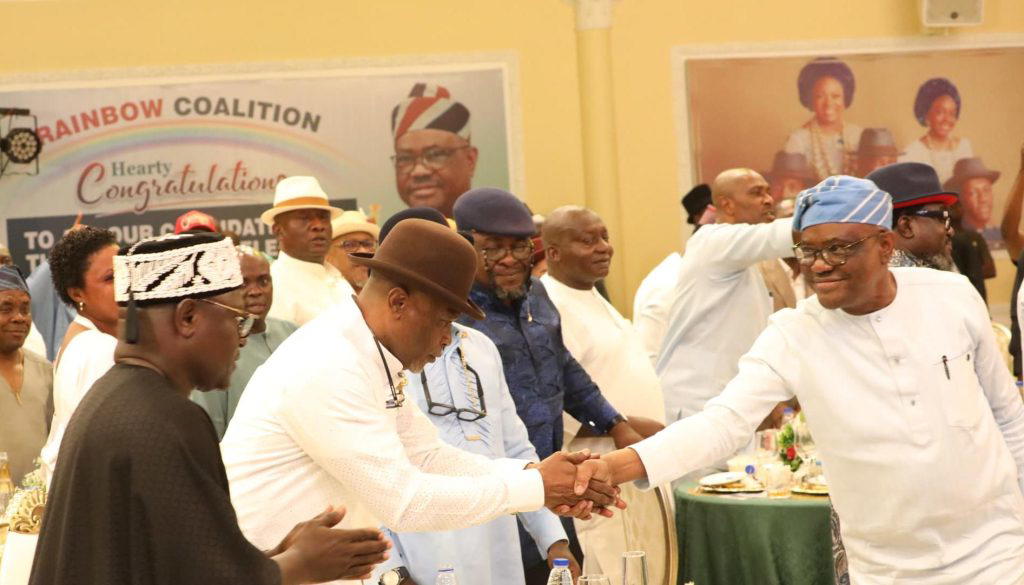
ABUJA – Federal Capital Territory FCT minister, Nyesom Wike on Saturday declared that the four political parties under the “Rainbow Coalition” in Rivers State will collectively agree on a single governorship candidate ahead of the 2027 general elections, shutting down speculation that any individual has already secured the ticket.
Wike, who spoke at a luncheon organized for coalition candidates in Port Harcourt, the state capital, said the alliance — comprising the Peoples Democratic Party PDP, All Progressives Congress APC, Labour Party LP and Action Alliance AA — has yet to settle on a flag-bearer, and that the decision will be taken jointly under the coalition’s leadership.
“The Rainbow Coalition, we have not chosen who will be the governor of Rivers State. But we have party candidates who have emerged under the Rainbow Coalition. The only decision we have taken is that we are going to support President Bola Ahmed Tinubu,” the minister declared.
Wike dismissed what he described as premature victory celebrations among some of the aspirants, warning that such claims create a false impression and undermine his own political standing, particularly given his membership of the PDP.
He urged all candidates from the four parties to sustain their grassroots mobilisation until the coalition formally convenes to take a unified position, adding that every candidate in the alliance is “okay for Rivers State.”
The minister also spoke about what he called a long-standing pattern of external exploitation of Rivers State’s political tensions, accusing certain human rights activists, commentators, and media organizations of profiting from the state’s instability. He said the Rainbow Coalition was assembled to permanently end that dynamic.
“God said no, we must come together as a people, irrespective of our political leanings. What is important is that we must talk about the development of our state. We must talk about the unity of our state,” Wike said.
He also took a swipe at fringe parties — singling out the African Democratic Congress ADC — arguing that political noise and defections are no substitute for genuine electoral structure, and that only the PDP, APC, and Labour Party have demonstrated the operational depth to prosecute statewide and national elections across Nigeria.
The post Rivers 2027: PDP, APC, LP, AA to jointly pick one governorship candidate — Wike appeared first on Vanguard News.
www.vanguardngr.com

Lagos APC picks Sonayon-James as Hamzat’s running mate
2027 Presidency: Peter Obi picks Kwankwaso as running mate

Why does BCG vaccine leave a scar?

Simi Sanya and Femi Dapson Are Now Legally Married and It Is Beautiful to See

FCT Area Council Election: Live results from polling units

Premier League Set-Piece Goals (2025/2026)
-
 Sports10 hours ago
Benjamin Mendy Now Lives Very Different Life
-
 Sports15 hours ago
‘I’m the Helicopter Pilot Who Saved Michael Schumacher
-
 Sports1 day ago
What Anthony Gordon Said in Spanish During Barcelona Unveiling
-
 Sports1 day ago
Where to Watch Toluca vs Tigres 2026 CONCACAF Champions Cup Final
-
 Sports16 hours ago
Rafael Jodar Speaks Out After Clip Goes Viral of Him ‘Shoving’ Ball Girl
-
 Metro2 days ago
Troops arrest two soldiers over alleged assault in Plateau
-
 Metro9 hours ago
Police arrest two for attempted theft of two-week-old baby in Abia
-

 Politics2 days ago
2027 guber: Dona Nwogbo emerges Enugu PDP factional candidate