
Politics
Stop running to Abuja: Governors can fix insecurity —Owoseni


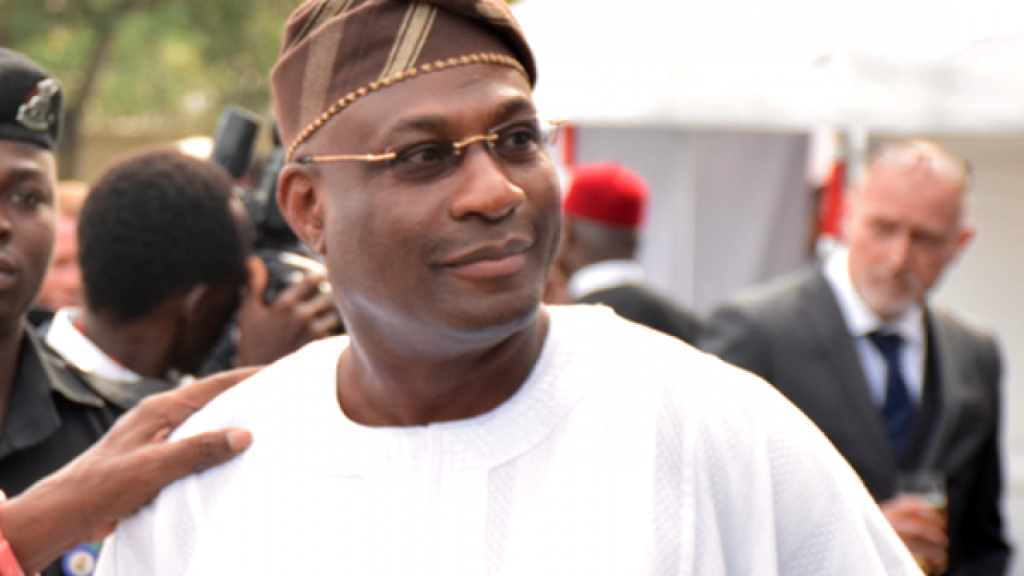
•Nigeria must find homegrown security solutions, not imports
By Clifford Ndujihe, Politics Editor
Retired Commissioner of Police, Fatai Owoseni, is not one to mince words on Nigeria’s festering insecurity. Having served in critical states like Lagos and Benue, and now advising the Oyo State Government on security, he argues that the problem is less about structure and more about leadership, trust and local initiative. In this interview, he dismisses claims that governors are incapacitated by the current security architecture, insisting they have both the authority and tools to act decisively. He also weighs in on intelligence gaps, state policing, and why Nigeria must stop searching abroad for solutions to its internal security challenges.
The recent attacks in Jos, Plateau State, are one too many. What do you think is responsible, and how can we curb such attacks?
I will start by paying condolences to the victims and the families of those people affected in the incident in Plateau State. And also, to the families of even our uniformed personnel who are being killed all over the country. Recently, we had a situation in Kaduna. There are situations that have been recurring all the time, and what this goes to say is that something must be missing in whatever we are doing with regard to securing our people. It is left for the people who are in the saddle now to identify what that thing is that is missing, what is the gap, and one of the areas that I will look at, which is critical, is the issue of the intelligence that we have been talking about.
We have been talking about technology, drones, and whatever, but technology without highly resourced boots on the ground? What do I mean by boots on the ground? The people that will do the actual work, technology alone cannot do it, and that is why we should be looking at how do we improve and get the trust of the people, because if we have the trust of the people, if they have confidence in our security system, they will also play a major role, and what is that major role? What we call human intelligence, because how do we explain that something happened last month, and everybody, including the people that I really know, will talk and say, “ Oh, yes, we sympathize. We are moving all the security heads to the Police. And just as you are saying that, another incident is happening in the same place. So, we must get the trust of the people. We must be able to let the people have confidence so that they can share real-time intelligence with us. Technology alone cannot do it. Our terrain is different. The insecurity problem in Nigeria, if we want to solve it, is not about importing a solution. The solution is within us, and we must find a way of tapping into that solution and optimizing our own capacity, which I believe that we have not optimized.
Days after the incident, the President invited Governor Caleb Muftwang and security chiefs. Are you satisfied with this approach?
We are saying the same thing. Yes, the president doesn’t even have to invite the governor. I believe that every governor has a solution within his domain. It is not the president and the people of the different states who voted to be their leader in that state. Whoever is a governor in a state is the president in that state. Whoever is the chairman of the local government is the president of his local government, the Commander-in-Chief of the Armed Forces. So, people must live up to their responsibility.
The issue of everybody running to Abuja, it is not the president that will design the security in the states for them. The local government chairmen, who you will find in most places in the country, are absentee in their councils. They don’t stay within the community. It is only when they want people’s votes that you see them within their community. Most of them live in the state capital, if they do stay at all. Some of our governors also, sadly, how many days or how many weeks do they even spend in their states? They must sit down before the president calls any governor to say he wants to help them address their security problem. The governor must be able to sit down and do a threat analysis with the security apparatus he has in his domain. So, when he’s going to meet the president, he should be telling the president that, yes, I have noticed that this is a gap in my state, and this is the area you can help me with. I believe that all the governors have what it takes to solve the problem within their domain. They should not wait for the president. They should not wait for the Chief of Army Staff, the Chief of Air Staff, or the institutional Police. They should optimize what they have on the ground. The traditional institutions are key partners.
We have been emphasizing non-state actors. I have been emphasizing it too. Every governor feels the solution to insecurity is the state police. No, it is not. It is one of the solutions. A whole society approach to securing our people is necessary. A whole society approach to policing. And, you know, getting the confidence of the people, getting the trust of the people, the governors should be on the ground. That is my own perspective.
A fact-finding committee is revisiting the root causes of violence in Jos. From your experience, what are the underlying drivers?
Insincerity. That is it. It is not about a fact-finding mission or the Task Force. In most cases, when they put fact-finding structures in place, these are people who are strangers to the community. They don’t get the people in the community involved. I would take Lagos as an example. I got to Lagos in 2015. What we met on the ground was that we had these banditry and robbery cases where one miscreant would go to banks, kill people, collect money, kill policemen, and all those things. We sat down. We looked at it. What can we do about it? Luckily for us at that time, the Nigerian police were well-equipped with a technical platform. We used it to our advantage. We optimized it. And that was why I said briefly that since that period that we tackled that robbery crisis up to the time I left Lagos in 2017 and up until today, how many times have you heard of all those serious bank robbery cases or in commercial places? The same thing with the issue of kidnapping. We addressed it squarely, and we had a government in Lagos at that time that was ready to support us with all the tools we needed.
We had a police hierarchy in the Force Headquarters that was ready to support us with the technical input we needed. We had the people of Lagos who were ready to support all our activities. And we were able to put that to pass. That is why when people talk of Lagos, they would say that the government is doing well. In Oyo State, we came here. We were able to share professional advice with the Governor here. We were also able to put structures in place. We are not saying we are perfect, but we centered all our architecture on proactive and integrated concept.
What is the integrated concept that we are doing in Oyo State? The handshake between the state actors and the non-state actors. We are not perfect. We do have breaches occasionally. So, every state must live up to its obligation. Each of the governors must live up to their obligations. It is not just about Lagos or Oyo State or any other state. When you see some states providing massively, helping their security institutions, putting them together, you find that in some states, the governors are absent. It is only when things happen that they will be lamenting, oh, yes, we are just Chief Security Officers.
No, it is unacceptable. They are accountable to the people, and they must solve the problem.
Some believe insecurity increases during election periods. Is that valid?
That is an aberration. It is unacceptable to normalize violence during elections. If we know the pattern, why haven’t we solved it after decades?
Those perpetrating such acts are not ghosts—they are known within communities. Failure to act reflects a collective failure of leadership and accountability.
There are growing calls for state police. Is Nigeria ready for it?
I have mentioned that before. State police or state policing, these are things that people are mouthing. They are looking for an easy way out. That is not the only solution. I challenge everyone. In most of the police commands, if you check the personnel, close to 40 to 50 percent of the people who are serving in that state, especially the junior ranks, have been there for years. And if you’re talking about, oh, we want state police so that people will get familiarized with the community. There are some DPOs who started their career probably as assistant superintendents of police, and up to when they get to the rank of chief superintendent of police, they have remained in that same state for 10 to 15 years. Would that not be enough to be familiar with their terrain?
I lived in Jos, and I went to the University of Jos. As in most of our communities, what should be our strength? We are allowing people that are practicing politics in a dirty way to use it as a tool to divide us. Between the Jos North and the other part of the Jos South, we have always had the belief that people can live happily in Jos. Jos used to be one of the places where most of the uniform people that go to serve there want to retire there. But this ethnicity, tribalism, senseless things crop up such that if you have a leader who is Birom or whatever, they will say it’s not acceptable to Jos North people. The Jos North people, who are predominantly the Hausas and the Fulanis, have been living there for years. They’ve intermarried with the Birom people. So, it is high time they build trust among ourselves.
So, our diversity should be a strength. But we’ve allowed callous people to use this diversity to divide us because they benefit from it. They gain from it. So that is why you are seeing all these. People will be emphasizing the issue of insecurity. People will be really emphasizing the insecurity of Hausa bandits, Igbo criminals, and Yoruba criminals. No.
When it comes to security, there is nothing like colouration. Immediately, any leader starts to colorize the issue of security, which is the first sign that they will fail. You don’t colourate security issues. Bandits are bandits. Bandits have no color. Bandits have no tribe. Criminals have no religion. They have no tribe. So, we have to take it frontally and start from that. Because immediately you start doing that, you have defeated yourself and whoever you even put on the ground to come and help you to do anything, that is when they will say, oh, it is because the commissioner of police is a Yoruba man. He has been posted to Plateau State. He is killing the Yoruba people. Then, if it is a Plateau man who is the commissioner of police, then Jos North people will say, oh, it’s a Birom man. He has been sent to come and kill Jos North’s people. They must wake up. I was Jos in 1985, 86 and for some part of my career. It is a place with which we are familiar. They have destroyed Plateau State just like some other states in this country have been destroyed by callous leaders who are using our diversity to their advantage. It is unfair, and it is also criminal. Is it only for everybody to carry Babariga and say they are going to Abuja? The solution is not in Abuja. The solution is right there in their communities.
Why have peace-building efforts failed in places like Plateau?
Because of systemic dysfunction. Internal security is primarily a police responsibility, yet the police are under-resourced and weakened.
The military’s role should be temporary and decisive, not permanent. If the police are not strengthened, insecurity will persist.
We must also address tribalism and religious bias within security agencies. Officers must see themselves first as national actors, loyal to the constitution—not to ethnic or religious identities.
What role should communities play in security?
Security cannot be outsourced entirely to government. Citizens must take responsibility—basic things like securing homes, installing lighting, and supporting community surveillance systems.
In many cases, the elite avoid contributing to community security efforts, leaving the burden on ordinary people. That must change.
A community-driven approach, supported by government, is essential.
What is your message to the people of Jos?
They must demand accountability from their leaders—governors, local government chairmen, and traditional rulers.
It is not enough to welcome leaders during visits without follow-up. Communities must insist on results.
Ultimately, people must adopt a whole-of-society approach to security. They are the first responders. They must rise and say enough is enough.
The post Stop running to Abuja: Governors can fix insecurity —Owoseni appeared first on Vanguard News.
www.vanguardngr.com
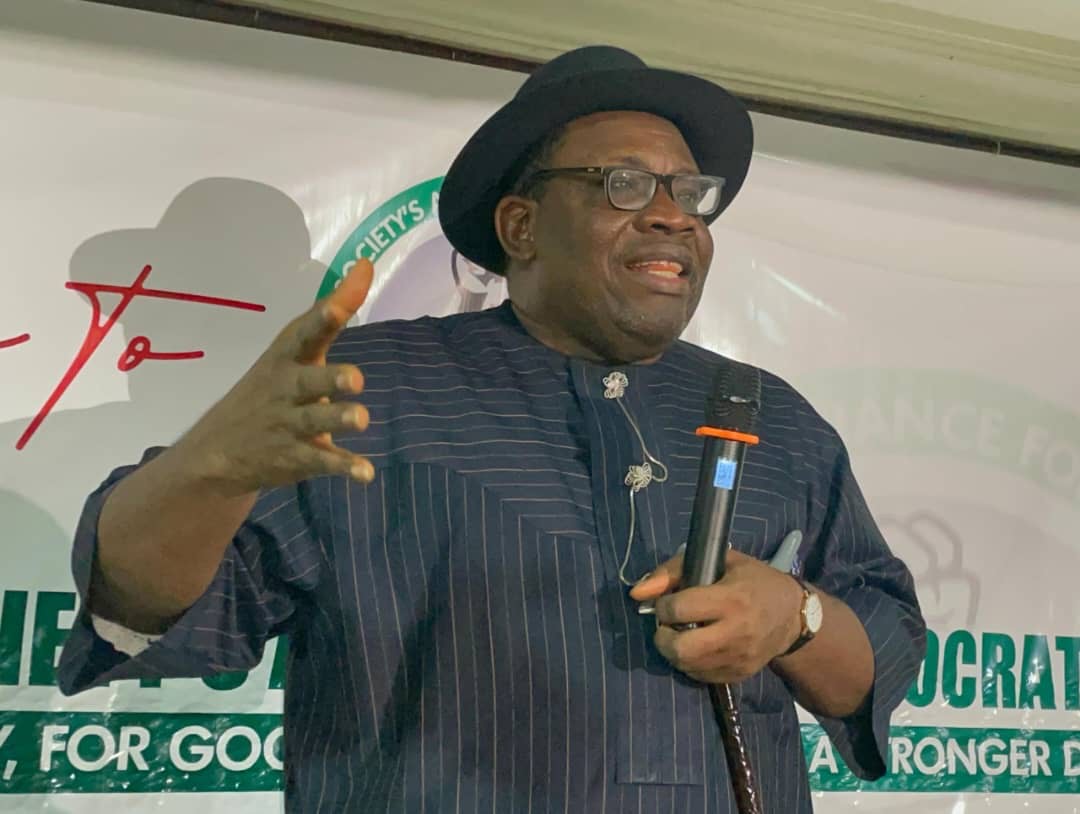
National Leader of the Nigeria Democratic Congress, NDC, Seriake Dickson, has revealed that the poo party’s presidential candidate, Peter Obi, was president when the motion for party supremacy was passed.
Speaking at the NDC stakeholder’s meeting on Thursday, Dickson said appointments and nominations will be done with consensus of the party and stakeholders.
Dickson was speaking on the party’s directive mandating affiliated groups like the Obidient Movement to operate under NDC supervision
According to him, they do not want somebody to win and run a one man show.
“His Excellency, Peter Obi was there when this motion on party supremacy was moved by Senator Ovie Omo-Agege and seconded by Senator Victor Umeh, and it was put to vote and passed.
“Every elected officer of this party must implement the programmes and policies not according to his or her whims and caprices, but programmes and policies of this party that will be analyzed, discussed, debated, and agreed.
“So, whether in the National Assembly or everywhere, we want to build an institution in this country. We may not get it one year or two years, but that’s our vision. So we say government policies and programmes must align with the parties, and a team is fine tuning certain things, which we will present to the public.
“Now, the second element is that appointments and nominations will be done with consensus of the party and stakeholders at all levels,” Dickson said.
dailypost.ng

Members of the APC Elders Forum in Adamawa Central senatorial zone have warned that President Bola Tinubu could face difficulties winning Adamawa State in the 2027 election if concerns over the alleged imposition of candidates are not addressed.
Speaking at a press conference in Yola on Thursday, the group’s spokesperson, Mohammed Jimeta, said the ruling party risks repeating mistakes that contributed to the PDP’s defeat in 2015.
Referring to the 2015 governorship election in Adamawa, Jimeta said, “In 2015, President Goodluck Jonathan and other PDP chieftains sat in Abuja and appointed the present National Security Adviser, Malam Nuhu Ribadu, as the governorship candidate, but the people of Adamawa State voted for the person they wanted as governor.”
He questioned the emergence of Mustapha Salihu as the party’s senatorial candidate, arguing that Salihu contested for governorship rather than the Senate during the primaries.
“The President himself knows that Mustapha Salihu did not contest for the Senate; he contested for governor. It was Abdulraheem Abbati who contested for the Senate in the Central senatorial zone. So, how can Salihu become the senatorial candidate in the zone?” Jimeta asked.
The elders insisted that, for fairness and justice, the ticket should be given to Abdulraheem Abbati, who they said legitimately contested for the seat.
Jimeta also argued that several local government areas in the zone have produced senators over the years, while Yola North has yet to be given the opportunity.
“Salihu and Senator Abbas are from the same local government area, so why is the APC showing bias against the people of Yola North? A few individuals are trying to deny Abbati the ticket,” he said.
The group further called on National Security Adviser Nuhu Ribadu to help prevent what they described as an injustice, warning that failure to resolve the issue could hurt both the APC governorship candidate and President Tinubu in future elections.
“There will be two losers—the Adamawa State APC governorship candidate and the President. To avert the looming political setback, the issue should be addressed now,” Jimeta stated.
He added that Abbati worked for Tinubu’s success in the state during the last election, saying, “Abbati was the returning officer for President Tinubu in Shelleng Local Government Area, even when some enemies of the APC in Adamawa State were working secretly against him.”
dailypost.ng

The Osun State chapter of the Labour Party has appealed for calm following recent incidents of political violence, including reported gunshots and killings in parts of the state.
The state chairman of the party, Mustapha Adebayo Muhydeen, made the appeal in a statement issued on Thursday, expressing concern over what he described as a disturbing rise in politically motivated violence.
Muhydeen said the development was a source of worry and urged political stakeholders and their supporters to embrace peace as political activities continue ahead of future elections in the state.
He recalled that during his inauguration as the chairman of the Labour Party in Osun on April 25, 2026, he had stressed the importance of peaceful coexistence among residents before, during, and after the August 15 governorship election.
According to him, “the recent incidents threaten the stability and democratic progress of the state and should not be allowed to continue.”
“The Labour Party in Osun State is deeply concerned about the recent spate of violence, including gunshots and reported loss of lives in some communities. We call on all political actors and their supporters to exercise restraint and allow peace to prevail.”
The party chairman urged security agencies to intensify efforts to maintain law and order across the state and ensure that those responsible for acts of violence are identified and prosecuted.
He maintained that political competition should not degenerate into violence, adding that democracy can only flourish in an atmosphere of peace, tolerance, and mutual respect.
Muhydeen stated, “No political ambition is worth the blood of any citizen. We urge all stakeholders to put the interest of Osun State above partisan differences and ensure that peace is not compromised.”
He also sympathised with families affected by the recent violence and called for justice and support for victims of the unrest.
The Labour Party chairman advised youths across the state not to allow themselves to be used by politicians as agents of violence, warning that such actions could have lasting consequences for their future.
Muhydeen reaffirmed the party’s commitment to peaceful political engagement and urged residents to remain calm while relevant authorities address the situation.
He stressed that dialogue and lawful engagement remain the appropriate means of resolving political differences in a democratic society.
dailypost.ng


Child playing with lighter triggers fire disaster in Kwara

NDC: Peter Obi present when motion for party supremacy was passed – Dickson

Edo: Court sentences five to death by hanging over lawyer’s abduction, murder

Simi Sanya and Femi Dapson Are Now Legally Married and It Is Beautiful to See

FCT Area Council Election: Live results from polling units

Premier League Set-Piece Goals (2025/2026)
-
 Sports12 hours ago
Thierry Henry Names Two ‘Surprise’ Teams That Can Win the 2026 World Cup
-
 Sports1 day ago
Uzbekistan Coach Fabio Cannavaro Calls Out US Security at World Cup
-
 Sports1 day ago
Body Language Expert Reveals Lewis Hamilton and Kim Kardashian’s Relationship Red Flags
-
 Sports22 hours ago
England Fans Claim Noni Madueke ‘Cannot Start’ at World Cup
-

 Sports1 day ago
Premier League Clubs Plan to Sue if Man City Found Guilty of 115 Charges
-
 Sports1 day ago
Newcastle Want Gabriel Jesus Transfer Amid Everton Interest
-
 Sports1 day ago
Liverpool Set to Complete Signing of ‘Elite’ Man City Talent Xavier Parker
-
 Sports2 days ago
Club Open To Tottenham Player Sale For £26M After Contact Made