
Politics
Ibadan Summit: Opposition parties plan single candidate for 2027 polls


By Adeola Badru
Opposition parties across Nigeria have declared their determination to challenge the dominance of the ruling All Progressives Congress (APC), warning of threats to democratic governance ahead of the 2027 general elections.
The declaration was made in a communiqué issued after a national summit held in Ibadan on Saturday, where key opposition figures, including Atiku Abubakar, Rabiu Musa Kwankwaso, Rotimi Amaechi, Peter Obi and Rauf Aregbesola, met to chart a common strategy.
Reading the communiqué, the factional chairman of the Peoples Democratic Party (PDP), Taminu Turaki, said: “We shall resist all machinations by the APC to foist a one-party State on Nigeria and fight for the survival of multi-party democracy in our country.”
On the 2027 elections, the opposition dismissed claims of a predetermined outcome, stating: “Despite the onslaughts and manoeuvrings of the ruling party… we shall field candidates and contest the 2027 Presidential and other elections.”
The parties also signalled plans for a united ticket, declaring: “We shall work towards fielding one Presidential Candidate for the 2027 elections, which shall be agreed and supported by all participating opposition parties to rescue our nation and her long suffering masses.”
Raising concerns about the electoral umpire, the communiqué stated: “The INEC Chairman, Joash Ojo Amupitan, having shown bias and partisanship in favour of the ruling APC, should not conduct the 2027 general elections.”
It further warned: “His continuous stay in office is vexatious and capable of triggering widespread crisis in our nation.”
On electoral reforms, the opposition urged lawmakers to act swiftly, saying: “The National Assembly should immediately review the Electoral Act, 2026 to remove all sections that threaten the sanctity and integrity of the elections.”
The communiqué also addressed alleged political repression, stating: “All leading politicians that are being detained or harassed on bailable offences be released with immediate effect and allowed to exercise their fundamental rights of participation and inclusivity as Nigerians.”
Criticising recent electoral guidelines, the parties said: “We consider the recent guidelines released by INEC as obstacles, deliberately engineered to impose conditions and deadlines on the opposition parties,” adding, “INEC [should] extend the deadline for primaries till the end of July, 2026.”
Earlier in his address, the host governor, Seyi Makinde, warned that Nigeria’s democracy was facing a gradual erosion due to increasing political concentration and the weakening of opposition parties.
He stated: “Across Nigeria today, we are witnessing a level of political concentration that should concern all of us… taken together, they point to a pattern where the space for real political competition is disappearing.”
Makinde cautioned that democracy “is not destroyed overnight,” but “weakened step by step,” stressing that “when opposition becomes ineffective, democracy itself begins to lose meaning.”
He emphasised that democracy must be defined by “the existence of real alternatives” and warned that without this, “what we have may still be called democracy, but it will no longer function as one.”
Highlighting the significance of Ibadan as the venue, he noted: “Ibadan has always served as the political capital of southwest Nigeria… this gathering… carries that same responsibility” as past historic constitutional conversations.
The governor also clarified the intent of the summit, saying: “It is not a gang-up against one man; and it is not about individual ambitions to be president. It is about the collective ambition of the Nigerian people to have a democracy properly defined.”
Makinde, however, warned that: “Democracy without opposition is not democracy, it is a slow drift toward a one-party State. And Nigeria must not make that drift,” urging stakeholders to “think clearly, speak honestly, and act with a sense of responsibility that goes beyond party lines.”
In his intervention, political economist and strategist, Pat Utomi, painted a stark picture of the country’s economic hardship, using a personal experience to illustrate the widening gap between living costs and citizens’ income.
He said: “Let me begin with a simple experience from yesterday. I set out to buy fuel, and by the time I was done, I had spent nearly 250,000 naira just to fill my tank.“
“At the same time, I came across a report showing that a large percentage of Nigerians live on less than 100,000 naira a month. That contrast is not just troubling, it is absurd. If that doesn’t reveal something fundamentally broken in our system, then nothing will.”
Utomi noted that the crisis extended beyond fuel prices, stressing: “Food prices are rising, insecurity continues to disrupt agriculture, and ordinary people are struggling to survive.“
“Yet we are often told to ‘be patient,’ that things will improve with time. But patience means very little to those who are hungry today.”
Reflecting on Nigeria’s past, he added: “In the years leading up to independence, Nigeria was not industrialised, but there was a clear vision. Within a few years, manufacturing began to grow significantly. There was direction, there was purpose.”
He argued that the country’s challenges were not only economic but moral, stating: “Leadership without character cannot build a nation. The crisis we face today is not only economic—it is moral.”
Utomi further emphasised Nigeria’s untapped potential, saying: “Every region has resources, talent, and potential. Yet we have become overly dependent on oil, neglecting other sectors and weakening our economic foundation.”
Calling for urgent reforms, he said: “We need leadership with character. We need policies that reflect our realities, not borrowed solutions that do not fit our context. Above all, we must listen to the voices of the people.”
He expressed optimism that: “The situation we face is serious, but it is not hopeless. With the right leadership, the right values, and a shared commitment to progress, we can rebuild this nation and create a future that works for all.”
Also addressing the summit, the National Chairman of the African Democratic Congress (ADC), David Mark, described the gathering as a critical moment in Nigeria’s history, calling it “an urgent response to our nation’s call to patriotic duty.”
He said: “My prayer is that history will remember us, that when the nation cried out to be rescued, we answered. When children went to bed hungry, we answered, when proud, hardworking citizens were turned to beggars; we answered.”
Raising alarm over insecurity, Mark stated: “Across the length and breadth of our country, insecurity has become a defining feature of daily life. Nigeria faces a historic challenge.”
Citing grim statistics, he added: “In 2025 alone, Nigeria recorded more than 12,000 conflict-related deaths. Nigeria is now ranked 4th in global terrorism index. At least 15 Nigerians are killed daily, while about 19 people are abducted.”
He criticised the government’s response, saying: “We are a nation that is constantly in mourning, yet the APC-led government is behaving as if all is well,” accusing it of being “preoccupied with election matters and politics of self-succession.”
On democracy, Mark warned: “The essence of democracy is to provide the people with a choice… however, the ruling party has done everything to deny the people of Nigeria this very right to seek an alternative.”
He described the opposition’s task as a “national rescue mission,” stressing: “No single opposition political party, can confront a system so entrenched. We must be united to salvage our nation.”
Mark further alleged deliberate efforts to weaken opposition parties, stating: “The move towards a one-party state is real, institutions that should safeguard our freedom, are increasingly under assault.”
He insisted that the struggle transcended politics, declaring: “This contest is between the ruling party APC, and the Nigerian people, we are on the side of the people.”
Questioning the credibility of the electoral body, he said: “When the referee clearly and proudly wears the jersey of one of the teams, then the legitimacy of the entire process is undermined,” adding that Nigerians had lost confidence in the Independent National Electoral Commission (INEC).
He called for unity and sacrifice, noting that: “Let this summit go down in history as the moment when everything changed, we chose unity over division, sacrifice over self, and country above all.”
www.vanguardngr.com

The Nigeria Democratic Congress, NDC, has disclosed that its presidential running mate, Rabiu Kwankwaso, never threatened to leave the party.
NDC National Publicity Secretary, Osa Director, disclosed that such claims were speculations aimed at demarketing the party.
In an interview with Arise News on Saturday night, Director blamed the ruling party and some opposition members for such speculations.
He said: “At no time did our leader, Kwankwaso threatened to leave the party, those were just conjectures and media speculations trying to demarket the party and we know where they are coming from.
“Apart from media speculation and those who do not want us to succeed, there were instances in a particular constituency in Delta State where an incumbent allegedly supported five or six aspirants to run against Collins Edema.”
It was widely reported that the former Kano State governor threatened to dump the NDC if his candidates in Kano State were replaced.
NDC had replaced several candidates earlier submitted by the Kwankwasiyya faction in Kano State over an alleged breach of a power-sharing agreement.
According to a document signed by Kano State NDC Chairman, Hon. Hussaini Isah Mairiga, the changes were made to reflect the earlier agreement on the distribution of party positions and elective tickets between the existing NDC structure and the Kwankwasiyya bloc.
dailypost.ng
Politics
EKITI 2026: Shettima, APC govs, national leaders, others to converge for Oyebanji’s mega rally

By Rotimi Ojomoyela
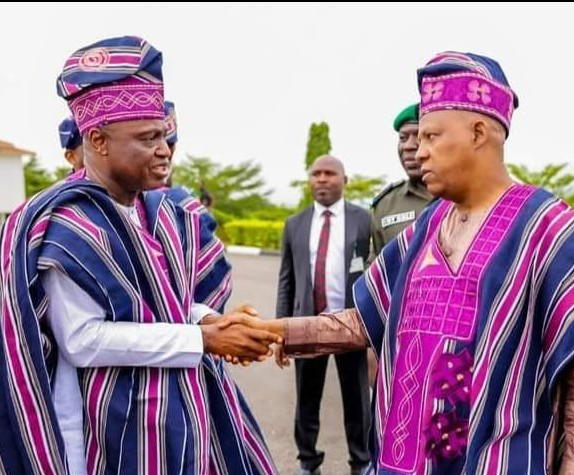
Vice President Kashim Shettima, governors elected on the platform of the All Progressives Congress (APC), national leaders of the party, members of the National Assembly, ministers, and thousands of enthusiastic supporters from within and outside Ekiti State are expected to converge on Ado-Ekiti on Tuesday for the grand finale mega rally in support of the re-election of Governor Biodun Abayomi Oyebanji and his deputy, Chief (Mrs.) Monisade Christianah Afuye.
The rally, scheduled to hold at the Ekiti Parapo Pavilion, New Iyin Road, Ado-Ekiti, beginning at 11:00 a.m., marks the climax of an unprecedented grassroots campaign that has traversed every ward, community, and local government area of the state, according to Rt. Hon. Taiwo Olatunbosun, Director, Media and Communication, Ekiti APC 2026 Governorship Election Campaign Council.
The rally, Olatunbosun said is expected to be one of the largest political gatherings ever witnessed in Ekiti State and a resounding demonstration of the people’s overwhelming support for Governor Oyebanji’s second-term bid.
Coming on the heels of massive endorsements by traditional rulers, professional groups, market associations, artisans, youths, women, civil servants, retirees, religious leaders, and political stakeholders across party lines, the mega rally is expected to showcase the broad coalition of support that has crystallized around Governor Oyebanji’s leadership.
The anticipated presence of the Vice President, APC governors, and other top party leaders reflects the strategic importance of Ekiti State to the APC and underscores the confidence of the party’s leadership in Governor Oyebanji’s performance, popularity, and capacity to consolidate the gains of his administration.
Over the last four years, Oyebanji has earned widespread acclaim for delivering impactful governance across key sectors, including infrastructure, education, healthcare, agriculture, youth empowerment, security, tourism, and economic development.
His inclusive approach to governance, bridge-building politics, and commitment to the welfare of the people have united Ekiti citizens behind a common vision of progress and prosperity.
According to the BAO Election Campaign Council, the statewide acceptance of Governor Oyebanji’s re-election bid is a clear testament to the trust and confidence reposed in him by the people.
The Council noted that wherever the campaign train visited, citizens openly expressed their appreciation for the governor’s humility, accessibility, responsiveness, and commitment to delivering the dividends of democracy.
The Council further stated that the grand finale mega rally would not only celebrate the achievements of the administration but also serve as a historic affirmation of the collective resolve of Ekiti people to sustain the peace, stability, development, and inclusive governance that have become the hallmarks of the Oyebanji administration.
“The rally will be a powerful statement of unity and a clear signal that Ekiti people are determined to consolidate on the remarkable gains recorded over the last four years. It will demonstrate that the mandate to continue the progress agenda enjoys support across political, social, and generational divides,” the Council stressed.
The Campaign Council therefore called on all APC members, supporters, and lovers of Ekiti State to turn out en masse and participate in what promises to be a historic gathering and a defining moment in the State’s democratic journey.
While assuring participants of adequate security and logistics arrangements, the Council urged attendees to conduct themselves peacefully and comply with all relevant security and traffic management directives.
The post EKITI 2026: Shettima, APC govs, national leaders, others to converge for Oyebanji’s mega rally appeared first on Vanguard News.
www.vanguardngr.com

*How efforts were made to secure MKO’s release before his death — Obasanjo
‘ Abdulsalami ignored pressure to extend his 6-month transition programme’
By Johnbosco Agbakwuru
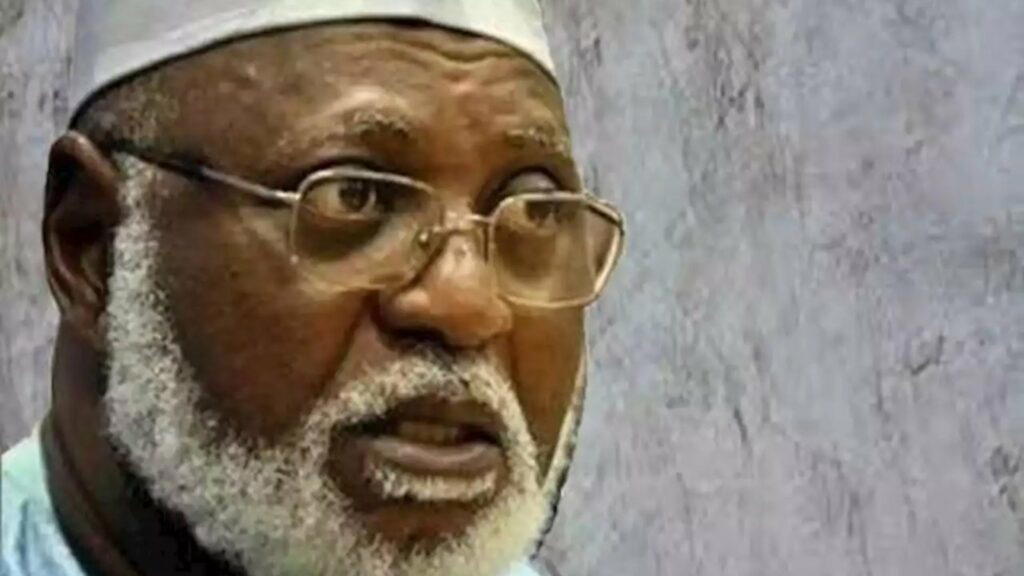
Former Head of State, Gen. Abdulsalami Abubakar (retd.), yesterday, dismissed allegation that the late Chief Moshood Abiola was poisoned, insisting that an autopsy conducted by pathologists from four countries attributed his death to natural causes.
Abiola, winner of the June 12, 1993, presidential election adjudged the freest and fairest in Nigeria’s history, was imprisoned by the military regime of the late General Sani Abacha after he declared himself the rightful president. He passed away in detention on June 7, 1998, under controversial and suspicious circumstances.
Meanwhile, Abubakar’s revelations, contained in Chapter 21 of his 264-page book, titled: ‘Call of Duty,’ stated that MKO collapsed during a meeting with a visiting American delegation comprising Mr Tom Pickering, then U.S. Undersecretary of State for Political Affairs, and Ms Susan Rice, then Assistant Secretary of State for African Affairs.
The book is one of three presented in honour of the former Head of State on his 84th birthday at the Banquet Hall of the Presidential Villa, Abuja.
The event, chaired by the former Head of State, General Yakubu Gowon (retd), had in attendance former presidents Olusegun Obasanjo and Goodluck Jonathan. President Bola Tinubu was also represented by the Vice President, Senator Kashim Shettima, among other dignitaries.
Abubakar wrote: “I do not believe Abiola was poisoned. The family requested an autopsy and we assembled American, British, Nigerian and Canadian pathologists to conduct it. The autopsy report attributed his death to natural causes.”
He disclosed that Abiola had been managing pre-existing medical conditions, including hypertension and a heart ailment, as far back as 1994 when he was first detained.
He stated: “As far back as 1994 when he was arrested by the Abacha Administration for declaring himself President, it was public knowledge that Abiola was managing certain medical conditions which could seriously affect the quality of life of any human being.”
According to Abubakar, a radiological report by Colonel (Dr) O. Awofeso, then Chief Consultant Radiologist at the Nigerian Army Defence Hospital, Sokoto, dated September 28, 1994, found that Abiola’s heart was enlarged with “right ventricular preponderance” consistent with hypertensive cardiac disease.
The former military leader narrated how the fatal meeting unfolded, citing Rice’s 2019 memoir, ‘Tough Love: My Story of the Things Worth Fighting For,’ in which she recalled that Abiola began coughing mildly about five minutes into their conversation before it became “wracking” and “dramatic.”
“Rice said she noticed Abiola’s ankles were swollen. About five minutes into their conversation, according to her, ‘Abiola started to cough, at first mildly and intermittently, and then wrackingly with consistency,’” Abubakar wrote, quoting the memoir.
He said Abiola complained of feeling hot and asked that the air-conditioning be turned up, after which a doctor was summoned and diagnosed a heart attack. Quoting Pickering’s account in a BBC interview shortly after Abiola’s death, Abubakar wrote that the politician “had trouble breathing, went into the toilet and came out obviously very distressed,” before being moved to a couch where he removed his shirt and asked for the room to be ventilated.
“A doctor arrived within 10 minutes and called for immediate hospital attention. We all helped to put him in a car, there was no ambulance immediately available. We followed him to the clinic of the Head of State of Nigeria, where doctors immediately began to work on him…but unfortunately at the end of their efforts it was not possible and he died,” Abubakar quoted Pickering as saying.
Abubakar recalled receiving the news from his Chief Security Officer, Major General Abdulrasheed Aliyu, who had led the American delegation to the meeting.
“Aliyu, my CSO, called me. As soon as I picked, he said, in a shaky voice, that there was a problem. I asked: ‘What problem again?’ He said Abiola was dead. My head went blank,” Abubakar wrote.
He described breaking the news to Abiola’s family, recounting how one of the politician’s daughters broke down in tears and was consoled by Rice.
“If we had not allowed the American delegation to see him and he had died in custody, it would have been a different story. It would have been insinuated that he had long died and we were trying to cover it up,” he stated.
Meanwhile, Obasanjo, in his remarks, revealed that Abdulsalami Abubakar was facilitating the release of Abiola before his death, saying: “You sagaciously managed the seeming confusion and uncertainty that followed Abacha’s death. You emerged from the cloud and carefully proceeded to untangle the nation. Political prisoners were released, and I was. As has been said by the President of the Senate, the National Assembly is a beneficiary of that. Your next move was how to get MKO Abiola released and you kept me regularly informed, and also related messages to the family. Kola was already in Abuja to pick up his father when the unexpected happened. I remember you telling me on the telephone, ‘our man is dead.’”
Obasanjo also recounted how Abubakar personally intervened to overcome widespread opposition to the Land Use Act, saying Abubakar engaged community leaders across Oyo State, pointing out that the effort helped secure the survival of a law that remains a key part of Nigeria’s constitutional framework.
Using the story to illustrate the importance of leadership, consultation and national service, Obasanjo said the Land Use Decree faced stiff resistance from both Northern and Southern interests when it was introduced during his military administration. When the Land Use Act was promulgated as a decree, a colleague came to me and said nobody liked it. The North didn’t like it, the South didn’t like it.”
According to him, reports later emerged that the Agbekoya movement in the South-West was preparing protests against the legislation, prompting him to seek advice from elder statesman Chief Adebo.
Obasanjo said the elder statesman advised him to engage directly with the people instead of relying on intermediaries.
“I left Lagos at about 2 a.m., got to Ibadan before dawn and visited villages to meet Agbekoya leaders in their homes. By about 8 a.m., I had visited more than a dozen villages explaining the policy to them,” he said.
The former president noted that the consultations succeeded in diffusing tensions and ensuring acceptance of the policy.
“That was how we were able to suppress the protest against the Land Use Decree, and that is why the Land Use Act has endured till today,” he said.
For his part, Major General Abdulrasheed Aliyu (retd), Chief Security Officer, CSO, to the former Head of State, disclosed that Gen Abubabakar rebuffed pressures from the military circle to extend his six months transition programme.
Aliyu said: “When he rolled out his six month transition programme, our participants in the military were divided into three groups. One group believed that, yes, this time they have accepted as proposed. Another group felt that it is okay, but can we have an extension of five to six months? The third group felt the civilians are not ready to take over the country.”
Aliyu said he approached Abubakar with the concerns. “Sir, those are the institutions for me extending six months so that we can have the small group by our side,” he recalled.
Abdulsalami looked at him and said: “It is my duty and my task to take decision on behalf of the country and what is good for the country and for the people. I’ve taken my decision. That’s what I will do.”
Also speaking at the event, Jonathan described Gen Abubakar as a remarkable statesman with a lifetime of dedication to the service of the nation and humanity, recounting his role in guiding Nigeria through a peaceful transition to democratic governance.
He commended the former head of state for his uncommon courage and selflessness in promoting peace and progress in Nigeria and his continued advocacy for peace, a legacy he said is measured not by the number of years but by achievements recorded.
Likewise. Senate President, Godswill Akpabio, who spoke at the event, described the National Assembly and Nigeria’s democratic institutions as direct beneficiaries of the sacrifice made by Gen Abubakar in restoring democratic rule to the country in 1999.
Akpabio said his decision to hand over power after an 11-month transition programme, despite having the authority to remain in office, helped restore democratic governance and laid the foundation for the legislature and other democratic institutions operating today.
For Gen Gowon, he used the occasion to call for unity and respect for others despite religious and ethnic differences, also urging young people to emulate Abubakar’s patriotism, commitment to justice and dedication to national unity.
The post MKO Abiola died of heart attack, not poison – Gen. Abubakar appeared first on Vanguard News.
www.vanguardngr.com


Mexican Man Loses Job After Racist Gesture Behind South Korea Fan

Thierry Henry Issues Statement After Nigeria Comment Backlash at World Cup

Liverpool in Talks to Sign Rising Midfield Star Ayyoub Bouaddi

Simi Sanya and Femi Dapson Are Now Legally Married and It Is Beautiful to See

FCT Area Council Election: Live results from polling units

Premier League Set-Piece Goals (2025/2026)
-
 Sports2 days ago
Lewis Hamilton’s Awkward Response to Kimi Antonelli Trolling Kim Kardashian
-
 Sports2 days ago
Fox Break FIFA Broadcasting Rule During Mexico v South Africa
-
 Sports1 day ago
12 Hardest Football Competitions to Win [Ranked]
-
 Sports1 day ago
Referee Michael Oliver Out of 2026 World Cup Match Due to Injury
-
 Sports2 days ago
England Fan Denied World Cup Access After Breaking Trump Rule
-
 Sports1 day ago
Clint Dempsey Slams Canada Boss Jesse Marsch on Live TV
-
 Sports16 hours ago
Sir Alex Ferguson Named His 2026 World Cup Winners
-
 Sports2 days ago
FIFA Statement as Canada Deny Thomas Partey’s 2026 World Cup Visa