
Politics
2027: Tinubu’s team to deploy ‘visible’ projects as campaign tool


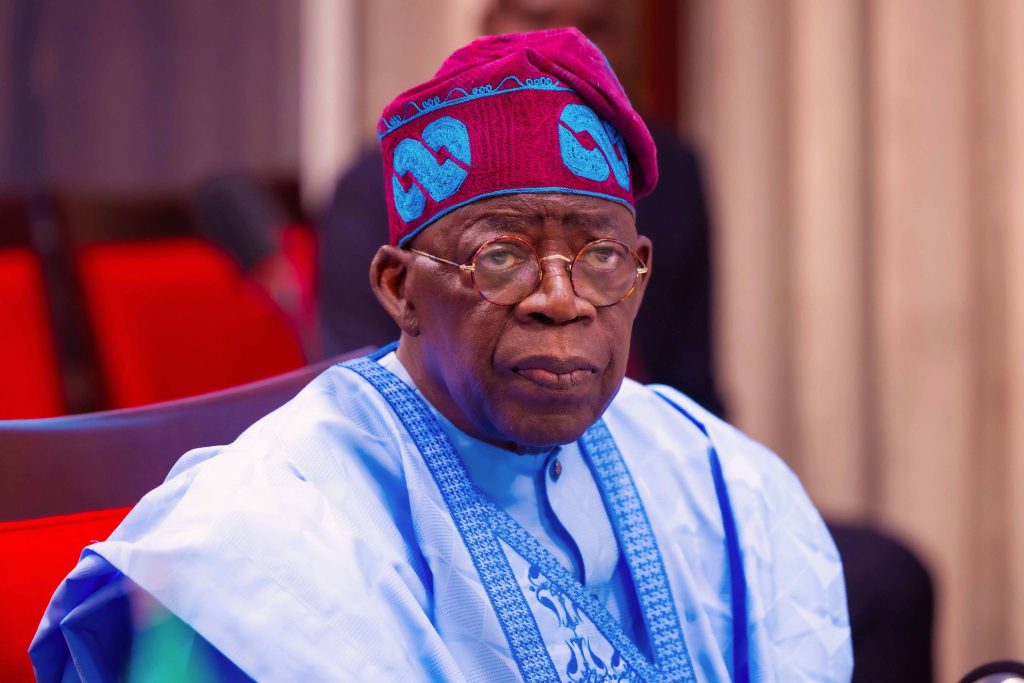
Presidential team banks on projects, state partnerships to counter opposition narrative
By Soni Daniel,Northern Region Editor
When the Independent National Electoral Commission, INEC, finally blows the whistle for the commencement of the 2027 electioneering campaigns, President Bola Tinubu may not need to do much of the talking himself. Instead, a carefully coordinated team of political foot soldiers may take centre stage, executing a strategy that has been quietly rehearsed over time.
The approach is simple, deliberate and potentially effective: let visible development speak louder than campaign rhetoric.
Across the country, especially in parts of the North-West recently visited by members of the presidential media team and the Renewed Hope Ambassadors, the message being crafted is clear: Nigerians should judge the government not by promises but by projects they can see and touch.
At the heart of that strategy is an attempt to turn one of the administration’s most controversial decisions — the removal of fuel subsidy — into a central campaign strength.
A strategy anchored on visibility
Those driving the President’s communication effort appear determined to avoid the pitfalls of traditional political messaging, which often relies on grand speeches, slogans and media appearances. Instead, they are pushing a “show, don’t tell” approach.
Under the Renewed Hope banner, campaign planners are betting that tangible infrastructure and social investments will resonate more deeply with voters than abstract arguments.
The logic is straightforward: in a political environment where trust in campaign promises has waned, visible projects such as roads, railways and public facilities provide more convincing evidence of governance.
Supporters of the policy insist that the benefits, though gradual, are becoming increasingly visible. They point to improved federal allocations to states, expanded public works and renewed investments in transportation, agriculture, education and healthcare.
One project frequently highlighted is the Kano-Maradi railway project, described as a priority infrastructure development under the administration. According to officials from the Federal Ministry of Transportation, the project has reached over 60 per cent completion.
The railway is being promoted as a critical component of regional integration and trade facilitation, linking commercial hubs across northern Nigeria and neighbouring Niger Republic.
States highlight gains from increased allocations
Another recurring theme during the tour was the emphasis by state officials on the impact of increased federal allocations following subsidy removal. Commentators interviewed by members of the media team highlighted how states have leveraged those allocations to fund infrastructure projects.
In Kaduna State, officials reportedly highlighted the construction and rehabilitation of roads spanning hundreds of kilometres, alongside investments in schools, hospitals and rural electrification.
In Jigawa State, the focus shifted to agriculture and youth empowerment. Visitors were shown large quantities of farming equipment acquired to boost food production, as well as a multipurpose skills acquisition centre aimed at reducing unemployment and promoting entrepreneurship.
According to officials, the centre offers training in various trades, from welding to renewable energy technologies, while a number of programmes are being rolled out to support small-scale enterprises.
A new federal-state dynamic
One of the most significant observations during the tour was the close collaboration between the Federal Government and state governments in delivering visible projects.
Observers note that such cooperation marks a departure from past tensions between federal and state authorities and could prove politically beneficial.
By aligning priorities and pooling resources, both levels of government appear to be working more closely to ensure that projects are completed and visible to ordinary Nigerians.
For the Tinubu administration, this cooperation is not only about governance but also political strategy.
It creates a network of state-level stakeholders who have a vested interest in defending and promoting the administration’s achievements.
Turning subsidy removal into an asset
Perhaps the most ambitious aspect of the strategy is the attempt to reframe the removal of fuel subsidy — widely viewed for years as a necessary but politically difficult decision — into something capable of boosting public confidence in the administration.
Supporters of the policy argue that the subsidy regime had become a major drain on public resources, encouraging inefficiency and corruption.
According to them, subsidy removal has freed up significant financial resources that can now be redirected into visible infrastructure and social projects.
Testing the message in the North-West
As part of efforts to validate and refine the strategy, members of the presidential media team and Renewed Hope Ambassadors recently visited Jigawa, Kaduna and Kano states.
During the tour, officials and ordinary citizens were invited to discuss ongoing projects and to expose journalists and the public to what the administration describes as concrete evidence of development.
One of the key infrastructure projects highlighted was the Kano-Maradi railway project, a major transportation scheme intended to connect northern Nigeria to Niger Republic and facilitate increased regional commerce.
Railway expansion and broader investments
The administration has also pointed to continued investments in roads, railways and airports as proof of its commitment to long-term economic growth.
In addition, the government says it is supporting agricultural development through fertiliser distribution programmes, irrigation schemes and access to improved seedlings.
Officials maintain that these interventions are designed not only to boost food production but also to create employment opportunities, particularly for young people.
Kano’s infrastructure push
In Kano State, officials showcased several ongoing infrastructure projects, including road rehabilitation works and investments in healthcare and education.
The state government also pointed to efforts aimed at expanding access to clean water and improving urban sanitation.
Observers who accompanied the tour noted that the administration appears keen on using these projects as part of a broader political communication strategy ahead of the next election cycle.
An uncertain but calculated gamble
While the strategy of relying on visible projects to persuade voters may carry political advantages, analysts caution that its success will depend heavily on whether ordinary Nigerians feel meaningful improvements in their daily lives.
Critics argue that infrastructure projects alone may not be enough to offset public frustration over inflation, unemployment and the rising cost of living.
Even so, the administration appears committed to staying the course, convinced that sustained investment in visible development projects can help reshape public perception and strengthen support ahead of the 2027 presidential election.
The post 2027: Tinubu’s team to deploy ‘visible’ projects as campaign tool appeared first on Vanguard News.
www.vanguardngr.com

By Luminous Jannamike, Abuja
As political alignments ahead of the 2027 general election continue to shift, renewed attention has turned to the Nigeria Democratic Congress (NDC) following a series of legal and political developments. In June, the Federal High Court in Lokoja, Kogi State, stunned sections of the opposition when it set aside its December 2025 judgment directing the Independent National Electoral Commission (INEC) to register the NDC as a political party, although that decision has since been overturned on appeal.
The legal twists have revived questions first raised months ago about the forces behind the emerging party. They have also rekindled interest in an earlier Saturday Vanguard report, which quoted insider sources expressing fears that the NDC could face internal sabotage after the emergence of its eventual presidential candidate and alleging that some individuals associated with the project maintained close relationships with influential figures in the ruling establishment.
Those claims have not been independently verified. Even so, the developments have continued to fuel public debate over the independence of emerging opposition platforms and whether ‘fifth columnists’ could undermine efforts to build a formidable coalition ahead of 2027.
Below is what Saturday Vanguard published on 9 May under the headline, ‘
2027: Who owns NDC? Fear of moles rocking party spreads.’
Fresh anxiety is quietly spreading within sections of the opposition coalition amid growing concerns that the National Democratic Congress (NDC) may already have individuals sympathetic to the ruling All Progressives Congress, APC, within its wider support network.
The unease emerged following the collapse of the ADC coalition arrangement involving former Vice President Atiku Abubakar and former Anambra State governor Peter Obi, with some insiders warning that the NDC may not eventually become the independent opposition platform many supporters expect.
Multiple sources familiar with ongoing coalition discussions told Saturday Vanguard that some political actors had become increasingly cautious about the emerging Obi-Atiku split and the rush into the NDC platform.
One source said there were fears that influential figures linked to the party maintained close relationships with elements within the ruling establishment.
“We have to be very, very careful about this Obi-Atiku split because there’s a game being played by the APC that many people are not aware,” the source said.
“Even the NDC that they are running to. Do you know who owns the NDC? The man pulling the strings behind this thing is a former lawmaker who is a key member of the APC and enjoys access to the State House, Aso Villa.
“The close supporters of the NDC are the PDP-APC people. So we will see what will happen. It’s only a matter of time.”
The source added that the situation could become clearer once the ongoing round of party primaries and internal alignments are concluded later this month.
The allegations could not be independently verified as of press time, and no evidence has publicly emerged linking the NDC leadership to the APC or the Presidency.
However, another source involved in the wider opposition talks said the unease within some camps was being driven by fears that “moles” could eventually weaken efforts to build the NDC into a united opposition front ahead of 2027.
According to the source, the concern was less about the formal founders of the party and more about some influential supporters and political associates believed to have longstanding ties within the APC power structure. “The concern is not necessarily about the founders,” the source said.
“It is about some major supporters and people around the project who are believed to have sympathies or strong relationships within the Presidency and the APC establishment.”
The development comes as opposition leaders intensify talks and political realignments following recent defections and coalition negotiations involving key figures across several parties ahead of the 2027 elections.
www.vanguardngr.com

Ahead of his historic address to the House of Lords in London on Friday, Imo State Governor, Senator Hope Uzodimma has received a special recognition from the United States House of Representatives for his transformative leadership.
Uzodimma, apart from the address at the House of Lords , would be receiving “African Inspirational Leadership and Good Governance Award” by the African Leadership Organization.
Even before the event scheduled for Westminster, the South Carolina House of Representatives moved a motion to recognise and commend Uzodimma for his transformative leadership guided by the strategic 3R agenda of rehabilitation, reconstruction and recovery.
The motion, moved by Representative Rosalyn D Henderson-Meyes, recognised the Imo State Governor for undertaking “ extensive investments in road infrastructure, urban renewal and digital transformation initiatives aimed at enhancing connectivity, improving public service delivery and creating an enabling environment for sustainable growth “
The South Carolina House of Representatives in the motion signed by the Speaker, G Murrel Smith Jr and the Clerk Charles F Reid ,also acknowledged Uzodimma as a widely respected leader known for his dedication to “ inclusive governance, infrastructure development, economic revitalization, and the long term prosperity of Imo State, reinforcing his standing as one of Nigeria’s leading sub-national reformers and development focused leaders “
It noted that the honour bestowed on only 40 Africans also took cognisance of the Governor’s focus on improving the ease of doing business through strategic reforms and investor friendly policies which has in turn enhanced the state’s attractiveness to both domestic and international investors. It specifically mentioned Uzodimma’s signature infrastructure projects to include the Assumpta Twin Flyover and the development of the Orashi Energy Free Trade Zone, which have made Imo State the key driver of regional national development.
Receiving the award in London on behalf of the Governor, the Imo State Commissioner for Information, Public Orientation and Strategy, Hon Declan Emelumba, described it as a global acknowledgement of Uzodimma’s hard work and commitment to the overall development of the state.
While commending the South Carolina House of Representatives for the honour, Emelumba said it would certainly spur the governor to do more not only for the state but Nigeria and the African continent.
The Commissioner noted that it was quite encouraging that notable global institutions have continued to acknowledge and appreciate Uzodimma as one of the very few sub-national leaders committed to transformative leadership in Africa.
www.vanguardngr.com
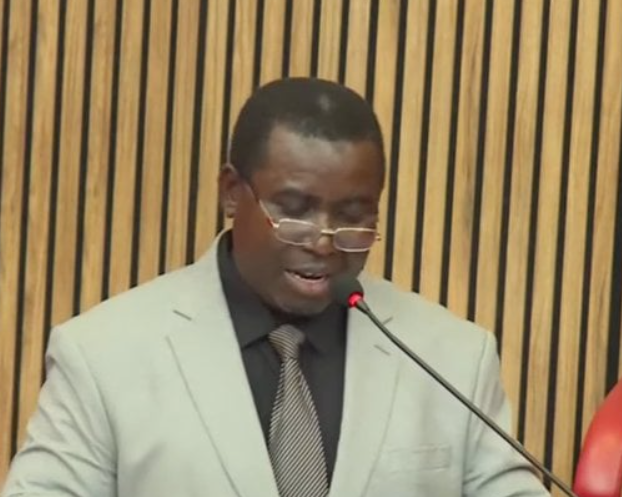
INEC Chair, INEC Chairman, Prof. Joash Amupitah
By Omeiza Ajayi
ABUJA: The Independent National Electoral Commission INEC has extended the ongoing nationwide Continuous Voter Registration CVR by two weeks, moving the deadline from 10th July to Friday, 24th July, 2026.
National Commissioner and Chairman of the Information and Voter Education Committee IVEC at the commission, Mohammed Kudu Haruna, disclosed this on Friday night in Abuja.
He said the extension followed a review of the exercise and feedback received from the Commission’s state offices, political parties, civil society organisations, and other stakeholders.
According to him, the exercise, which commenced on 18th August, 2025, was being extended to give eligible citizens who are yet to register additional opportunity to do so ahead of future electoral activities.
The Commission said the extension underscored its commitment to ensuring that every eligible Nigerian has a fair and reasonable chance to be included in the Register of Voters.
In addition to the extension, INEC announced the introduction of a self-service online registration option for eligible first-time voters.
The new service, according to the statement, will become available from Wednesday, 8th July, 2026, through the Commission’s dedicated CVR portal, cvr.inecnigeria.org, where a step-by-step guide will also be provided.
The Commission explained that the self-service option would allow eligible citizens to initiate and complete their voter registration, including biometric capture, using their personal devices without having to physically visit an INEC office.
It added that the system incorporates identity verification, biometric validation, and backend integrity checks designed to preserve the credibility and accuracy of the National Register of Voters.
INEC urged eligible Nigerians who are yet to register to take advantage of the extended window and explore the new registration technology, stressing its commitment to a credible, inclusive, and accessible voter registration process anchored on the use of technology to improve citizens’ experience in the electoral process.
www.vanguardngr.com

Who really owns NDC? – Vanguard News
US House of Reps honours Uzodimma for transformative leadership

Nigeria’s challenge is low revenue, not high debt – World Bank

Simi Sanya and Femi Dapson Are Now Legally Married and It Is Beautiful to See

FCT Area Council Election: Live results from polling units

Premier League Set-Piece Goals (2025/2026)
-
 Sports2 days ago
Real Reason Serena Williams Broke Strict Rule as $50,000 Fine Decision Made
-
 Sports23 hours ago
FIFA Release Statement After VAR Call During Portugal 2-1 Croatia
-
 Sports21 hours ago
Piers Morgan Slams BBC Commentators For Cristiano Ronaldo Treatment
-
 Sports21 hours ago
Croatia’s Igor Matanovic Praised For Interview After Goal v Portugal is Ruled Out
-
 Sports2 days ago
VAR Expert Casts Clear Verdict on Folarin Balogun Red Card vs Bosnia
-
 Sports10 hours ago
FIFA Set to Change England vs Mexico World Cup Kick-Off Time
-
 Sports19 hours ago
What Cristiano Ronaldo Told Croatia Star After Controversy in World Cup Game
-
 Sports2 days ago
US Icon Brad Friedel Blasts Mexico Ahead of England Match