
Politics
2027: Betty Akeredolu, Barguwa, others purchase Labour Party nomination forms


The Labour Party, LP, has reported a surge in the scramble for its nomination and expression of interest forms for various elective offices.
LP spokesperson, Ken Eluma Asogwa, disclosed in a statement on Thursday that several aspirants seeking to contest in the 2027 general elections thronged the party’s National Secretariat to purchase nomination forms.
Among those who purchased forms on Wednesday, according to Asogwa, include Mrs Betty Anyanwu-Akeredolu, former First Lady of Ondo State, who vying for the Senate seat for Imo East Senatorial District.
Others are Hassan Mamman Barguwa, seeking the House of Representatives seat for Gombi/Hong Federal Constituency in Adamawa State, Dennis Chibuzor Oshai, Aniocha/Oshimili Federal Constituency, Delta State, Eric Edward, contesting for the State House of Assembly seat for Hong State Constituency in Adamawa State, and Mohammed Hayatu Atiku, vying for the State House of Assembly seat for Uba/Gaya State Constituency in Adamawa State, among other aspirants.
Speaking to journalists after purchasing his forms, Hassan Mamman Barguwa, a former member of the House of Representatives for Gombi/Hong Federal Constituency, commended the process and modalities put in place by the party, describing the exercise as seamless.
He also expressed confidence in the renewed fortunes of the party and assured supporters of the party’s growing strength in Adamawa State and across the North East.
As of the time of filing this report, several aspirants were still at the party’s National Secretariat seeking to purchase nomination and expression of interest forms.
dailypost.ng

By Luminous Jannamike
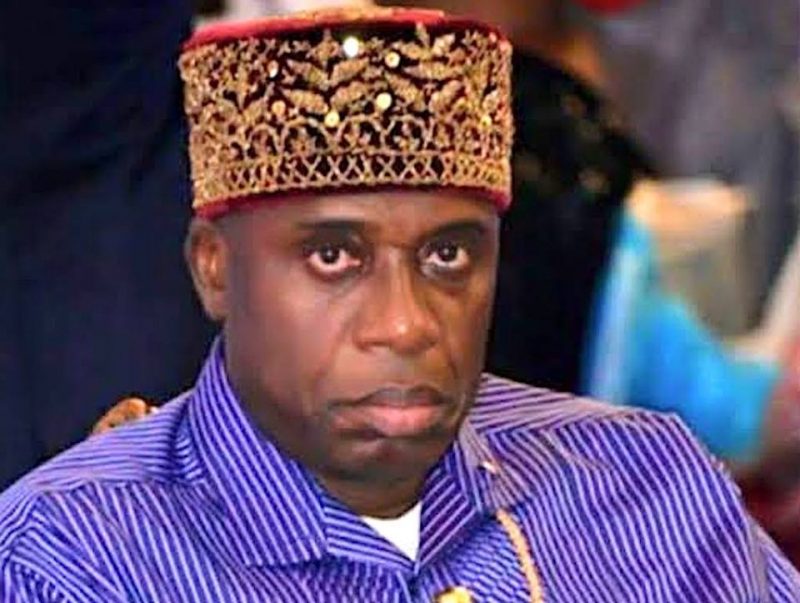
ABUJA — Former Minister of Transportation and presidential aspirant on the platform of the African Democratic Congress, Chibuike Rotimi Amaechi, on Tuesday rejected the outcome of the party’s presidential primary, accusing the leadership of disenfranchising members and manipulating the process.
The rejection opens a fresh crisis within the ADC at a critical moment for the opposition party, which has been presenting itself as a credible alternative to the ruling All Progressives Congress ahead of the 2027 presidential election.
In a statement posted on X, Amaechi said he was rejecting what he described as ‘concocted results’ following reports of widespread voter disenfranchisement during the primary across the country.
Amaechi said, “I had initially stated that I will only accept the outcome of the Primaries if the process was free, fair, and transparent, and I stand by my word.
“I will not accept results from a process that does not reflect the values that the ADC had pledged to uphold, to rescue Nigerians from the impunity and gross mismanagement that our country is currently facing in the hands of the ruling party.”
The former Rivers State governor alleged that nearly 80 per cent of party members were denied the opportunity to vote during the exercise.
“There’s no way that about eighty percent of members of the party were not allowed to vote, and you expect me to accept such results. Then what makes us different from the others?” he asked.
Amaechi said the ADC was created to give ordinary Nigerians a voice and offer a genuine alternative to the kind of politics it once condemned.
Criticising the party leadership, Amaechi said: “A party that criticizes the ruling APC and INEC for vote buying, rigging and writing of results, cannot be engaged in vote buying, writing of results, and other electoral malpractices that leads to the disenfranchisement of voters who are party members. This is not acceptable!”
The remarks are expected to deepen tensions within the ADC and intensify scrutiny of the party’s presidential primary process as opposition parties prepare for the 2027 general election.
The post 2027: ‘You can’t condemn rigging and write results’, Amaechi tells ADC appeared first on Vanguard News.
www.vanguardngr.com

The Court of Appeal sitting in Yola on Tuesday affirmed Ibrahim Sadiq Dasin as chairman of the Adamawa State chapter of the African Democratic Congress (ADC).
The Appeal Court held that, contrary to the ruling of a lower court earlier this month, the state congress of the ADC held in April 2026 which produced Dasin and other members of his executive committee was valid.
Delivering its ruling on Tuesday, the appellate court granted the appeal of the committee that conducted the congress and, consequently, invalidated the verdict of the lower court which nullified the congress in the state.
The Court of Appeal declared that the trial court lacked jurisdiction to entertain the respondents’ claims, given the state of judicial decisions on intra-party disputes relating to congresses, leadership positions and internal administration of political parties.
DAILY POST recalls that the Adamawa State High Court in Yola had three weeks ago annulled the local government and state congresses of the ADC conducted last month, citing breach of due process.
Justice Ahmed Isa of the High Court had delivered judgment in a suit filed by Shehu Yohanna, the ADC state chairman, before the congress that produced Dasin, who challenged the legality of the congresses, stating that the proceedings failed to comply with established legal frameworks and party procedures.
Yohanna had also insisted that the congresses were conducted even after the State High Court ordered that they be halted pending its substantive ruling on the suit.
The lower court had later given its ruling nullifying the said congress, prompting the committee that conducted the congress to take its appeal to the higher court.
dailypost.ng

The deepening leadership crisis rocking the Ebonyi State chapter of the African Democratic Congress (ADC) assumed a dramatic dimension on Monday as rival factions of the party conducted parallel presidential primary elections and announced conflicting outcomes, with former Vice President Atiku Abubakar and former Rivers State Governor Rotimi Amaechi both declared winners by competing party structures.
The development has further exposed widening cracks within the opposition party in Ebonyi State, intensifying concerns over legitimacy, institutional authority and internal cohesion ahead of the 2027 general elections.
While one faction declared Atiku winner of a presidential primary reportedly conducted across the state’s 171 political wards, another structure loyal to the recognised state leadership earlier announced Amaechi as victor in a separate exercise, a situation political observers now describe as a dangerous escalation of factional contestation within the party.
The parallel declarations, announced from different locations by separate committees laying claim to constitutional authority, underscored the intensifying struggle for control of the ADC’s political machinery in Ebonyi State.
The Atiku-backed camp announced its result late Monday at Preston Hotel, Abakaliki, which served as its designated collation centre. Declaring the outcome on behalf of the “Ebonyi State Presidential Primary Election Committee,” alleged Chairman of the committee and ADC National Vice Chairman (Diaspora), Fred Onwe, said Atiku polled 15,300 votes to defeat Amaechi, who secured 2,200 votes, while Muhammad Hayatudeen garnered 200 votes.
According to the committee, a total of 18,891 voters were registered across Ebonyi State, while 17,700 accredited voters reportedly participated in the exercise conducted across the 13 local government areas.
“Consequent upon the outcome of the election as seen above, Alhaji Atiku Abubakar, having scored the highest votes, is hereby declared winner in Ebonyi State,” Onwe stated.
The declaration was jointly signed by Onwe and the committee secretary, Egbedike Michael.
In his remarks, factional State Chairman of the party, Barrister Silas Joseph Onu, commended returning officers for what he described as their resilience and commitment despite adverse weather conditions caused by heavy rainfall across parts of the state.
According to him, the exercise reflected the determination of party faithful to sustain democratic participation and internal inclusiveness.
However, the declaration immediately deepened controversy surrounding the conduct of the primary, particularly because another faction of the party had, hours earlier, announced a completely different outcome.
Earlier in the day, the Ebonyi ADC leadership led by State Chairman, Dr Mrs Jennifer Adibe-Nwafor, supervised a separate presidential primary election at the party secretariat along the old Abakaliki-Enugu Expressway, where Amaechi emerged victorious.
Announcing the result, the alleged Coordinator of Electoral Matters and Returning Officer, Bassey Edogi Imoke, disclosed that Amaechi polled 6,050 votes to defeat Atiku, who secured 1,210 votes, while Muhammad Hayatudeen garnered 4,840 votes.
Imoke stated that the exercise was conducted through the direct primary system across the 171 political wards in the state.
According to him, 12,641 delegates were registered for the exercise, while 12,100 delegates were accredited and participated in the election.
“The mode of election is direct primary. The election was conducted across the 171 political wards in Ebonyi State. Total registered delegates were 12,641 while accredited delegates were 12,100,” Imoke declared.
“Atiku Abubakar scored 1,210 votes, Rotimi Chibuike Amaechi scored 6,050 votes while Muhammad Hayatudeen scored 4,840 votes. Consequently, Rotimi Chibuike Amaechi, having scored the highest number of lawful votes cast, is hereby returned elected as the preferred flag bearer of the African Democratic Congress in Ebonyi State.”
The contradictory outcomes have now plunged the Ebonyi chapter of the ADC into an unprecedented legitimacy crisis, with both camps laying claim to institutional recognition and constitutional backing.
Political analysts believe the dispute transcends a mere contest over presidential preference and reflects a broader struggle for control of party structures ahead of critical congresses and the build-up to the 2027 electoral cycle.
The roots of the crisis appear closely linked to an earlier Federal High Court judgment which reportedly nullified previous congresses conducted by the party nationwide.
The ruling triggered fresh political realignments and competing interpretations among stakeholders within the Ebonyi chapter of the ADC.
Only days before the controversial primary exercises, Adibe-Nwafor had publicly announced that the party would comply with the court judgment by conducting fresh congresses across all states of the federation.
Addressing journalists after a State Working Committee meeting at the party secretariat, Adibe-Nwafor explained that the Federal High Court judgment delivered on April 29 invalidated earlier congresses and directed the conduct of fresh exercises nationwide.
“The SWC looked at the Federal High Court judgment delivered on April 29. All the congresses held before were quashed. State chairmen have been mandated to conduct fresh congresses, and we are complying with that directive,” she stated.
She further disclosed that the party’s national convention had been rescheduled for May 27, during which Distinguished Senator David Mark and other National Working Committee members would be re-elected and ratified.
According to her, compliance with the court ruling was necessary to restore institutional legitimacy and strengthen internal democracy within the party.
“We are law-abiding citizens. We do not go against court orders; we follow due process,” she added.
However, even as the party leadership insisted on legal compliance, another layer of crisis was simultaneously unfolding within the state chapter over the legitimacy of Barrister Silas Onu’s claim to the state chairmanship.
In what now appears central to the emerging factional conflict, the Ebonyi State Executive Committee of the ADC had recently ratified Onu’s suspension over alleged anti-party activities and constitutional breaches.
The decision was reportedly reached during a State Executive Committee meeting held at the party secretariat along the old Abakaliki-Enugu corridor.
Reading the official communication, State Secretary, Comrade Chukwudi Mgboroko, accused Onu of allegedly falsifying party structures and parading himself as the duly elected state chairman contrary to the party’s recognised records.
According to the party leadership, the suspension originated from the Obiozara Ward in Ohaozara Local Government Area and was unanimously ratified by the State Executive Committee.
“The actions in question have not only generated internal disquiet but also exposed the party to reputational risk at the national level,” Mgboroko stated.
A motion ratifying the suspension was reportedly moved by Bassey Imoke-Edogi and seconded by State Auditor Vincent Eze.
Defending the disciplinary action, Adibe-Nwafor said the party remained committed to preserving institutional order and constitutional discipline.
“The conduct under review constitutes a clear violation of the party’s constitution and undermines the principles of discipline, cohesion and orderly administration,” she said.
She further explained that the sanction barred Onu from participating in party activities at ward, local government, state and national levels pending the conclusion of disciplinary proceedings.
Despite the suspension, however, the Onu-led faction proceeded to organise and announce the separate presidential primary that eventually produced Atiku as winner.
The contradictory exercises have now created uncertainty over which faction enjoys authentic recognition from the national leadership of the party.
For many political observers, the emergence of dual results reflects the fragile nature of coalition politics within opposition parties and the intensifying tension between legacy political blocs seeking strategic advantage ahead of 2027.
Atiku’s emergence through the factional structure led by Onu is widely interpreted as an attempt by one bloc within the party to consolidate influence around the former vice president’s expansive northern political network.
Conversely, Amaechi’s victory through the Adibe-Nwafor-led structure appears to underscore the growing influence of southern political interests seeking to strengthen power rotation arguments ahead of the next presidential contest.
Muhammad Hayatudeen’s participation in both exercises, despite polling significantly lower figures, also highlighted the widening ideological and strategic divisions within the party’s evolving coalition framework.
Analysts argue that the credibility crisis surrounding the Ebonyi primaries could have far-reaching implications for the ADC nationally, particularly at a time the party is attempting to reposition itself as a formidable alternative platform ahead of the next electoral cycle.
The conflicting figures announced by both factions have equally raised serious questions regarding delegate authenticity, accreditation procedures and institutional coordination.
While the Amaechi faction reported 12,100 accredited delegates and valid votes, the Atiku faction announced 17,700 accredited voters from a register of 18,891 participants.
The significant disparity in voting figures has intensified concerns over procedural uniformity and organisational legitimacy.
Observers believe the controversy may ultimately require intervention from the party’s national leadership or even judicial interpretation to determine the legally recognised structure in Ebonyi State.
The situation has also placed the national leadership of the ADC under increasing pressure to clarify which exercise aligns with the party’s constitution and operational guidelines.
Beyond the immediate controversy, the development reflects the broader instability currently confronting several opposition parties across Nigeria as political actors intensify preparations for the 2027 elections.
The struggle for control of party structures, delegate systems and congress mechanisms has increasingly become central to intra-party politics, particularly in parties seeking to attract influential defectors and consolidate regional alliances.
In Ebonyi State, the ADC crisis now threatens to undermine ongoing efforts to build a united opposition front capable of challenging dominant political interests.
Despite assurances by party officials that the exercises were peaceful, transparent and credible, the existence of rival declarations has significantly weakened public confidence in the process.
Earlier, Adibe-Nwafor had commended party members for what she described as their peaceful conduct during the primary exercise.
“No delegate was forced to vote for any aspirant. The election was free, fair and credible, while all aspirants were given a level playing ground,” she maintained.
Similarly, Chairman of the Primary Election Committee, Paschal Okafor, described the process supervised by the party leadership as peaceful and transparent.
“It was fair, free and credible. Every aspirant was given a fair opportunity,” Okafor stated.
Yet, the emergence of another parallel process and contradictory declaration effectively neutralised attempts to project institutional coherence within the party.
For now, the Ebonyi chapter of the ADC remains sharply divided between competing power blocs, rival leadership claims and conflicting political loyalties.
As the national leadership prepares for fresh congresses and a special convention expected to ratify new leadership structures, the battle over Ebonyi may become a major test of the party’s capacity to manage internal dissent and enforce constitutional order.
Whether the crisis ultimately strengthens democratic competition within the ADC or further fractures the party’s fragile coalition remains uncertain.
What, however, appears increasingly evident is that the contest involving Atiku, Amaechi and Hayatudeen in Ebonyi has evolved beyond an ordinary presidential primary into a broader struggle over legitimacy, party structure and the future direction of opposition politics within the African Democratic Congress ahead of 2027.
It would be recalled that the Adibe-Nwafor-led camp of the ADC had earlier conducted primary elections for the governorship, State Assembly and National Assembly positions, with results collated and announced at the party’s state secretariat.
The exercise was reportedly monitored by relevant agencies, including officials of the Independent National Electoral Commission (INEC), security operatives and members of the media, with reports of the proceedings widely circulated across various media platforms.
In contrast, the Onu-led camp has, for now, only reportedly conducted a factional presidential primary election in the state, a process that has equally been openly publicised within the media space.
dailypost.ng

2027: ‘You can’t condemn rigging and write results’, Amaechi tells ADC

Police arrest six over murder of Ebonyi traditional ruler, recover AK-47

Crystal Palace Eyeing Man Utd Winger Jadon Sancho

Simi Sanya and Femi Dapson Are Now Legally Married and It Is Beautiful to See

FCT Area Council Election: Live results from polling units

Premier League Set-Piece Goals (2025/2026)
-
 Sports2 days ago
Andy Robertson Shouts Out Guardiola and Coleman in Liverpool Interview
-
 Politics1 day ago
BREAKING: Ex-Chief of Staff to APC National Chairman joins NDC after losing 2027 ticket
-
 Sports1 day ago
Nottingham Forest’s Evangelos Marinakis Involved in Fight at Basketball Game
-
 Politics1 day ago
Gombe PDP aspirants oppose Pantami’s alleged entry into governorship race
-
 Sports24 hours ago
Arsenal and Spurs Stars Celebrate End of Season in Same Nightclub
-
 Entertainment1 day ago
After Party? Make It Chic and Glam With This Stunning Bridal Look
-
 Politics2 days ago
2027: Ex-Oyo Deputy Governor, Gbolarumi wins PDP guber ticket
-
 Entertainment1 day ago
Be the Best Dressed Guest With These 10 Elegant WeddingFlow Outfits That Deliver Pure Glamour