
Business
URUS tackles livestock products deficit with innovative solutions


By Cynthia Alo
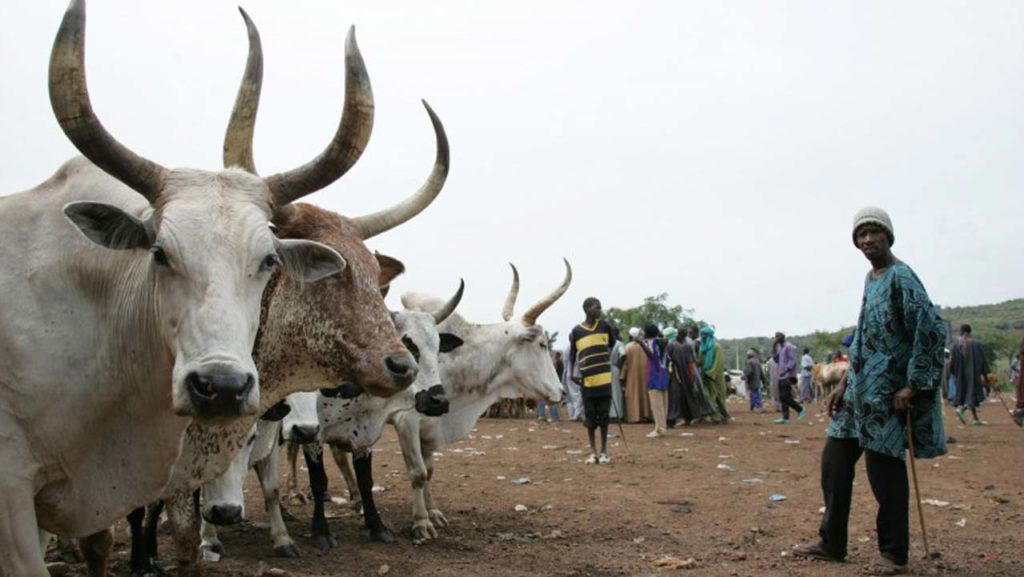
Amid a worrying deficit in local milk and meat production which fuels dependency on import of livestock products, URUS Group is pushing forward a suite of innovations to boost local production to meet nutritional demands.
Country Manager of the firm, Adekunle John, speaking at the just concluded Vanguard Economic Discourse, said despite Nigeria having one of the largest cattle populations in Africa, productivity remains disappointingly low with average milk yield at just one to two litres per cow daily, far below the 30 to 50 litres recorded in Europe and the United States.
This, Adekunle noted, can be improved through genetics process, the organization’s area of expertise, which involves deploying artificial insemination and breeding technologies to enhance herd quality and output.
He informed that the company operates in 36 countries and has built a global database tracking over nine million cows, a model it now seeks to replicate in Nigeria as part of efforts to modernise the sector.
He cited poor data system in the livestock sector, noting that countries such as Brazil, Uganda and Kenya have been successful leveraging data strength.
“If we want to succeed in this country, we must take data seriously. I’ve worked in this industry for over 26 years, and the biggest problem we have is data. The action has already started, it has to be backed up with data”, he said.
He disclosed that the organisation is also investing in training and extension services such as developing artificial insemination technicians and farmer education in response to the capacity challenge in artificial insemination process.
He stated further: “There are limited number of trained personnel which is why capacity building is critical. Yes, we are here to do business, but beyond that, we want improved animal productivity, train Artificial Insemination (AI) technicians to ensure food security in the country.
“We are collaborating with breeding centers and support AI technicians. We are also working with farmers to improve their skills. At the same time, we are making our services affordable and accessible”.
Adekunle added that the company which has been around for over a year has recorded measurable progress that included trading of 120 animals across Abuja, Kano, Oyo, Osun, and more states.
He explained further, “We now have over 500 farmers who are breeders. Some farms already have up to 160 calves each. These farmers are equally raising next generation of improved livestock locally so we don’t have to import from Europe or Brazil. Conception rates have equally surged to 64.62 per cent from a previous five per cent.
“This is a real Nigerian success story. It’s happening in rural communities. We are working with smallholder farmers and getting real results”.
The post URUS tackles livestock products deficit with innovative solutions appeared first on Vanguard News.

The World Bank has said Nigeria’s biggest fiscal challenge is weak revenue mobilisation rather than excessive borrowing, urging the government to prioritise efforts to boost revenue generation to support sustainable economic growth.
Speaking during an interview on Channels Television on Friday, the World Bank Country Director for Nigeria, Mathew Verghis, said Nigeria’s debt profile remains moderate by international standards and is significantly different from countries experiencing debt distress.
“From our assessment, Nigeria doesn’t have a high indebtedness problem; it has a low revenue problem,” Verghis said.
He explained that Nigeria’s debt-to-GDP ratio is lower than that of many comparable countries, stressing that concerns should focus on improving government revenue rather than limiting borrowing.
“When we looked at the numbers, Nigeria is a moderately indebted country, meaning it has less debt relative to its economy than most of its neighbours and many other countries,” he said.
“Nigeria is in a very different situation than Ghana, for example, which is going through a debt restructuring.”
Verghis defended government borrowing as a necessary tool for financing long-term investments that stimulate economic growth and improve living standards.
“Nigeria borrows for the same reasons that all countries borrow. If you want to deliver results to people, the money available on an annual basis is not enough. So you borrow, deliver results, and that improves your ability to repay,” he said.
He cited the expansion of electricity access as an example, noting that providing power to about 32 million Nigerians requires substantial upfront investment.
“To be able to connect and provide energy to 32 million Nigerians, Nigeria needs to borrow money now. But with increased access to energy, the country will become wealthier and better positioned to repay the loans,” he added.
The World Bank official, however, warned that low government revenue poses a greater threat to Nigeria’s fiscal sustainability than its current debt level.
“Nigeria’s debt is not particularly high, and in fact, it’s quite moderate by international standards. Its revenues are very low by international standards, and unless those revenues are raised, it will not be able to pay back debt,” Verghis said.
According to him, strengthening revenue mobilisation would enable the government to increase investments in infrastructure, healthcare, education and other sectors that drive job creation, improve human capital and reduce poverty over the long term.
The remarks come as the World Bank recently unveiled a new six-year Country Partnership Framework for Nigeria, which places job creation at the centre of its support for the country through investments in infrastructure, healthcare, agriculture and digital connectivity.

By Elizabeth Adegbesan
As part of the Federal Government (FG) borrowing plan for the 2026 budget, the Central Bank of Nigeria, CBN, has issued Treasury Bills, TBs, to raise N5.8 trillion in the third quarter of 2026 (Q3’26).
This represents a 241 percent year-on-year (YoY) increase when compared to N1.76 trillion sold in Q3’25.
CBN disclosed this in its Nigeria Treasury Bills Issue programme for Q3’26.
Treasury Bills are short term (less than one year) debt instruments used by the apex bank to borrow money from the Nigerian public on behalf of the federal government. CBN also uses TBs to control money supply in the economy.
The TB issue programme commenced on July 1st, and ends on September 23rd, 2026. The settlement date began yesterday and ends on September 24th, 2026.
During the period, the apex bank will issue TBs worth N900 billion on 91 days tenor, N900 billion on 182 days and N4 trillion on 364 days.
A breakdown of the programme revealed that in July, the apex bank plans to issue N2 trillion worth of TBs, comprising N300 billion worth of 91 days bills, N300 billion worth of 182 days bills and N1.4 trillion worth of 364 bills.
In August, the apex bank issued N2.1 trillion worth of TBs, comprising N300 billion worth of 91 days bills, N300 billion worth of 182 days bills, and N1.5 trillion worth of 364 days bills.
In September, CBN plans to sell N1.7 trillion worth of TBs comprising N300 billion worth of 91 days bills, N300 billion worth of 182 days bills and N1.1 trillion worth of 384 days bills.

By Emma Ujah
President and Chairman of the Board of the African Export-Import Bank (Afreximbank), Dr. George Elombi, has tasked African nations to stop the export of Lithium, the main raw material used in the production of electric vehicle (EV) batteries. Nigeria is a major exporter of Lithium in Africa, though most of the quantity is illegally exported.
Speaking at the bank’s Mid-Year Media Roundtable in Abuja on Wednesday, he said that rather than exporting raw lithium, African countries should use it to manufacture EV batteries on the continent.
He also said Afreximbank has sufficient funds to finance the production of EV batteries and is ready to provide the necessary funding to any individual or organisation willing to venture into the industry.
In his words, “African mineral resources must work for Africa’s development. EVs are the future of transportation, and the use of lithium to produce EV batteries is taking centre stage in the EV industry.
“Africa must take its position in the EV industry. We have lithium. We should produce EV batteries at home. We simply have to produce them here. There is enough money in Africa to manufacture batteries in Africa.
“If you know anyone who is interested in EV battery production, bring them to me. But if you see someone looking for funding to export lithium, don’t bring them to me.”
Dr. Elombi also said African leaders and institutions must work together to ensure that African funds held outside the continent are repatriated to support the region’s development.
Some rating agencies biased against Africa
Speaking on the bank’s credit ratings, Dr. Elombi, who advocated for African rating agencies, said some global rating agencies initially dismissed Afreximbank as too small and insignificant to drive Africa’s development, while questioning the bank’s trade finance mandate.
According to him, one agency’s 2014 assessment suggested that trade finance could not serve as a foundation for development and implied that the bank’s core mandate lacked relevance.


Harry Kane’s Interview After Mexico 2-3 England Was Comedy Gold

2027 polls: Parties rush to meet INEC’s uploading deadline

Report alleging ₦500bn offer to split S’South votes false, baseless – Jonathan

Simi Sanya and Femi Dapson Are Now Legally Married and It Is Beautiful to See

Premier League Set-Piece Goals (2025/2026)

FCT Area Council Election: Live results from polling units
-
 Sports6 hours ago
Neymar’s Comment to Norway Goalkeeper Orjan Nyland After Scoring Penalty
-
 Sports1 day ago
Joe Hart Slams ‘Disgrace’ France vs Paraguay Referee
-
 Sports19 hours ago
Mexico vs England Referee Already Made World Cup Blunder
-
 Sports1 day ago
Vozinha Reveals What Lionel Messi Told Him After Argentina 3-2 Cape Verde
-
 Sports2 days ago
20 Players in England’s 2026 World Cup Squad Could’ve Represented Other Nations
-
 Sports2 days ago
Footage Shows What Happened After Lionel Messi’s Post-Match Interview v Cape Verde
-
 Sports2 days ago
Explanation Emerges as Ref Accused of Breaking FIFA Rule to Favour Argentina v Cape Verde
-
 Sports2 days ago
Paraguay Legend Chilavert Sparks Uproar With ‘Disgraceful’ Comments About France