
Business
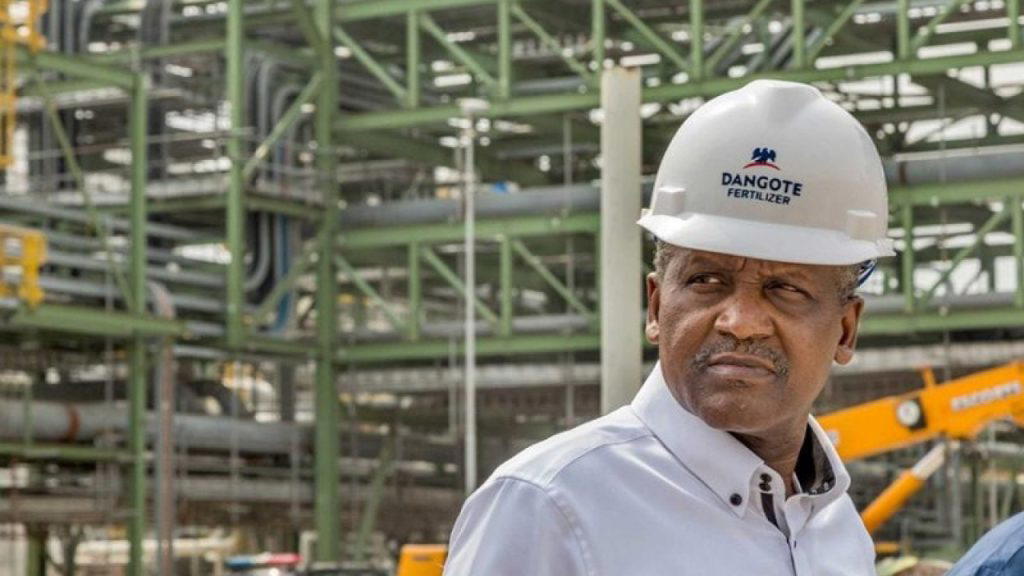
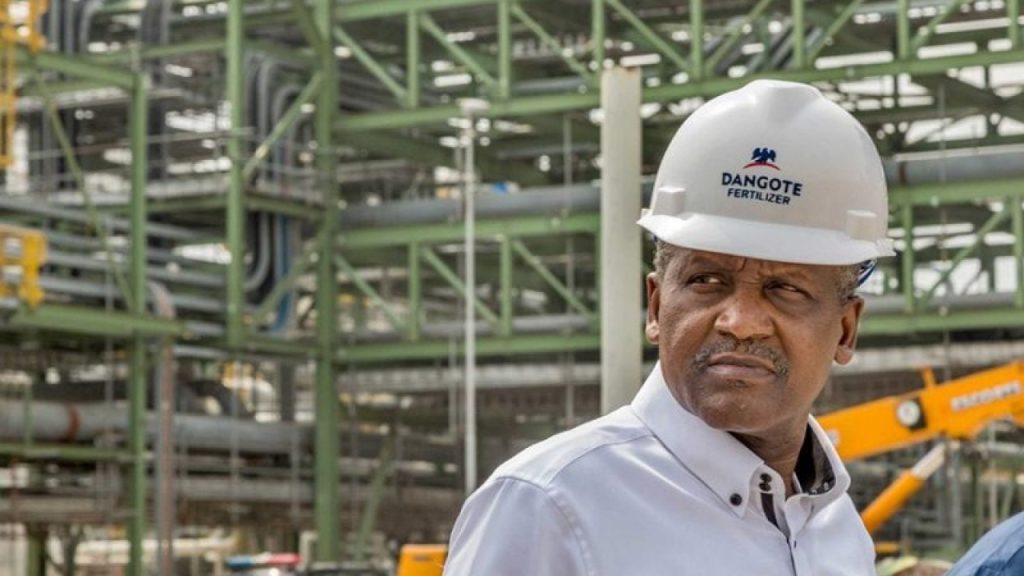
How mafia fought to frustrate $20bn Dangote Petroleum Refinery—Aliko Dangote

•Middle East crisis boosts demand, prices •Meet beneficiaries of subsidy regime •Plans expansion plans across Africa •We sell stakes to attract investors •We are not overstretching financially •Civil unrest, policy inconsistency, other risks
By Udeme Akpan, Energy Editor
Africa’s richest man and President of the Dangote Group, Aliko Dangote, has alleged that some influential fuel importers fought hard to frustrate the establishment of the $20 billion refinery.
He said the “mafia” feared that the refinery would alter the trade flows that encouraged massive importation of refined petroleum products into Nigeria despite the country’s status as a major crude oil producer and exporter.
According to him, he was determined to end the prolonged fuel queues in Nigeria, noting that it was worrisome that Nigerians sometimes spent hours and even days trying to buy fuel at filling stations.
He said the refinery project, launched in 2013, encountered many obstacles, some allegedly created by entrenched interests in the oil business.
He added that the cost of building critical infrastructure such as a port, heavy equipment facilities and a treated water plant was enormous.
Dangote stated that despite the challenges and discouragement, he pushed ahead with the project in order to strengthen Nigeria’s and by extension Africa’s energy security.
The post How mafia fought to frustrate $20bn Dangote Petroleum Refinery—Aliko Dangote appeared first on Vanguard News.

By Peter Egwuatu
Stanbic IBTC Bank has affirmed its commitment to accelerating the growth of Micro, Small and Medium Enterprises (MSMEs) across Nigeria through strategic partnerships with state governments and institutions committed to creating enabling environments for businesses to thrive.
The bank made this commitment during its Nigeria Business Summit Regional Tour held in Aba, in partnership with the Abia State Government, to deliver business enlightenment sessions, funding masterclasses, enterprise advisory services and capacity-building programmes for entrepreneurs.
Speaking at the event, the Commissioner for Industry and SMEs, Mazi Michael Enyinnaya Akpara, reiterated Abia State Government’s commitment to building one of Nigeria’s most competitive enterprise ecosystems through deliberate policy reforms and strategic initiatives.
According to him, the State is currently developing a comprehensive MSME Policy to provide a clear framework for enterprise development, while also establishing a statewide MSME Directory to improve business visibility and access to investment opportunities. He further announced plans for the National Brands Development and Made-in-Nigeria Project (Abia Expo 2026), an initiative designed to showcase the ingenuity of Nigerian businesses, strengthen locally manufactured products and position Abia as Nigeria’s preferred destination for quality local production.
“Abia State is intentionally building an ecosystem where businesses can start, grow, compete and access markets both locally and internationally. Through the development of the State MSME Policy, the MSME Directory, the National Brands Development and Made-in-Nigeria Project, we are laying the foundation for sustainable enterprise growth. Partnerships with organisations like Stanbic IBTC are critical to achieving this vision because government cannot build a thriving MSME ecosystem alone,” he said.
Commenting on Stanbic IBTC’s broader role in supporting Nigerian businesses, Chuma Nwokocha, Chief Executive, Stanbic IBTC Holdings, said: “Businesses do not scale in isolation. They scale when they have access to capital; to intelligence; and to the platforms that connect them to wider markets.”
Nwokocha further stated: “We will accelerate MSME graduation through value chain finance, structured lending, and the credit and advisory capability that turns promising businesses into durable ones. And we will invest in the sectors that will define Nigeria’s next decade.”
Also speaking, Executive Director, Business and Commercial Banking, Stanbic IBTC Bank, Remy Osuagwu, noted that the company is taking a more deliberate, nationwide approach to supporting entrepreneurs by bringing practical business support closer to where businesses operate.

By Godwin Oritse
The Nigeria Customs Service (NCS) and its counterpart in the Republic of Benin have strengthened their partnership on the deployment of geospatial technology to enhance economic security, improve border surveillance, and facilitate legitimate trade along their shared border corridor.
The collaboration was highlighted during a meeting held at the ECOWAS Conference Hall, Seme-Krake Joint Border Post.
Speaking at the event, the Customs Area Controller of the Seme Area Command, Comptroller Abdullahi Kaila, described the initiative as a significant milestone in improving border management, boosting trade, and addressing the security challenges confronting one of West Africa’s busiest trade corridors.
According to him, the deployment of geospatial technology will provide Customs authorities with better intelligence and operational capabilities to tackle smuggling and other cross-border crimes.
Also speaking, the Head of Geospatial at the Nigeria Customs Service, Deputy Comptroller of Customs Labaran Ahmed, said the initiative is designed to pilot the Service’s border management application using the World Customs Organisation (WCO) satellite platform.
“With this new tool, we will not only identify vulnerable points along the border but also strategically deploy our field officers to those locations for targeted operations and more effective results,” he said.

•NUPRC, NOSDRA disagree on volume
By Ediri Ejoh
There are indications that the Federal Government’s ambition to transform Nigeria into a gas-driven economy by 2030 is facing significant challenges, as the country lost an estimated 3,100 gigawatt-hours (GWh) of electricity generation potential to persistent gas flaring by oil companies in May 2026.
This came as figures released by the Nigerian Upstream Petroleum Regulatory Commission (NUPRC) differed from those of the National Oil Spill Detection and Response Agency (NOSDRA) on the volume of gas flared during the period.
While the NUPRC recorded 17.6 million standard cubic feet (MMSCF) of gas flared in May 2026, NOSDRA put the figure at 30.7 million standard cubic feet (MSCF).
Data obtained from NOSDRA’s latest report showed that the monetary value of the gas flared during the period stood at $107.5 million.
According to the agency, the defaulting companies, including International Oil Companies (IOCs), are liable to penalties amounting to $61.4 million.
Providing a breakdown of flaring across oilfields, NOSDRA disclosed that gas flaring by companies operating onshore rose by 62.3 per cent to 22.3 MSCF, compared to 8.4 MSCF flared offshore.
The agency further stated that the volume of gas flared during the review period translated into carbon dioxide emissions estimated at 1.6 million tonnes.
NOSDRA lamented that despite efforts to curb the practice, gas flaring has persisted in Nigeria since the 1950s, releasing carbon dioxide and other harmful gases into the atmosphere.
The Federal Government has repeatedly stated its commitment to the “Decade of Gas” initiative.
Under the initiative, launched in 2021, Nigeria aims to become a gas-powered economy by 2030 through improved power supply, industrial utilisation and increased gas exports.
A government report obtained by Vanguard stated that “increasing gas utilisation for power generation and incentivising investments in the gas value chain” remain top priorities.
Vanguard gathered that gas flaring has remained persistently high despite increased investments in the gas sector, suggesting that inflows into the industry have not translated into proportional improvements in gas production and utilisation.
Checks by Vanguard also indicated that Nigeria’s inability to consistently generate more than 4,000 megawatts (MW) of electricity for households and businesses is partly linked to inadequate gas supply to Electricity Generation Companies (GenCos).
Meanwhile, the Renevlyn Development Initiative, RDI, has urged the Federal Government to impose an outright ban on gas flaring, arguing that oil companies operating in the Niger Delta are more comfortable paying penalties than ending the practice.““RDI’s position followed recent data from the Nigerian Oil Spill Monitor covering March 2012 to 2025, which showed that oil companies operating in Nigeria paid an estimated $646 million in gas flaring penalties in 2025, the highest in the last five years.

Stanbic IBTC, Abia State partner to deepen MSME growth

Nigeria, Benin Customs strengthen border security with geospatial tech

Man Utd Hold Talks Over Signing Real Madrid Star Eduardo Camavinga

Meaning Behind Egypt Manager’s ‘X’ Gesture vs Argentina

Simi Sanya and Femi Dapson Are Now Legally Married and It Is Beautiful to See

Premier League Set-Piece Goals (2025/2026)
-
 Sports23 hours ago
England vs Argentina: Referee and Assistants Announced
-
 Sports2 days ago
Alfie Haaland’s 6-Word Insult to Roy Keane After England vs Norway
-
 Sports2 days ago
Lionel Messi Missed Training Session Ahead of Argentina vs England
-
 Sports2 days ago
Argentina ‘Make Special Request to FIFA’ Before England World Cup Clash
-
 Sports2 days ago
Alexander Sorloth’s Girlfriend Releases Statement After Online Backlash
-
 Sports2 days ago
Concerning Jude Bellingham Footage Sparks England Injury Fears
-
Metro2 days ago
Bandits kidnap Oyo school headmaster, demand N30m ransom
-
 Sports2 days ago
UFC 329 Salaries For Conor McGregor, Max Holloway, Paddy Pimblett