
Business
Maritime lawyers seeks stronger legal framework for NSW


By Godwin Oritse
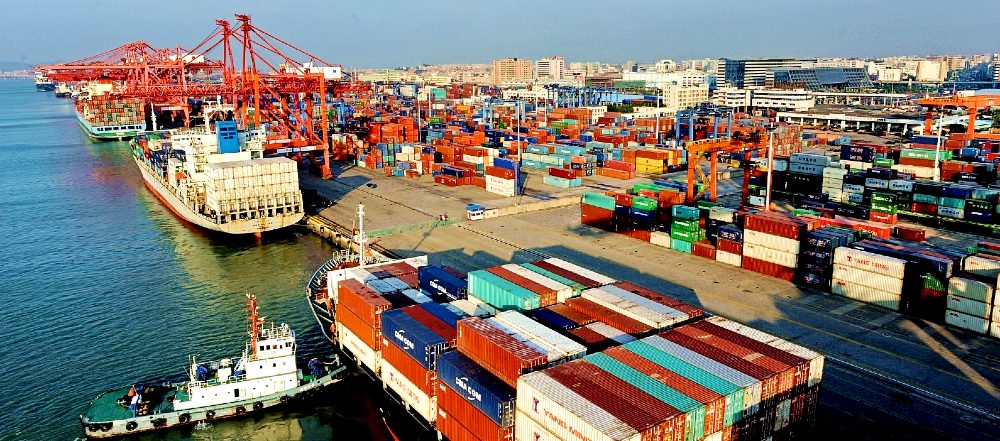
The Nigerian Maritime Law Association, NMLA, has called for a robust legal and regulatory framework to ensure the successful implementation of the National Single Window, NSW, project in Nigeria.
According to the association, the National Single Window initiative of the Federal Government is designed to improve operational efficiency through faster cargo clearance processes, greater transparency in regulatory procedures, and enhanced coordination among government agencies involved in maritime trade and port operations.
Speaking at the 4th Breakfast meeting of the NMLA, Mr. Mike Igbokwe, Senior Advocate of Nigeria, SAN, who is also President of the group said that the initiative represents a major shift towards the digitalisation of processes within the maritime sector and is expected to promote ease of doing business, reduce bottlenecks at the ports, and strengthen Nigeria’s trade competitiveness.
Speaking on the theme of the meeting, “Regulatory Reforms and the National Single Window (NSW) Project,” Igbokwe noted that Nigeria’s maritime sector is characterised by the involvement of multiple regulatory agencies with overlapping responsibilities, resulting in duplication of functions, efforts and costs.
He further observed that the traditional processes within the sector remain fragmented and largely manual, leading to delays in cargo clearance, increased cost of doing business, rising inflation, and higher prices of imported raw materials and manufactured goods.
He said: “NSW will be of benefit to members of NMLA as maritime lawyers and IT experts as there will be a need to update regulatory frameworks, data governance and cybersecurity considerations, contractual and liability adjustments in trade transactions and greater reliance on electronic records and systems.”
“Nigeria does not lack good regulatory frameworks but usually lacks the political will and determination for implementing, monitoring and supervising the legislation.
“The National Single Window Project represents a transformative regulatory reform capable of modernizing Nigeria’s trade and maritime sector. If effectively implemented, it can significantly improve efficiency, transparency, revenue generation, and ease of doing business.
“However, its success will depend not only on technology, but also on strong political will, institutional cooperation, legal reforms, and sustained stakeholder engagement.”
The post Maritime lawyers seeks stronger legal framework for NSW appeared first on Vanguard News.

By Peter Egwuatu
Dangote Petroleum Refinery has announced a reduction in the ex-depot prices of Premium Motor Spirit (PMS) and Automotive Gas Oil (Diesel), effective Thursday 6th of August, thereby reaffirming its commitment to providing affordable, high-quality petroleum products to the Nigerian market.
The company in a statement said, under the new pricing structure, the refinery has reduced the ex-depot price of PMS to N1,165 per litre, down from N1,215 per litre, representing a reduction of N50 per litre. Similarly, the ex-depot price of Diesel has been reduced to N1,570 per litre from N1,650 per litre, amounting to a decrease of N80 per litre.
The price review reflects Dangote Refinery’s ongoing efforts to enhance energy affordability, improve access to refined petroleum products, and support economic activities across Nigeria. The refinery remains committed to ensuring stable supply while leveraging operational efficiencies to deliver value to consumers, businesses, and stakeholders.
As Africa’s largest refinery, Dangote Petroleum Refinery continues to play a pivotal role in strengthening Nigeria’s energy security, reducing reliance on imports, and supporting the nation’s economic development through the supply of world-class petroleum products.
The company reaffirmed its dedication to contributing to the growth of the Nigerian economy and passing on the benefits of improved operational efficiencies to consumers whenever market conditions permit.
•As crude oil prices drop
By Udeme Akpan, Energy Editor
Competition among petroleum marketers and depot operators intensified on Tuesday as the prices of Premium Motor Spirit (PMS), also known as petrol, and Automotive Gas Oil (AGO), also called diesel, recorded downward adjustments across major depots in Lagos, Port Harcourt, Warri and Calabar.
This came on the heels of significant reduction in crude oil prices with international benchmark Brent crude falling below the critical $80 per barrel mark.
The development, however, raises fresh concerns over oil-exporting countries’ revenues, including Nigeria’s, if the downward trend persists.
Market data showed that Brent crude dropped by $4.68, or 5.59 per cent, to $79.09 per barrel, while West Texas Intermediate (WTI) declined by $4.79, or 5.96 per cent, to $75.55 per barrel.
The OPEC Basket suffered the biggest decline among the major benchmarks, plunging 10.04 per cent to $79.50 per barrel after shedding $8.87. Similarly, the Indian Basket slipped 5.78 per cent to $88.12 per barrel.
In Nigeria’s refined product market the latest Mid-Day Price Report showed that while leading suppliers, including Dangote Petroleum Refinery, retained their petrol prices, several independent depot operators reduced both petrol and diesel prices in a move that could further support lower pump prices if sustained.
In Lagos, Dangote Petroleum Refinery retained its ex-depot petrol price at N1,215 per litre, keeping it among the most competitive suppliers in the market.
Similarly, Pinnacle and Nipco maintained their PMS prices at N1,215 and N1,216 per litre respectively, while Ardova trimmed its price by N1 to N1,216 per litre.
African Terminal and Integrated Depot, however, raised prices marginally by N1 each to N1,217 per litre, while MRS held its price at N1,218 per litre.
The report indicates that the narrow pricing band of N1,215-N1,218 per litre among major Lagos depots reflects heightened competition for marketers’ patronage.
On the diesel market, prices were largely stable in Lagos, although Emadeb reduced its AGO price by N10 to N1,620 per litre from N1,630, providing modest relief to industrial consumers and transport operators.
Dangote, however, increased its diesel price slightly by N1 to N1,651 per litre, while most other depots maintained prices between N1,620 and N1,625 per litre.
In Port Harcourt, Matrix lowered its petrol price by N 2 to N1,220 per litre, while Liquid Bulk maintained N1,220 per litre.
On the diesel side, Bulk Strategic cut its AGO price by N10 to N1,665 per litre, while Matrix reduced its price by N5 to N1,670 per litre.
Warri witnessed some of the sharpest reductions during the trading session.
Matrix reduced its PMS price by N7 to N1,221 per litre, while A.Y.M. Shafa lowered its price by N4 to N1,223 per litre.
Optima and Rain Oil also cut petrol prices by N2 each to N1,225 per litre.
Diesel prices in the oil hub also declined, with Matrix and A.Y.M. Shafa reducing prices by N10 each to N1,670 and N1,665 per litre respectively.
Nipco posted the biggest diesel adjustment in Warri, cutting its AGO price by N15 to N1,650 per litre, while Rain Oil and Zamson maintained N1,650 per litre.
Checks by Vanguard showed that MRS that takes supplies directly from Dangote Petroleum Refinery reduced its fuel price to N1,245 per litre from N1,280 per litre, yesterday.
The checks also showed that other oil marketers reduced their petrol prices from more than N1,280 per litre to between N1, 245 per litre to N1, 250 per litre in Lagos and its environs.

By Elizabeth Adegbesan
The withdrawal of the Central Bank of Nigeria’s (CBN) COVID-19 regulatory forbearance given to banks has pushed banks’ Non-Performing Loans (NPLs) ratio to 9.94 per cent in the first quarter of 2026 (Q1’26), significantly above the apex bank’s prudential benchmark of 5.0 per cent.
The development was disclosed in the CBN’s first quarter 2026 (Q1’26) Economic Report, which attributed the increase to the end of the long-standing pandemic-era relief measures introduced to support borrowers and strengthen financial system stability during the COVID-19 crisis.
According to the report, the NPL ratio rose by 2.43 percentage points from 7.51 per cent in the fourth quarter of 2025.
The CBN stated: “With the withdrawal of the Bank’s long-standing COVID-19-related forbearance measures to promote transparency and accountability in the banking system, the non-performing loans (NPLs) ratio stood at 9.94 per cent, above the 5.00 per cent threshold.” Despite the rise in bad loans, the apex bank maintained that the Nigerian banking industry remained resilient, with key financial soundness indicators largely above regulatory requirements.
The banking sector’s Liquidity Ratio (LR) increased to 67.32 per cent in Q1’26 from 57.22 per cent in the previous quarter, remaining well above the statutory minimum of 30 per cent.
Similarly, the Capital Adequacy Ratio (CAR) improved by 0.84 percentage point to 13.19 per cent, exceeding the regulatory minimum of 10 per cent.
According to the CBN, the stronger liquidity position reflects banks’ capacity to meet short-term obligations while continuing to extend credit to the economy, and the improved capital position underscores the industry’s ability to absorb potential credit and market shocks.
The report stated: “The Nigerian banking sector remained resilient and stable, as reflected in the performance of key financial soundness indicators, most of which were within regulatory thresholds.”
Meanwhile, credit extended by Other Depository Corporations (ODCs) to the economy rose by 5.95 per cent to N60.73 trillion in Q1’26 from N57.32 trillion in Q4’25, indicating continued support for productive sectors despite the tight monetary environment.
The services sector accounted for the largest share of total credit at 59.54 per cent, followed by industry with 34.10 per cent, while agriculture accounted for 6.36 per cent. However, consumer lending weakened during the period.
The report suggests that while the banking sector remains adequately capitalised and liquid, the withdrawal of COVID-19 forbearance has exposed previously restructured or distressed loans, leading to a marked deterioration in asset quality even as banks continue to expand lending to critical sectors of the economy.


‘World-class’ £140m Star Open to Joining Arsenal Instead of Vini Jr

Arsenal Expected To Make Ezri Konsa Bid

Tottenham Set Aside ‘Substantial Budget’ to Sign Gakpo

Meaning Behind Egypt Manager’s ‘X’ Gesture vs Argentina

Premier League Set-Piece Goals (2025/2026)

Simi Sanya and Femi Dapson Are Now Legally Married and It Is Beautiful to See
-
 Sports2 days ago
All Completed Chelsea Transfers in 2026/27
-
 Entertainment16 hours ago
The Mkambala Make a Grand Entrance in Rich Burgundy Looks at Peller and Jarvis’ Traditional Wedding
-
 Entertainment16 hours ago
Peller and Jarvis Put Edo Culture in the Spotlight With Stunning Traditional Wedding Looks
-
 Entertainment16 hours ago
The Adelajas in Aso Oke! Peller and Jarvis Celebrate Yoruba Heritage in Their Most Regal Wedding Look Yet
-
 Sports16 hours ago
Two 2026-27 Champions League Rule Changes Introduced by UEFA
-
 Politics2 days ago
Osun 2026: I’ll win if election is free and fair — Adeleke
-
 Politics2 days ago
WARD DELINEATION: Itsekiri group rejects equal allocation with Ijaw
-
 Sports2 days ago
4 Countries That Never Backed Gianni Infantino’s Re-Election as FIFA President