
Business
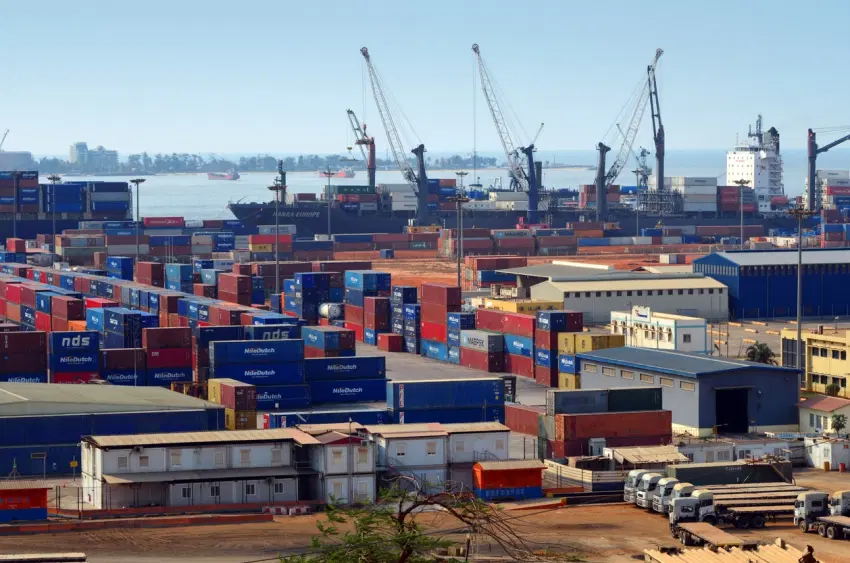
N7m clears container in Cotonou, same cargo costs N15m in Apapa — IMAN


•Importers remain govt’s biggest revenue source after oil — Yar’adua
By Efe Onodjae
The Importers Association of Nigeria (IMAN) has decried the rising cost of cargo clearance at Nigerian ports, revealing that while it costs between N7 million and N8 million to clear a 20-foot container in Cotonou, Benin Republic, the same container attracts between N14 million and N15 million at Apapa Port in Lagos.
The Association described the disparity as a major reason many Nigerian importers are diverting cargoes to neighbouring West African countries, including Benin Republic, Ghana and Togo, where port charges are lower and operations are more efficient.
In an interview with Vanguard in Apapa, Lagos, IMAN South West Chairman, Joseph Ajoku, strongly rejected the recent increase in tariffs by shipping lines and terminal operators, warning that the development would worsen inflation, increase the cost of goods and further cripple import businesses across the country.
The association stated that a 40-foot container, which costs about N13 million to N14 million to clear in Benin Republic, currently attracts between N19 million and N20 million in Nigeria.
According to IMAN, the increasing cost of doing business at Nigerian ports has continued to weaken the country’s competitiveness within the West African sub-region.
“Our findings reveal that smaller West African countries such as Ghana, Togo, Benin Republic and Burkina Faso are recording significant improvements in operational efficiency and service delivery.
“For instance, at Benin Republic ports, a 20-foot container can be cleared at approximately N7 million to N8 million, compared to N14 million to N15 million at Apapa Port, Nigeria. Similarly, a 40-foot container costs approximately N13 million to N14 million to clear in Benin Republic, while the same container costs about N19 million to N20 million at Apapa Port,” the association stated.
Also speaking, the National General Secretary of IMAN, Aliyu Yar’adua, said importers remain critical to the survival of the Nigerian economy, stressing that the sector contributes massively to government revenue generation.
“After oil, it is what importers bring into the economy that keeps the country moving. Importers are the lifeline of government revenue,” he said.
Yar’adua appealed to the Nigerian Shippers’ Council (NSC) to halt further tariff increases and ensure proper consultations with importers before approving any adjustment in shipping and terminal charges.
He warned that many importers were already struggling under the weight of high foreign exchange rates, rising bank interest rates and multiple port charges, adding that some businesses had abandoned cargoes because they could no longer afford the costs involved.
According to him, allowing additional tariff increases at a time Nigerians are battling economic hardship would only worsen inflation and push more businesses to neighbouring countries.
The post N7m clears container in Cotonou, same cargo costs N15m in Apapa — IMAN appeared first on Vanguard News.

By Yinka Kolawole
Manufacturers’ confidence in Nigeria’s business environment rebounded in the second quarter of 2026 (Q2’26) buoyed by expectations of improved government policies and a more favourable operating climate. But the sector operators have continued to grapple with high borrowing costs, inadequate power supply, foreign exchange constraints and multiple taxation.
The latest Manufacturers CEO Confidence Index (MCCI) released by the Manufacturers Association of Nigeria, MAN, showed that the aggregate index rose to 52.1 points in Q2 2026, up from 48.7 points in the first quarter (Q1’26) indicating a return to positive business sentiment.
Director General of MAN, Segun Ajayi-Kadir, said the improvement reflected manufacturers’ optimism about the direction of government reforms rather than any significant improvement in current operating conditions.
He stated: “The increase in the MCCI to 52.1 points signals renewed confidence among manufacturers, driven largely by expectations that recent policy initiatives, including the Nigeria Industrial Policy, the ‘Nigeria First’ Policy, Executive Orders 003 and 005, and the Nigeria Tax Act 2025, will improve the operating environment.”
He, however, noted that the optimism remained fragile as manufacturers continued to face severe operational challenges.
“The confidence expressed by manufacturers is largely forward-looking. Actual business and employment conditions during the second quarter remained weak, with both indicators still below the 50-point threshold, reflecting subdued business activity,” Ajayi-Kadir stated.
He listed limited access to finance, persistent electricity shortages, high production costs, inadequate foreign exchange availability, weak consumer demand and multiple taxation as the major constraints confronting manufacturers.
Ajayi-Kadir said manufacturers remained dissatisfied with the high cost of bank credit, attributing it to the Central Bank of Nigeria’s Monetary Policy Rate, MPR, of 26.5 per cent.
“Commercial lending rates remain prohibitively high for manufacturers. The current monetary policy stance continues to constrain access to affordable financing needed for investment and expansion,” he said.
The MAN DG further expressed concern over continued regulatory bottlenecks and uncertainty surrounding the implementation of the Nigeria Tax Act 2025, saying manufacturers were yet to enjoy the full benefits of the reforms aimed at reducing multiple taxation and easing regulatory burdens.
Ajayi-Kadir added that although local sourcing of raw materials had improved, government ministries, departments and agencies were yet to substantially increase patronage of Made-in-Nigeria products as envisaged under the “Nigeria First” policy.
He urged the Federal Government to ensure strict compliance with the directive requiring MDAs to source at least 80 per cent of their procurement locally, while calling on the CBN to reduce the MPR to below 20 per cent and prioritise foreign exchange allocation to manufacturers to stimulate production and accelerate industrial growth.
Business
Mutual Benefits meets NAICOM recapitalisation milestone, strengthen industry leadership position

By Rosemary Iwunze
Mutual Benefits Assurance Plc and Mutual Benefits Life Assurance Ltd have achieved another significant regulatory milestone following their inclusion among the 43 insurance and reinsurance companies that successfully met the National Insurance Commission (NAICOM)’s prescribed Minimum Capital Requirements under the Nigerian Insurance Industry Reform Act (NIIRA) 2025.
The announcement, made by NAICOM following the twelve-month insurance sector recapitalisation deadline of July 31,2026, marks a defining moment in the transformation of Nigeria’s insurance industry. It signals the emergence of a stronger, more resilient, adequately capitalised, professionally governed and policyholder-focused insurance sector that is better positioned to support national economic growth, deepen financial inclusion, mobilise long-term investment capital and contribute meaningfully to the stability of Nigeria’s financial system.
The successful compliance of Mutual Benefits Assurance Plc and Mutual Benefits Life Assurance Ltd reflects the Group’s strong financial fundamentals, prudent corporate governance, sound risk management practices and unwavering commitment to delivering lasting value to policyholders, shareholders and other stakeholders.
Commenting on the achievement, the Group Managing Director of Mutual Benefits Assurance Plc, Mr. Olufemi Asenuga, described the announcement as a defining moment for the company and the Nigerian insurance industry.
“Successfully meeting NAICOM’s recapitalisation requirements is a clear demonstration of our financial resilience, strategic foresight and commitment to sustainable growth. This milestone strengthens our capacity to underwrite larger and more complex risks, accelerate innovation and deepen customer confidence. As the insurance industry enters this new era, Mutual Benefits Assurance Plc is exceptionally well positioned to deliver greater value to our customers, shareholders and the Nigerian economy.”
While commending NAICOM for its visionary leadership and unwavering commitment to strengthening Nigeria’s insurance industry through the successful recapitalisation exercise, Asenuga expressed profound appreciation to the Board of Directors, shareholders, customers, brokers, employees and all other stakeholders of Mutual Benefits for their steadfast trust, loyalty and support. He noted that this landmark achievement would not have been possible without their collective belief and commitment to the Mutual Benefits vision.
He reaffirmed the Group’s commitment to delivering innovative insurance solutions, superior customer service, digital transformation, sound corporate governance and sustainable value creation, while continuing to contribute meaningfully to the growth and development of Nigeria’s insurance industry.
Also speaking on the milestone, the Managing Director of Mutual Benefits Life Assurance Ltd, Mr. Biyi Ashiru-Mobolaji, noted that the successful recapitalisation further reinforces the company’s ability to provide long-term financial security to millions of Nigerians.
“This achievement goes beyond meeting a regulatory requirement. It is a reaffirmation of our enduring promise to policyholders. Our strengthened capital base enhances our ability to honour our commitments, develop innovative life insurance and wealth creation solutions and support individuals and families as they plan confidently for the future. We remain committed to protecting lives, preserving legacies and creating lasting financial security for generations.”
With both companies successfully meeting the new capital requirements, the Mutual Benefits Group is well positioned to contribute to the next phase of growth in Nigeria’s insurance industry, while supporting national aspirations for greater financial inclusion and economic development.
The Group remains focused on expanding insurance access, investing in technology-driven customer experiences, strengthening operational excellence and delivering sustainable value to all stakeholders.
Mutual Benefits Assurance Plc is one of Nigeria’s foremost insurance companies, providing innovative General insurance solutions that protect individuals, families, businesses and institutions. With a legacy of excellence spanning three decades, the company continues to deliver financial security through innovation, professionalism and exceptional customer service.
On its part, Mutual Benefits Life Assurance Ltd is a leading provider of life insurance, savings, investment and retirement solutions dedicated to helping individuals and families achieve long-term financial security through customer-centric and innovative insurance offerings.
The recapitalisation exercise by NAICOM was undertaken pursuant to Section 15 and other relevant provisions of the Nigerian Insurance Industry Reform Act (NIIRA) 2025, signed into law on July 31, 2025, by President Bola Ahmed Tinubu as part of the Federal Government’s financial sector transformation agenda aimed at building a US$1 trillion economy by 2030.

…Marks new era of pension administration, managing N3tr in assets
By Rosemary Iwunze
Following the successful operational integration of Leadway Pensure and PAL Pensions, Leadway Holdings has officially unveiled Leadway PFA as its single, unified pension brand.
This announcement marks the final milestone in the consolidation process, retiring the legacy entity names and introducing a bold new identity built for the future of wealth creation in Nigeria.
Operating with a combined Asset under Management (AuM) of over ₦3 trillion, the newly established brand, Leadway PFA emerges as a formidable institution in the Nigerian pension landscape. The unified brand now operates on a fully harmonized and upgraded technological infrastructure, ensuring that its 1.2 million Retirement Savings Account (RSA) holders benefit from a seamless, highly secure, and optimized customer experience.
The transition to Leadway PFA represents more than a name change, it is a renewed commitment to exceptional financial security. By bringing together the rich heritage, specialized talent, and robust risk frameworks of both legacy firms, the new brand leverages expanded market reach and deeper investment capacity to drive sustained, long-term value for contributors.
Commenting on the brand unveil, Olusakin Labeodan, MD/CEO of Leadway PFA, emphasized the institution’s readiness for the future. “Today, we are thrilled to formally introduce Leadway PFA to the world. Over the past few months, we have executed a meticulous integration of our systems, processes, and people. Leadway PFA is the result of that dedication, resulting into a stronger, more agile institution built to protect and exponentially grow our contributors’ wealth. Our unified brand identity reflects our singular, unwavering purpose: to be the ultimate, most trusted partner in our customers’ retirement journeys”.
The organisation reassures all contributors that the brand transition requires zero action on their part. All RSA balances, unique PINs, and historical financial records remain perfectly intact and rigorously protected by the institution’s enhanced safeguards. Customers can seamlessly continue to monitor their accounts and engage with the brand through existing digital platforms and service centers, which have now been updated to reflect the Leadway PFA identity.
With the brand unification complete, Leadway PFA steps forward entirely focused on setting new industry benchmarks in prudent fund administration, proactive customer service, and innovative pension solutions.
Leadway PFA is a licensed Pension Fund Administrator formed from the integration of Leadway Pensure and PAL Pensions. The unified institution administers retirement savings and pension funds on behalf of individuals and organisations across Nigeria, operating under a consolidated governance and operational framework. Leadway PFA is committed to strong regulatory compliance, disciplined fund management and long-term security for contributors.

Manufacturers’ confidence rebounds despite high borrowing costs, power woes

Fire breaks out at filling station in Abuja

Argentina Confirm Gianni Infantino Stance Amid FIFA Investigation

Meaning Behind Egypt Manager’s ‘X’ Gesture vs Argentina

Premier League Set-Piece Goals (2025/2026)

Simi Sanya and Femi Dapson Are Now Legally Married and It Is Beautiful to See
-
 Entertainment2 days ago
The Mkambala Make a Grand Entrance in Rich Burgundy Looks at Peller and Jarvis’ Traditional Wedding
-
 Entertainment2 days ago
Peller and Jarvis Put Edo Culture in the Spotlight With Stunning Traditional Wedding Looks
-
 Sports2 days ago
Two 2026-27 Champions League Rule Changes Introduced by UEFA
-
 Entertainment2 days ago
The Adelajas in Aso Oke! Peller and Jarvis Celebrate Yoruba Heritage in Their Most Regal Wedding Look Yet
-
 Politics1 day ago
Osun guber: ‘Allow free election to hold’ – Accord to Tinubu after EFCC action
-

 Metro2 days ago
Kidnap trial: Defence laments absence of witnesses as three suspects close case
-

 Sports2 days ago
Juventus Ready to Strike Deal With Man Utd for Joshua Zirkzee
-
 Politics1 day ago
2027: Watch it, God may call you like Abacha before election – Dino