
Politics
Tinubu’s bold resets amid shrinking democratic space


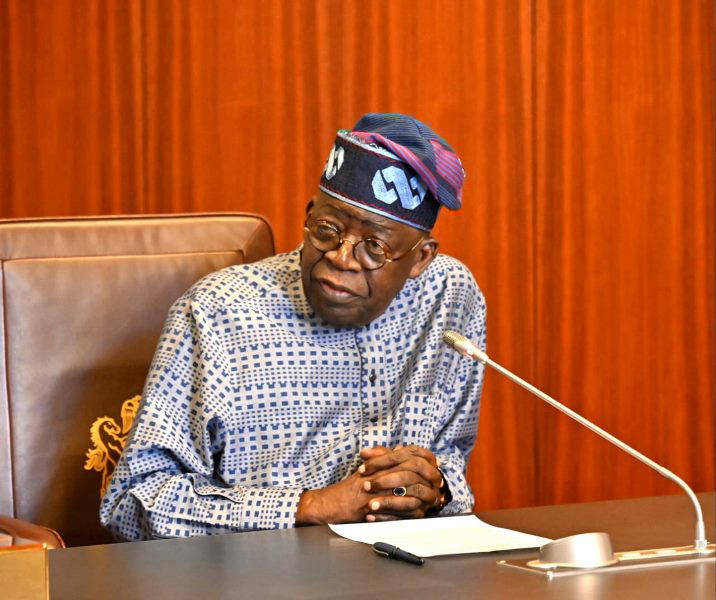
By Dapo Akinrefon
As President Bola Tinubu marks his third year in office today, the political landscape reflects a mix of sweeping reforms, deepening controversies and growing concerns over the health of Nigeria’s democracy.
From the beginning in May 2023, the Tinubu administration set out on an ambitious course, rolling out structural and economic reforms that have continued to draw both applause and criticism. While supporters hail his boldness in confronting entrenched systems, critics argue that the same administration is presiding over a shrinking democratic space.
LG autonomy: Landmark victory, troubled implementation
One of the administration’s most celebrated milestones is the push for local government autonomy. In a landmark judgment, the Supreme Court granted full financial and administrative independence to the 774 local government areas, effectively stripping state governors of their long-held control over council funds.
For decades, governors operated the joint allocation system, a mechanism widely accused of stifling grassroots development.
The apex court’s ruling was, therefore, seen as a watershed moment.
Tinubu’s supporters were quick to applaud the development, describing it as a decisive step towards deepening governance at the grassroots.
However, nearly a year after the ruling, implementation remains fraught with controversy.
Critics accuse the Federal Government of failing to enforce compliance among state governors, many of whom are alleged to have continued indirect control of council finances.
The situation in Osun State has become a flashpoint.
Since March 2025, statutory allocations to the state’s 30 local government areas have been withheld following a dispute over the legitimacy of council leadership after the February 2025 elections.
The Federal Government directed funds to previously elected APC chairmen, a move rejected by Governor Ademola Adeleke, whose administration challenged the decision in court.
In December 2025, the Supreme Court struck out the suit filed by the Osun State Government, ruling that the Attorney General lacked the locus standi to sue on behalf of the councils.
Yet, in the same breath, the court held that the Federal Government’s withholding of funds violated constitutional provisions and earlier rulings affirming local government autonomy.
Despite this, the funds remain frozen, a development that has intensified calls from civil society groups for immediate compliance with the court’s judgment.
Opposition under pressure
Beyond governance reforms, the administration faces persistent allegations of interference in opposition parties.
Observers argue that the ruling All Progressives Congress, APC, has devoted considerable energy to weakening rival platforms ahead of the 2027 elections.
Opposition parties, including the Peoples Democratic Party, PDP, and African Democratic Congress, ADC, have repeatedly accused the Federal Government of meddling in their internal affairs.
Governor Seyi Makinde of Oyo State added fuel to the controversy with a startling claim about a high-level political meeting.
“I was in a meeting with the president and (FCT Minister, Mr Nyesom) Wike and a few others, and Wike said to the president that ‘I will hold PDP for you against 2027’; I was in shock,” Makinde alleged.
Wike swiftly dismissed the claim. “That’s a blatant lie,” he retorted.
Nevertheless, Wike’s political posture – frequently backing APC candidates while remaining a PDP member – has continued to stir debate about internal sabotage within opposition ranks.
Further controversy erupted in April 2026 when the President’s Chief of Staff, Femi Gbajabiamila, openly advised an ADC lawmaker to remain within the party and confront rival factions.
“Stay in ADC. Fight them. Scatter them,” Gbajabiamila reportedly told Rep Leke Abejide, a remark critics interpret as evidence of official encouragement of internal crises within opposition parties.
The PDP, Labour Party and ADC have all grappled with leadership tussles and factional disputes, often despite judicial pronouncements, developments many analysts view as symptomatic of a broader political strategy. Just last week, a faction emerged in SDP expelling its already endorsed presidential candidate, Adebayo.
Fears of a one-party state
With a growing number of governors and federal lawmakers aligning with the APC, concerns have intensified over a possible drift towards a one-party state.
Defections from opposition parties have become a recurring feature of the political landscape, raising questions about the balance of power.
Critics allege that state resources, political pressure and strategic alliances are being deployed to consolidate dominance ahead of 2027.
The presidency, however, has firmly rejected such claims.
President Tinubu has maintained that political plurality remains essential to democracy, warning that suppressing opposition would ultimately breed tyranny. Yet, the body language speaks of something else.
Judiciary, INEC and credibility questions
Another contentious issue is the perceived role of key democratic institutions.
The judiciary has come under scrutiny, with opposition figures alleging that legal maneuvers are being used to weaken rival political platforms.
Similarly, the Independent National Electoral Commission, INEC, has faced sustained criticism over its perceived lack of independence.
Opposition parties and civil society organisations have accused the electoral body of partisanship, pointing to controversies surrounding elections and the performance of its Result Viewing Portal (IReV).
They also question the transparency of appointments into the commission, alleging attempts to consolidate executive influence.
INEC has consistently denied the allegations, insisting that it remains an impartial umpire.
“We are an independent and impartial body operating strictly within the confines of the Electoral Act,” the commission has maintained.
Despite these assurances, public confidence in the electoral process remains fragile, a factor likely to shape political dynamics as 2027 approaches.
The road to 2027
Three years into Tinubu’s presidency, Nigeria stands at a critical juncture.
On one hand are bold reforms aimed at restructuring governance and redefining federal relations. On the other are mounting concerns about political inclusiveness, institutional independence and democratic resilience. But there is always no smoke without fire
The coming months will test the administration’s commitment to balancing reform with democratic ideals.
Whether Tinubu’s legacy will be defined by transformative governance or by allegations of democratic backsliding remains an open question that only time, and the electorate, can answer.
The post Tinubu’s bold resets amid shrinking democratic space appeared first on Vanguard News.
www.vanguardngr.com

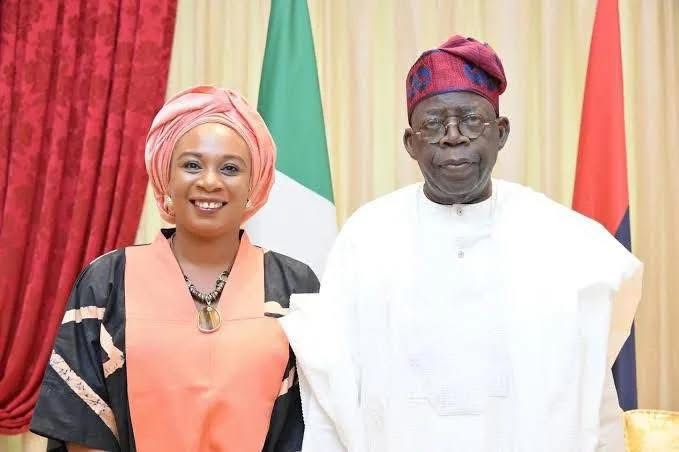
The All Progressives Congress, APC, has named Damilola Sonayon-James as Lagos deputy governorship candidate for the 2027 general elections.
Sonayon-James, who hails from Badagry, will be the running mate to Dr Obafemi Hamzat.
Princess Sonayon-James is a politician, sustainability specialist, and business leader, widely recognised for her grassroots mobilisation and advocacy for women’s empowerment.
She serves as the Deputy State Chairman of the APC in Lagos State.
She rose to prominence as the State Assistant Woman Leader and was later elevated to the role of Deputy State Chairman of the APC in Lagos State. She has also served as a Supervisory Councillor for Agriculture and Social Services in Badagry West LCDA.
Sonayon-James holds a Master’s degree in Social Work from Ladoke Akintola University of Technology, LAUTECH, and a degree in Business and Human Resources Management from the University of Hull in the UK.
She has built a dynamic career in human resources, logistics, and sustainability, operating as CEO of DGS Chauffeurs & Logistics.
The post Lagos APC picks Sonayon-James as Hamzat’s running mate appeared first on Vanguard News.
www.vanguardngr.com

By Emmanuel Okogba
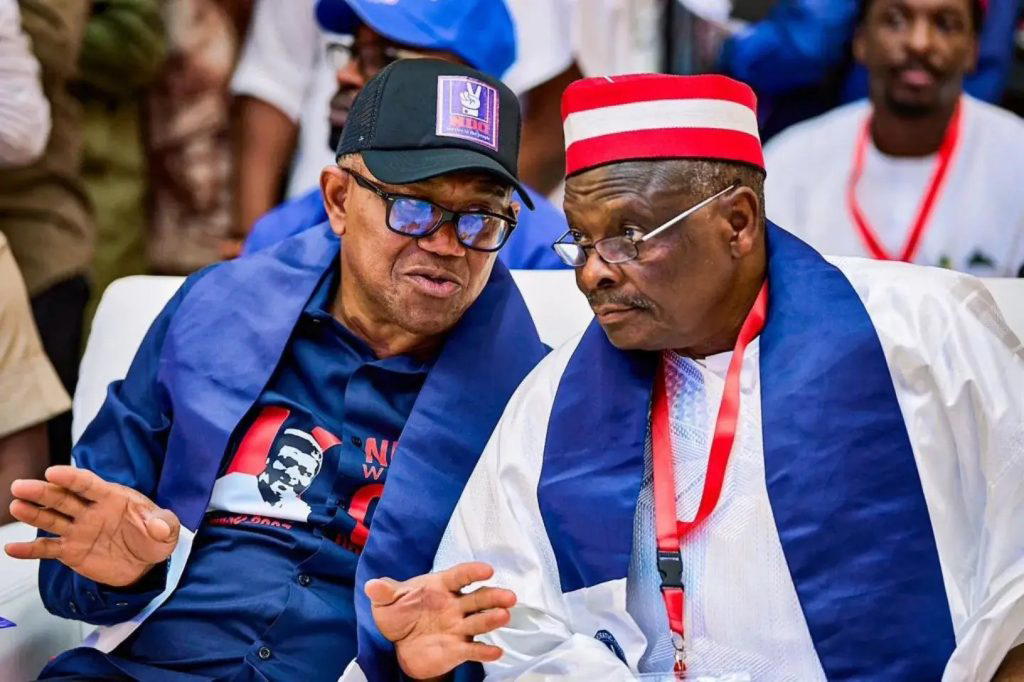
The presidential candidate of the Nigeria Democratic Congress (NDC), Peter Obi, has named former Kano State Governor Rabiu Musa Kwankwaso as his running mate for the 2027 presidential election.
Obi announced the decision on Saturday shortly after he was officially confirmed as the party’s presidential candidate ahead of the general election.
The announcement followed the NDC’s presidential primary, where Obi emerged as the party’s flagbearer.
Obi and Kwankwaso recently joined the NDC after leaving the African Democratic Congress (ADC), citing internal disagreements and prolonged legal disputes within their former party.
The emergence of the Obi-Kwankwaso ticket is expected to alter the dynamics of the 2027 presidential race by bringing together two influential opposition politicians with strong support bases in different parts of the country.
Obi is widely regarded as popular among young voters and enjoys significant support in the South-East and parts of the South-South, while Kwankwaso remains a major political force in Kano State and across sections of Northern Nigeria through his political network.
Party leaders expressed optimism that the alliance would boost the NDC’s prospects in the next presidential election, describing the ticket as a strategic combination capable of attracting broad national support.
Further details of the party’s campaign strategy are expected to be unveiled in the coming months as preparations for the 2027 polls gather momentum.
The post 2027 Presidency: Peter Obi picks Kwankwaso as running mate appeared first on Vanguard News.
www.vanguardngr.com

By Omeiza Ajayi
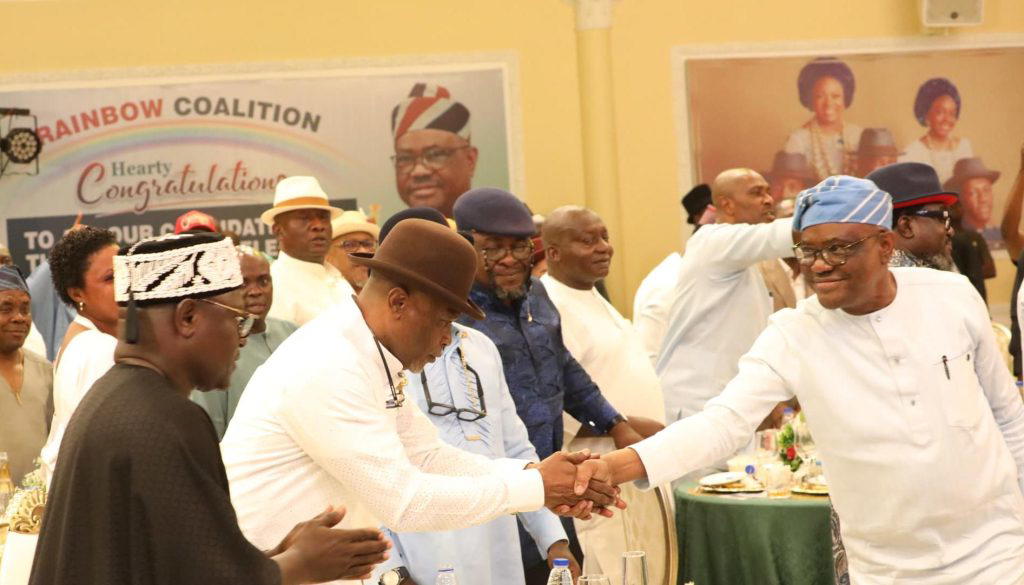
ABUJA – Federal Capital Territory FCT minister, Nyesom Wike on Saturday declared that the four political parties under the “Rainbow Coalition” in Rivers State will collectively agree on a single governorship candidate ahead of the 2027 general elections, shutting down speculation that any individual has already secured the ticket.
Wike, who spoke at a luncheon organized for coalition candidates in Port Harcourt, the state capital, said the alliance — comprising the Peoples Democratic Party PDP, All Progressives Congress APC, Labour Party LP and Action Alliance AA — has yet to settle on a flag-bearer, and that the decision will be taken jointly under the coalition’s leadership.
“The Rainbow Coalition, we have not chosen who will be the governor of Rivers State. But we have party candidates who have emerged under the Rainbow Coalition. The only decision we have taken is that we are going to support President Bola Ahmed Tinubu,” the minister declared.
Wike dismissed what he described as premature victory celebrations among some of the aspirants, warning that such claims create a false impression and undermine his own political standing, particularly given his membership of the PDP.
He urged all candidates from the four parties to sustain their grassroots mobilisation until the coalition formally convenes to take a unified position, adding that every candidate in the alliance is “okay for Rivers State.”
The minister also spoke about what he called a long-standing pattern of external exploitation of Rivers State’s political tensions, accusing certain human rights activists, commentators, and media organizations of profiting from the state’s instability. He said the Rainbow Coalition was assembled to permanently end that dynamic.
“God said no, we must come together as a people, irrespective of our political leanings. What is important is that we must talk about the development of our state. We must talk about the unity of our state,” Wike said.
He also took a swipe at fringe parties — singling out the African Democratic Congress ADC — arguing that political noise and defections are no substitute for genuine electoral structure, and that only the PDP, APC, and Labour Party have demonstrated the operational depth to prosecute statewide and national elections across Nigeria.
The post Rivers 2027: PDP, APC, LP, AA to jointly pick one governorship candidate — Wike appeared first on Vanguard News.
www.vanguardngr.com

Lagos APC picks Sonayon-James as Hamzat’s running mate
2027 Presidency: Peter Obi picks Kwankwaso as running mate

Why does BCG vaccine leave a scar?

Simi Sanya and Femi Dapson Are Now Legally Married and It Is Beautiful to See

FCT Area Council Election: Live results from polling units

Premier League Set-Piece Goals (2025/2026)
-
 Sports11 hours ago
Benjamin Mendy Now Lives Very Different Life
-
 Sports16 hours ago
‘I’m the Helicopter Pilot Who Saved Michael Schumacher
-
 Sports1 day ago
What Anthony Gordon Said in Spanish During Barcelona Unveiling
-
 Sports1 day ago
Where to Watch Toluca vs Tigres 2026 CONCACAF Champions Cup Final
-
 Sports17 hours ago
Rafael Jodar Speaks Out After Clip Goes Viral of Him ‘Shoving’ Ball Girl
-
 Metro2 days ago
Troops arrest two soldiers over alleged assault in Plateau
-
 Metro10 hours ago
Police arrest two for attempted theft of two-week-old baby in Abia
-

 Politics2 days ago
2027 guber: Dona Nwogbo emerges Enugu PDP factional candidate