
Business
CBN’s new FX manual may raise Dollar liquidity, enhance market confidence


By Emeka Anaeto, Business Editor
The implementation of the fourth edition of the Foreign Exchange Manual by the Central Bank of Nigeria (CBN) recently launched in Abuja and will be taking off on June 1. The new manual is expected to deepen FX transparency, improve liquidity and strengthen market confidence and liquidity. The new policy also aligns with the CBN’s broader vision of ensuring that businesses and individual have equal access to FX in a transparent and liquid market.
The recent launch of the fourth edition of the Foreign Exchange Manual by the Central Bank of Nigeria signals (CBN) a major step in ongoing efforts to deepen transparency, improve liquidity, and strengthen confidence in Nigeria’s foreign exchange market amid broader economic reforms.
The new manual, which officially takes effect on June 1, 2026, is expected to serve as a fresh regulatory guide for banks, importers, exporters, government agencies, and other participants in the foreign exchange market. For decades, Nigeria’s foreign exchange market has remained one of the most sensitive parts of the country’s economy.
Any movement in the value of the naira directly affects prices of food, transport, school fees, medicines, fuel, manufacturing costs, and the general cost of living.
Businesses depend heavily on foreign exchange to import raw materials and machinery, while investors closely study the stability of the market before bringing money into the country.
For ordinary Nigerians, the foreign exchange market may appear distant and technical, but its impact is felt daily through inflation, jobs, purchasing power, and overall economic confidence. It is against this critical background that the launch of this fourth edition has attracted widespread attention across the financial sector, banking industry, and business community.
In recent years, Nigeria has battled severe pressure on the naira, low foreign exchange liquidity, multiple exchange rates, speculative trading, and declining investor confidence. These structural problems created deep uncertainty for businesses and contributed significantly to inflationary pressure across the country. For years, many manufacturers complained that they could not access foreign exchange to import raw materials, while airlines struggled to repatriate their earnings.
Foreign investors frequently delayed investments because they feared they would be unable to take out profits when necessary, and the country witnessed a wide gap between official and parallel market exchange rates at different periods. The launch of the new manual therefore represents much more than a routine regulatory update, reflecting the latest phase of a broader effort by the central bank to rebuild confidence in the Nigerian foreign exchange system after years of instability.
Policy vision and strategic direction
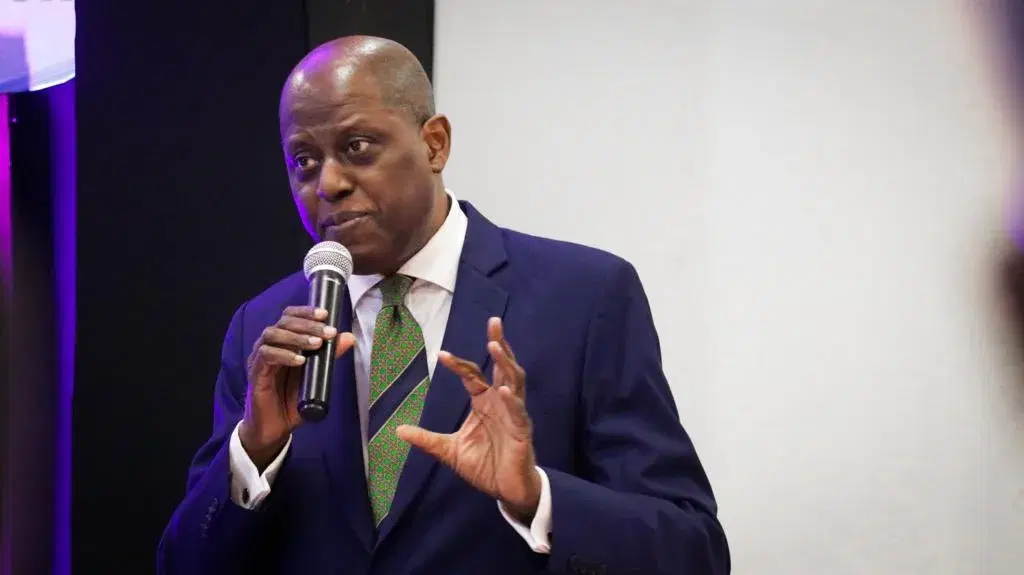
At the official launch, the Governor of the Central Bank of Nigeria, Olayemi Cardoso, described the new manual as part of efforts to strengthen Nigeria’s macroeconomic foundation, improve transparency, and restore confidence in the foreign exchange market.
His remarks went beyond the unveiling of a policy document, reflecting the broader direction of the current foreign exchange reforms being pursued by the apex bank under the present administration. Cardoso made it clear that the foreign exchange market is not simply a platform for buying and selling dollars.
According to his policy philosophy, it plays a major role in determining price stability, investment confidence, and the smooth movement of goods and capital within an economy that is connected to global markets. He noted that foreign exchange is a critical enabler in any open economy because it anchors price stability, facilitates the flow of goods and capital, and shapes investor sentiment.
Transparency, consultation, enforcement
One of the major themes from the governor’s speech was transparency, as he repeatedly stressed the need for openness, accountability, and fairness in the operation of the market. According to him, the new manual is the result of extensive consultations with banks and other stakeholders rather than a document imposed solely by regulators. He emphasized that the document does not represent a regulator talking down at the regulated, but is instead a joint effort that has taken into consideration the concerns of all market participants as much as possible.
This collaborative approach appears designed to address one of the long-standing complaints from market participants who previously argued that policy changes in the foreign exchange market were sometimes sudden, inconsistent, and unclear.
Over the years, Nigeria’s foreign exchange market witnessed frequent policy reversals, multiple directives, and uncertainty over applicable rules, causing investors and businesses to struggle to understand the direction of policy, which led to speculation and reduced confidence. By involving banks and stakeholders directly in the review process, the central bank is seeking stronger market cooperation and greater compliance with the new rules.
Market liquidity and evolutionary shift
Another major aspect of Cardoso’s speech was his focus on liquidity and market depth. According to him, the ultimate goal of the reforms is to create a deeper and more liquid foreign exchange market. Liquidity refers to the ease with which buyers and sellers can trade foreign exchange without causing major disruptions to prices. A liquid market generally inspires confidence because participants know they can enter and exit transactions smoothly.
Cardoso explained that Nigeria’s foreign exchange market has evolved significantly from what he described as a one-way market where the central bank was almost the sole provider of dollars. He said that in the past, the market largely depended on periodic interventions from the central bank, after which participants simply waited for the next intervention.
That legacy system created a heavy dependence on the central bank and reduced private sector participation, while placing enormous pressure on the country’s foreign reserves because the apex bank had to supply large amounts of foreign exchange to support the market.
Cardoso argued that this situation is now changing as the market becomes more dynamic and transparent. According to official disclosures, daily market turnover has increased from about $100 million during the early days of the current administration to between $400 million and $600 million per day. He also disclosed that the market had achieved transactions of up to $1 billion per day on some occasions in recent months. These figures are significant because higher transaction volumes usually indicate stronger market activity and improved confidence among participants.
Cardoso’s comments on reserves drew significant attention during the launch, as he stated directly that reserves are reserves, and are not what you look to fund a market. This statement reflects a major shift “in policy thinking compared to previous years when the central bank frequently used foreign reserves to defend the naira and supply the market. Economists have long debated the sustainability of relying heavily on reserves to support exchange rates. While interventions can provide temporary relief, they become difficult to sustain if external inflows remain weak.
The current approach appears to favor a more market-driven system where supply and demand play a greater role while reserves are preserved primarily as buffers against external shocks. This strategy aligns with broader reforms aimed at attracting more autonomous foreign exchange inflows into the economy through exports, investments, and diaspora remittances.
Understanding policy manual
The Deputy Governor for Economic Policy, Mohammed Sani Abdullahi, whose presentation preceded Cardoso’s remarks, provided deeper technical details regarding the operational provisions of the manual.
His contribution showed clearly that the revised manual is not merely an administrative document, but is a major component of the ongoing transformation of Nigeria’s foreign exchange market and wider financial system.
Abdullahi traced the origins of the reform initiative to the assumption of office by Cardoso, noting it was initiated from the beginning of the administration to restore confidence, improve transparency, deepen liquidity, and strengthen the market.
This demonstrates that the review was not an isolated exercise, but forms part of a broader restructuring of Nigeria’s monetary and exchange rate framework. The deputy governor said the central bank recognised the urgent need for a framework that reflects current realities, aligns with international standards, reduces inefficiencies, and supports a more transparent, rules-based, and market-oriented system. This facilitates clearer price discovery, which is the process through which market forces determine exchange rates based on demand and supply conditions.
The deputy governor stressed that the revised manual is intended to strengthen the integrity, credibility, and effectiveness of the foreign exchange ecosystem, which is central to attracting formal participation. He described the manual as a critical single authoritative reference document that harmonizes procedures, clarifies rules, and standardizes market practices to improve uniformity across banks, corporates, exporters, regulators, and government agencies.
Crucially, the review process deliberately adopted an Ease of Doing Business approach aimed at removing bottlenecks, ambiguities, delays, and operational inefficiencies that have historically plagued importers, exporters, investors, and families paying foreign school fees.
By reducing transaction frictions and improving processing timelines, the central bank hopes to encourage greater participation within the regulated system rather than informal markets, which contribute to opacity and weaken monetary policy.
Views from stakeholders
The contributions of the Minister of Finance and Coordinating Minister of the Economy, the banking industry leadership, and major commercial bank executives further expanded the significance of the launch, showing a rare level of alignment between fiscal authorities, monetary regulators, and the banking sector.
Representing the Minister of Finance, the Permanent Secretary for Special Duties, Mohammed Sanusi Danjuma, described the manual as a major step in the country’s effort to strengthen its foreign exchange management system.
His remarks reflected the position of the federal government that foreign exchange reform is not solely a monetary policy matter but a key part of Nigeria’s wider economic transformation agenda.
Danjuma noted that the launch comes at a strategic period as the country continues implementing bold fiscal and non-fiscal reforms under the administration of Bola Ahmed Tinubu, including fuel subsidy removal, tax reforms, and exchange rate liberalisation. While these measures were introduced to correct long-standing economic distortions, they initially contributed to rising inflation and increased living costs, creating pressure on households and businesses. The finance ministry’s endorsement therefore signals strong, continued alignment on the reform agenda, with Danjuma noting that policy consistency and predictability are absolutely essential for investment and growth.
Offering a perspective from the commercial banking operators, Oliver Alawuba, the Chairman of the Body of Banks’ Chief Executives and Group Managing Director of United Bank for Africa, described the revised manual as part of a broader policy direction anchored on transparency, ethical conduct, stronger documentation, and improved oversight.
He linked it directly to earlier initiatives such as the Electronic Foreign Exchange Matching System and the Nigerian Foreign Exchange Code, which are designed to modernise market governance.
Alawuba made a striking comparison between the current foreign exchange market and the situation two or three years ago, noting that in the past, bank customers constantly asked whether banks had foreign exchange available, whereas today the table has been turned to the point where banks now ask customers whether they have foreign exchange to sell. This reflects what banking executives see as a substantial improvement in liquidity and stronger confidence in formal market participation, shifting away from an era of severe scarcity where the central bank was the primary supplier through forced periodic interventions.
Alawuba openly praised the reforms, stating there is now much greater confidence in the Nigerian economy, and assured the apex bank that commercial banks would work closely to maintain a transparent market and support Nigeria’s long-term aspiration of becoming a $1 trillion economy.
—
Media Limited
EMEKA ANAETO
Business Editor
Phone: 081 25189690, 08104056415
www.vanguardngr.com
The post CBN’s new FX manual may raise Dollar liquidity, enhance market confidence appeared first on Vanguard News.

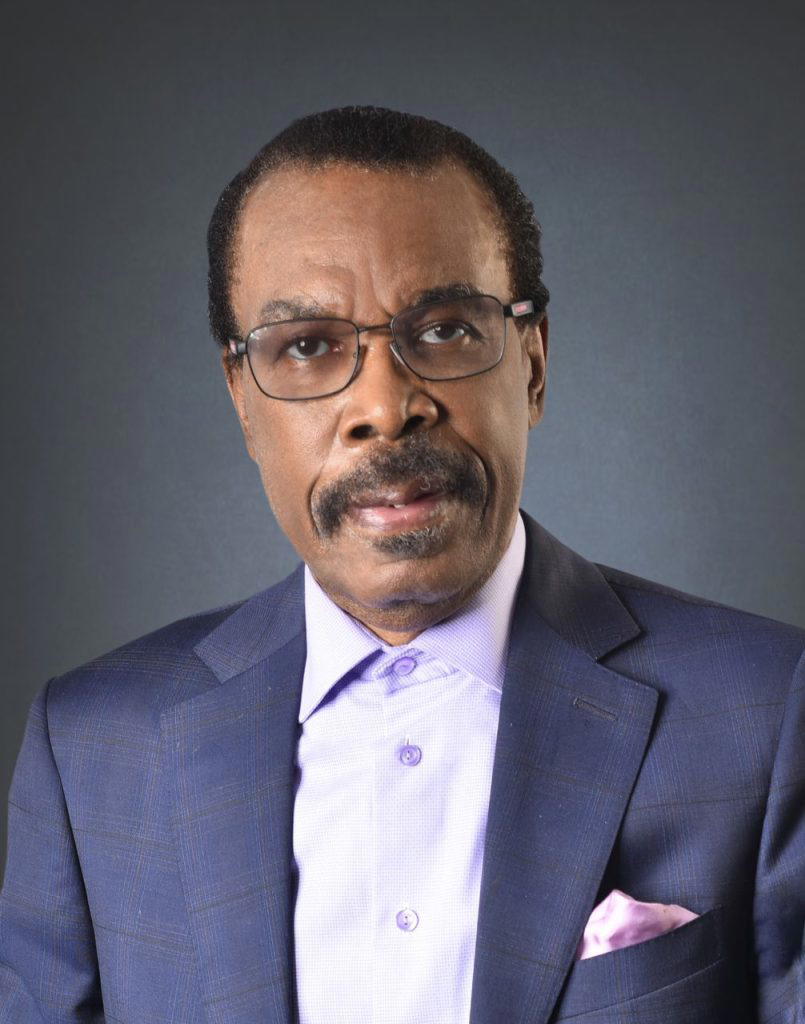
First City Monument Bank (FCMB) Limited has appointed Mr. Bismarck Rewane as a Non-Executive Director and Chairman of its Board of Directors, following approval from the Central Bank of Nigeria.
Mr. Rewane is a respected economist and experienced leader in Nigeria’s financial sector, with more than 40 years of experience in macroeconomic research, investment banking, and strategic management. He is the Managing Director at Financial Derivatives Company Limited, a top financial advisory and economic research firm.
He is a Fellow of the Nigerian Economic Society and has held leadership roles at International Merchant Bank Nigeria Limited and First National Bank of Chicago. He graduated from the University of Ibadan with a degree in Economics and is a Fellow of the Chartered Institute of Bankers of Nigeria and an Associate of the Institute of Chartered Bankers of England and Wales.
Mr. Rewane has served on the boards of blue-chip companies and multinationals, including Guinness Nigeria Plc., British American Tobacco, Henkel Nigeria Limited, Top Feeds Nigeria Limited, and Africa Infrastructure Plus Partners.
He was a member of the Presidential Steering Committee for the Resolution of the Global Economic Crisis.
He has completed executive management programmes at top business schools, including the Oxford International Capital Markets programme, the Euromoney Institute of Finance, and IMD Lausanne, Switzerland.
The Board of Directors of First City Monument Bank welcomes Mr. Rewane. The Bank is confident that his expertise in macroeconomics, corporate governance, and strategic management, together with the Bank’s stronger capital base, will strengthen its leadership and help drive the next phase of growth while continuing to deliver value to stakeholders.
First City Monument Bank Limited is a member of FCMB Group Plc, a financial services company that provides banking, consumer finance, investment management, and fintech services.
The post FCMB appoints Bismarck Rewane as Non-Executive Director, Board of Directors Chairman appeared first on Vanguard News.

•Lauds Lagos on industrial, digital transformation
By Emeka Anaeto
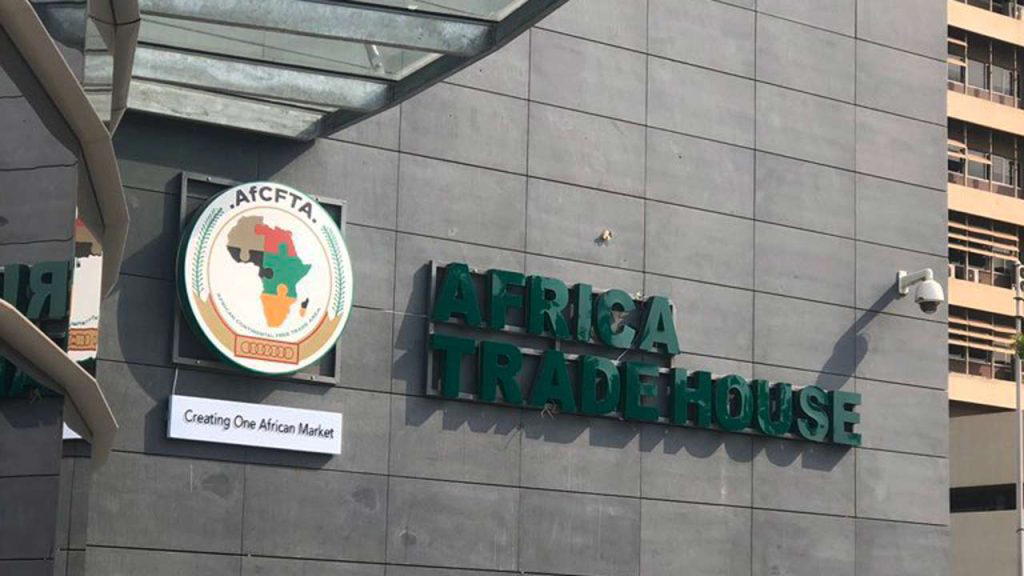
The Secretary-General of the African Continental Free Trade Area (AfCFTA), Wamkele Mene, has disclosed that the continental trade bloc is on course to achieve an annual intra-African trade volume of $250 billion in the current year, up from $220 billion recorded in 2025.
This is even as he commended the Lagos State Government for positioning the city as a leading centre for Africa’s industrialisation and digital innovation.
Speaking at the just ended ‘Invest Lagos 3.0’ Conference Lagos Mene said the huge leap is reflecting growing implementation of the AfCFTA agreement across the continent.
He noted that, 50 African countries are currently implementing the agreement and that all the protocols underpinning the trade pact have been concluded, creating a stronger foundation for economic integration and regional commerce.
He stated: “Many African countries have lost market share in key international markets and face increasing trade barriers. We have to build a strong domestic market within Africa because our future growth lies here on the continent.
He stressed that, strengthening intra-African trade would help the continent become more resilient to future economic shocks.
He identified high trade finance costs, inadequate transport infrastructure, logistics bottlenecks and restrictions on the movement of people as some of the major barriers limiting trade growth across Africa.
He revealed that, transporting goods between Lagos and Abidjan, a distance of about 1,080 kilometres, can take up to 17 days due to multiple checkpoints and border-related challenges.
Mene also called for wider adoption of visa-free policies and visa-on-arrival arrangements for African business travellers, noting that, easier movement of entrepreneurs and investors would significantly boost trade and investment across the continent. Mene described Lagos as the continent’s leading fintech hub and a major driver of innovation.
He said Africa’s digital economy is projected to reach $712 billion by 2035, creating opportunities for entrepreneurs, farmers and businesses through digital payments, business connectivity and emerging technologies.
On manufacturing, Mene described the sector as central to Africa’s economic transformation, noting that, Lagos hosts one of the continent’s largest concentrations of industrialists.
Mene also praised Lagos for its strategic role in shaping Africa’s economic future, describing the city as a critical hub for investment, manufacturing, technology and innovation.
In his closing remark, the governor of Lagos State, Mr. Babajide Sanwo-Olu applauded the all the local and international investors, partners, sponsors, volunteer groups and well wishers of the State who are passionate about the growth and development of Lagos.
He noted that, the State government is deliberate about its projects across critical sectors in Lagos, saying, those initiatives will define the next phase of Lagos.
The post AfCFTA targets $250bn intra-African trade appeared first on Vanguard News.


By Martha Godwin
Electricity Distribution Companies (DisCos) in Nigeria have been mandated to implement fresh technical, commercial and reporting obligations following the introduction of the Nigerian Electricity Regulatory Commission’s (NERC) Net Billing Regulations 2026.
The regulation is designed to deepen renewable energy integration and allow electricity consumers with solar power systems and other renewable energy installations to export excess electricity to the national grid.
Under the new framework, customers seeking to connect renewable energy systems under a net billing arrangement are required to submit applications to their respective distribution companies alongside specified technical and ownership documents.
These include proof of ownership or occupation of the premises, a certified single-line diagram of the proposed interconnection showing switching and protection systems, and technical specifications of the renewable energy installation.
For already existing systems, applicants are additionally required to provide generation history or performance data where available, previous approvals or registration documents, projected annual electricity generation capacity, details of energy storage systems, and a certified inspection report confirming safety and compliance with applicable standards.
The regulation places significant responsibilities on DisCos, particularly in evaluating and approving applications for grid interconnection.
Upon receiving a complete application, a DisCo is expected to conduct a technical feasibility assessment of its distribution network and communicate approval or rejection within 15 days.
According to NERC, this process is aimed at ensuring the safe integration of renewable energy systems without compromising the stability and reliability of the electricity network.
The regulations also make DisCos responsible for providing net meters after customers have paid the required connection charges.
The meters must be capable of measuring electricity imported from the grid as well as electricity exported to it.
NERC stated that approved meters must either be revenue-grade import/export meters or dual-register smart meters compliant with the national metering code and equipped with time-of-use functionality.
However, where time-of-use meters are unavailable during commissioning, distribution companies may temporarily deploy NEMSA-certified bidirectional meters, subject to prior approval by the commission.
In terms of billing and settlement, DisCos are now required to issue detailed monthly bills to prosumers — customers who both consume and generate electricity.
The bills must clearly indicate energy imported and exported in kilowatt-hours, applicable import and export tariffs, monthly charges and credits in naira, carried-forward credit balances, and the net payable amount for the billing cycle.
The regulation further mandates DisCos to maintain dedicated accounting ledgers for prosumer credits and reconcile such balances on a monthly basis.
In what appears to be one of the most far-reaching provisions, the new framework imposes extensive reporting obligations on distribution companies.
Under the regulation, DisCos must maintain accurate and updated registers of all approved net billing installations within their franchise areas, publish quarterly data on approved systems, and provide periodic reports on applications received, approved, rejected, or pending.
They are also expected to disclose network upgrade projects undertaken to support net billing integration across their operational areas.
The post NERC gives DisCos fresh technical, commercial, reporting obligations appeared first on Vanguard News.


Tottenham Want to Complete Deal to Sign Jan Paul Van Hecke in Next 72 Hours

Five terrorists bag 25-year jail terms, forfeit vehicle, 15 rifles to FG

Court declares AAP legally registered, directs INEC to issue certificate of registration

Simi Sanya and Femi Dapson Are Now Legally Married and It Is Beautiful to See

FCT Area Council Election: Live results from polling units

Premier League Set-Piece Goals (2025/2026)
-
 Sports8 hours ago
Thierry Henry Names Two ‘Surprise’ Teams That Can Win the 2026 World Cup
-
 Sports2 days ago
Why Lewis Hamilton Stopped Speaking to Martin Brundle at F1 Races
-
 Sports23 hours ago
Uzbekistan Coach Fabio Cannavaro Calls Out US Security at World Cup
-
 Sports1 day ago
Body Language Expert Reveals Lewis Hamilton and Kim Kardashian’s Relationship Red Flags
-
 Sports19 hours ago
England Fans Claim Noni Madueke ‘Cannot Start’ at World Cup
-
 Sports2 days ago
FIFA Told to Pay Omar Artan £75,000 After World Cup Ban
-

 Sports1 day ago
Premier League Clubs Plan to Sue if Man City Found Guilty of 115 Charges
-
 Politics2 days ago
Peter Obi brought prominence to Labour Party – Julius Abure confesses