
Politics
33 years after: Can Nigeria ever have another election like June 12?


By Clifford Ndujihe, Politics Editor
THE process was crude but transparent. The organisers called it Option A4. Only two candidates stood for the election. No thumb-printing was required. Voting was done by queuing behind the candidate/party of your choice. Those on the queues were properly counted separately and figures entered into the result sheets against the respective candidates or parties.
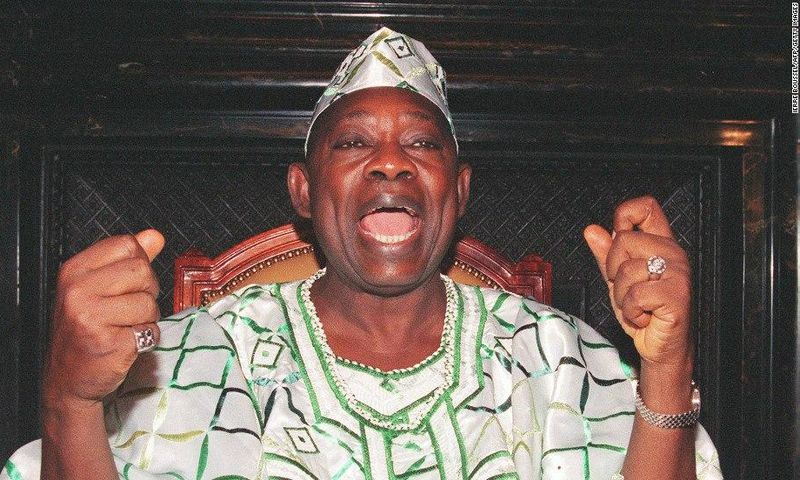
It was as clear as daylight who won or lost. Welcome to the June 12,1993 presidential election won by late Business tycoon and politician, Chief MKO Abiola.
Conducted by then National Electoral Commission, NEC, as the electoral umpire was called, led by late Professor Humphrey Nwosu, the June 12 election has, arguably, remained the freest and fairest poll in the history of electioneering in Nigeria, 33 years after.
It was also one of the keenest. Of the over 14 million voters that took part, Chief MKO Abiola of the Social Democratic Party, SDP, got over eight million while his challenger, Bashir Othman Tofa, of the National Republican Convention, NRC, garnered about six million.
Controversial annulment
Results of most the states had been tallied before the military regime of General Ibrahim Badamasi Babangida annulled the election and flung the nation into bloody political crisis that took another six years to be partially resolved in 1999 with the election of Chief Olusegun Obasanjo also from South-West as Abiola, as president.
Ever since that election, Nigeria has not had another comparable poll in terms of conduct and credibility.
In last month’s primaries, some parties tried to replicate the June 12 model but ended up counting those on the queues geometrically instead of arithmetically as shamefully displayed in an avalanche of trending videos.
That is why today is a unique day in Nigeria’s electioneering history.
It is the 33rd anniversary of the June 12, 1993 presidential poll. Today is also the 8th anniversary of the Federal Government’s recognition of June 12 as Democracy Day, and the third that will be marked by President Bola Tinubu.
While marking June 12 in 2018, President Muhammadu Buhari apologized to the family of Chief M.K.O Abiola, the presumed winner of the 1993 presidential election, and conferred a posthumous award on him as the Grand Commander of the Federal Republic of Nigeria, GCFR.
In 2019, President Buhari took a step further by assenting a bill into law and officially recognised the date as the nation’s day for commemorating the return to civil rule.
By the Act, May 29 gave way to June 12 as the country’s Democracy Day.
Cloud of challenges
As the nation marks June 12 amid a cloud of insecurity and a salad of unity-threatening challenges, forthcoming polls beginning with June 20 governorship election in Ekiti and bye-elections in six constituencies in four states, as well January 2027 general polls,, many questions are begging for answers.
Abiola’s aborted welfare programme
Late Chief M.K.O Abiola’s campaign was anchored on welfare of the people with ‘’Farewell to Poverty’’ as the theme. His campaign theme was Hope 93.
Thirty- three years after, has Nigeria waved poverty farewell? If Abiola had been allowed to exercise his mandate would things have been different?
Few months before the 1993 election, according to the Nigeria Bureau of Statistics, NBS, 1992 data, no fewer than 39.2 million Nigerians were living below the poverty line, that is 42.7 percent of the then 91.5 million population.
Following the truncation of the 1993 transition programme, the number of those living below the poverty line (less than $1a day as of then) jumped to 67.1 million, representing 65.6 per cent of the 102.3 million population, NBS data showed.
In 2018, a report by Brooking’s Institution said at the end of May 2018, Nigeria had about 87 million people living in extreme poverty, compared with India’s 73 million. And extreme poverty in Nigeria was growing by six people every minute, while poverty in India continued to fall.
Today, no fewer than 131 million Nigerians are multi-dimensionally poor
Another question is: When will Nigeria have free and fair polls like that of June 12, 1993? It was an election that the results were known to all parties – Social Democratic Party, SDP; and National Republican Convention, NRC’s agents without disputation before being officially announced by the electoral commission.
There were no incidents of ballot box-snatching, and falsification of election results at collation centres among other electoral infringements.
Beginning from the first series of elections on December 5, 1998 when the first local council polls of the Fourth Republic were conducted to the 2023 general elections, balloting has been characterised by ballot snatching, falsification of figures, fielding of unqualified candidates, malfunctioning of card readers, intimidation and harassment of voters, and violence among others.
Consequently, the outcome of many elections have been nullified by the courts, a reason we now have staggered governorship elections in eight states.
So far, transmission of election results is still an issue. Diaspora and electronic voting is far from sight.
Already, future polls and the 2027 general polls are being threatened by insecurity, and voter apathy with youths shunning the ongoing continuous voters registration,CVR, citing lack of faith in the process and saying their votes won’t count despite repeated assurances by INEC officials.
Disputed polls
After the 1999 general elections, outcomes of most polls were decided by the courts as attention shifts to the courts after every poll.Apart from 2015, when out-going President Goodluck Jonathan of the Peoples Democratic Party, PDP, refused to challenge the victory of Major General Muhammadu Buhari of the All Progressives Congress, APC, other presidential polls had been subjects of litigation.
In 1999, Chief Olu Falae, who flew the Alliance for Democracy/All Peoples Party joint ticket challenged former President Olusegun Obasanjo’s victory in 1999 but did not pursue it to the Supreme Court. Buhari and other candidates challenged the victories of Obasanjo, late Umaru Musa Yar’Adua and President Goodluck Jonathan in 2003, 2007 and 2011 respectively.
After the 2019 general polls, focus immediately shifted to the judiciary where 77 election tribunals constituted by President of the Court of Appeal, Justice Zainab Bulkachuwa, addressed 786 petitions.
The 786 petitions were the second highest since the return to democratic rule in 1999. The highest was in 2007 when 1,291 petitions heralded the infamous ‘’do-or-die’’ elections held that year. The winner of the 2007 presidential election, late Dr Umaru Musa Yar’Adua admitted that the election that brought him to power was flawed. Consequently, he set up the Justice Mohammed Uwais Election Reform Committee to hammer out solutions.
Indeed, the Uwais panel made far-reaching recommendations that have been implemented in breach or piece meal hence the country is still mired in controversial elections.
Uwais committee’s work
Following the work of the Uwais’ committee, noticeable improvements were witnessed in the 2011 general elections when the number of petitions went down to 732. More improvements were recorded in 2015 as the figure further went down to 611 petitions.
However, the gains of 2015 appeared to have been eroded in 2019 as the number of petitions rose to 786. And in the “go to court” elections of 2023 1196 petitions were filed.
According to data released by Engr Iro Gambo, director Voter Registry of the Independent National Election Commission, INEC, dated April 19, 2017, the electoral body conducted 167 elections after the 2015 electoral cycle and most of them by the Professor Yakubu Mahmood regime.
Three types of elections conducted since 2015 were: Re-run elections by court order following nullification of 80 elections; End of tenure (four governorship, and 68 Area Council, Abuja), 72; and Bye elections caused by death or resignation of lawmakers, 16. Of this number, 123 were concluded at first ballot and 44 were inconclusive.
And at the law courts, 80 of the 167 elections were nullified of which Rivers State accounted for 37 of the 80 annulled polls. Also, of 44 polls concluded with supplementary elections, two happened in Rivers Of the re-run election ordered by the Court of Appeal in 2015, the North-Central had 14; North-East six, North-West, one; South-East 13; South-South, 46. And upturned elections for which certificates of return were issued by court order were as follows, North-Central, five; North-East, three; North-West, one; South-East, four; South-South, eight; and South-West, two.
The post 33 years after: Can Nigeria ever have another election like June 12? appeared first on Vanguard News.
www.vanguardngr.com
The African Democratic Congress, ADC, says June 12 remains one of the most significant dates in Nigeria’s political history and democratic journey.
In a Democracy Day statement issued on Thursday in Abuja, the party’s National Publicity Secretary, Mallam Bolaji Abdullahi, said June 12 symbolised Nigerians’ enduring democratic aspirations.
He said the date reflected the belief that citizens’ voices matter, their votes count and governments derive legitimacy from the people.
“June 12 remains one of the most important dates in our nation’s political history and a reminder that government derives legitimacy from the governed,” he said.
Abdullahi, however, said Democracy Day should not only be a time to celebrate past struggles but also an opportunity to assess the country’s democratic progress.
According to him, democracy should be measured not by the number of years under civilian rule but by improvements in citizens’ welfare, freedoms and opportunities.
The ADC spokesman said persistent insecurity, economic hardship and declining public confidence in institutions continued to pose challenges to Nigeria’s democratic development.
He noted that rising costs of food, transportation, healthcare, housing and education had placed immense pressure on households and businesses.
“Our young people should be driving national growth and renewal, but many are struggling to find opportunities and hope within the country,” he said.
He added that the party rejected the notion that insecurity, poverty and economic hardship were inevitable, insisting that effective governance could reverse the trend.
“We believe security must be intelligence-led, technology-enabled, community-informed and locally responsive if Nigeria is to achieve lasting peace,” he stated.
Abdullahi said the ADC’s vision prioritised economic reforms aimed at reducing the cost of living, supporting businesses and improving the standard of living of Nigerians.
He added that the party would promote transparency, accountability, food security and institutional reforms to restore public confidence in democratic governance.
“We believe government must once again be judged by results, not speeches, excuses or headlines, but by the wellbeing of Nigerians,” he said.
The party congratulated Nigerians on Democracy Day and urged citizens to remain committed to building a more secure, prosperous and accountable democratic society.
dailypost.ng

With the African Democratic Congress, ADC, primary elections now over, attention has shifted to who becomes the running mate to the party’s presidential candidate, Atiku Abubakar.
Atiku had picked the current Nigeria Democratic Congress, NDC, presidential candidate, Mr Peter Obi as his running mate in 2019 and former governor of Delta State, Ifeanyi Okowa as his running mate in the 2023 polls.
A few weeks ago, Atiku emerged as the flag bearer of the ADC after polling the highest number of votes in the party’s primary election.
DAILY POST reports that he is said to be thinking towards the South-East, with names like the Director General of the World Trade Organization, WTO, Ngozi Okonjo-Iweala and former Speaker of the House of Representatives, Emeka Ihedioha being mentioned.
Amid these speculations, the Director of Politics at Arise News, Sumner Sambo had said Okonjo-Iweala distanced herself from such a move, stressing that she was unwilling to abandon her current post as WTO DG for a Nigerian political contest.
Okonjo-Iweala assumed the position of the DG of WTO on March 1, 2021, becoming both the first woman and the first African to lead the world trade organization.
She assumed her second term as director-general in September 2023 and her tenure runs until 2029.
However, Sambo said she had communicated her position directly to Atiku’s camp.
Sambo said: “Okonjo-Iweala is not willing to actually leave a lucrative job as DG of the World Trade Organisation to actually consider that.
“She’s made it known to them, and that is understandable because she just resumed in September last year, and she has a tenure that will run for a second term till 2029.”
Emeka Ihedioha
One of the names featuring prominently is the former governor of Imo State and ex-Speaker of the House of Representatives.
Ihedioha, who is also a member of the ADC, is believed to be among those the former Vice President is quietly evaluating as his potential running mate.
South South link with Amaechi
While speculations are rife that Atiku is looking at the Southeast, there are also claims that he has extended his searchlight towards the South South region.
Atiku is said to be considering a fellow presidential aspirant and former Minister of Transportation who served as a two-term governor of Rivers State, Rotimi Amaechi.
The ADC presidential candidate met with Amaechi behind closed doors on Monday, but details of the meeting were never made public.
However, some believe it has everything to do with the choice of Atiku’s running mate.
Southeast running mate won’t get Atiku votes – APC chieftain, Eli
A chieftain of the All Progressives Congress, APC, Sogbeye Eli, has said shopping for a running mate from the Southeast won’t get Atiku many votes in 2027 due to the influence of Obi in the region.
“Atiku has no room for votes from a vice-presidential candidate from both the South-East and South-West,” he said in an interview.
Dele Momodu portrays self as Atiku’s running mate
Amid the political uncertainty, a chieftain of the ADC and former presidential candidate, Dele Momodu had posted a flyer on his social media page wherein he was portrayed as Atiku’s running mate.
Alongside the flyer, Momodu wrote: “The Attraction of Atiku Abubakar/Dele Momodu ticket”, “The right choice for a greater Nigeria.”
Spare tyre won’t be basis of Atiku picking running mate – Aide
Reacting to the speculations, Atiku’s Special Assistant on Public Communication, Phrank Shaibu, said the ADC presidential candidate would pick his running mate based on competence and not on the usual basis of “spare tyre.”
Speaking with DAILY POST, Shaibu said: “On the question of the Vice Presidential slot, it is far too early to speculate on specific regions or individuals.
“That decision will ultimately be guided by what best serves the national interest and strengthens the mission of rescuing Nigeria.
“What I can say with confidence is that Alhaji Atiku Abubakar understands the enormous responsibilities of leadership. He appreciates that the challenges facing Nigeria today require a competent, experienced, and capable team.
“Therefore, I do not expect the choice of a running mate to be based on symbolism or the outdated notion of a “spare tyre.” Nigeria needs a governing team, not a sole administrator.
“The Vice President must be someone who can contribute meaningfully to governance, policy formulation, economic management, national cohesion, and the overall task of rebuilding the country.
“When the time comes, Nigerians can expect a decision driven by competence, capacity, and the national interest.”
Picking running mate from Southeast Atiku’s strongest option – Lawyer
Contributing to the discussion, a lawyer, Maduabuchi Idam, pointed out that if Atiku wants national cohesion and political balance, picking his running mate from the Southeast is his “strongest option.”
Idam said Atiku can pose a great challenge to Obi’s presidential ambition if he picks a running mate from the Southeast.
“Atiku’s strongest option may be to choose a running mate from the South-East if the objectives are equity, national cohesion, and political balance in the event of victory.
“The South-East would need meaningful representation in his administration to foster a greater sense of inclusion and national belonging.
“A northern presidential ticket without South-East representation is likely to attract criticism and apathy from a significant segment of the South-East electorate.
“Furthermore, if Atiku intends to pose a serious challenge to the influence of Peter Obi in the region, selecting a running mate from the South-East could be a strategic necessity.
“Without such a move, securing the constitutionally required spread of votes, including a substantial share from the region, may prove difficult in the 2027 electio
dailypost.ng
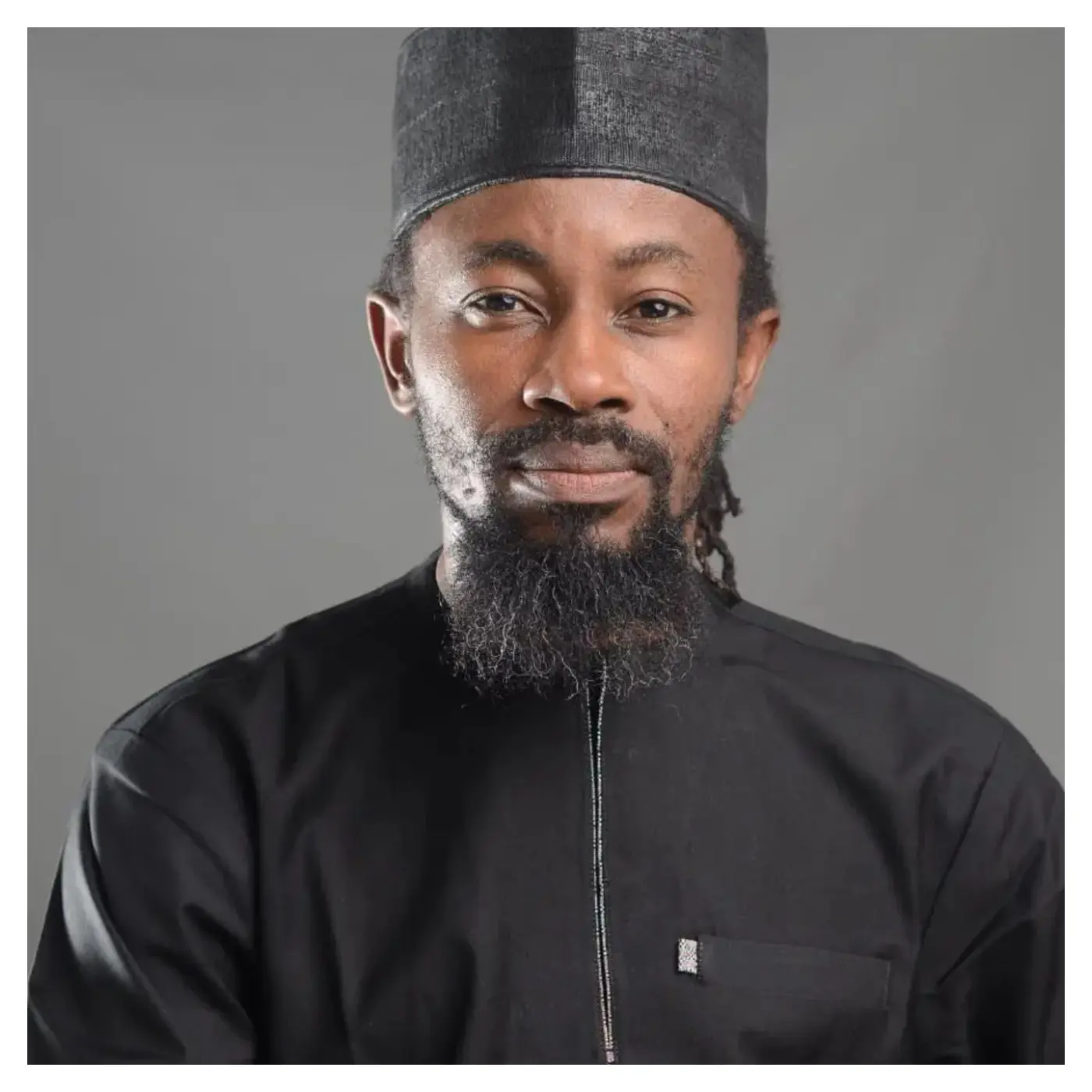
FormerChairmanship candidate of the Abuja Municipal Area Council, AMAC, Moses Paul, has described the crisis in the Nigeria Democratic Congress, NDC, as a ploy by the enemy to bring the party to its knees.
Featuring in an interview on Arise Television’s ‘Prime Time’ on Thursday, Paul said the agenda is to cause division among the party leader, Seriake Dickson, the presidential candidate, Peter Obi, and Sen Rabi’u Kwankwaso.
He added Peter Obi did not nominate any candidate, stressing that people are trying in all ways to ensure that there is chaos and anarchy within the NDC.
“The agenda is to bring NDC to its knees. To the best of my knowledge, Peter Obi did not nominate, and he did not influence any of all of those.
“What gets to happen, especially with what you see with the NDC, with Peter Obi, and Kwankwaso moving in, is that people are trying all kinds of things to ensure that there is chaos and anarchy, even within the party.
“So, they’re trying to ensure that they bring division, especially within the three wise men, like I will call them, Peter Obi, Senator Kwankwaso, and also Senator Seriake Dickson.
“I’m saying that here, so that the world can know, and the followers too can know that this is the agenda to ensure that this particular party, where Peter Obi is, is brought down right to its knees,” he said.
dailypost.ng


England Thrash Opponents in Behind-Closed-Doors Friendly Before World Cup

Cardoso receives Central Bank of the Year Award

Businesses’ confidence in macroeconomy rises to 7.9 index points — CBN

Simi Sanya and Femi Dapson Are Now Legally Married and It Is Beautiful to See

FCT Area Council Election: Live results from polling units

Premier League Set-Piece Goals (2025/2026)
-
 Sports21 hours ago
Thierry Henry Names Two ‘Surprise’ Teams That Can Win the 2026 World Cup
-
 Sports2 days ago
Uzbekistan Coach Fabio Cannavaro Calls Out US Security at World Cup
-
 Sports10 hours ago
Gary Neville and Roy Keane Slam the US For Banning World Cup Referee
-
 Sports2 days ago
Body Language Expert Reveals Lewis Hamilton and Kim Kardashian’s Relationship Red Flags
-
 Sports1 day ago
England Fans Claim Noni Madueke ‘Cannot Start’ at World Cup
-

 Sports2 days ago
Premier League Clubs Plan to Sue if Man City Found Guilty of 115 Charges
-
 Sports2 days ago
‘Real Reason’ Why CM Punk Hasn’t Been on TV Since WrestleMania 42
-
 Sports2 days ago
Liverpool Set to Complete Signing of ‘Elite’ Man City Talent Xavier Parker