
Politics
Three years of hard choices, navigating economic challenges, recovery


By Johnbosco Agbakwuru
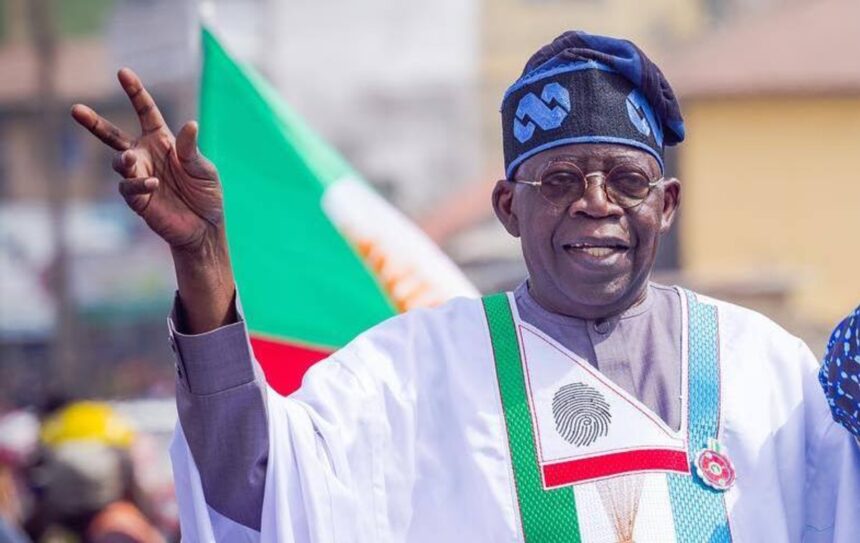
President Bola Tinubu assumed office on May 29, 2023, amid huge expectations. Since the return to civilian rule in 1999, he was the stalwart of the National Democratic Coalition, NADECO, which spearheaded the battle against military rule to lead the nation.
He marked his first Democracy Day on June 12, 2023 with aplomb.
Although the national economy was in poor condition when he took office,. three years in the saddle, the tide has been turbulent; there have been lamentations from the citizenry, but the ship of administration appears to be sailing despite the bumps and storms.
The storm before the government is the result of the administration’s deliberate choice between “reform over ruin” and “decisiveness over hesitation”—a framing that captures both the ambition and the controversy surrounding his economic agenda.
Marking the third anniversary of his administration on May 29, 2026, President Tinubu addressed Nigerians not merely as their leader but as “a fellow citizen who understands the sacrifices many families have made in recent years.”
The address laid out a comprehensive account of the challenges that confronted Nigeria when he took office in May 2023, the difficult reforms his government implemented, and the progress he says Nigeria has now achieved. The President acknowledged that “we have not solved every problem, and we are not yet where we want to be.”
Tinubu said that Nigeria faced “profound economic and structural difficulties” at the inception of his administration. He enumerated several interconnected challenges: mounting fiscal pressures, unsustainable fuel subsidies, declining revenues, exchange-rate distortions, rising debt-servicing costs, insecurity across several regions, energy supply constraints, and declining public confidence in institutions.
Breaking point
On one of the issues that has affected the economy, which is the subsidy regime, Tinubu noted that the country had reached a breaking point. “At the height of the subsidy regime, Nigeria was spending as much as ?18.4 billion daily to sustain petrol subsidies—over ?4 trillion in 2022 alone,” he said. These resources, he argued, “could have been invested in roads, healthcare, education, housing, and critical infrastructure.”
Equally troubling, the President said, was the forex system. “Multiple exchange rate windows and forex arbitrage created massive distortions, with Nigeria losing more than ?8 trillion over three years to rent-seeking and speculative practices.”
“The situation demanded urgent and courageous action,” Tinubu stated. “Difficult but necessary decisions had to be taken to stabilise the economy and prevent a deeper national crisis. The easy choices would have been politically convenient. But leadership demands courage, especially when the right decisions are difficult.”
Human cost
On the sacrifice of his reforms, the President acknowledged the human cost. “These decisions came with sacrifice,” he said. “The rising cost of living triggered by our measures placed enormous pressure on families, workers, and businesses. Young people searching for jobs felt discouraged. Many questioned whether these difficult decisions would lead to a better future.”
Tinubu expressed personal awareness of these sacrifices: “I remain deeply conscious of those sacrifices, and I assure you: your sacrifice has not been in vain.” He then made a bold claim: “And today, I can say with confidence that Nigeria has stabilised and is moving forward again. Across the country, visible progress is taking shape.”
Despite the hardship, the President said there is light at the end of the tunnel with economic growth and a market boom. The administration’s most striking claim concerns the stock market. Tinubu reported that “the All Share Index rose from 53,000 and market capitalisation of N30 trillion in 2023 to a record All Share Index of 250,000 and market capitalisation of N160 trillion this year.” He added that “companies are declaring record profits and dividends.”
The President also asserted that “our economy is now more competitive and better positioned for sustainable growth than it was in 2023. Public finances are improving. States and local governments have greater resources to invest in their people. Investor confidence is growing.”
Yet these macroeconomic gains exist alongside persistent concerns about the cost of living, job availability, and whether ordinary Nigerians are experiencing the benefits of this growth. In the midst of the government’s efforts, Tinubu acknowledged that there is still a gap: “We have not solved every problem… The task before us now is clear: we must ensure that the benefits of reform are felt more directly in the daily lives of ordinary Nigerians.”
On infrastructure, Tinubu presented what he called “unprecedented scale” development. “Over 2,700 kilometres of highways and major roads are under construction, reconstruction, or rehabilitation,” he said. The projects include the Lagos-Calabar Coastal Highway, the Sokoto-Badagry Super Highway, the Abuja-Kaduna-Zaria-Kano Road, the East-West Road, and many rural access roads.
“Significant sections are already completed or nearing completion,” the President claimed, noting these projects are “improving transportation, reducing travel time, boosting regional trade, and creating thousands of jobs.”
Rail modernisation projects are also “ongoing to improve connectivity, logistics, and economic integration across the federation,” Tinubu added.
In the oil and gas sector, Tinubu credited his reforms with attracting “billions of dollars in fresh investment from the international oil companies that had shunned our country.” The “$5 billion NLNG Train 7 project is nearing completion to boost LNG production capacity, exports, and dividends,” he said. Domestic gas utilisation is expanding, and “local refining capacity has improved our energy security.” With “large-scale domestic and modular refineries operational,” Nigeria is “reducing its dependence on imported petroleum products and conserving foreign exchange,” according to the President.
One sector that has continued to pose problems for successive administrations is the power sector. Tinubu acknowledged that the sector “suffered from debt, underinvestment, and uncertainty, which weakened generation capacity and limited growth.” But he said his administration is now “clearing legacy obligations, expanding transmission infrastructure, investing in renewable energy, and strengthening the national grid because no modern economy can grow in darkness.”
Tinubu’s statement also highlighted social interventions. He said agricultural programs have “supported millions of farmers by improving seedlings, fertilisers, mechanisation, and irrigation and by expanding access to finance and markets.” The government is “opening new agricultural corridors to create jobs, strengthen supply chains, and reduce pressure on household incomes.”
He further stated that access to education has expanded through the Nigerian Education Loan Fund, which “has provided over 1.5 million students with access to higher education, disbursing more than ?282 billion to ensure that no willing student is denied access due to financial hardship.”
President Tinubu said the “Renewed Hope Housing Programme, along with that of the Federal Housing Authority (FHA), is delivering over 10,000 housing units across 14 states and the FCT, creating over 300,000 jobs and expanding access to affordable housing.” Major “Renewed Hope Cities in Abuja, Lagos, and Kano are progressing steadily,” he said. The consumer credit initiative “CREDICORP is opening up new economic opportunities for workers and families.”
The President said “thousands of primary healthcare centres are being revitalised, while health insurance coverage is expanding for vulnerable Nigerians.”
He also highlighted his administration’s efforts in telecoms stabilisation and digital transformation. According to him, the telecommunications sector, “one of the most important drivers of modern economic growth,” received “decisive action to stabilise” after “years of severe operational pressures and declining investment.” Now, “confidence is gradually returning to the sector. Telecom operators are expanding networks, investing in infrastructure, recruiting Nigerian talent, and widening digital access across the country.”
Tinubu recognized the importance of youth in socio-economic development. He said: “To our young people, I want you to know this nation believes in you. You are not a problem to be managed. You are the engine of Nigeria’s future.” He said the administration is investing “in digital skills, technical education, innovation, student financing, and enterprise support because the future must be driven by Nigerian talent, creativity, and productivity.”
Insecurity challenge
The greatest challenge before the government, which requires collective and urgent attention, is insecurity. There has been a worsening security situation in the country, but Tinubu said security remains “central to our national mission. Our Armed Forces and security agencies have intensified operations against terrorists, bandits, kidnappers, oil thieves, and criminal networks.” He acknowledged that “while challenges remain, many communities and highways are becoming safer and more economically active.”
According to him, the government is “continuing to invest in intelligence, surveillance, logistics, technology, and inter-agency coordination,” improving “the capabilities of our armed forces and security agencies, and reclaiming the authority of the Nigerian state wherever criminality threatens peace and order.”
“I want to assure you that this government will not relent until every Nigerian can live, work, travel, and dream in safety,” Tinubu pledged.
Tinubu told Nigerians that the administration will “continue to ensure that food prices, which have largely come down from their peak in 2023/2024, remain low.” The government is “working to reduce transportation costs as operators of commercial trucks, buses, and taxis convert their petrol engines to CNG and switch to electric vehicles.” It has also “set our sights on creating more opportunities for decent work and enabling enterprise expansion.”
The President concluded with a call for unity: “We must choose hope over despair, unity over division, and nation-building over narrow interests.” He emphasized that “true security and prosperity require that every Nigerian feel included and valued. Nigeria belongs to all of us—no region, faith, or group should feel marginalised or forgotten.”
“Our diversity is a source of strength. Whether Christian or Muslim, North or South, urban or rural, we rise or fall together as one nation under God,” Tinubu said.
He invoked Nigeria’s historical resilience: “History teaches us that great nations are not built in comfort. They are built through sacrifice, resilience, courage, and collective purpose. Ours is a nation of extraordinary people. We survived the civil war and rebuilt. We overcame dictatorship and restored democracy. We endured hardship and remain bearers of hope. The Nigerian spirit remains strong and unbroken.”
“Today, the world is watching our country again, not as a nation defined by its difficulties, but as a nation determined to rise,” he declared. “Across agriculture, infrastructure, power, technology, manufacturing, and industry, the signs of recovery are becoming clearer. Confidence is returning. Productivity is improving. Opportunity is expanding.”
Despite the rough paths, the President asked the citizenry one final thing: to keep faith with Nigeria. “Let us reject cynicism and division. Let us move forward together, united in purpose, disciplined in effort, compassionate toward one another, and confident in the greatness that lies ahead.”
“History tests nations before it elevates them. Nigeria is passing through such a test. But I believe with all my heart that we shall emerge stronger, fairer, more united, and more prosperous than ever before,” Tinubu said.
As Nigeria continues navigating the complex terrain between macroeconomic reform and everyday hardship, President Tinubu’s third-anniversary statement serves as both a defense of difficult choices and an assertion of emerging progress. It is left for the government to reciprocate the citizens’ patience and perseverance with positive outcomes and tangible changes that will restore hope and place the country on a development trajectory. Whether ordinary Nigerians will feel the benefits more directly remains the administration’s next critical challenge—and the nation’s most important test.
The post Three years of hard choices, navigating economic challenges, recovery appeared first on Vanguard News.
www.vanguardngr.com
The African Democratic Congress, ADC, says June 12 remains one of the most significant dates in Nigeria’s political history and democratic journey.
In a Democracy Day statement issued on Thursday in Abuja, the party’s National Publicity Secretary, Mallam Bolaji Abdullahi, said June 12 symbolised Nigerians’ enduring democratic aspirations.
He said the date reflected the belief that citizens’ voices matter, their votes count and governments derive legitimacy from the people.
“June 12 remains one of the most important dates in our nation’s political history and a reminder that government derives legitimacy from the governed,” he said.
Abdullahi, however, said Democracy Day should not only be a time to celebrate past struggles but also an opportunity to assess the country’s democratic progress.
According to him, democracy should be measured not by the number of years under civilian rule but by improvements in citizens’ welfare, freedoms and opportunities.
The ADC spokesman said persistent insecurity, economic hardship and declining public confidence in institutions continued to pose challenges to Nigeria’s democratic development.
He noted that rising costs of food, transportation, healthcare, housing and education had placed immense pressure on households and businesses.
“Our young people should be driving national growth and renewal, but many are struggling to find opportunities and hope within the country,” he said.
He added that the party rejected the notion that insecurity, poverty and economic hardship were inevitable, insisting that effective governance could reverse the trend.
“We believe security must be intelligence-led, technology-enabled, community-informed and locally responsive if Nigeria is to achieve lasting peace,” he stated.
Abdullahi said the ADC’s vision prioritised economic reforms aimed at reducing the cost of living, supporting businesses and improving the standard of living of Nigerians.
He added that the party would promote transparency, accountability, food security and institutional reforms to restore public confidence in democratic governance.
“We believe government must once again be judged by results, not speeches, excuses or headlines, but by the wellbeing of Nigerians,” he said.
The party congratulated Nigerians on Democracy Day and urged citizens to remain committed to building a more secure, prosperous and accountable democratic society.
dailypost.ng

With the African Democratic Congress, ADC, primary elections now over, attention has shifted to who becomes the running mate to the party’s presidential candidate, Atiku Abubakar.
Atiku had picked the current Nigeria Democratic Congress, NDC, presidential candidate, Mr Peter Obi as his running mate in 2019 and former governor of Delta State, Ifeanyi Okowa as his running mate in the 2023 polls.
A few weeks ago, Atiku emerged as the flag bearer of the ADC after polling the highest number of votes in the party’s primary election.
DAILY POST reports that he is said to be thinking towards the South-East, with names like the Director General of the World Trade Organization, WTO, Ngozi Okonjo-Iweala and former Speaker of the House of Representatives, Emeka Ihedioha being mentioned.
Amid these speculations, the Director of Politics at Arise News, Sumner Sambo had said Okonjo-Iweala distanced herself from such a move, stressing that she was unwilling to abandon her current post as WTO DG for a Nigerian political contest.
Okonjo-Iweala assumed the position of the DG of WTO on March 1, 2021, becoming both the first woman and the first African to lead the world trade organization.
She assumed her second term as director-general in September 2023 and her tenure runs until 2029.
However, Sambo said she had communicated her position directly to Atiku’s camp.
Sambo said: “Okonjo-Iweala is not willing to actually leave a lucrative job as DG of the World Trade Organisation to actually consider that.
“She’s made it known to them, and that is understandable because she just resumed in September last year, and she has a tenure that will run for a second term till 2029.”
Emeka Ihedioha
One of the names featuring prominently is the former governor of Imo State and ex-Speaker of the House of Representatives.
Ihedioha, who is also a member of the ADC, is believed to be among those the former Vice President is quietly evaluating as his potential running mate.
South South link with Amaechi
While speculations are rife that Atiku is looking at the Southeast, there are also claims that he has extended his searchlight towards the South South region.
Atiku is said to be considering a fellow presidential aspirant and former Minister of Transportation who served as a two-term governor of Rivers State, Rotimi Amaechi.
The ADC presidential candidate met with Amaechi behind closed doors on Monday, but details of the meeting were never made public.
However, some believe it has everything to do with the choice of Atiku’s running mate.
Southeast running mate won’t get Atiku votes – APC chieftain, Eli
A chieftain of the All Progressives Congress, APC, Sogbeye Eli, has said shopping for a running mate from the Southeast won’t get Atiku many votes in 2027 due to the influence of Obi in the region.
“Atiku has no room for votes from a vice-presidential candidate from both the South-East and South-West,” he said in an interview.
Dele Momodu portrays self as Atiku’s running mate
Amid the political uncertainty, a chieftain of the ADC and former presidential candidate, Dele Momodu had posted a flyer on his social media page wherein he was portrayed as Atiku’s running mate.
Alongside the flyer, Momodu wrote: “The Attraction of Atiku Abubakar/Dele Momodu ticket”, “The right choice for a greater Nigeria.”
Spare tyre won’t be basis of Atiku picking running mate – Aide
Reacting to the speculations, Atiku’s Special Assistant on Public Communication, Phrank Shaibu, said the ADC presidential candidate would pick his running mate based on competence and not on the usual basis of “spare tyre.”
Speaking with DAILY POST, Shaibu said: “On the question of the Vice Presidential slot, it is far too early to speculate on specific regions or individuals.
“That decision will ultimately be guided by what best serves the national interest and strengthens the mission of rescuing Nigeria.
“What I can say with confidence is that Alhaji Atiku Abubakar understands the enormous responsibilities of leadership. He appreciates that the challenges facing Nigeria today require a competent, experienced, and capable team.
“Therefore, I do not expect the choice of a running mate to be based on symbolism or the outdated notion of a “spare tyre.” Nigeria needs a governing team, not a sole administrator.
“The Vice President must be someone who can contribute meaningfully to governance, policy formulation, economic management, national cohesion, and the overall task of rebuilding the country.
“When the time comes, Nigerians can expect a decision driven by competence, capacity, and the national interest.”
Picking running mate from Southeast Atiku’s strongest option – Lawyer
Contributing to the discussion, a lawyer, Maduabuchi Idam, pointed out that if Atiku wants national cohesion and political balance, picking his running mate from the Southeast is his “strongest option.”
Idam said Atiku can pose a great challenge to Obi’s presidential ambition if he picks a running mate from the Southeast.
“Atiku’s strongest option may be to choose a running mate from the South-East if the objectives are equity, national cohesion, and political balance in the event of victory.
“The South-East would need meaningful representation in his administration to foster a greater sense of inclusion and national belonging.
“A northern presidential ticket without South-East representation is likely to attract criticism and apathy from a significant segment of the South-East electorate.
“Furthermore, if Atiku intends to pose a serious challenge to the influence of Peter Obi in the region, selecting a running mate from the South-East could be a strategic necessity.
“Without such a move, securing the constitutionally required spread of votes, including a substantial share from the region, may prove difficult in the 2027 electio
dailypost.ng
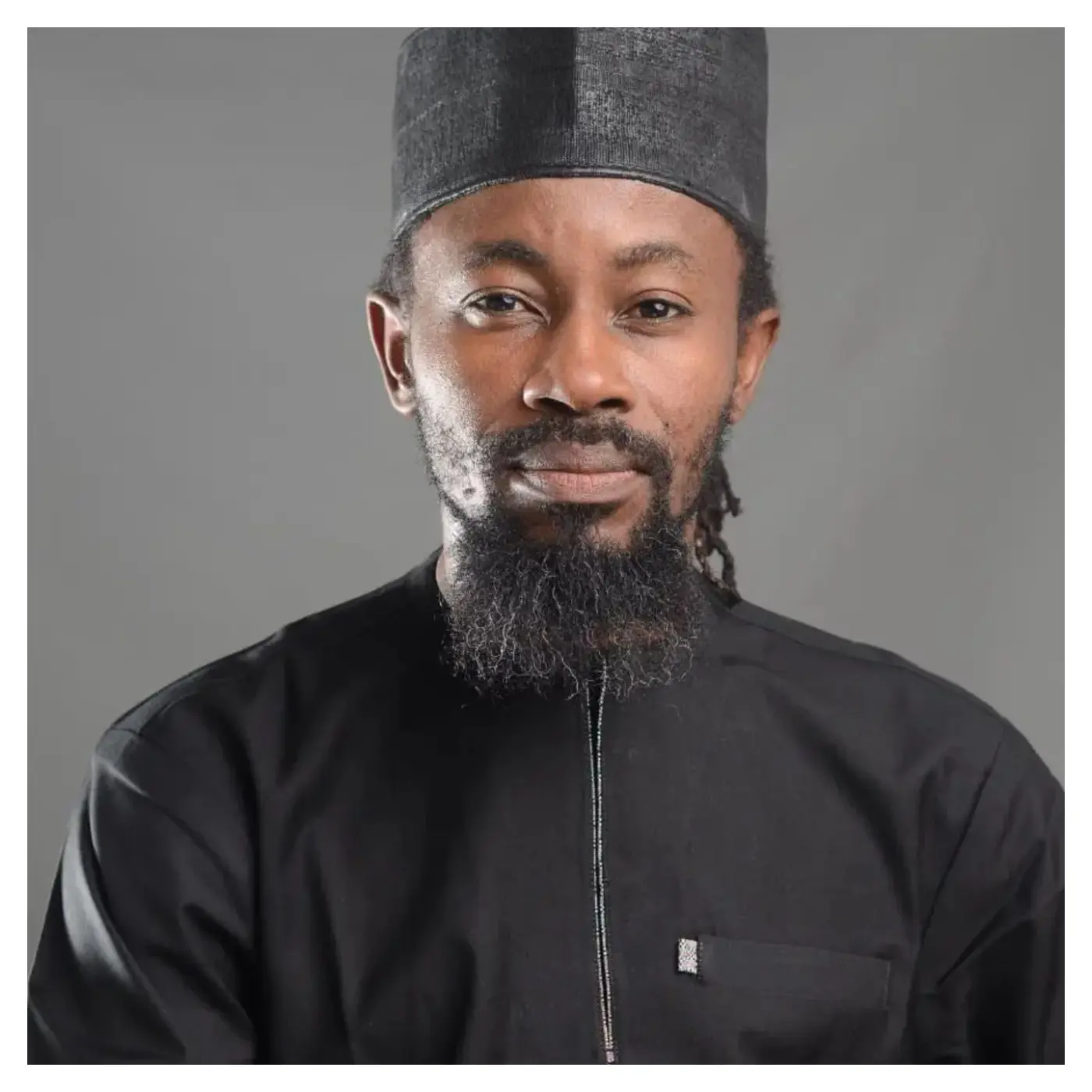
FormerChairmanship candidate of the Abuja Municipal Area Council, AMAC, Moses Paul, has described the crisis in the Nigeria Democratic Congress, NDC, as a ploy by the enemy to bring the party to its knees.
Featuring in an interview on Arise Television’s ‘Prime Time’ on Thursday, Paul said the agenda is to cause division among the party leader, Seriake Dickson, the presidential candidate, Peter Obi, and Sen Rabi’u Kwankwaso.
He added Peter Obi did not nominate any candidate, stressing that people are trying in all ways to ensure that there is chaos and anarchy within the NDC.
“The agenda is to bring NDC to its knees. To the best of my knowledge, Peter Obi did not nominate, and he did not influence any of all of those.
“What gets to happen, especially with what you see with the NDC, with Peter Obi, and Kwankwaso moving in, is that people are trying all kinds of things to ensure that there is chaos and anarchy, even within the party.
“So, they’re trying to ensure that they bring division, especially within the three wise men, like I will call them, Peter Obi, Senator Kwankwaso, and also Senator Seriake Dickson.
“I’m saying that here, so that the world can know, and the followers too can know that this is the agenda to ensure that this particular party, where Peter Obi is, is brought down right to its knees,” he said.
dailypost.ng


MTN Nigeria committed to transparency, consumer education — CEO

Reason Barcelona Have Not Completed Marcus Rashford Signing Yet

Brevity Anderson, EICBI partner across Africa, Europe, India

Simi Sanya and Femi Dapson Are Now Legally Married and It Is Beautiful to See

FCT Area Council Election: Live results from polling units

Premier League Set-Piece Goals (2025/2026)
-
 Sports22 hours ago
Thierry Henry Names Two ‘Surprise’ Teams That Can Win the 2026 World Cup
-
 Sports2 days ago
Uzbekistan Coach Fabio Cannavaro Calls Out US Security at World Cup
-
 Sports11 hours ago
Gary Neville and Roy Keane Slam the US For Banning World Cup Referee
-
 Sports2 days ago
Body Language Expert Reveals Lewis Hamilton and Kim Kardashian’s Relationship Red Flags
-
 Sports1 day ago
England Fans Claim Noni Madueke ‘Cannot Start’ at World Cup
-

 Sports2 days ago
Premier League Clubs Plan to Sue if Man City Found Guilty of 115 Charges
-
 Sports2 days ago
‘Real Reason’ Why CM Punk Hasn’t Been on TV Since WrestleMania 42
-
 Sports2 days ago
Liverpool Set to Complete Signing of ‘Elite’ Man City Talent Xavier Parker