
Politics
Rivers guber: ‘I’ve no godfather’ – Fubara


The governorship candidate of the Nigeria Democratic Congress, NDC, in Rivers State, Blessing Fubara, has declared that he has no godfather but God.
Fubara disclosed this while noting that he and his brother, Governor Sim Fubara of Rivers State have a different perspective.
He spoke on Arise Television’s Prime Time on Friday night while dismissing claims that his political ambition is an extension of Fubara’s political project.
According to Fubara: “I don’t have a godfather but I have God the father. You would also agree with me that if my ambition is determined by the grounds you are mentioning, it would mean I have no clear vision or focus for what I am working toward.
“My brother, Nigerians, and indeed the wider world saw what happened between him and his party. We have different political ideologies and individual perspectives.
“It’s a trying moment for us in Rivers State and there are all sorts of narratives. They come with different narratives and try to set up a perspective for the people to run with but we are focused with our eyes on the ball that the sole of Rivers State must be rescued.”
dailypost.ng

By Luminous Jannamike, ABUJA
Security operatives fired tear gas at Democracy Day protesters in Abuja on Friday, triggering chaotic scenes around the Federal Secretariat where activist and former presidential candidate Omoyele Sowore collapsed during a march against insecurity, economic hardship and governance failures.
Read Also: Video: Sowore collapses after police tear-gassed Abuja protesters
Coming 33 years after the annulled June 12, 1993 presidential election that has come to symbolise Nigeria’s democratic struggle, the protest turned the nation’s annual Democracy Day commemoration into a fresh test of public confidence in democratic governance.
Demonstrators used the occasion to voice frustration over soaring living costs, worsening insecurity, kidnappings and unemployment while questioning the direction of the Tinubu administration.
Sowore, who led the protest under the banner of the Take It Back Movement and allied civil society groups, addressed supporters shortly before the march began.
Separate demonstrations were also staged in parts of the nation’s capital by social media activist, Martins Vincent Otse, also known as VeryDarkMan, and members of the Ratel Movement.
“We are out today to return Nigeria to the path of real democracy,” Sowore told journalists.
Long before protesters arrived, security agencies had flooded strategic parts of the capital with heavily armed personnel, erecting roadblocks around the Three Arms Zone, the Presidential Villa, the National Assembly and the Supreme Court.
Access roads leading to Eagle Square and parts of the Central Business District were effectively sealed off as authorities sought to prevent demonstrators from reaching designated gathering points.
Despite the restrictions, protesters gathered at locations including Wuse, Unity Fountain and the Federal Secretariat, waving placards, chanting solidarity songs and demanding government action on inflation, hunger and insecurity.
Tensions escalated when police fired tear gas canisters at demonstrators and journalists around the Federal Secretariat in an effort to disperse the crowd.
Amid the confusion, Sowore collapsed after inhaling tear gas and was helped away from the protest ground by supporters.
“We have lost our democratic way, and Nigerians are tired of these masquerades who call themselves democrats, led by Bola Ahmed Tinubu, who has obviously lost complete control of the Nigerian nation and has left the Nigerian people in misery, either through negligence or by his own conspiracy,” Sowore said.
A recurring demand among demonstrators was the rescue of abducted citizens and stronger action against the kidnapping crisis that continues to affect communities across the country.
“As we speak, many schoolchildren are in kidnappers’ dens. Their parents are in kidnappers’ dens. Their teachers are in kidnappers’ dens. Policemen are in kidnappers’ dens. Soldiers are in kidnappers’ dens. Army generals, whether serving or retired, are in kidnappers’ dens. Yet nothing is being done,” Sowore argued.
The protest leaders maintained that worsening insecurity and economic hardship had eroded public confidence in the ability of government to deliver the benefits many Nigerians associate with democratic rule.
Linking the demonstration to the legacy of June 12, Sowore said: “That is why we are back on the streets on 12 June 2026, some 33 years after a watershed election was held by Nigerians and subsequently truncated by the military.”
The activist also took aim at the government’s response to the country’s economic difficulties.
“We woke up this morning only to be insulted with another speech. Will speeches put food on our tables?” he asked.
The Abuja demonstrations formed part of wider protests organised in several cities by civil society groups and activists who accused the government of failing to address worsening economic conditions and insecurity.
While the Take It Back Movement mobilised supporters around the city centre and key government districts, VeryDarkMan and members of the Ratel Movement continued separate demonstrations around Airport Road and other strategic locations, pressing for sweeping changes to the country’s security and governance systems.
In a development that drew attention, members of the ‘Babalawo Association’ also staged an independent protest march towards the Presidential Villa, adding an unusual dimension to the Democracy Day demonstrations.
Across several flashpoints in the city, including major roundabouts and roads leading to government institutions, security personnel maintained a strong presence while traffic diversions and roadblocks disrupted movement for commuters.
Earlier, the U.S. Embassy in Nigeria had advised citizens to avoid the city centre, Eagle Square and surrounding districts because of anticipated disruptions linked to the protests.
As of press time, there was no official statement from the police on the use of tear gas against demonstrators, while the Presidency had yet to respond to the protesters’ demands.
Declaring that the demonstrations would continue, Sowore insisted: “As we have said, this march is to show that Nigerians are willing to risk their lives to make it clear that either we have a democracy or we do not.”
On the protesters’ immediate demands, he said: “Primarily, we want to see an end to the kidnapping of our children and for the government to immediately ensure that everyone in kidnappers’ dens is released and reunited with their families.
“Our goal is to march through Abuja. Our march will hopefully end at Aso Rock Villa this morning. We know they will bring in soldiers, but one day, if we keep marching, we will find ourselves in the living rooms of everybody in power because Nigerians must keep pushing until we win.”
Falana, Falz lead protest in Lagos
Prominent lawyer, Mr Femi Falana (SAN), his son – afrobeats singer, Mr Folarin Falana, popularly known as Falz, alongside civil society organisations, youth groups, among others, on Friday staged a protest in Lagos. They demanded urgent action to address worsening insecurity and economic hardship in the country. The protest came as Nigeria marked Democracy Day, set aside in remembrance of the June 12, 1993 presidential election, widely acclaimed to have been won by late Chief MKO Abiola.
The election, though regarded as the freest and fairest in the nation’s history, was annuled by the then military government.
Chanting, the protesters converged on the Ikeja Under Bridge, carrying placards with inscriptions such as “No Democracy Without Security,” End Bad Governance,” and “End Insecurity and Kidnapping.” Others include, “End Hunger,” “Free All Captives Now,”End all anti-people policies now,” The demonstration was aimed at drawing attention to rising insecurity, economic hardship and policies affecting ordinary Nigerians. Speaking during the protest, Falana called for the immediate release of abducted pupils and teachers in Oyo State, expressing concern over their welfare in captivity. According to him, the protest is not only about demanding the rescue of the abducted victims but also about highlighting broader issues of injustice, insecurity and poverty confronting Nigerians. “We are protesting the kidnapping of our children in Oyo State. We are also protesting injustice in our country, a situation whereby innocent school children in Oyo and Borno states have been in the custody of criminals for several weeks now. “We are also protesting injustice meted out to young people who are regularly arrested on the highways by the police.
“We are protesting hunger and poverty in the land, and we are calling on the government to address these challenges,” he said. Falana, a human rights advocate, lamented the condition of the abducted children and teachers, and regretted the killing of one of the latter. He called on the authorities to intensify efforts to secure the release of the remaining victims.
Also addressing the protesters, Falz bemoaned what he described as worsening insecurity and economic hardship across the country. The entertainer and activist said Nigeria was grappling with increasing cases of kidnappings and killings, urging the government to do more in its responsibility of protecting the citizens. “Everybody can see the worsening insecurity. It is becoming unbearable,” he said. Falz cited recent abductions in different parts of the country, including the kidnapping of students and the abduction of a relative of a former minister in Oyo State.
“Every Nigerian life matters and must be protected at all costs,” he stated. He said that the repeated abduction of students had heightened public frustration and anxiety.
Also speaking, human rights activist, Mr Olumide Ogunsanwo, popularly known as Seaking, called for stronger government action to tackle insecurity across the country.
He said Nigerians were demanding better governance and an end to the growing wave of killings, kidnappings and other violent crimes.
“We say no to insecurity. Insecurity has to end,” he said. Ogunsanwo urged the Federal Government to intensify efforts against bandits, insisting that decisive action, rather than rhetoric, was needed to end the insecurity. Security operatives maintained presence around the protest venue and monitored activities throughout the demonstration.
The post 33 years after June 12, protests mark Democracy Day in Abuja appeared first on Vanguard News.
www.vanguardngr.com
Politics
Three women standing for 2027 Presidency: ‘Why we want to succeed Tinubu’ – Okereke, Zugwai-Chukwu, Fredrick

By Clifford Ndujihe, Politics Editor
WITH the conclusion of primaries by political parties, three women have emerged as presidential candidates ready to challenge President Bola Tinubu of the All Progressives Congress, APC, for Nigeria’s topmost job.
Although 18 presidential flag bearers are on the prowl, only 14 will remain when the chips are down because 14 political parties are involved of which three have factional candidates. With three female candidates in 2027, which is 21.43 percent of 14 candidates, women are having their best outing in the history of presidential polls in Nigeria.
Although there were six female candidates in 2019, it amounted to 8.22 percent of the 73 standard bearers.
With more slots, it is to be seen if women will surpass the 157,560 votes secured by Mrs Sarah Jubril in 2003 and even go further to defeat President Tinubu.
The last three women standing; how women fared in past polls
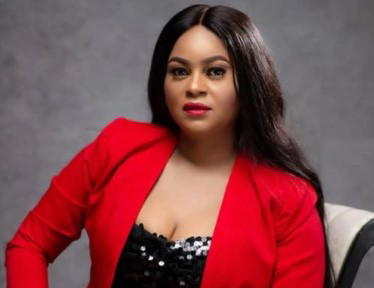
The three women contesting the January 16, 2027 presidential election are Dr Esther Nkem Okereke of the National Rescue Movement, NRM; Mrs Anita Zugwai-Chukwu of the Young Progressives Party, YPP; and Ada Fredrick of the National Democratic Party, NDP.
Women were not on the radar in 1999, when only two candidates, General Olusegun Obasanjo of the Peoples Democratic, PDP, and Chief Olu Falae of the Alliance for Democracy, AD/All Peoples Party, APP, slugged it out with Obasanjo emerging the winner.
However, women were on the ballot in 2003, which so far remains their best attempt at occupying Aso Villa. Of the 20 presidential candidates, two were women(10 percent) – Mrs Sarah Jubril of the Progressive Action Congress, PAC, and Major Mojisola Adekunle Obasanjo, retd, of the Masses Movement of Nigeria, MMN. While Major Obasanjo polled 3,757 votes at that election, Mrs Jubril scored 157,560 votes, the highest any woman has ever got in a presidential election in the country.
Ever since, the fortunes of women have been dwindling at the presidential polls. In a pool of 27 candidates in 2007, there was only one woman(3.70 percent) – Major Obasanjo, who garnered a miserly 4,309 votes.
In 2011, with 63 political parties in which 20 parties fielded candidates, there was also only one woman(5 percent) – Ebiti Ndok of the United National Party for Development, UNPD, who polled 21,203 votes. Mrs. Sarah Jubril’s efforts to be on the ballot did not yield a dividend. She got one vote at the PDP presidential primary.
In 2015, the poor run of women continued. Mrs. Oluremi Sonaiya, was the only female in a crowd of 14 presidential standard bearers(7.14percent) and she got 13,076 votes.
In 2019, in a crowd of 73 presidential candidates, there were six women(8.22percent), the highest so far in the history of electioneering in Nigeria. However, the women fared badly polling altogether 25,594 votes in a contest that President Buhari scored 15,191,847 of the total votes cast while his closest opponent, Atiku Abubakar of the PDP got 11,262,978 votes, a victory margin of 3,928,869 votes.
The women who took part in the 2019 election were Mrs Oby Ezekwesili (ACPN, 7,223 votes); Angela Johnson (AUN, 1,092 votes); Olufunmilayo Adesanya-Davies (MAJA, 2,651 votes); Eunice Atuejide (NIP, 2,248 votes); Rabia Yasai Hassan Cengiz (NAC, 2,279); and Maina Maimuna Kyari (NPC, 10,081 votes).
In 2023, there was only one woman among 18 candidates(5.56percent) when Princess Chichi Ojei of the Allied Peoples Movement polled 10,613 votes.
Will women fare better next year?
Speaking on their ambition after picking the tickets of their various parties, Okereke, Zugwai-Chukwu and Frederick said they have the quality to make a difference if elected.
It’s time to end bad leadership – Okereke, NRM
Dr Esther Nkem Okereke, who emerged through consensus at the NRM national convention held in Abuja, ahead of two other aspirants, Ademola Joseph Onigbokun and Oluwadare Joseph Faduri, described her nomination as a sacred assignment and a call to service, promising to restore hope and rebuild the country, if elected.
She lamented the economic hardship in the country, saying millions were trapped in poverty, insecurity and economic uncertainty despite the nation’s vast resources.
She said many families still live without electricity, graduates remain unemployed, farmers cannot access their farmlands due to insecurity, and businesses are collapsing under harsh economic conditions.
“The truth must be told boldly: Nigeria today is battling systemic failure caused by poor leadership, corruption, selfishness and lack of vision,” she said.
Okereke criticised what she described as politics driven by the struggle for power rather than service to the people, adding that governance should be transformational and not transactional.
She, however, expressed optimism that Nigeria could overcome its challenges through courageous and purposeful leadership, saying: “We can build a nation where electricity is stable, businesses thrive, youths become innovators, and citizens live with dignity, opportunity and hope.”
The NRM candidate urged Nigerians to unite and work towards ending what she called the era of broken promises, adding that history would remember this period as a defining moment when Nigerians chose courage, unity and progress over fear and despair.
I’ll provide credible alternative – Anita Zugwai-Chukwu, YPP
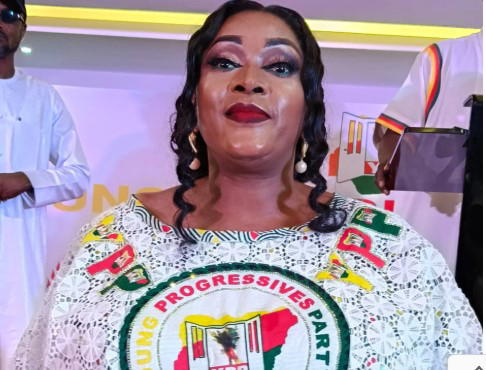
On her part, Mrs Anita Zugwai-Chukwu, who emerged as the YPP standard-bearer following consultations and endorsements by key organs of the party, including the National Executive Committee, NEC, and state chairmen from across the 36 states and the Federal Capital Territory, FCT, said she would provide a credible alternative.
In her acceptance speech, she thanked the leadership and members of the party for the confidence reposed in her, pledging to uphold the party’s ideals and work towards its growth and national expansion.
She acknowledged the challenges confronting the nation and said Nigerians were yearning for transparent, people-centred and progressive leadership.
“I am not unaware of the challenges before us as a nation and as a party. Nigerians are yearning for leadership that is transparent, people-centred and progressive.
“As the presidential candidate, my duty is clear. I will safeguard our party’s vision, uphold our constitution, and work closely with the National Working Committee and other stakeholders.
“Let me be clear: my personal ambition takes second place to the stability and growth of the YPP. I pledge my loyalty to the party, my fidelity to our ideals, and my total commitment to the unity of our members across all states.”
Zugwai-Chukwu expressed gratitude to party members and supporters across the country, describing the period ahead as a defining moment for both the party and Nigeria.
Nigeria needs empathetic leadership women could provide – Ada Frederic, NDP
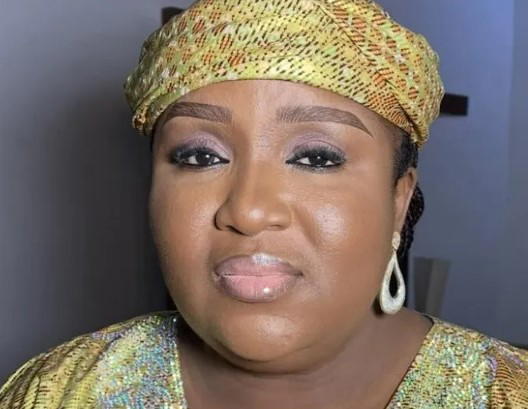
In like manner, Ada Fredrick described her emergence as NDP candidate as a huge responsibility, noting that the nation urgently required the empathetic leadership that women could provide.
“This responsibility is huge, but with God on our side, we will do our best. Nigeria has come a long way; a lot is happening, and we need women.
“At this point in our lives, we need great women who can speak out passionately and be heard. We will do our best to make sure we give Nigerians the light of hope and fulfill all the promises in our manifesto,” she said.
Frederick further stated that the party would soon unveil its full manifesto to the public, which would clearly demonstrate why the NDP remained the best political option for the country.
“I will not fail you, I will not fail my country. I will do my best as a woman, a mother and a sister.
“We are calling on Nigerian women and the youth to join hands with us to make Nigeria a better place for all of us,” she said in her acceptance speech.
Other candidates
Apart from Tinubu, the women will face other men such as former Vice President Atiku Abubakar/Dumebi Kachikwu of the African Democratic Congress, ADC; former President Goodluck Jonathan/Senator Sandy Onor of the PDP; former Anambra State Governor, Peter Obi of the Nigeria Democratic Congress, NDC; Omoyele Sowore(AAC); Gbenga Olawepo Hashim(Accord); Aliyu Bin Abass(ADP); and Kenndy Ahanotu/Dr Chibuzo Okereke(Labour Party); Oyo State Governor, Seyi Makinde(APM), former Cross River State Governor, Mr Donald Duke(PRP); and Adewole Adebayo/Abimbola Atanda(SDP).
The post Three women standing for 2027 Presidency: ‘Why we want to succeed Tinubu’ – Okereke, Zugwai-Chukwu, Fredrick appeared first on Vanguard News.
www.vanguardngr.com
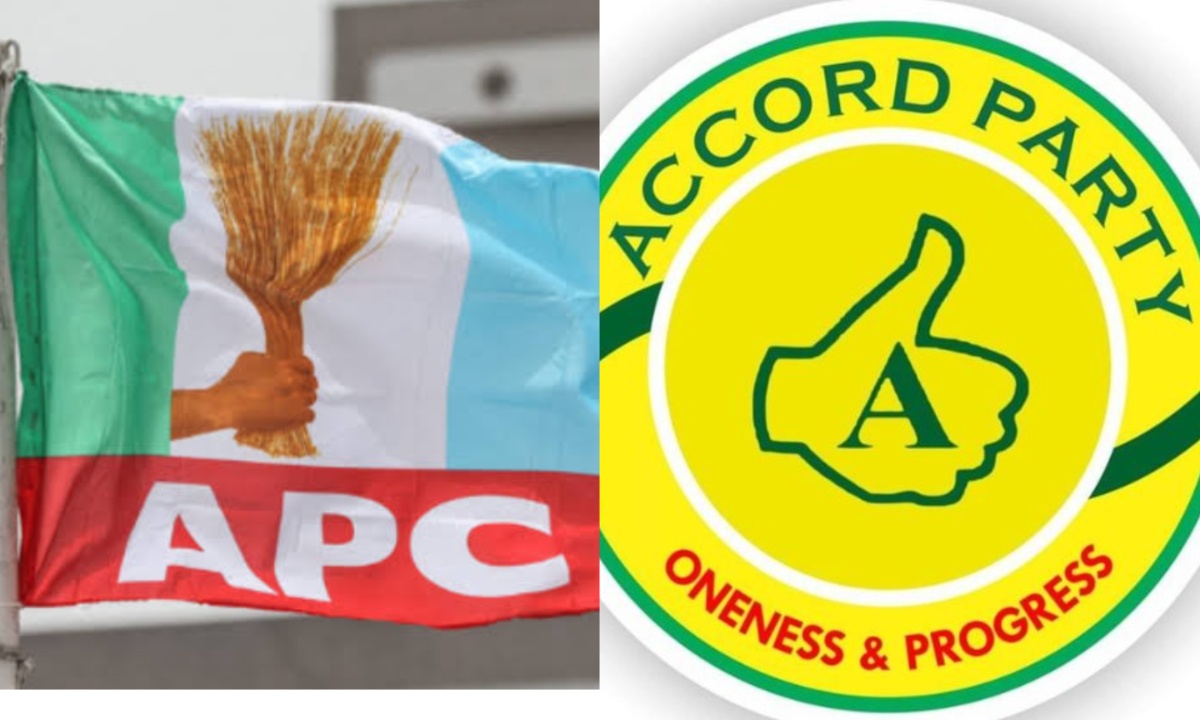
Osun State chapter of the All Progressives Congress, APC, has accused the Accord Party and some members of the National and State Assemblies in the state of spreading false allegations against the opposition party ahead of the August 15 governorship election.
In a statement issued on Friday by the party’s Director of Media and Information, Kola Olabisi, the APC alleged that recent claims linking the party, its governorship candidate, Bola Oyebamiji, and former governor Adegboyega Oyetola to acts of violence and political misconduct were fabricated.
The party claimed that the allegations were part of efforts by its political opponents to influence public opinion as campaigning intensifies across the state.
According to the statement, the APC rejected reports of alleged attacks on political opponents and claims that vehicles were being branded with Accord Party insignia to create unrest.
“We want to enjoin the members of the public to discountenance these frivolous fabrications against our party, our governorship candidate and the leader of our party,” the statement said.
The APC further alleged that its opponents had repeatedly blamed the party and its leaders for incidents occurring during political activities in the state.
The party maintained that its governorship candidate, popularly known as AMBO, remained focused on his campaign and was pursuing electoral victory through lawful and peaceful means.
“Oyebamiji, who is a man of peace, does not need to engage in violence before he records victory in the election,” the statement added.
The APC also expressed confidence in its chances at the forthcoming governorship poll, arguing that its campaign strategy and political mobilisation had positioned the party strongly ahead of the contest.
While criticising the administration of Governor Ademola Adeleke, the opposition party claimed that dissatisfaction among voters would influence the outcome of the election.
The statement further alleged that some of the accusations levelled against the APC were intended to distract attention from challenges facing its political rivals and to generate public sympathy.
Reaffirming its commitment to peaceful political engagement, the APC said it would not resort to violence under any circumstances and urged residents of the state to remain vigilant throughout the electioneering period.
The party stated, “Our party has never and will never tow the path of violence to achieve its objectives under any circumstances.”
DAILY POST had reported that on Friday, lawmakers in the Accord in the state during a press briefing called for the immediate redeployment of the Commissioner of Police, CP Ibrahim Gotan over alleged partisanship.
The spokesperson of the lawmakers, the Speaker of the Osun State House of Assembly, Adewale Egbedun also accused the APC of orchestrating violence before the crucial august 15 poll.
dailypost.ng


Troops discover corpse with machete wounds in Plateau community

Man Utd Prepare Huge Contract Offer For Bruno Fernandes
33 years after June 12, protests mark Democracy Day in Abuja

Simi Sanya and Femi Dapson Are Now Legally Married and It Is Beautiful to See

FCT Area Council Election: Live results from polling units

Premier League Set-Piece Goals (2025/2026)
-
 Sports23 hours ago
Lewis Hamilton’s Awkward Response to Kimi Antonelli Trolling Kim Kardashian
-
 Sports22 hours ago
Fox Break FIFA Broadcasting Rule During Mexico v South Africa
-
 Sports2 days ago
‘I’m a 10-Handicap Golfer – Here’s What I Scored Around Shinnecock Ahead of the 2026 US Open’
-
 Sports10 hours ago
Referee Michael Oliver Out of 2026 World Cup Match Due to Injury
-
 Sports2 days ago
Thierry Henry Names Two ‘Surprise’ Teams That Can Win the 2026 World Cup
-
 Sports11 hours ago
12 Hardest Football Competitions to Win [Ranked]
-
 Sports17 hours ago
England Fan Denied World Cup Access After Breaking Trump Rule
-
 Sports1 day ago
Gary Neville and Roy Keane Slam the US For Banning World Cup Referee