
Politics
ADC confirms Amaechi as Atiku’s running mate


By Enitan Abdultawab
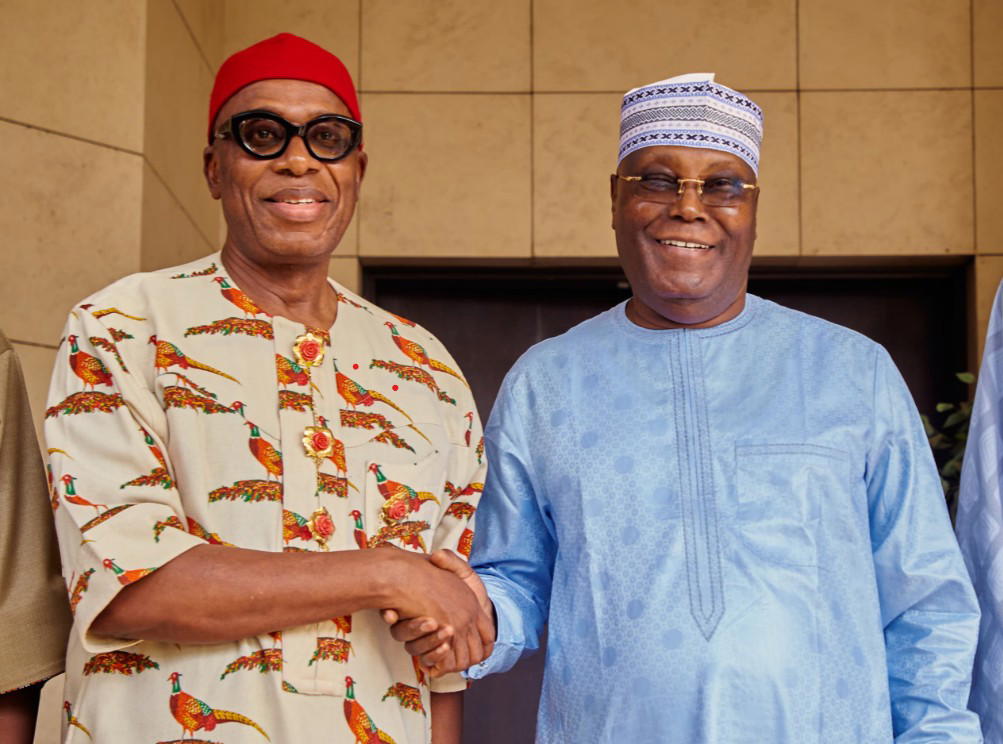
The African Democratic Congress (ADC) has officially named former Minister of Transportation and ex-Rivers State Governor, Rotimi Amaechi, as the party’s vice-presidential candidate for the 2027 presidential election.
The announcement means Amaechi will run alongside former vice president Atiku Abubakar, on the ADC ticket in the next general elections.
In a statement issued on Monday by the party’s National Publicity Secretary, Bolaji Abdullahi on its official X page, the ADC said Amaechi’s emergence followed extensive consultations with party stakeholders across the country.
According to the party, the decision came after the conclusion of its presidential primary election, where Amaechi finished as runner-up.
“The National Leadership of the African Democratic Congress (ADC) is proud to announce that the Rt. Hon. Chibuike Rotimi Amaechi has been selected as the Vice-Presidential Candidate of our great party for the 2027 Presidential Election,” the statement said.
The party described the Atiku-Amaechi partnership as a combination of “two tested statesmen” with the experience and national appeal required to address Nigeria’s challenges.
“The proposed partnership between His Excellency Atiku Abubakar and Rt. Hon. Rotimi Amaechi represents more than a political alliance; it is the coming together of two tested statesmen with the experience, national reach, and leadership capacity required to rescue Nigeria from its current challenges,” the statement added.
Highlighting Amaechi’s credentials, the party noted that he had served in key legislative and executive positions, including Speaker of the Rivers State House of Assembly, two-term governor of Rivers State and Minister of Transportation.
“Few political leaders in Nigeria today possess such extensive and balanced experience across both the legislative and executive arms of government”, the statement noted.
The ADC further argued that Amaechi’s influence in the South-South and other parts of Southern Nigeria would strengthen the presidential ticket and help broaden its national appeal.
“Together, Atiku Abubakar and Rotimi Amaechi embody a truly national ticket—one that bridges regions, generations, and political traditions.
“The ADC is prepared to govern, prepared to unite the nation, and prepared to deliver results.”
The opposition party expressed confidence that the alliance would boost its coalition ahead of the 2027 election and offer Nigerians what it described as a credible alternative focused on economic recovery, security, job creation and national unity.
The post ADC confirms Amaechi as Atiku’s running mate appeared first on Vanguard News.
www.vanguardngr.com

Justice Peter Odo Lifu of the Federal High Court in Abuja has ordered the Independent National Electoral Commission (INEC) to immediately deregister the African Democratic Congress (ADC), Accord Party and others from participating in the 2027 general elections over alleged constitutional breaches.
Justice Lifu issued the order on Monday while delivering judgment in a suit filed by a group of former lawmakers in the country.
By the judgment, former Vice President and presidential candidate of the ADC, Atiku Abubakar, has no platform on which to contest the forthcoming presidential election.
Similarly, Osun State Governor Ademola Adeleke, who is billed to seek re-election in the August 15 governorship election on the platform of the Accord Party, has been kicked out of the race.
The suit, marked FHC/ABJ/CS/2637/2026, was instituted by the Incorporated Trustees of the National Forum of Former Legislators against the Independent National Electoral Commission (INEC) and several political parties, including the ADC, Action Alliance, APP, Accord Party and Zenith Labour Party.
dailypost.ng

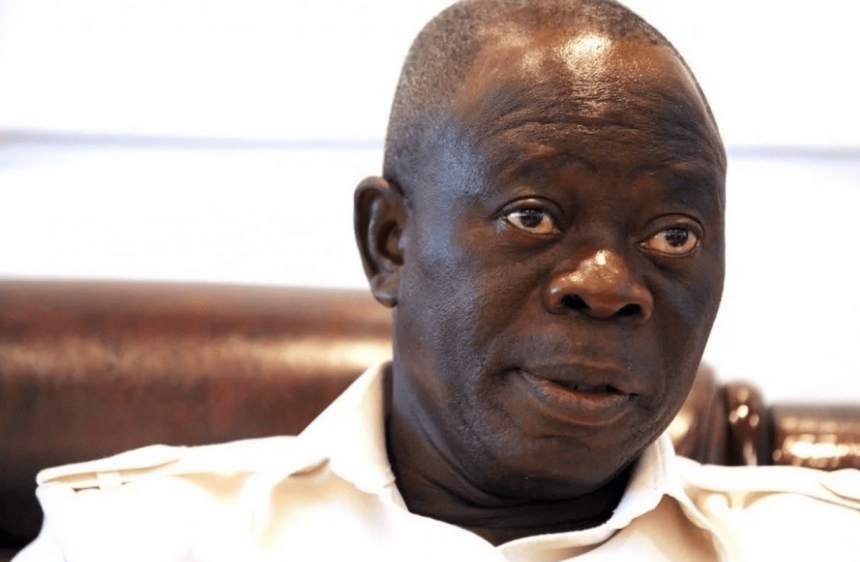
Senator Adams Oshiomhole (APC, Edo North) has accused Senate President Godswill Akpabio of harbouring a bias against him, alleging that the Senate leader is suspicious of his activities and influence within the National Assembly.
Speaking on the Sunday edition of Mic On Podcast, Oshiomhole claimed that Akpabio is “paranoid” whenever he interacts with some senators and suggested that the Senate President would exclude him from the chamber if given the opportunity.
He added that he could not explain the reason for what he described as Akpabio’s bias, despite his role as a founding member of the All Progressives Congress (APC) and his contribution to President Bola Tinubu’s election victory in 2023.
He said, “Don’t forget that I was a founding governor of the APC and deputy DG of Bola Tinubu Campaign Council that gave us victory. I’m not saying I am responsible for the victory, but I worked for it, and I’m happy we got it.
“He (Akpabio) is so paranoid about anything that has to do with me. Everybody in the Senate knows that if Senator Akpabio have his way, he will lock me out of the senate because he has misled himself into thinking that I am probably the devil he knows. There are many angels he doesn’t know,” he said.
Oshiomhole also predicted that the leadership dynamics of the next Senate would differ from the current arrangement, claiming that many lawmakers were dissatisfied with Akpabio’s leadership style.
“The 11th Senate will not be like the 10th, this I can say. It can’t be. Senators are grumbling about his style of leadership. But we try to manage, and I’ve tried to assure him that ‘Look, Mr Senate President, I am a very fulfilled person.’
“Whatever job I am given to do, I ask God to give me courage and even greater wisdom to do that job to the satisfaction of my constituents. The Senate President’s bias against me is very well known. I will not join in speculating as to the reason for his bias,” he stated.
The lawmaker further alleged that Akpabio often becomes uncomfortable when he holds discussions with certain colleagues. He cited an incident involving Senator Abdulaziz Yari, claiming the Senate president once joked that Yari’s desire to serve as vice-chairman of the Senate Committee on Interior was linked to a plan to remove him from office.
According to Oshiomhole, the Senate President remains accountable to fellow lawmakers because the position is determined by the collective will of senators.
“If you understand the way the Senate works, the Senate president is first among equals. Only the persons favoured by the senators are elected.
“Remember, if Senator Yari had got the majority, he could have become the Senate president. It is not about what anybody wishes. It is about who the senators want,” he warned.
The post Senators unhappy with Akpabio; he sees me as devil — Oshiomhole appeared first on Vanguard News.
www.vanguardngr.com

*222,137 die in 20 years; INEC, Falana, Adeniran raise red flag; Opposition parties kick against postponement
By Clifford Ndujihe, Politics Editor
BARELY seven months to the 2027 general elections, a reign of insecurity is casting a shadow over preparations for what should be a watershed democratic exercise, 33 years after the June 12, 1993, historic free and fair election.
Read Also: Falana to FG, governors: Negotiating with terrorists attracts 20-year jail term
Between January and May 2026 alone, no fewer than 5,272 Nigerians, according to media reports, have been killed in violence-related incidents.
According to the 15th Report on Violence in Nigeria, released by Nigeria Watch and compiled by Dr Vitus Nwankwo Ukoji, with support from Dr Abiola Victoria Ayodokun, 222,137 Nigerians were killed in 46,182 violent incidents across the 36 states and the FCT between 2006 and 2025.
With this background, the 2026 death toll has prompted the Independent National Electoral Commission, INEC, rights activists and senior lawyers to warn that the polls scheduled for January 16 and February 6, 2027, could be conducted under the cloud of an unprecedented security crisis. Continued terrorist attacks, banditry, kidnappings and other violent crimes in most zones of the country, especially in the North-East, North-West, North-Central and now creeping into the South-West, have caused tension and fear in the polity.
As the 2027 polls countdown intensifies, the consensus emerging from multiple fronts, INEC’s leadership, the police high command, the human rights community and civil society, is unambiguous: Nigeria cannot afford to treat security and elections as separate conversations.
The two, as INEC Chairman, Professor Joash Amupitan, put it, are “two sides of the same coin of national stability.”
However, leading opposition parties, such as Peoples Democratic Party, PDP, African Democratic Congress, ADC, and Nigeria Democratic Congress, NDC, last week, warned against postponing the elections, saying doing so would amount to surrendering the nation’s democracy to terror groups.
We need proactive measures — Amupitan
INEC Chairman, Professor Amupitan, raised the alarm on two separate occasions in recent days, each time deepening the sense of urgency around the 2027 timetable.
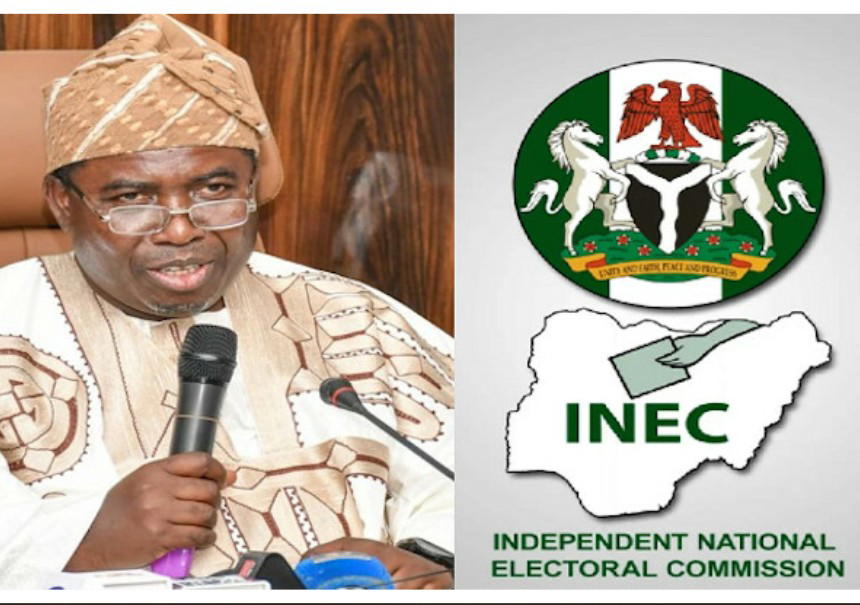
First, during a courtesy visit to the Inspector-General of Police, IGP, Olatunji Disu, Amupitan formally sought the support and collaboration of the Nigeria Police, ahead of the general election.
In a statement by the commission’s Director of Publicity and Voter Education, Mrs. Victoria Eta-Messi, the INEC chairman identified electoral malpractices, vote-trading, and threats of violence as factors capable of undermining public confidence and posing risks to national security.
He stressed the need for proactive security measures, including comprehensive risk assessments, to identify potential flashpoints and deploy appropriate mitigation strategies ahead of time, rather than waiting for trouble to erupt.
“The scale of insecurity across various parts of the country presents a threat to the conduct of free and fair elections. It is essential that we carry out thorough security risk analyses, ahead of the elections,” Amupitan stated.
He singled out the Inter-Agency Consultative Committee on Election Security, ICCES, as the linchpin of the entire security architecture for the polls, describing it as the “heartbeat” of operational safety during elections.
According to him, the commission’s success hinges on ICCES shifting its posture entirely.
“Our success depends on ICCES moving from reactive policing to proactive intelligence coordination,” Amupitan said, adding that all stakeholders, including security agencies, INEC, political parties and communities, must adopt a unified, multi-agency approach to protecting electoral personnel, materials and voters.
Despite the grim picture, Amupitan reaffirmed INEC’s commitment to working closely with the police and other security agencies to deliver elections that were peaceful, credible, transparent and genuinely reflective of the will of Nigerian people.
Responding, IGP Disu assured the commission of the Nigeria Police’s preparedness to provide a secure environment for the 2027 general election, with a pointed promise: there would be no preferential treatment for anyone or any party.
He said the force would discharge its responsibilities with professionalism, impartiality and strict adherence to the 1999 Constitution, the Electoral Act and other extant laws.
Crucially, Disu disclosed that the force had already begun strategic threat assessments and intelligence mapping nationwide to identify flash-points and emerging security risks well ahead of the election dates.
“Issues such as political violence, the proliferation of illegal arms, voter intimidation, cyber manipulation, misinformation, and attacks on electoral infrastructure had been identified as priority concerns requiring proactive attention,” the IGP stated, adding that intelligence-led deployments and preventive policing strategies would be deployed to neutralise threats before they escalate.
He further assured INEC of adequate security cover for electoral officials, sensitive materials, collation centres and other critical electoral infrastructure throughout the process.
Sophisticated triad of threats
Days later, at the 2nd Annual Lecture of the Alumni Association of the National Institute for Security Studies, AANISS, Amupitan returned to the theme, this time, with even sharper language, calling attention to emerging threats to Nigeria’s electoral process.
He declared that Nigeria was entering a “critical phase” following the release of the 2027 election timetable, noting that the scheduled presidential and National Assembly elections on January 16, 2027, and governorship polls on February 6, 2027, now represented not just political milestones but “a security trigger.”
Amupitan identified what he called a “sophisticated triad” of threats facing Nigeria’s elections: social media volatility, AI-driven disinformation, and Foreign Information Manipulation, FIMI, all compounded by more conventional logistical and security challenges such as insurgency and communal conflicts.
“Without a secure environment, the sovereign will of the people is not just threatened; it is silenced,” he warned.
Falana: Can we honestly say we are ready?
At the Annual June 12 Commemoration Lecture held in Abuja in honour of the late electoral umpire, Professor Humphrey Nwosu, an event that also featured the unveiling of the Humphrey Nwosu Centre for Democracy and Human Rights, leading lawyer and Senior Advocate of Nigeria, Femi Falana, delivered one of the most pointed warnings yet.
Falana used the occasion to recount behind-the-scenes efforts that led to the historic June 12, 1993 presidential election, widely regarded as Nigeria’s freest and fairest, before pivoting to a sobering assessment of the present.
He warned that the country risked conducting yet another flawed electoral cycle in 2027 unless worsening insecurity, poverty, kidnapping and democratic deficits were urgently addressed.
“As we are gathered here today, many children are in the custody of criminals. People are being abducted daily. Can we honestly say we are ready for elections under these conditions?” Falana queried.
He stressed that no meaningful electoral process could take place while terrorism, kidnappings and violent crimes continued to spread unchecked across the country, a position that places the burden squarely on government to demonstrate, through action rather than rhetoric, that the environment for 2027 will be fundamentally different from what obtained today.
Insecurity will shape voter behaviour — Adeniran
Taking a slightly different angle, rights activist and President of the Committee for the Defence of Human Rights, CDHR, Mr Debo Adeniran, warned in an interview in Lagos that Nigeria’s persistent security challenges could significantly influence voter decisions in 2027.
Adeniran, who doubles as chairman of the Centre for Anti-Corruption and Open Leadership, CACOL, said many Nigerians remained deeply concerned about insecurity nationwide, despite ongoing government and security agencies’ efforts to curb criminal activities.
According to him, public perception of government performance on security can play a decisive role in determining electoral outcomes in 2027.
He noted that citizens generally assessed governments based on their ability to guarantee safety and create an environment conducive to economic and social activities.
Adeniran explained that insecurity had continued to affect livelihoods, disrupt businesses, and limit movement in several communities across the country, consequences voters carried with them into the polling booth, whether or not security dominates campaign rhetoric.
He insisted that authorities at all levels needed to convince Nigerians that every possible step was being taken to tackle threats posed by criminals and violent groups, while expressing cautious optimism that visible progress on insecurity could restore public confidence before the next general elections.
“If the government demonstrates greater commitment and delivers visible results, public confidence will improve ahead of the 2027 elections,” he said, warning that public expectations would continue to rise the closer the country got to election day.
He maintained that effective security reforms would not only protect citizens but also strengthen democratic participation and national stability.
Numbers tell the story
Killings Year-by-Year (2011–2026)
Year Lives Lost
2011 – 1,096
2012 – 3,761
2013 – 7,276
2014 – 15,600
2015 – 12,795
2016 – 5,763
2017 – 4,618
2018 – 6,565
2019 – 8,340
2020 – 9,694
2021 – 10,399
2022 – 9,079
2023 – 8,097
2024 – 12,954
2025 – 12,162
2026 – (Jan–May) 5,272
Cumulative toll, 2006–2025
According to the 15th Report on Violence in Nigeria, released by Nigeria Watch and compiled by Dr Vitus Nwankwo Ukoji with support from Dr Abiola Victoria Ayodokun, a total of 222,137 Nigerians have been killed in 46,182 violent incidents across the 36 states and the FCT between 2006 and 2025. The report identified insurgency, rural banditry, kidnapping, farmers-herders clashes and counter-operations by security agencies as the leading drivers of violence across the country in 2025.
Worst-hit states in 2025
State Deaths
Borno – 2,221
Niger – 1,438
Zamfara – 1,426
Benue – 811
Katsina – 731
Banditry surge
Perhaps the most alarming single data point in the Nigeria Watch report is the trajectory of rural banditry. Deaths linked to bandit attacks and counter-operations rose to 3,974 in 2025, up sharply from 1,452 in 2024, nearly a threefold increase in a single year, and a trend that, if sustained, could place enormous strain on security deployment for the 2027 polls.
How insecurity foreshadowed past polls
Nigeria’s electoral history offers a sobering backdrop to current anxieties. The run-up to the 2003 general elections, in particular, was marked by a disturbing wave of high-profile political assassinations that observers say set a troubling precedent.
Among the most notable cases: in 2001, Chief Victor Nwankwo, younger brother of activist, Dr Arthur Nwankwo, was assassinated in Enugu State, while Odunayo Olagbaju, a member of Osun State House of Assembly, was killed in front of a police station in Ile-Ife.
That same year, Bola Ige, then Minister of Justice and Attorney-General of the Federation and a former governor of old Oyo State, was shot dead at his residence in Ibadan, a killing that remains unresolved to this day.
The following year, 2002, saw the murders of Ahmed Pategi, Kwara State PDP chairman; Barnabas Igwe, chairman of Onitsha branch of the Nigerian Bar Association, and his wife, Abigail, ambushed and killed in their car after he had publicly called for the resignation of then Anambra State governor, Chinwoke Mbadinuju, over unpaid salaries; and Alhaji Isyaku Muhammad, North-West Vice-Chairman of the United Nigeria Peoples Party, UNPP.
The 2003 election cycle itself claimed more lives still, including Ogbonnaya Uche, an ANPP senatorial candidate in Imo State; and Marshal Harry, ANPP National Vice-Chairman (South-South) and a chief campaigner for Muhammadu Buhari, assassinated in his Abuja home.
After the polls, the killings continued. On February 6, 2004, the National Vice-Chairman (South) of the PDP, Chief Aminosoari Dikibo, was assassinated in Delta State on his way to the South-South PDP meeting in Asaba
On March 3, 2004, the convoy of the Benue State governor, George Akume, was attacked by suspected assassins on his way to Kaduna.
Although he survived the attack, a member of PDP’s board of trustees, Andrew Agom, and Joseph Ngama, a police sergeant, were killed. On March 4, 2004, Mr. Luke Shingaba, a chairmanship candidate, was killed in his house in Bassa Local Government Area of Kogi State
By 2006, the pattern had not changed. Funso Williams, a leading PDP governorship aspirant in Lagos State, was strangled in his home just hours after returning from a political meeting, amid a bitter internal party struggle over the governorship ticket.
Weeks later, Ayo Daramola, a PDP governorship aspirant in Ekiti State, was stabbed and shot in his bedroom after attackers scaled his fence and burrowed through to reach him, hours after he had addressed a campaign rally in Ado-Ekiti.
On November 25, 2006, an explosion destroyed parts of PDP secretariat in Bayelsa State; November 28, 2006, a car bomb explosion killed one Godwin Aigbekhai in Owan East Local Council, Edo State; December 5, 2006, dynamites exploded at then Governor Goodluck Jonathan’s campaign office in Bayelsa State; and December 11, 2006, thugs attacked Ndudi Elumelu’s campaign office in Aniocha/Oshimili Federal Constituency, Delta with dynamites.
Ahead 2011
Before the 2011 polls, the polity was also littered with killings and bomb blasts, beginning from 2009. On July 12, 2009, the Movement for the Emancipation of Niger-Delta, MEND, attacked Atlas Cove, an oil facility in Lagos, with dynamite and guns killing five persons.
On December 22, 2009, a parcel bomb exploded in the premises of Superscreen, a private television station, in the Onipanu area of Lagos, ripping off the right hand of the conveyer of the explosive device.
On March 15, 2010 , a bomb blast rocked Post-Amnesty Summit being organised by Vanguard Newspapers in Delta State, with no casualty; and on October 1, 2010, a twin car bomb blasts killed 12 and injured 36 in Abuja. Since 2011, every electoral circle has been heralded by high-wire insecurity and tension.
Attack on INEC infrastructure, ahead 2023 poll
Beyond assassinations, INEC’s physical infrastructure has repeatedly come under attack in past election cycles, a pattern security experts fear could resurface ahead of 2027.
In the lead-up to the 2023 polls, INEC facilities were attacked 52 times across 29 states since the previous general election.
Then-INEC Chairman, Professor Mahmood Yakubu, lamented that in just four months, five INEC offices were attacked, with buildings damaged and materials destroyed across the country.
The commission lost over 1,990 ballot boxes, 399 voting cubicles, 24 generators, and 65,699 Permanent Voter Cards, PVCs, in one incident alone.
Notable attacks included simultaneous strikes in Ogun and Osun states on November 10, 2022; an attack in Ebonyi State on November 26; and attacks in Imo State’s Orlu and Oru local government areas on December 1 and 2, 2022.
In the Ogun State arson alone, 904 election boxes, 65,699 uncollected PVCs, 29 voting cubicles, 30 megaphones, 57 election bags and three power generators were destroyed.
Yakubu vowed at the time that the attacks would stop and perpetrators prosecuted, while assuring Nigerians that lost materials would be replaced, though replacement costs, given Naira depreciation against foreign currencies, have grown significantly heavier on the public purse.
Each card reader previously cost N167,063 and each memory card N6,000; both figures are now considerably higher.
Bottom line
As Nigeria counts down to January 16 and February 6, 2027, the next seven months may determine not just who governs Nigeria from 2027, but whether the process that decides it can be trusted at all.
The post Bullets Before Ballots: Insecurity threatens 2027 polls – 5,272 killed in 5 months appeared first on Vanguard News.
www.vanguardngr.com


Troops clash with suspected terrorists in Kebbi, recover weapons

Troops arrest suspected car thief at Abuja checkpoint

Adidas and Pharrell Williams Give the Virginia Vario Flat Earther a Luxe Suede Upgrade

Simi Sanya and Femi Dapson Are Now Legally Married and It Is Beautiful to See

FCT Area Council Election: Live results from polling units

Premier League Set-Piece Goals (2025/2026)
-
 Sports1 day ago
Thierry Henry Issues Statement After Nigeria Comment Backlash at World Cup
-
 Sports1 day ago
Strong Reaction to Brazil Star’s World Cup Performance vs Morocco
-
 Sports2 days ago
James McClean Slams ‘Worst’ Decision For Ireland vs Israel
-
 Sports18 hours ago
Uruguay Denied US Entry Day Before World Cup Opener
-
 Sports1 day ago
Gary Neville Calls Out FIFA ‘Dictatorship’ After World Cup Incident
-
 Sports2 days ago
Sir Alex Ferguson Named His 2026 World Cup Winners
-
 Sports2 days ago
Jurgen Klopp Blasts 2026 World Cup Hydration Breaks
-
 Sports10 hours ago
Judges’ Scorecards and Punch Stats For Ilia Topuria vs Justin Gaethje at UFC Freedom 250