
Sports
Keito Nakamura Accused of Breaking Kit Rule During Japan 2-2 Netherlands


A member of Japan’s national football team has been accused of breaking a kit rule during the 2026 World Cup clash against Netherlands on Sunday.
The two sides played out an entertaining 2-2 draw at the AT&T Stadium in Texas. Following a goalless first half, the game came to life when Virgil van Dijk put Netherlands ahead shortly after the interval.
Keito Nakamura equalised minutes later before West Ham’s Crysencio Summerville restored the Oranje’s one-goal advantage. However, Ronald Koeman’s side were denied two valuable points when Daichi Kamada scored late on.
Japan Player Acccused of Breaking Kit Rule

Japan manager Hajime Moriyasu went viral on social media for deploying a never-seen-before tactic with his whiteboard.
Meanwhile, images of Nakamura have also spread across social media platforms, with football fans convinced the 25-year-old wasn’t wearing any shin pads.
The International Football Association Board (IFAB), the organisation responsible for the laws of the game, state that shin pads are a mandatory piece of equipment that all footballers must wear while playing.
Law 4.2 states that shin pads must:
- Be made of a suitable material.
- Be of an appropriate size to provide reasonable protection and be covered by the socks.
- And players are responsible for the size and suitability of their shin pads.
While the law does not define what an “appropriate” shin tag is, with the decision ultimately left to each individual player, they must still provide “reasonable protection”.
Former FIFA Ref Reacts

Former PGMOL chief and ex-FIFA referee Keith Hackett said in response to the images of Nakamura:
“Shinguards – these must be made of a suitable material and be of an appropriate size to provide reasonable protection and be covered by the socks. Players are responsible for the size and suitability of their shinguards.”
Some football fans have claimed that Nakamura was wearing tiny shin pads underneath his socks, but whether these offer reasonable protection is debatable.
There’s been a growing trend in recent years of certain top-level footballers wearing small shin pads. One of the most famous examples is Everton’s Jack Grealish, who wears shin pads that are between large child and small adult size.
You scored
out of 20
While players like Nakamura and Grealish may see little harm in wearing small shin pads, former Wycombe Wanderers club doctor Bob Sangar strongly disagrees with the growing trend.
“Some modern-day football boots have got sharp angled studs quite capable of slicing through a sock, skin and muscle. I’ve seen freak injuries,” he said.
“So many times when players got a nasty kick or studs-up challenge on the shin or around the ankle, they wore really pathetic protection and seemed oblivious to the fact that those contact injuries can be substantial.
“Last year we had a game at Bristol Rovers and one of our forwards ended up with a cut that required close to 30 stitches and he had to have a plastic surgical repair, and that was literally just a stud running down the outside of his leg.”
He added: “We worry so much about the safety of players with concussion, I cannot fathom why there is less attention on the risk of serious leg injuries. We wouldn’t send soldiers into the battlefield without body armour – but footballers will go on to the field wearing a shirt, shorts and that’s it.
“This is going to keep happening until something very negative happens and then people will realise they should have done something sooner.”

The biggest ever World Cup tournament is well under way and one of the biggest winners in the opening round of matches has been Sweden.
Graham Potter’s men were on fire as they ripped Tunisia apart in their Group E encounter in Philadelphia, with Premier League stars Yasin Ayari (2), Viktor Gyokeres and Alexander Isak bagging four of the five goals in a 5-1 demolition job.
Had it not been for Germany’s 7-1 thrashing of minnows Curacao hours beforehand, the Swedes would have been celebrating the biggest victory of the early stages of the competition.

Former Chelsea and West Ham boss Potter only took over as head coach of the national team in October, with the sole task of getting them into the World Cup, following a dismal spell in charge by Dane Jon Dahl Tomasson.
If it was so dismal, I hear you scream, how did they make it to the World Cup Finals? Well that is a very good question to those who do not follow the qualification process game-by-game.
When it came to the qualifying process for the 2026 World Cup, the UEFA pathway was split into 12 groups with the group winners all advancing to the World Cup Finals. The 12 runners-up were then paired together in a play-off round, with the six winners also making it through to the tournament in the USA, Canada and Mexico.
Sweden were in Group B of qualifying and actually finished bottom of the four-nation table, failing to win a single match, picking up just two points in their six matches from draws home and away with Slovenia. They lost home and away to Switzerland and Kosovo, leading to Tomasson getting the sack.
⚽
World Cup History Quiz
You scored
out of 20
So how did they make it to the World Cup?
Well, the UEFA qualification process does not just come down to those groups. It brings in the best performers from the UEFA Nations League competition too.
Nations League plays a part in World Cup qualification

Twenty spots are available to UEFA nations, with the 12 group runners-up in qualifying joined by the four best performing countries in the 2024/25 Nations League campaign that have not already qualified for the tournament or the play-offs.
As a result, Sweden’s impressive performance in the Nations League – they finished top of Group C1 and were promoted to the B League, got them into the play-off round. They were joined by fellow Nations League group winners Romania, North Macedonia and Northern Ireland.
But unlike those other three nations, Sweden, under Potter, beat Ukraine in the play-off semi-final and then Poland, who had finished second behind the Netherlands in Group G of World Cup qualifying, 3-2 in the final to secure their place in the States, Canada and Mexico.
And they’re certainly taking their opportunity with both hands. Sweden play Japan and the Netherlands in their next two group games, knowing that they only have to be one of the eight best third-placed teams in the tournament to qualify for the knockout stages.
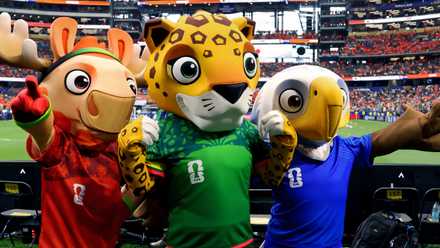
World Cup 2026 Mascots: Who They Are & Meaning Explained
The 2026 World Cup will be hosted by three nations, each with their own distinct mascot that celebrates their country’s culture and spirit.

FIFA have performed a swift U-turn on press conference rules at the 2026 World Cup after awkward incidents involving Achraf Hakimi and Vinicius Junior went viral.
The governing body has been under intense scrutiny after bringing in several new on-pitch rules for the biggest competition in world football. Mandatory hydration breaks annoyed Virgil van Dijk, while Scotland’s Andy Robertson tried his best to get around new time-wasting regulations.
It goes to show not everyone agrees with the rules put in place. But there is sound logic behind them. Hydration breaks are to combat the searing temperatures the host nations can reach, while time-wasting regulations are designed to keep the game flowing.
However, one of the more bizarre regulations was displayed away from the pitch. A clip quickly went viral on social media, and the backlash appears to have forced FIFA’s hand.
Why FIFA Banned Spanish at World Cup Press Conferences

Ahead of Morocco vs Brazil on Saturday night, both Achraf Hakimi and Vinicius Junior appeared stunned when they were told Spanish questions were not allowed in press conferences.
Hakimi, who was born in Spain and speaks the language, tried to let the press officer know that he could answer a Mexican outlet’s question in Spanish, saying: “It’s OK, I understand.”
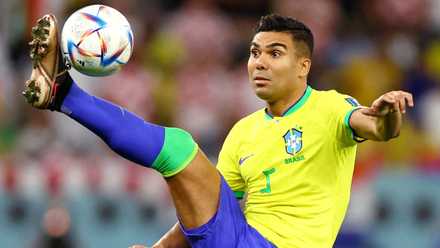
Brazil Fans in Total Agreement About Casemiro After Opening 2026 World Cup Game vs Morocco
There’s been a big reaction from the media and Brazil fans alike to the 34-year-old’s opening 2026 World Cup display against Morocco
However, he was told the resources to translate weren’t available, and he instead had to answer in English, which he did very impressively. A lot of the major outrage has come from the fact that one of the host nations, Mexico, is a Spanish-speaking country.
Another clip then appeared of Real Madrid superstar Vinicius Jr. The Brazilian was asked to answer a question in Spanish, but he replied: “I’m with Brazil, I’m gonna speak in Portuguese.”
Watch both incidents below.
FIFA Make Rule Change After Backlash

According to a report from the Sporting News, FIFA have recognised the oversight and will now add Spanish as a fourth available language in press conferences. It comes after they noticed the strong backlash received online.
You scored
out of 20
Before this change, FIFA offered translation in three languages. They were English and two others requested by each national team at the podium.

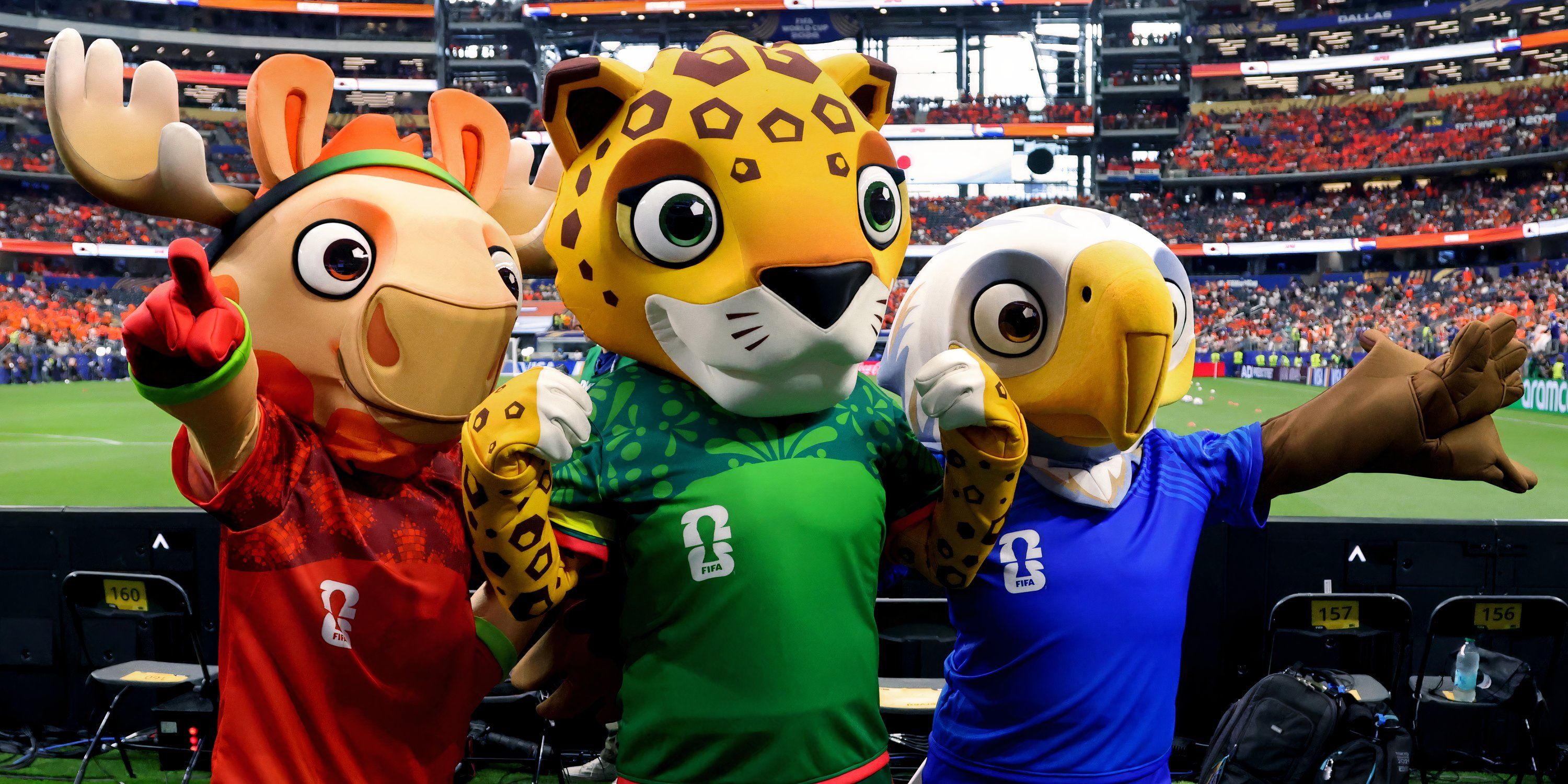
The 2026 World Cup is taking place across North America this summer, so it’s unsurprising to see the competition supersized in more ways than one.


FCT Police storm kidnapping hideout in Abuja, arrest pregnant suspect, three others

BREAKING: NDC guber candidate in Kano picks Kwankwaso’s son as running mate
Sweden’s Route to the 2026 World Cup After Winning 0 Qualifiers

Simi Sanya and Femi Dapson Are Now Legally Married and It Is Beautiful to See

FCT Area Council Election: Live results from polling units

Premier League Set-Piece Goals (2025/2026)
-
 Sports1 day ago
Thierry Henry Issues Statement After Nigeria Comment Backlash at World Cup
-
 Sports1 day ago
Strong Reaction to Brazil Star’s World Cup Performance vs Morocco
-
 Sports2 days ago
James McClean Slams ‘Worst’ Decision For Ireland vs Israel
-
 Sports18 hours ago
Uruguay Denied US Entry Day Before World Cup Opener
-
 Sports1 day ago
Gary Neville Calls Out FIFA ‘Dictatorship’ After World Cup Incident
-
 Sports2 days ago
Sir Alex Ferguson Named His 2026 World Cup Winners
-
 Sports2 days ago
Jurgen Klopp Blasts 2026 World Cup Hydration Breaks
-
 Sports10 hours ago
Judges’ Scorecards and Punch Stats For Ilia Topuria vs Justin Gaethje at UFC Freedom 250