
Sports
25 Greatest Portugal Players in Football History [Ranked]


When it comes to the world of football, Portugal certainly has provided a fair few special talents over the years. And while they may still be awaiting a first-ever World Cup win, no international tournament feels complete without the iconic red and green colours of the European nation.
Countless Portuguese stars have dazzled, with the current game littered with those from the Iberian Peninsula. Cristiano Ronaldo, for instance, will go down as one of the best players to ever grace the sport. But which of his fellow countrymen also deserve to be regarded in a similar vein?
To solve this dilemma, GIVEMESPORT has written up a list, ranking the 30 greatest players to ever play for Portugal.
Ranking factors
- International achievements (honours, appearances, goals, assists, etc)
- Club achievements (honours, appearances, goals, assists, etc)
- Individual awards
- Legacy within football
25
Ricardo Quaresma

Ricardo Quaresma was one of the most gifted and unpredictable players of his generation. Known for his flair, creativity and trademark trivela passes and shots, he could produce moments of magic that few others could match. One of his most memorable goals came at the 2018 World Cup, when he curled a brilliant trivela strike into the net against Iran.
Although his inconsistency sometimes held him back, Quaresma still enjoyed a highly successful career. He played an important part in Portugal’s historic Euro 2016 triumph, scoring the winning goal in extra time against Croatia in the last 16 as the team went on to claim its first major international trophy.
At club level, Quaresma also tasted success abroad, winning the treble with Inter Milan during the 2009/10 season under fellow Portuguese José Mourinho. His career may have had its ups and downs, but his talent was never in doubt.
|
Ricardo Quaresma’s Career |
|
|---|---|
|
Appearances |
684 |
|
Goals |
112 |
|
Assists |
166 |
|
Portugal caps |
80 |
24
Antonio Simoes
Antonio Simoes spent 14 professional seasons with Benfica, playing 449 official games and scoring 72 goals from the left wing position. In the late 1970s and early 1980s, he also represented several teams in the United States, and subsequently worked as a manager in both continents.
Simoes holds the record of youngest player (18 years and 139 days old) to play and win a European Cup final, when he appeared for Benfica against Real Madrid in 1962. How underrated he is is best proven by the fact images of him are hard to come by.
|
Antonio Simoes’ Career |
|
|---|---|
|
Appearances |
449 |
|
Goals |
72 |
|
Assists |
N/A |
|
Portugal caps |
40 |
23
Nuno Gomes

With 29 goals in 79 caps, Nuno Gomes remains one of Portugal’s all-time top goalscorers. He played a crucial role in their “golden generation,” finishing third at Euro 2000 and reaching the final of Euro 2004.
Known for his clever movement, which combined perfectly with the fact he didn’t need much encouragement to turn few touches into goals, Gomes is another on this list who spent most of his time with Lisbon giants Benfica. He spent 12 seasons across two separate stints with them, cementing his legacy as an icon. In total, he scored 166 goals in 398 appearances for them alone.
|
Nuno Gomes’ Career |
|
|---|---|
|
Appearances |
585 |
|
Goals |
219 |
|
Assists |
68 |
|
Portugal caps |
79 |
22
Fernando Couto

While Portugal is mostly known for its technically-gifted footballing imports, Fernando Couto completely ripped up what outsiders knew about the Iberian nation throughout the 1990s. He was an uncompromising, physical “stopper” who loved tight marking and gained a reputation for his intense, sometimes combative approach to defending.
Despite being average in height for a modern centre-back, Couto’s exceptional leap and timing made him a massive threat both in clearing crosses and scoring goals at the other end. And, as the Porto defender’s career progressed, he became more of a Libero with clubs such as Parma, allowing him to read the game, cover for his teammates, and dictate play from the back.
|
Fernando Couto’s Career |
|
|---|---|
|
Appearances |
552 |
|
Goals |
34 |
|
Assists |
4 |
|
Portugal caps |
110 |
21
Jose Augusto
Jose Augusto played most of his career with Benfica, for which he appeared in 369 competitive matches and scored 174 goals, winning 13 major honours, including eight Primeira Liga titles and two European Cups. He was dubbed the “Portuguese Garrincha” by French footballer, coach, and journalist Gabriel Hanot.
He earned 45 caps for Portugal, and was a key part of the squad that took part in the 1966 World Cup. Despite his legendary status, though, his two attacking partners – Jose Aguas and Eusebio – both stole much of the limelight from him.
|
Jose Augusto’s Career |
|
|---|---|
|
Appearances |
344 |
|
Goals |
163 |
|
Assists |
N/A |
|
Portugal caps |
45 |
20
Joao Pinto

A key member of Portugal’s celebrated “golden generation,” which lifted consecutive U-20 World Cup titles in 1989 and 1991, João Pinto was a creative playmaker who could unlock defences at the drop of a hat and had a keen eye for goal, netting 23 times in 81 appearances for the national team.
Pinto helped Portugal reach the semi-finals of Euro 2000, but he was also known for occasionally letting his temper get the better of him. That fiery streak landed him in hot water at the 2002 World Cup, where he received a six-month suspension after pushing a referee following his dismissal. At club level, he enjoyed success on both sides of Lisbon’s football divide, winning Primeira Liga titles with Benfica and later with their fierce rivals, Sporting CP.
|
Joao Pinto’s Career |
|
|---|---|
|
Appearances |
604 |
|
Goals |
148 |
|
Assists |
102 |
|
Portugal caps |
81 |
⚽
World Cup History Quiz
You scored
out of 20
19
Nene
Few forwards in Portuguese football have matched Nene’s consistency in front of goal. Spending his entire professional career with Benfica between 1968 and 1986, he rattled in an astonishing 359 goals across 575 appearances, helping the club claim 10 league crowns. His exploits did not go unnoticed, as he was named Portuguese Footballer of the Year in 1971 and finished atop the Primeira Liga scoring charts on two occasions.
On the international stage, Nene earned 66 caps and struck 22 goals for Portugal. He played a pivotal role in the Seleção’s memorable run to the Euro 1984 semi-finals, proving time and again that he had a knack for being in the right place at the right time when the stakes were highest.
|
Nene’s Career |
|
|---|---|
|
Appearances |
575 |
|
Goals |
359 |
|
Assists |
N/A |
|
Portugal caps |
66 |
18
Jose Aguas
Before the television was a centrepiece in every European household, Jose Aguas was one of the most prolific goalscorers in football, and typified the modern day characterisation of a “fox in the box”. As the legendary captain of Benfica, he won 5 Primeira Liga titles (finishing top goalscorer in all of those) and back-to-back European Cups in 1961 and 1962.
He scored a staggering 290 goals in just 281 official matches for the club, and ran so that Eusebio could walk later down the line. Also notably, he was the top scorer of the 1960/61 European Cup, scoring his team’s opening goal in both the 1961 final against FC Barcelona (3-2) and the 1962 final against Real Madrid (5-3).
|
Jose Aguas’ Career |
|
|---|---|
|
Appearances |
281 |
|
Goals |
290 |
|
Assists |
N/A |
|
Portugal caps |
25 |
17
Ruben Dias

A gem at the back for Manchester City, Ruben Dias has earned his reputation as a defensive titan, and one of the best in his position in the world. Fearless when tackling, an underrated passer of the ball and a leader at the back, he is well-equipped to play Pep Guardiola’s style of football and has cemented his status as a key part of the winning-machine at the Etihad Stadium for the best part of the last decade.
Injuries prevent him from being any higher on this list, but he’s always a commanding presence when fit, both for club and country. For Portugal, he has 76 caps, which has amounted to two Nations League winners’ medals.
|
Ruben Dias’ Career |
|
|---|---|
|
Appearances |
466 |
|
Goals |
14 |
|
Assists |
19 |
|
Portugal caps |
76 |
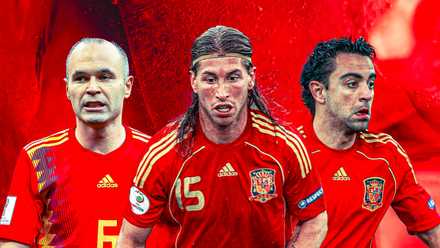
15 Greatest Spanish Players in Football History [Ranked]
We’ve ranked the best 11 Spanish-born players in the history of football, taking into account several factors such as trophies won and longevity.
16
Jose Torres
Jose Torres, affectionately nicknamed “O Bom Gigante” (The Good Giant), was an exceptionally prolific centre-forward and a legendary figure in Portuguese football. Standing at 6ft3in, he relied on formidable physical presence and clinical finishing to amass 226 goals in 259 appearances for Benfica.
It was with the same club that amassed 9 Portuguese Liga titles and 6 Portuguese Cups during his 12-season stint, while also helping score the goals that got them to three European Cup finals. With the national side, he scored 14 goals in just 34 caps, starring alongside a certain other iconic striker.
|
Jose Torres’ Career |
|
|---|---|
|
Appearances |
374 |
|
Goals |
217 |
|
Assists |
N/A |
|
Portugal caps |
34 |

Arsenal have been dealt a boost in their bid to land a new left-winger this summer, with one of their possible targets now available. The Gunners need to strengthen on the left having struggled to get consistent performances from their players on that side, though Leandro Trossard did have an impressive campaign.
Ultimately, though, Arsenal need someone as dangerous as Bukayo Saka on the left to ensure they have a complete front three, and it seems that is very much the plan this summer. The left-winger signing is likely to be responsible for much of Arsenal’s financial outlay this summer, and there are already a couple of likely targets.
Morgan Rogers has reportedly been singled out as the ideal option, but there may now be a decision to make due to the availability of one of the world’s best left wingers.
Barcola becomes available

According to TalkSport reporter Alex Crooks, PSG and France left-winger Bradley Barcola has now become available due to failed contract negotiations with his club.
Crooks said on TalkSport’s YouTube: “Another potential star of this World Cup – Bradley Barcola. He is in demand when it comes to Premier League clubs. Liverpool and Arsenal are both tracking Barcola, and I woke up to a message this morning from a very reliable source that Barcola has asked to leave PSG. He has been in contract negotiations and those negotiations have stalled, which could open the door to Liverpool and Arsenal.
“Arsenal obviously looking to strengthen out wide, and that could mean Gabriel Martinelli is sold, maybe Leandro Trossard as well. While Morgan Rogers is very much Arsenal’s top choice, I certainly wouldn’t rule out a move for Barcola, who could be a key player for France as they look to go all the way here in North America this summer.”
Barcola a worthwhile option

With Aston Villa in the Champions League and unlikely to sell Rogers, at least not for a crazy fee, Barcola is an option Arsenal should be considering. The ‘world-class’ 23-year-old is already playing at a world-class level, scoring 13 and assisting seven this season, and he can play across the front line.
Kylian Mbappé said of Barcola this week: “It was inevitable that he would reach the highest level, but he did so in his very first season in Paris. He’s really starting to establish himself with the national team. Bradley doesn’t talk much. You have to understand that. But once you do, you know he’s a great guy.”
He is a little unlucky in that Khvicha Kvaratskhelia has the left wing spot locked down at PSG, likely being the best in the world in his position, but Barcola has plenty to offer, and he can surely elevate Arsenal’s attack to a new level. It will likely be a pricey deal, but the fee is also likely to be less than what Villa will ask for Rogers this summer.
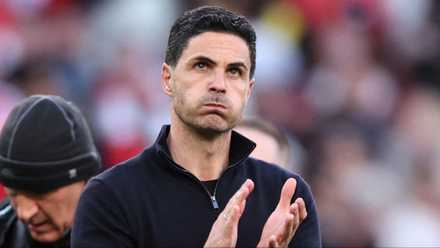
Richard Keys Warns Mikel Arteta Target That He Shouldn’t Go ‘Anywhere Near Arsenal’
Yet again, Keys has caused a stir with his comments.

Manchester United must be careful not to miss out on what could be a generational talent this summer. The Red Devils have a number of areas they want to strengthen after a season of progress that saw them finish in third in the Premier League.
Michael Carrick has been kept around as the club’s new permanent boss, and while he did very well last season, he will know that more progress will be expected this season. New recruits will be needed to help make that happen, but it’s not just a case of upgrading. There are parts of this United squad that now have holes following the usual slew of summer departures, and one of them is at left-back.
United’s left-back problem

United’s left-back problem is two-fold. The Red Devils are sorely lacking in depth following the departure of Tyrell Malacia, now down to just Luke Shaw and the young Diego León. And with Shaw 30 years of age and having had his fair share of injury issues, Carrick is arguably lacking a starting left-back.
The right starting left-back signing could solve both of those issues, given there will be a reduced need for depth, especially with a couple of the centre-backs able to play on the left in an emergency, while León could be used if needed, provided he is not loaned out.
But getting the right starting left-back is another task altogether, and reports now suggest that United will resist getting stuck in a bidding war for Eintracht Frankfurt’s Nathaniel Brown, instead turning to £80million-rated Lewis Hall.
Hall has impressed with Newcastle United, but he had a rocky end to the season that may have played a part in him missing out on the England World Cup squad.
Brown proving some players are worth it

United’s recent recruitment has been seriously impressive. They have moved away from paying silly fees for unproven players, instead going with a nice mix of players who have proven themselves in the Premier League, and some more calculated risks from abroad.
To that end, it’s understandable why United don’t want to find themselves in a bidding war for Brown, but some players are worth paying for.
Hall is a very good player, and he is undoubtedly proving himself in the Premier League. But at 22 years of age, everyone in Germany is recognising Brown, described as ‘fearless’ by the Bundesliga website, as a generational talent who will be Germany’s starting left-back for years to come. That’s a different level to Hall, who isn’t even among England’s best two or three left-backs.
Beyond that simple logic, Brown is coming off a season of registering four goals and six assists, proving himself as not only a solid left-back defensively, but one who can get forward, support the attack and produce. That kind of left-back is crucial in the modern era, and it will be crucial to keeping United a dangerous attack going forward.
Hall is far more of the traditional mould, and while there is a place for that, Carrick and the Red Devils need to be more ambitious.
And, given the news that Bayern Munich appear to have come to an agreement over a €55million (£47.5million) fee including add-ons, he would be considerably cheaper than Hall. That agreement also means United need to act quickly to complete a last-minute hijack if they are interested in the player.
The decision should be obvious for United, and this World Cup will highlight why, with Brown playing a starring role for Germany and already getting on the scoresheet in his first game.
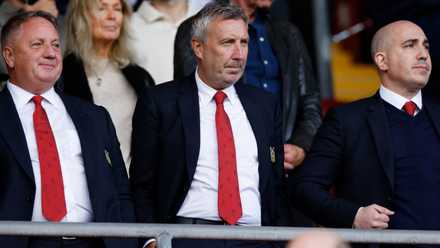
Man Utd Boosted in Bid to Sign £70m Star Wilcox is Personally Pushing For
Manchester United are interested in signing Newcastle United defender Lewis Hall this summer

Summary
- Fans have been left confused as to why the Spanish national team doesn’t sing during its national anthem.
- ‘Marcha Real’ is one of four European anthems that doesn’t contain any lyrics.
- Luis De La Fuente’s side got their 2026 World Cup campaign underway this week.
Luis de la Fuente’s Spain side have left fans puzzled during their 2026 World Cup opener and during other international games, with many spotting that none of the players sing during their national anthem.
La Roja proved they were one of the strongest teams in the European Championships, with the Iberian nation proving many doubters wrong by reaching the Berlin final and then beating England 2-1 to lift the prestigious trophy back in 2024, as they now turn their attention to the world stage.
Blessed with stars such as Rodri and history-maker Lamine Yamal, the Spaniards are among the favourites to repeat their 2010 highpoint. Because of their fortunes in Germany, onlookers were able to see the stoic national anthem on plenty of occasions. However, despite the fact that Spain fans always tend to chant during the song, there is a good reason why the players refrain from doing so.
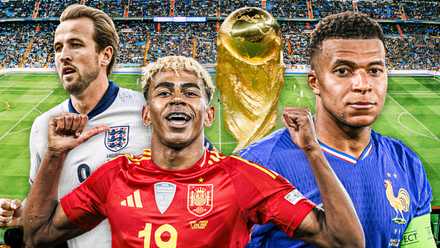
Current Spanish National Anthem Composed Without Lyrics

Spanish teams in the past have often been at the end of criticism for the fact that none of the players were seen singing during the pre-match anthem, with some going as far as to call the former world champions a ‘disgrace.’
However, those levying them complaints may be unaware that the squad don’t sing because the Spanish national anthem doesn’t have any lyrics. The origin of ‘Marcha Real’ links back to the 18th century, where the tune was used as a military march, as per Classic FM.
There have been several suggestions over possible lyrics in the past, with the Spanish Olympic committee attempting to have the phrase ‘Viva Espana’ open the national chant ahead of the 2008 Olympic Games. However, this was turned down due to the fact that the words were commonly used during General Francisco Franco’s dictatorship.

You scored
out of 20
Another reason why certain Spanish players may choose not to engage with the Spanish national anthem is because of their place of birth. Gerard Pique and Jordi Alba are two of the biggest stars from Spain’s past who received calls to be axed from the national set-up due to the fact that they were both from Catalonia.
The region, located in the north-east of Spain, is home to Barcelona and has recently found itself fighting for its independence. Calls for this reached its peak in 2017, with an illegal referendum and mass protests taking place. The situation was so tense that Pique even stated that he would be willing to retire from international football if his inclusion was going to upset natives.
Some of those from Basque also feel as though that region is an unrecognised nation, separate from Spain. As such, Euro 2024 heroes Mikel Oyarzabal and Mikel Merino, from the Basque Country, were branded as ‘traitors’ for their part in the tournament success.
The Spanish National Anthem’s Old Lyrics

Between 1938 and 1975, the Spanish national anthem did contain lyrics after the aforementioned General Francisco Franco came to power. Franco led the Nationalist Party during a period of civil war, eventually overthrowing the Second Spanish Republic.
The dictator ruled the country unopposed for over three decades, during which he instructed famed poet Jose Maria Peman to create a new anthem which included lyrics designed to promote ‘the rebirth’ of Spain.
Upon Franco’s passing in 1975 after battles with Parkinson’s disease, the anthem was abolished, and a lyric-less anthem made its return. To this day, some fans can be seen singing the old lyrics as they get fired up before their team’s games. However, the links to what is considered to be some of the darker days in modern-day Spain mean that we are unlikely to see any of De La Fuente’s men join in with the serenading.


2,077 PWDs set to vote in Ekiti Governorship Election
‘World-Class’ Arsenal Target Bradley Barcola Hands in Transfer Request

Police arrest three over alleged killing, burning of houses over girlfriend in Edo

Simi Sanya and Femi Dapson Are Now Legally Married and It Is Beautiful to See

FCT Area Council Election: Live results from polling units

Premier League Set-Piece Goals (2025/2026)
-
 Sports1 day ago
Thierry Henry Issues Statement After Nigeria Comment Backlash at World Cup
-
 Sports2 days ago
Strong Reaction to Brazil Star’s World Cup Performance vs Morocco
-
 Sports2 days ago
James McClean Slams ‘Worst’ Decision For Ireland vs Israel
-
 Sports21 hours ago
Uruguay Denied US Entry Day Before World Cup Opener
-
 Sports1 day ago
Gary Neville Calls Out FIFA ‘Dictatorship’ After World Cup Incident
-
 Sports13 hours ago
Judges’ Scorecards and Punch Stats For Ilia Topuria vs Justin Gaethje at UFC Freedom 250
-
 Sports2 days ago
Jurgen Klopp Blasts 2026 World Cup Hydration Breaks
-
 Sports2 days ago
John Terry Names England’s 4 ‘World-Class’ Players at the World Cup