
Politics
State police: We need constitutional safeguards against abuse —Shagari


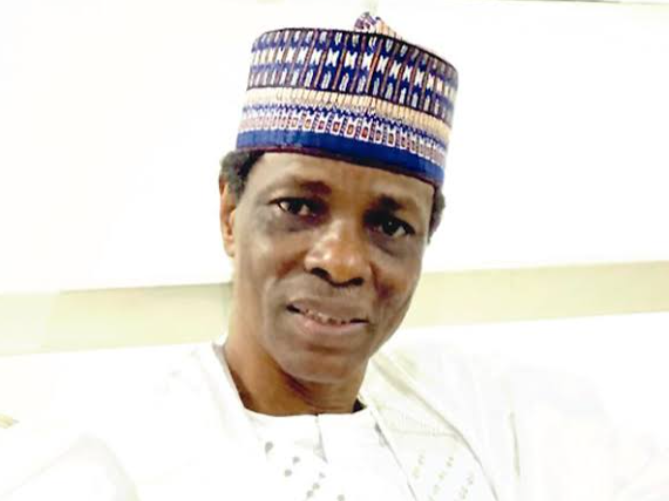
By Musa Ubandawaki
Former Deputy Governor of Sokoto State and former Minister of Water Resources, Alhaji Muktari Shagari, in this interview argues that Nigeria can no longer delay the creation of state police.
He speaks on why the country urgently needs decentralized policing, how funding should be structured, the safeguards required to prevent abuse, and the role state police could play in tackling banditry, kidnapping and other violent crimes across the federation among others.
There appears to be growing momentum in the National Assembly towards establishing state police. Beyond granting states policing powers, what critical safeguards must be included in the legislation to ensure success?
There has never been a more appropriate time in Nigeria’s history to establish state police than now. Across the country, insecurity has become a major concern despite the efforts of the Federal Government and the security agencies.
The reality is that our existing security institutions are overstretched. Banditry, kidnapping and other criminal activities have spread beyond the North-West and North-East to other regions of the country.
I strongly believe state police has become imperative. Members of the National Assembly must recognise their responsibility to enact laws that protect Nigerians. The proposed legislation must ensure professionalism, accountability and effective collaboration with federal security agencies. Above all, it must allow states to recruit personnel from local communities who understand the terrain, culture and security dynamics of their areas.
One of the major concerns is that governors could misuse state police for political purposes. How do you respond to such fears?
The bigger question is whether we should continue allowing Nigerians to be kidnapped, killed and terrorised while we focus on fears about what might happen in the future. Any governor who uses state police to intimidate political opponents would be acting outside constitutional provisions and democratic norms. Nigerians are politically conscious and would resist such abuse.
We cannot allow hypothetical concerns to delay a critical security reform. The priority now should be protecting lives and property. Safeguards can be built into the law to prevent misuse, but the establishment of state police should not be delayed.
Critics argue that many states already struggle to meet financial obligations. Can governors realistically fund state police?
Funding challenges are real, but they are not insurmountable. Security must be treated as the highest priority of government.
States already receive security votes and allocate resources for security-related activities. We must rethink how those resources are utilised. If governments can fund other programmes, they can certainly prioritize security.
The protection of citizens should come before every other consideration.
Should state police funding come solely from state governments or should there be federal support?
There must be a funding arrangement that guarantees sustainability and transparency.
While security votes can contribute, they may not be sufficient to cover all operational costs. Therefore, there should be synergy between the Federal Government and state governments.
My position is that funding mechanisms should include allocations directly linked to the Federation Account, ensuring that personnel salaries and operational requirements are adequately covered.
Many criminal groups possess sophisticated military grade weapons. How can state police effectively confront such threats?
Several state governments are already supporting security operations by procuring equipment for the military and conventional police formations.
At the same time, authorities must intensify efforts to identify and dismantle the networks supplying weapons to criminal groups. The Federal Government must take decisive action against those responsible for arms trafficking.
Another important advantage of state police is their ability to identify informants within local communities. Because officers will be recruited from the areas they serve, they are more likely to understand local dynamics and expose collaborators aiding criminal elements.
Public trust in law enforcement remains a challenge. Why would state police be different from existing policing structures?
The answer lies in recruitment, training and accountability. State police must recruit qualified and educated personnel. Officers should be properly trained to understand that their duty is to protect citizens, not harass them.
The law should contain clear disciplinary provisions for misconduct. There must also be public sensitisation programmes to foster mutual understanding between communities and security personnel.
If citizens and law enforcement officers work together, trust can be built. Community based policing has worked in the past because officers knew the people they served and communities saw them as partners rather than outsiders.
What measures should be taken to prevent the politicisation of state police?
Governors and political leaders must recognize that public institutions outlive individual administrations.
The legal framework must guarantee operational independence, professionalism and accountability. State police should be equipped and supported to perform their constitutional responsibilities, not serve as political instruments. Any attempt to politicise the institution would undermine its effectiveness and create unnecessary tensions.
Some analysts argue that state police alone cannot solve Nigeria’s security crisis. Do you agree?
Absolutely. State police should not be viewed as a replacement for the military, the police, intelligence agencies or other security institutions.
Rather, it should serve as a complementary structure. Effective security depends on cooperation, intelligence sharing and coordination among all agencies.
The military, police, intelligence services, vigilantes and community based security groups must work together. State police will strengthen this network by providing local knowledge and rapid response capabilities.
The key is synergy. When all security stakeholders collaborate effectively, Nigeria will be in a much stronger position to confront insecurity.
What message would you like to send to lawmakers currently considering the state police bill?
My message is simple: Nigerians are looking to the National Assembly for action.
The security situation demands urgent and bold reforms. Lawmakers should rise above partisan interests and pass legislation that strengthens security and protects citizens.
State police is not a luxury; it is becoming a necessity. The time for debate is gradually giving way to the time for action. Nigeria cannot afford further delays.
The post State police: We need constitutional safeguards against abuse —Shagari appeared first on Vanguard News.
www.vanguardngr.com

The National Chairman of the African Democratic Congress (ADC) has called on party members, supporters, and candidates on the platform of the party not to despair over the judgment delivered by Justice Peter Lifu of the Federal High Court, Abuja, which purportedly ordered the deregistration of the ADC and some other political parties.
This was disclosed by Kola Ologbondiyan, his Special Adviser on Media and Publicity.
Senator David Mark, in a swift reaction while receiving a delegation of the party’s candidates who paid him a visit in Abuja on Monday, described the judgment as “an arrow fired at the heart of Nigeria’s democracy,” assuring party faithful that the decision would be overturned by superior courts.
He recalled that the Court of Appeal had earlier ordered a stay of proceedings in the matter and adjourned further hearing to October 27, 2027.
He therefore questioned how a judgment could validly be delivered while the subsisting order of the appellate court remained in force.
“The judgment cannot stand. It will be set aside because it does not pass the test of law and due process. Our democracy must be protected from actions that seek to undermine the constitutional rights of political parties and the choices available to Nigerians,” he stated.
He urged ADC candidates and supporters across the country to remain calm, focused, and committed to the party’s mission, stressing that there was no cause for alarm.
“The ADC will be on the ballot in 2027. I assure all our candidates, members, and supporters that this temporary setback will be overcome through the judicial process. We remain resolute and confident in the rule of law,” he added.
Senator Mark further reaffirmed the party’s commitment to strengthening democratic institutions and providing Nigerians with a credible political alternative ahead of the 2027 general elections.
dailypost.ng
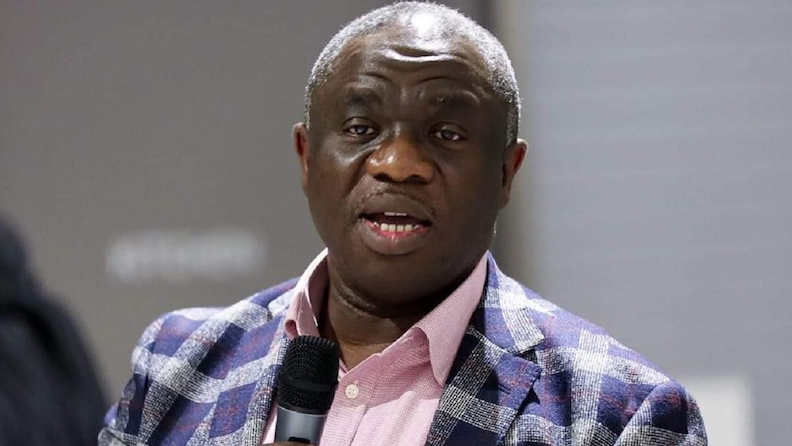
The Peoples Democratic Party, PDP, candidate for the Saturday, June 20, 2026, governorship election in Ekiti State, Dr Wole Oluyede, has symbolically shown the state Governor, Biodun Oyebanji of the All Progressives Congress (APC), who is seeking re-election, a “red card,” declaring that the governor would be voted out of office at the polls.
Oluyede made the declaration during the PDP’s grand finale governorship campaign rally held in Ado-Ekiti yesterday, where he expressed confidence in his chances of defeating the incumbent governor at the polls.
“I have given Oyebanji a red card today. In football, a red card means dismissal. Consequently, I have expelled him from the Government House and secured freedom for the people of Ekiti,” Oluyede said.
The PDP candidate maintained that he would emerge victorious in the election, insisting that many Ekiti residents were dissatisfied with the current administration.
“The people of Ekiti, whom I believe have been impoverished under the present administration, are ready to support me and vote for change. The June 20 election is not just about the PDP; it is about all Ekiti people who desire a better future,” he said.
Oluyede described the election as a “freedom fight” and urged eligible voters to participate actively in the electoral process and also protect their votes.
“Your vote is your power. Do not allow anyone to intimidate you. Arrive at your polling units early and ensure that the ballot boxes are empty before voting begins. After casting your votes, remain at the polling units and monitor the process until the votes are counted and recorded,” he said.
He encouraged voters to follow the electoral process through to the collation stage and expressed confidence that security agencies would provide adequate protection throughout the exercise.
Oluyede also advised voters not to sell their votes, stressing that the future of the state depended on the choices they would make in the election.
Oluyede questioned the impact of the federal allocations received by the Ekiti State Government in the last three and a half years under the current administration of Oyebanji.
According to him, the state deserves better infrastructure and development outcomes, considering the level of resources available to the government.
He urged residents to make informed decisions during the election and vote massively for the PDP for a better future for Ekiti State.
“If anyone offers you money, that is your personal decision. However, vote for the PDP by thumb-printing the Umbrella symbol on the ballot paper if you desire a better future for Ekiti State.
“Do not be deceived by fake news and propaganda. That is their stock-in-trade. Many stories and allegations may surface before election day, but you should ignore them. They have failed the people. God has made me the David who will defeat and humble their Goliath,” Oluyede added.
dailypost.ng
Politics
ADC Deregistration: ‘Mystery judgment recipe for national crisis in Nigeria’ — Timi Frank seeks Trump’s intervention

Timi Frank, former deputy national publicity secretary of the All Progressives Congress, APC, said the recent Abuja High Court judgment deregistering the African Democratic Congress and political parties is a recipe for an incoming national crisis nationwide.
Recall that Justice Peter Odo Lifu of the Federal High Abuja, in a ruling on Monday, had ordered the Independent National Electoral Commission to deregister the Democratic Congress, ADC, Accord Party, and others from participating in the 2027 general election.
The judgment had stirred concerns among Nigerians.
ADC, however, announced a plan to appeal the judgment.
Reacting to the judgment, Timi Frank, in a statement on Monday, said it was an attempt to eliminate major opposition platforms, noting that it could trigger a national crisis and undermine Nigeria’s democratic foundations.
He called on President Donald Trump of the United States and members of the international community to urgently intervene to preserve Nigeria’s multiparty democracy alive.
“The judgment came suddenly without prior notice to the parties involved. From the information available to us, it appeared that the judgment had been prepared elsewhere and simply delivered by the court,” he alleged.
“Nobody knew about it. There was no information and no briefing, even to the lawyers representing the parties. The judgment was given suddenly. It was something they plotted and cooked up to make it look legitimate without even notifying the parties involved,” Frank alleged.
He described the ruling as a “mystery judgment.” Frank alleged that it was orchestrated to achieve a predetermined political outcome.
“From the information we received, the judgment was written elsewhere and handed to the judge. The Office of the Attorney General wrote the script, and the judge merely played out that script,” he alleged.
Frank further alleged that the reported move to deregister opposition parties was part of a broader campaign to weaken political opposition and consolidate power.
“It must be noted that any attempt by President Bola Ahmed Tinubu and those working with him to deregister political parties, particularly major opposition parties such as the ADC, will give rise to a crisis that may be difficult to contain,” he said.
“The time has come for all lovers of democracy to rise in defense of the democratic gains Nigerians have fought hard to achieve. Silence in the face of these developments could have far-reaching consequences for the future of our country,” he said.
dailypost.ng


UFC Freedom 250 Salaries For Topuria, Gaethje, Pereira, Gane

2027: ADC will be on the ballot — David Mark assures

Ekiti guber: PDP’s Oluyede shows Oyebanji ‘red card,’ predicts victory in June 20 poll

Simi Sanya and Femi Dapson Are Now Legally Married and It Is Beautiful to See

FCT Area Council Election: Live results from polling units

Premier League Set-Piece Goals (2025/2026)
-
 Sports20 hours ago
FIFA Forced Into U-Turn on Spanish Press Conference Rule After Backlash
-
 Sports2 days ago
Uruguay Denied US Entry Day Before World Cup Opener
-
 Sports1 day ago
Judges’ Scorecards and Punch Stats For Ilia Topuria vs Justin Gaethje at UFC Freedom 250
-
 Sports13 hours ago
FIFA Ban Pre-Revolutionary Iran Flags From World Cup Stadiums
-
 Sports12 hours ago
US Denied World Cup Visa For Mum of Cape Verde Goalkeeper Vozinha
-
 Sports12 hours ago
Emma Hayes Praised For Using Drinks Break For Tactical Analysis
-
 Sports22 hours ago
Manuel Neuer Breaks World Cup Kit Rules in Germany vs Curacao
-
 Sports14 hours ago
Rafael van der Vaart Accused of Making Racist Japan Comments