
Business
Manufacturing leads non-oil tax revenue with N404bn VAT, CIT contribution in Q1’26



Nigeria’s manufacturing sector reinforced its role as a major contributor to government revenue in the first quarter of 2026 (Q1’26), generating N329.59 billion in Value Added Tax (VAT) and N74.48 billion in Company Income Tax (CIT), totalling N404.07 billion.
Data obtained from the National Bureau of Statistics (NBS) highlight the sector’s continued importance to Nigeria’s non-oil revenue base despite persistent economic and operating challenges facing manufacturers.
NBS data showed that VAT collections from manufacturing activities rose by 14.86 per cent year-on-year to N329.59 billion in Q1’26 from N286.95 billion recorded in the corresponding period of 2025. The amount also exceeded the sector’s quarterly VAT contributions throughout 2025, underlining the resilience of manufacturing output and consumption.
Manufacturing accounted for 29.75 per cent of the N1.11 trillion generated from local VAT payments during the quarter, making it the largest contributor among all sectors of the economy.
The sector’s VAT performance has remained strong over the past five quarters. Manufacturing generated N286.95 billion in VAT in Q1’25, rising to N297.68 billion in Q2’25 before moderating to N290.79 billion in Q3’25. Collections increased slightly to N292.12 billion in Q4’25 before climbing sharply to N329.59 billion in Q1’26.
Overall, manufacturing contributed N1.17 trillion in VAT revenue in 2025, compared with N803.53 billion in 2024, reflecting the sector’s growing significance in domestic revenue mobilisation.
NBS reported that total VAT collections in Q1’26 stood at N2.42 trillion, representing a 9.98 per cent increase from N2.20 trillion recorded in Q4’25 and a 17.06 per cent rise year-on-year. Manufacturing posted a quarter-on-quarter VAT growth rate of 12.82 per cent, ranking among the leading sectors driving the increase.
On the corporate tax front, manufacturing generated N74.48 billion in CIT during the quarter, accounting for 13.82 per cent of domestic CIT collections of N538.91 billion. The sector ranked third among the largest contributors to CIT revenue, behind financial and insurance activities and mining and quarrying.
However, CIT contributions from manufacturers declined significantly compared with N107.90 billion recorded in Q1’25 and N141.84 billion in Q4’25, reflecting pressure on corporate profitability amid rising production costs and a challenging business environment.
Overall CIT collections stood at N1.37 trillion in Q1’26, down 8.08 per cent from N1.49 trillion in the preceding quarter (Q4’25) and 31.05 per cent lower than the level recorded in Q1’25.
The contrasting performance of VAT and CIT suggests that while manufacturing activity and consumer demand remained relatively strong during the quarter, profitability within the sector came under pressure.
The post Manufacturing leads non-oil tax revenue with N404bn VAT, CIT contribution in Q1’26 appeared first on Vanguard News.


The Federal Government has announced significant progress in the implementation of the Nigeria Industrial Policy (NIP) 2025, recording over $380 million in strategic financing commitments within its first 90 days and advancing key initiatives aimed at boosting local manufacturing, exports, skills development and industrial infrastructure.
A 90-day progress report released by the Office of the Minister of State for Industry, Senator John Owan Enoh, stated that the policy has moved beyond its launch phase into active implementation, with measurable interventions underway across its eight strategic pillars.
The report revealed that, alongside securing more than $380 million in financing commitments, the ministry has advanced plans for a proposed N350 billion Micro, Small and Medium Enterprises (MSMEs) Development Fund. It has also activated five quick-win industrial programmes in partnership with the Bank of Industry (BoI).
The ministry stated that the early milestones underscore the Federal Government’s commitment to leveraging industrialisation as a catalyst for economic growth, job creation, investment attraction and value retention within the economy.
Speaking on the progress achieved so far, Enoh said: “The Nigeria Industrial Policy is not intended to remain a document on the shelf. It is a delivery instrument for productivity, competitiveness, investment, job creation and national value retention.
“In the first 90 days, we have focused on building the foundations required for implementation: financing, partnerships, value-chain activation, skills, infrastructure and accountability.”
A key area of focus during the implementation phase has been the promotion of local content and domestic production through the Federal Government’s Nigeria First Policy.
The ministry disclosed that it has commenced stakeholder engagements with the Bureau of Public Procurement (BPP), the National Automotive Design and Development Council (NADDC), the Manufacturers Association of Nigeria (MAN), the Association of Local Automotive Manufacturers, and stakeholders in the cotton, textile and garment value chains.
According to the ministry, the engagements are aimed at strengthening patronage of locally manufactured goods, deepening domestic value addition and ensuring compliance with local procurement policies across government institutions.
The post Nigeria Industrial Policy: FG secures $380m investment commitments in 90 days appeared first on Vanguard News.

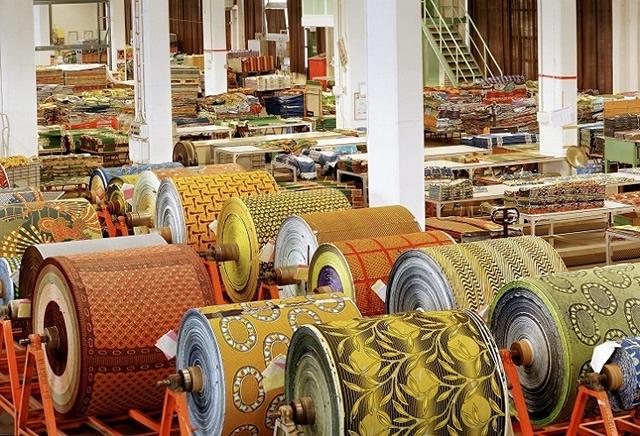
The Nigeria Textile Manufacturers Association (NTMA) has renewed its call for stronger government measures to protect the country’s textile industry from excessive imports, smuggling and unfair foreign competition.
Speaking on a programme on the Nigerian Television Authority (NTA), the Director-General of NTMA, Dr. Hamma Ali Kwajaffa, said the association has consistently advocated decisive trade policies, including restrictions on textile imports, rather than marginal tariff increases that offer little protection to local manufacturers.
His position aligns with recent resolutions by the Senate, which urged the Federal Government to impose a total ban on textile imports, enforce local content requirements and increase funding for the Bank of Industry (BoI) to support domestic production.
Kwajaffa lamented that unchecked importation, dumping of foreign products and widespread smuggling have devastated Nigeria’s textile sector, leading to the closure of many textile mills and significant job losses.
According to him, NTMA supports comprehensive policy interventions aimed at reviving the industry and restoring its competitiveness. He stressed that stricter border controls and effective enforcement of trade regulations are essential to curb the influx of cheap imported fabrics that undermine local producers.
However, he noted that import restrictions alone would not be sufficient to revive the sector. He identified several structural challenges that continue to hinder local manufacturers, including inadequate raw material supply, high production costs, poor infrastructure and insecurity.
“The collapse of local cotton production has left manufacturers struggling to source inputs,” he said, adding that government incentives, improved agricultural extension services and support for cotton farmers are critical to rebuilding the industry’s value chain.
Kwajaffa also highlighted the difficulty that manufacturers face in accessing affordable locally produced polyester, as well as the burden of high energy costs despite Nigeria’s status as a major crude oil producer.
He further noted that insecurity in farming communities has limited the ability of extension workers to support farmers, negatively affecting cotton yields and raw material availability for the textile industry.
The post Textile manufacturers seek stronger trade protection for local industry appeared first on Vanguard News.

By Efe Onodjae
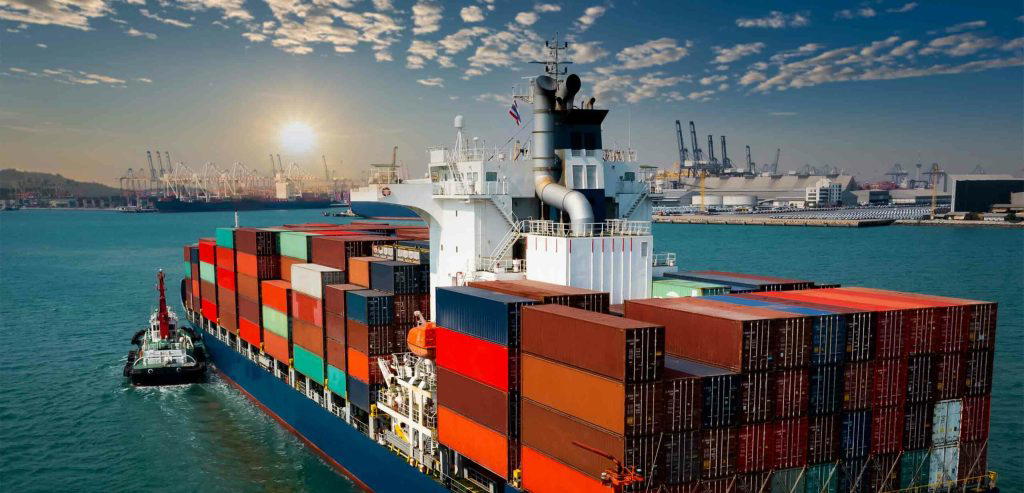
Importers and clearing agents have raised concerns over mounting demurrage costs at Nigerian seaports, blaming delays linked to the National Single Window (NSW) platform for prolonged cargo clearance processes.
The National President of the National Council of Managing Directors of Licensed Customs Agents, NCMDLCA, Lucky Amiwero, along with other customs agents, alleged that some importers now pay as much as N100,000 daily in demurrage to shipping companies and terminal operators while awaiting approvals from regulatory agencies.
Speaking with Vanguard, Amiwero described the platform as ineffective, arguing that it has complicated rather than streamlined port operations.
According to him, delays in obtaining approvals from agencies such as the National Agency for Food and Drug Administration and Control (NAFDAC) and the Standards Organisation of Nigeria (SON) have worsened congestion and increased the cost of doing business.
He argued that the current structure of the National Single Window falls short of the globally accepted model of a true single-window platform.
“The National Single Window is not effective. What we have now is more of a multiple-window system that duplicates Customs functions,” he said.
“A proper single window should involve single administration, single transaction, and single delivery. Once processes are harmonised at the backend, cargo clearance should be seamless.
“But importers are still required to interact separately with agencies like NAFDAC and SON. That defeats the purpose of a single-window system.”
Amiwero further alleged that the Nigerian Revenue Service, which is driving the initiative, lacks the expertise required for customs and import procedures, insisting that tax administration and customs operations should remain separate.
According to him, consignments are often trapped at terminals for weeks due to delays in approvals and documentation processing, leading to huge financial losses for importers.
“Some importers are paying close to N100,000 daily in demurrage because their cargoes remain uncleared for two or three weeks. Government needs to review the system and properly harmonise the process,” he added.
Responding to the allegations, the Director of Communications for NSW, Tola Fakolade, said criticisms of the platform largely stem from resistance to stricter compliance procedures introduced under the system.
He clarified that the first phase of the initiative was never designed to guarantee one-day approvals for all regulatory processes.
“What we promised was a unified entry point where importers and stakeholders can process documentation seamlessly without moving from one agency office to another,” he said.
Fakolade acknowledged existing implementation challenges, particularly inherited backlogs within some agencies, but noted that efforts were ongoing to resolve them.
“For NAFDAC specifically, there was already a backlog before the National Single Window went live, and that accounts for some of the delays currently being experienced. However, the agency is working to clear the pending applications,” he added.
The post Importers pay N100,000 daily demurrage over NSW delays — Customs agents appeared first on Vanguard News.


Iran Leave Written Note in Los Angeles Stadium Dressing Room

2027: We’ll teach Makinde political lesson – Fayose

US Open Golf 2026 Salaries

Simi Sanya and Femi Dapson Are Now Legally Married and It Is Beautiful to See

FCT Area Council Election: Live results from polling units

Premier League Set-Piece Goals (2025/2026)
-
 Sports1 day ago
World Cup Fans Praise Alexander Isak’s Display in Netherlands 5-1 Sweden
-
 Sports2 days ago
Ally McCoist Confused By Achraf Hakimi Boos vs Scotland
-
 Sports2 days ago
Haiti and Turkiye Eliminated Early Due To FIFA Rule Change
-
 Sports2 days ago
Ronaldinho, 46, Signs Contract With Italian Third Tier Side Ravenna
-
 Sports1 day ago
Mark Hughes’ Son, Alex, Passes Away Aged 38
-
 Sports2 days ago
World Cup: Lionel Messi Avoided Red Card For Covering His Mouth
-
 Sports23 hours ago
EFL Club Reacts as Fans Banned From Taking England Flag Into World Cup Stadiums
-
 Sports2 days ago
Joe Hart Suggests Goalkeeper Mistakes Could Be Down to Ball