
Sports
The Reason Why Footballers Cut Holes in Their Socks


An increasing number of professional footballers have been playing with deliberately cut holes in their socks. It’s become something of a growing trend in recent years, although not everyone is convinced it should be allowed.
Take legendary manager Jose Mourinho, for example. In February 2023, the Portuguese tactician criticised footballers who cut holes in their socks via an unexpected post on Instagram
The former Chelsea and Real Madrid boss, who is widely regarded as one of the greatest managers in football history, posted five black and white photos of unidentified players wearing ripped socks.He wrote:
“Beautiful socks for the Beautiful Game… Approved by the football authorities.”

More and more high-profile players appear to be following the new trend. Real Madrid and England midfielder Jude Bellingham has been seen playing with ripped socks for his country, including during the Qatar World Cup and Euro 2024, and while representing his former club Borussia Dortmund.
Bellingham’s international teammatem Bukayo Saka, has also been spotted playing with ripped socks at the aforementioned major tournaments.
Brazilian superstar Neymar has also played with holes in his socks, as has former Manchester City star Kyle Walker. The number of holes cut in the socks varies from player to player. While some opt for one or two holes, others (like Walker) have played with multiple holes cut through the back of their socks.
One of the very first footballers spotted playing with ripped socks was former England full-back Danny Rose during the 2018 World Cup finals in Russia. Needless to say, the sight of Rose’s socks sparked plenty of confusion and bemusement from football fans on social media at the time.
Why Players Cut Holes in Their Socks

It’s certainly an unusual look, isn’t it? But tearing their socks apart prior to kick-off must have benefits – either real or psychological – for players, right? Otherwise, they surely wouldn’t do it.
Players are generally cutting holes in their socks to reduce the pressure on the calf muscles, which are often restricted due to the garment’s tightness.
Footballers with bulging leg muscles find socks particularly restrictive, resulting in effective blood flow and circulation becoming an issue, as well as breathability. Players are subsequently avoiding this problem by cutting holes in their socks.
Additionally, a Premier League club’s senior member of medical staff confirmed to talkSPORT: “Many players feel the current socks are too tight and compressive on their legs, and some of them relate this to getting cramp in their calves.”
That said, the medical expert suggested that the theory behind the slightly odd development in football kit is not backed up by ‘hard evidence’. As a result, they claimed that it could merely be a fashion statement that has picked up traction over the years.
“There isn’t any hard evidence of this, though. It’s more to do with how they can feel uncomfortable. I think it then becomes more of a routine or fashion, as they’ve done it before and see other players do it. But the kit suppliers prefer they don’t, as it alters the look of the socks.
“Some kit suppliers have adapted their socks to try and change the level of compression around the calf area,” the unnamed top flight staff member continued. “They’ll have designers looking at tweaks like this as they devise kits for the next season.”

Former Valencia player Ezequiel Garay was once ordered to change his socks after a La Liga referee decided his ripped pair did not befit the sporting dress code. But what do the laws of the game actually say when it comes to correct attire?
There’s nothing in the Football Association’s Laws of the Game stating that footballers must only wear socks without holes. Socks are listed among the basic compulsory equipment of every player, along with a jersey or shirt; shorts or truck suit trousers; shinguards, and footwear.
The referee has the power to ask a player to leave the playing area to correct his equipment if there are any infringements of this law.
⚽
World Cup History Quiz
You scored
out of 20
Calls for a Ban

Like Mourinho, TV host Richard Keys, who is best remembered for his long spell with Sky Sports in the UK, isn’t a fan of footballers cutting holes in their socks.
In fact, during the Premier League clash between Chelsea and Manchester City, he called for a ban via X (formerly Twitter).
“Enough of this nonsense,” Keys wrote. “There’s no need for it. The Spanish have outlawed it (although Bellingham gets away with it). It’s time we did.” While the rules may eventually change, Premier League footballers are currently free to continue cutting their socks before games.
Gary Neville: ‘I’m Not Having It’

In an episode of Stick to Football, Gary Neville had his say on the matter and said he didn’t believe the practice was necessary.
Neville ranted: “The one where they cut the actual holes in the back of their socks, which actually I think looks ugly to start with, doesn’t make you look smart going onto a pitch. There was a thing at United – tuck your shirt in, make it look right. Tuck your shirt in and pull your socks up was actually a thing at United.
“I’m asking this question again. Why do players take the holes out of the back of their socks? Can I tell you why I’m a little bit skeptical about it… because in 2024, they have about 400 pairs of boots, they have everything made to measure. I’m not having that Nike or a sponsor of a kit don’t make them a slightly bigger pair of socks. I don’t get it.”

Every now and then, a fan trend from the World Cup or European Championship goes viral, spreading further than the stadiums it started in, and Norway’s “Viking Row” is one of the best recent examples.
It’s the sort of celebration that sums up exactly why major tournaments tend to produce these moments in the first place; simple enough for anyone to join in with, yet tied closely enough to a country’s identity that it ends up meaning far more than the average football song.
Performed by the country’s supporters, it made its way onto escalators, into city squares, and even inside Norway’s own parliament during the 2026 World Cup, turning a routine match day tradition into a repetitively viral moment.
What is the ‘Viking Row’ in Soccer?

The Viking Row is a synchronised chant and movement performed by groups of fans, designed to mimic the action of rowing a longship.
It starts with supporters sitting down together, before building into a rhythmic chant of the word “ro,” which simply translates to “row.”
As the chant builds, fans begin moving their arms back and forth in unison, exactly as if they were pulling on oars.
The motion gradually speeds up, before the whole group rises together at the climax, arms thrown up, roaring in celebration. It can take fans a little while to get fully in sync, but once it clicks, it’s an incredible sight.
It’s not limited to the stands either. Fans have been known to take the routine outside the stadium, performing it on moving escalators, in train stations, and on city streets.
Origin of the ‘Viking Row’ Trend

The tradition is taken from Norway’s seafaring history, with the rowing motion inspired by the longships that once carried Viking warriors and explorers across the seas centuries ago. It ties their support of the national side directly back to a piece of national heritage Norwegians have long taken pride in.
It’s also not the first time a national fanbase has turned a slice of cultural history into a football chant. Iceland did something similar with their famous “Viking Clap” at Euro 2016. A slow, building clap performed above the head became a viral sensation. Dutch fans also have an equally viral trend. Their simple dance, from left to right to the song Snollebollekes, have seen crowds of more than 25,000 participate in the street. The Viking Row follows a similar idea, giving supporters something simple and easy to join in with.

Brazil & Man Utd star Matheus Cunha’s ‘Samba Surfer’ Celebration Explained
It’s a rather unique celebration to say the least.
Reaction to the ‘Viking Row’ at World Cup 2026

The trend went well beyond football stadiums and areas close by. Norwegian politicians even paused proceedings to perform the row inside parliament itself, with the chamber’s speaker setting the rhythm before everyone pulled on their imaginary oars. Clips of the moment spread quickly online, with people amused to see politicians briefly swap debate for a bit of choreography.
Beyond the politicians and the impromptu street performances, the reaction online was just as telling. Clips of the celebration racked up millions of views across social media, with supporters of other countries admitting they wished their own fanbase had something similar. Pundits and former players also weighed in during broadcasts, often praising the tradition as one of the more original pieces of fan culture, rather than just another viral clip that fades within days.
More from GIVEMESPORT
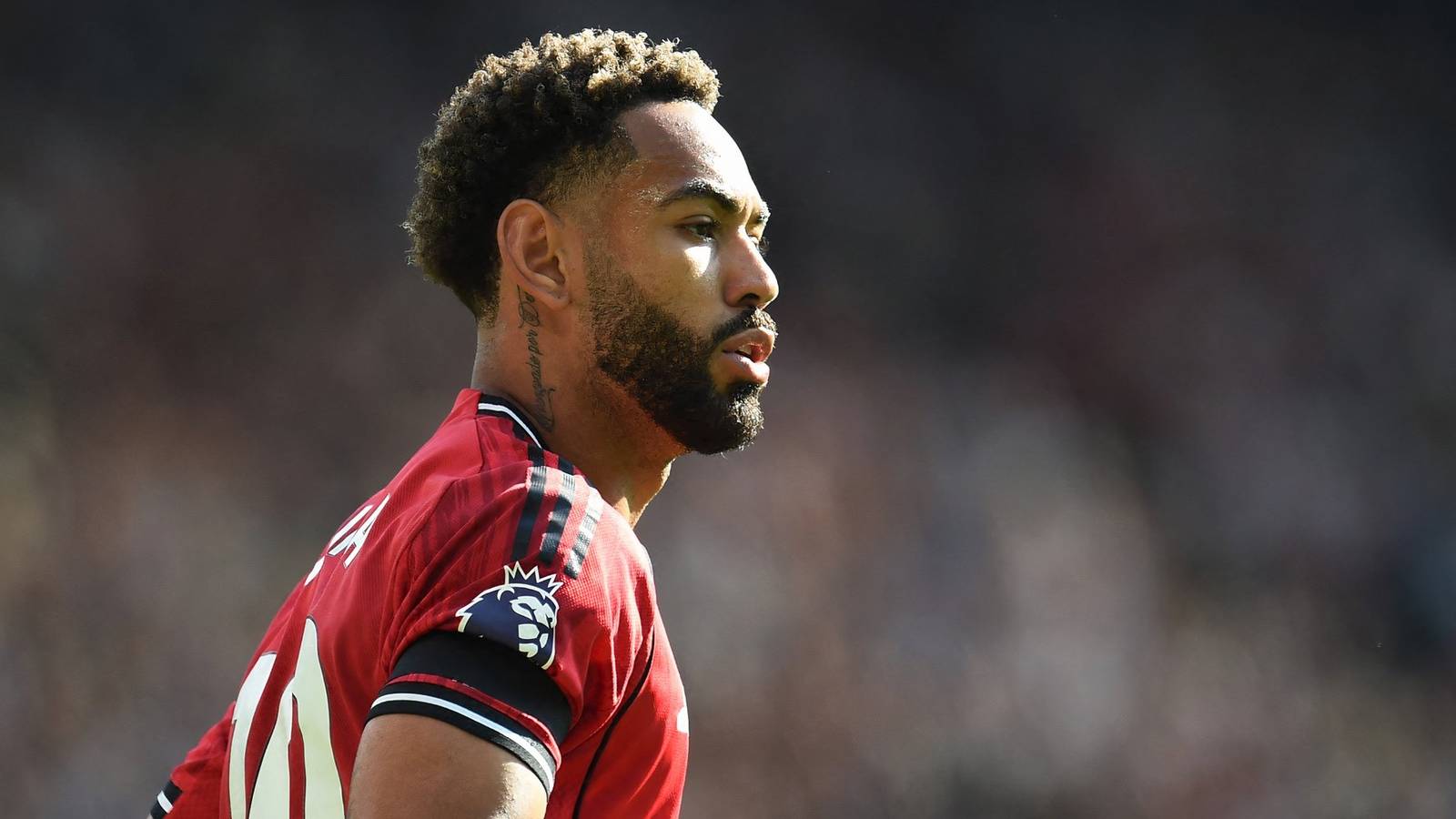
Whenever Matheus Cunha finds the net, be that for Manchester United or Brazil, one thing is near enough guaranteed to happen: the surfing celebration.
The forward marks his goals by crouching low and riding an imaginary wave in front of the cameras. Coming out for the first time in 2025 when playing for Wolverhampton Wanderers in the Premier League, it’s now a routine that has become one of the more recognisable celebrations in football, and has even made it as far as the World Cup.
Behind the playful gesture, though, is a story rooted in something much more personal than most fans probably realise, tying back to where Cunha grew up and how he switches off from the pressures of football.
What is Matheus Cunha’s Surfing Celebration?

The celebration follows a familiar pattern every time. Cunha drops to the ground as if diving onto a surfboard, paddles briefly with both arms, then pops up to his feet and rides an imaginary wave, exactly as a surfer would when catching one out at sea.
Watch: Matheus Cunha explains his surfing celebration:
What began as a fairly simple gesture of pretending to balance on a surfboard has turned into something closer to a full performance, even if it only lasts a handful of seconds. It’s become one of the most talked-about parts of his game, regularly clipped and shared across social media every time he finds the net.

Vinicius Jr Reveals Why He Really Did the Crying Celebration in Man City 1-2 Real Madrid
Vinicius Jr is never shy to show his emotions on the football pitch, and that’s exactly what he did in Real Madrid’s win vs Man City.
What is Matheus Cunha’s Surfing Celebration About?

Speaking about the celebration, Cunha made it clear that it isn’t just for show.
“Now I’m considered a surfer guy.”
He explained that the sport is a part of his life rather than a gimmick invented for the cameras.
He’s detailed where the love of surfing comes from, growing up in Joao Pessoa in northeastern Brazil before learning to ride waves in Baia Formosa, the hometown of his close friend Italo Ferreira, the 2019 World Surf League champion and Tokyo 2020 Olympic gold medallist.
“Surfing has become a big part of my life, a way to relax,” Cunha said, adding that he follows the sport almost as closely as football itself and considers Ferreira one of his best friends.
For anyone new to football and unfamiliar with the gesture, it’s essentially Cunha bringing a piece of home onto the pitch, using surfing as both an escape from the pressures of professional sport and a way to express his personality once the ball hits the net.
It also explains why this celebration carries far more weight for him than a standard goal celebration would, given how much time he actually spends on the sport away from football, to the point where he’s even sampled it in the cold waters of Bristol.
Does Matheus Cunha Have Other Celebrations?

The surfing routine isn’t the only trick up Cunha’s sleeve, even if it’s become the one most associated with him. He’s also been known to mix in more traditional celebrations, depending on the occasion, be them solo celebrations or with teammates.
Earlier in his time with the Red Devils, Cunha experimented with a handful of other gestures, like a point to the sky, kneeslides and kisses blown in the direction of adoring fans, before settling on the surfing routine as his go-to celebration, and his teammates have got in on the act too, with multiple United and Brazil players performing it with him.
It’s now reached the point where fans actively expect to see it whenever he scores, adding extra anticipation to his goals beyond just the strike itself, regardless of the competition or occasion.

Transfer windows are important periods in the football calendar and people at every top club in the world have the relevant dates in the back of their minds at all times.
From a director of football seeking to rejuvenate the panel to a manager who needs to plug a gap mid-way through a season or an unsettled player mulling over their future with an eager agent, they are all keenly aware of the fact that transfers can only happen during very specific timeframes. Fans, too, look forward to the window with a mixture of anticipation and trepidation, while transfer news and rumours swirl mercurially through their orbit day by day.
They are technically known as transfer registration periods – basically, the windows when clubs can officially register new recruits – and they occur at two different times during a season, depending on the country. Broadly speaking, they tend to be referred to as the summer transfer window and the winter transfer window.
Here, GIVEMESPORT outlines the various upcoming summer 2026 transfer window dates for your convenience.
When the Summer 2026 Transfer Window Opens & Closes
Premier League, Ligue 1, Serie A, La Liga and Bundesliga

|
League |
Window Opens |
Window Closes |
|---|---|---|
|
Premier League |
June 15, 2026 |
September 1, 2026 |
|
Ligue 1 |
June 15, 2026 |
September 1, 2026 |
|
Serie A |
June 29, 2026 |
September 1, 2026 |
|
La Liga |
July 1, 2026 |
September 1, 2026 |
|
Bundesliga |
July 1, 2026 |
September 1, 2026 |
There is relative uniformity among the top European leagues when it comes to transfer windows, but there are variations to note, which can be seen in the table above.
England’s Premier League and the French Ligue 1 each saw their summer 2026 transfer window open on June 15, 2026, while the transfer window for Serie A clubs in Italy opens slightly later on June 29. La Liga and Bundesliga clubs will only be able to transfer players from July 1, 2026.
Despite the fact that the leagues have a number of different transfer window opening dates, they will all have to conclude their business by September 1, 2026, with windows closing for all of them at that date.
All Completed Man Utd Transfers in 2026/27
Every new Manchester United signing and departure in the 2026/26 season so far
MLS and Liga MX

|
League |
Window Opens |
Window Closes |
|---|---|---|
|
MLS |
July 13, 2026 |
September 2, 2026 |
|
Liga MX |
July 2, 2026 |
September 11, 2026 |
|
Canadian Premier League |
July 17, 2026 |
August 20, 2026 |
MLS adheres to a different calendar than its European counterparts and thus the competition is in the middle of its 2026 season and looking towards its second transfer window, which opens on July 13, 2026 and closes on September 2, 2026.
To the south, Liga MX‘s summer transfer window will open on July 2, 2026 and close on September 11, 2026. For Canadian Premier League clubs, the transfer window opens on July 17 and closes relatively early on August 20.
Saudi Pro League, Eredivisie & Select Competitions

|
League |
Window Opens |
Window Closes |
|---|---|---|
|
Saudi Pro League |
July 22, 2026 |
October 12, 2026 |
|
Eredivisie |
June 22, 2026 |
September 2, 2026 |
|
Liga Portugal |
July 1, 2026 |
September 15, 2026 |
|
Scottish Premiership |
June 15, 2026 |
August 31, 2026 |
|
Turkish Super Lig |
June 22, 2026 |
September 4, 2026 |
|
Argentine Liga Profesional |
July 9, 2026 |
September 2, 2026 |
|
Brazilian Serie A |
July 20, 2026 |
September 11, 2026 |
The Saudi Pro League has been a destination for some of the biggest names in football ever since Cristiano Ronaldo signed for Al Nassr in 2023. With many clubs still boasting formidable buying power, it remains an intriguing potential destination for players seeking to boost their earnings.
This summer the Saudi Pro League’s transfer window opens on July 22 and closes on October 12 – meaning the deadline extends way beyond the one observed by most European leagues.
Dates taken from FIFA’s official transfer window calendar – correct as of 22/06/26

What Is A Premier League Transfer Deadline Day Deal Sheet?
A closer look at what a transfer deadline day deal sheet actually is


6 out of 7: How APC swept Ekiti gov, 5 bye-elections, lost Rivers to PDP
Viral World Cup Trend Explained

2027: Abia APC denies giving guber ticket to non-party member

Simi Sanya and Femi Dapson Are Now Legally Married and It Is Beautiful to See

FCT Area Council Election: Live results from polling units

Premier League Set-Piece Goals (2025/2026)
-
 Sports2 days ago
World Cup Fans Praise Alexander Isak’s Display in Netherlands 5-1 Sweden
-
 Sports2 days ago
Haiti and Turkiye Eliminated Early Due To FIFA Rule Change
-
 Sports2 days ago
Mark Hughes’ Son, Alex, Passes Away Aged 38
-
 Sports1 day ago
Fabio Capello Named 4 Players in Football History Who Are a Level Above Cristiano Ronaldo
-
 Sports1 day ago
EFL Club Reacts as Fans Banned From Taking England Flag Into World Cup Stadiums
-
 Sports2 days ago
World Cup: Lionel Messi Avoided Red Card For Covering His Mouth
-
 Sports1 day ago
Jurgen Klopp Slams Rafael van der Vaart For Virgil van Dijk Comments
-
 Sports1 day ago
Jeremy Doku Slammed Over Plan to Leave World Cup to Attend Birth of His Child