
Sports
World Cup Group Stage Tie-Breakers Explained


With the 2026 World Cup housing more teams than ever before, the inflated competition brings more games than ever and new situations to consider.
That is particularly evident in the group stages, where the complications surrounding the new format means an extra knockout round and the added ‘best third-placed teams’ section.
Plus, there’s also confusion when it comes to group ties. How does it work? What metric is used to separate teams? Don’t worry: we’ve got all the answers.
World Cup Group Stage Tie-Breakers

The most important question is: what happens if teams finish level on points? As we know, the end of the group stage is determined by points. However, where two or more teams are tied on points, tiebreakers come into effect and are applied until a winner is found. This takes on greater importance due to the extension of the format and the best third-placed team addition.
For the 2026 competition, the new addition is that the head-to-head record now comes before overall goal difference as the first tiebreaker. However, for the third-placed teams all competing against each other, goal difference is the key factor in progressing to the Last 32.
If teams were to tie both head-to-head and overall goal difference, they would then move down the list of tiebreakers — of which there are eight in total — to find the winner. Here’s the full list:
|
World Cup Tie-Breaker Rules |
|
|---|---|
|
Step 1 |
Head-to-head points |
|
Step 2 |
Head-to-head goal difference |
|
Step 3 |
Head-to-head goals scored |
|
Step 4 |
Overall goal difference |
|
Step 5 |
Overall goals scored |
|
Step 6 |
Team conduct score |
|
Step 7 |
FIFA ranking |
History of World Cup Tie-Breakers

Over the history of the World Cup, the tournament has evolved over time to include more teams and different formats. For example, the first two editions in 1934 and 1938 had no group stages.
In fact, the first time tie-breakers were used was in 1958. Playoff matches were used alongside goal average (an outdated concept) to decide which teams would advance from the group stages. Goal difference wasn’t introduced until 1970; the same tournament that utilised drawing lots.
Only once was drawing lots used. In 1990, the Netherlands and Ireland were inseparable on every conceivable metric — goals, goal difference and head-to-head — and drawing lots was needed to decide who finished second and third. FIFA’s Sepp Blatter oversaw a live, televised draw in which Ireland finished second but Oranje progressed as the best third-placed side.
You scored
out of 20
1994 saw the introduction of head-to-head as a deciding factor — and the most extraordinary group in World Cup history. Group E saw Mexico, Ireland, Italy and Norway all tied on four points as well as having identical goal difference across the board.
Mexico topped the group by virtue of scoring the most goals. Ireland and Italy each netted twice and were separated due to the Irish one-nil victory, but the Azzurri progressed as the best third-placed team. Norway were eliminated due to the fact that they netted just once.
After that, the next notable mention of tiebreakers was the usage of the ‘fair play’ ruling that was demonstrated for the first time in the 2018 World Cup in Russia. Japan advanced over Senegal on fair play after both teams were level on points, goal difference, goals and head-to-head. The Asian side progressed due to them recording lower cards, minus four versus the six that the African side managed. 2022 also saw the removal of drawing lots as the final tiebreaker.
Returning to the present, the addition of head-to-head as primary is important given the nature of the extended competition and perceived disparity between teams. Take Germany‘s 7-1 win over Curaçao as a prime example; rewarding teams for winning matches matters most, rather than totaling dominant victories against weaker opponents.
World Cup on GIVEMESPORT

A new update has emerged on the health of Ilia Topuria following his defeat in the main event of UFC Freedom 250, as Justin Gaethje finally captured the UFC Lightweight Championship.
It was a brutal fight on the grounds of the White House with ‘The Highlight’ inflicting a severe amount of damage on Topuria’s face. By the end of the fight, Gaethje’s blows had shut both of the adopted Spaniard’s eyes, which led to the fight was stopped between the fourth and fifth rounds.
The result was shocking, especially as Topuria was undefeated heading into the bout. He had previously finished Alexander Volkanovski, Max Holloway and Charles Oliveria in devastating fashion. However, this time, he was the one on the receiving end of a barrage of attacks.
Ilia Topuria’s Trainer Provides Update on Physical Condition After UFC White House

While Topuria did have some bright moments during the fight, mostly in the second round as his work to the body continued to add up, it wasn’t enough to contain Gaethje’s relentless assault.
The fight was almost stopped after the third round due to the damage to Topuria’s eyes. By the end of the fourth, it was too much. Ilia’s post-fight medical report was later leaked to Spanish media, confirming that he had sustained broken orbital bones in both eyes.
Given the severity of his injuries, there has been plenty of speculation over whether ‘El Matador’ will ever be the same again. Although the answer to that question won’t truly be known until he steps into the Octagon, comments shared by Topuria’s physical trainer, Jesus Gallo, indicate that he is healing well and could be on course to make a much earlier return than expected.
In an interview with SerEbro EnlosDeportes, Gallo said, “Day by day, he already looks like a completely different person… He looks like he wasn’t even in a fight, honestly. All the swelling in his face has gone down, every type of bruising he had.”
Topuria’s trainer went on to explain how long it might be until his man fights again:
“After that, for him to start wrestling again, to start doing things again, it’ll take a little while for it to really solidify there. I think we’re talking about at least 2 to 3 months, easily. If you saw us in a rematch or in a fight, it would be toward the end of the year, December. Who knows? We’ll see,” he explained.
What’s Next For Ilia Topuria After UFC White House Defeat?

Topuria has already challenged Gaethje to a rematch. The question is whether the UFC will opt for that route, as there are other contenders champing at the bit to fight for the title.
Arman Tsarukyan has been the number one contender at lightweight for some time and many think he deserves the next title shot. Tsarukyan hasn’t been in the Octagon since last November, when he made easy work of Dan Hooker.
The highly anticipated bout with Liverpool’s Paddy Pimblett could also be a possibility for Ilia on his return. Pimblett takes on Benoit Saint Denis at UFC 329, a win for the Scouser could easily bring him back into top five contention, and land him a bout with Topuria.
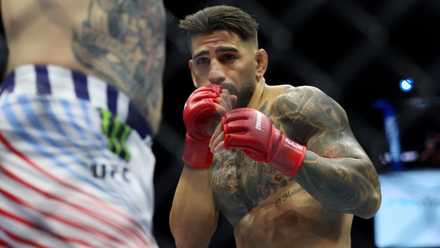
Ilia Topuria: ‘Real Reason’ He Lost to Justin Gaethje at UFC White House
Topuria lost his undefeated record on the South Lawn…

It’s remarkable that Lionel Messi and Cristiano Ronaldo are still playing at the World Cup aged 39 and 41, respectively, never mind scoring goals.
Messi currently leads the race for the 2026 World Cup Golden Boot award after scoring five goals in Argentina’s opening two matches of this summer’s tournament, while Ronaldo silenced his critics with two goals against Uzbekistan after drawing a blank against DR Congo.
Cristiano has now scored 145 goals in 230 appearances for Portugal, while Messi has 122 goals in 201 matches for Argentina and recently bagged his 61st career hat-trick. Extraordinary numbers from two players who will always be part of greatest footballer of all time debates.
It’s strange to think that Messi would have been retired from international football for a full decade by now without the pleas from the Argentine public and his teammates.
After Argentina lost the 2016 Copa America final – the fourth major final La Albiceleste had lost in the space of nine years – a devastated Messi, who missed a penalty in the shootout against Chile, announced his retirement.

“For me, the national team is over,” Messi, who was seen in tears after losing the final, told reporters. “I’ve done all I can. It hurts not to be a champion.”
Aged 29 at the time, and with 113 international appearances to his name, Messi added: “It’s been four finals, I tried. It was the thing I wanted the most, but I couldn’t get it, so I think it’s over.
“I think this is best for everyone. First of all for me, then for everyone.
“I think there’s a lot of people who want this, who obviously are not satisfied, as we are not satisfied reaching a final and not winning it.
“It’s very hard, but the decision is taken. Now I will not try more and there will be no going back.”
⚽
World Cup History Quiz
You scored
out of 20
Ronaldo’s Reaction to Messi’s Retirement

After hearing Messi’s emotional reaction to losing, Ronaldo – who was on the verge of winning Euro 2016 with Portugal – offered his view on his long-term rival’s shock decision.
“Messi has taken a tough decision and people should understand,” Ronaldo told Mundo Deportivo, per Sky Sports.
“He is not accustomed to defeats and disappointments, not even finishing second. Missing a penalty does not make you a bad player.
“It hurts to see Messi in tears and I hope he returns to his country, because he needs it.”
Ronaldo, perhaps the one player on the planet who could truly emphatise with Messi given his own global superstar status, admitted it ‘hurt’ to see Messi in tears – despite the fact they were battling for supremacy week-in, week-out with Real Madrid and Barcelona in La Liga at the time.
While Messi’s absence would have enhanced his and Portugal’s chances of success on the international stage over the next 10 years, Ronaldo made it clear that he preferred it if his rival reversed his decision.

The group stage of the 2026 World Cup is almost over, and there has already been a surfeit of talking points to whet the appetite of football fans across the globe. Away from the political tensions that have defined the tournament off the pitch, several teams have emerged as early favourites for glory.
Argentina look a safe bet to go far again after winning it under Lionel Messi’s guidance in 2022, while France’s attacking play has also seen them maintain a 100% start this summer with real authority. Meanwhile, Morocco, the USA and Japan have emerged as genuine dark horses, showing enough resilience and quality to suggest deep runs, while others have already fallen by the wayside, including Haiti and Tunisia.
The current state of England remains unclear, having made a statement of intent with a 4-2 win over Croatia before a damp squib against Ghana left them winless in their second match for a fourth straight tournament. But what about the players themselves within those teams? The standout performers so far have been ranked based on their average WhoScored rating.
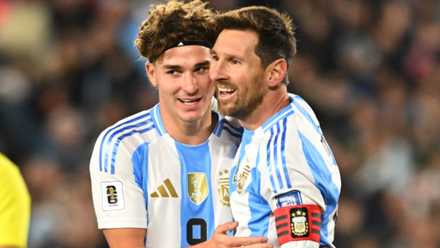
2026 World Cup Golden Boot: 17 Top Goalscorers Predicted By AI
Lionel Messi, Cristiano Ronaldo, Kylian Mbappe and Harry Kane are all expected to finish among the top goalscorers in this summer’s tournament.
30-21

Kicking things off is Premier League star Daniel Munoz, whose two goals from right-back for Colombia earn him an average rating of 7.70. Alexi Lalas placed the South American underdogs above Argentina in his controversial World Cup Power Rankings ahead of the tournament, but they had to squeeze past debutants DR Congo in their first match before conceding to Uzbekistan in their second, resulting in Munoz’s ceiling being lower than others on this list.
Keito Nakamura, along with Paraguay duo Julio Enciso and Matías Galarza, follow within 0.02 points, while Pedri – despite being considered among the top three midfielders in the world – sits down in 26th. That could be reflective of Spain’s lack of control in the engine room when the pressure rose in a 0-0 draw against Cape Verde, though the fact Matheus Cunha’s three goals only earn him one place higher is indicative of the Barcelona man’s ability to impress without necessarily dominating headlines.
In 24th is Viktor Gyokeres, having scored and assisted once so far. He is narrowly behind Canada’s Nathan Saliba, Algeria’s Nadhir Benbouali, and Portugal defender Ruben Dias, whose pass success stands at an incredible 98.4% so far.
|
30 Best Players at 2026 World Cup Based on Stats (30-21) |
||
|---|---|---|
|
Rank |
Player (country) |
Rating |
|
30. |
Daniel Munoz (Colombia) |
7.70 |
|
29. |
Keito Nakamura (Japan) |
7.71 |
|
28. |
Julio Enciso (Paraguay) |
7.71 |
|
27. |
Matias Galarzo (Paraguay) |
7.72 |
|
26. |
Pedri (Spain) |
7.74 |
|
25. |
Matheus Cunha (Brazil) |
7.75 |
|
24. |
Viktor Gyokeres (Sweden) |
7.77 |
|
23. |
Nathan Saliba (Canada) |
7.80 |
|
22. |
Nadhir Benbouali (Algeria) |
7.80 |
|
21. |
Ruben Dias (Portugal) |
7.82 |
20-11

Two USA players feature in this section after the Stars and Stripes managed to win back-to-back World Cup matches for just the second time in their history, and the first since 1930. Christian Pulisic’s dictatorial performance against Paraguay earned him an 8.04 rating before an injury ruled him out of Mauricio Pochettino’s next two matches, while Alex Freeman (7.85) has won more aerial duels than anyone on this list with five, having also kept a clean sheet and contributed to two goals.
Maxi Araujo of Uruguay, and Japanese ace Ko Itakura sit either side of him in 20th and 18th respectively. Achraf Hakimi, who has created 11 big chances so far this summer, then follows after his goal and assist against Haiti in their final match spared Morocco plenty of blushes, while Mikel Oyarzabal was boosted by Lamine Yamal’s return in Spain’s second match to score twice and register another assist in a cruising victory over Saudi Arabia.
Manchester United captain Bruno Fernandes was among those to be viciously trolled on social media after Portugal’s 1-1 draw with DR Congo in their opener, with many Cristiano Ronaldo fans infuriated by what they felt was a deliberate decision not to pass to him. In the second match, however, all was forgiven when he set up Portugal’s opener, placing him just behind Alexander Isak on this list, as Liverpool fans dream of a return to full sharpness for their British transfer fee record signing.
|
30 Best Players at 2026 World Cup Based on Stats (20-11) |
||
|---|---|---|
|
Rank |
Player (country) |
Rating |
|
20. |
Maxi Araujo (Uruguay) |
7.84 |
|
19. |
Alex Freeman (USA) |
7.85 |
|
18. |
Ko Itakura (Japan) |
7.86 |
|
17. |
Achraf Hakimi (Morocco) |
7.87 |
|
16. |
Mikel Oyarzabal (Spain) |
7.90 |
|
15. |
Bruno Fernandes (Portugal) |
7.90 |
|
14. |
Alexander Isak (Sweden) |
7.93 |
|
13. |
Mateo Chavez (Mexico) |
7.97 |
|
12. |
Christian Pulisic (USA) |
8.04 |
|
11. |
Ayase Ueda (Japan) |
8.11 |
10-1
In a World Cup that has already produced several memorable goalkeeping performances, Alireza Beiranvand joined the group with seven saves during Iran’s recent goalless draw against Belgium, which included one of the saves of the tournament. For that reason, he earns a place in the top 10, with his 8.12 rating just behind that of Felix Nmecha (8.14) and Pedro Porro (8.15).
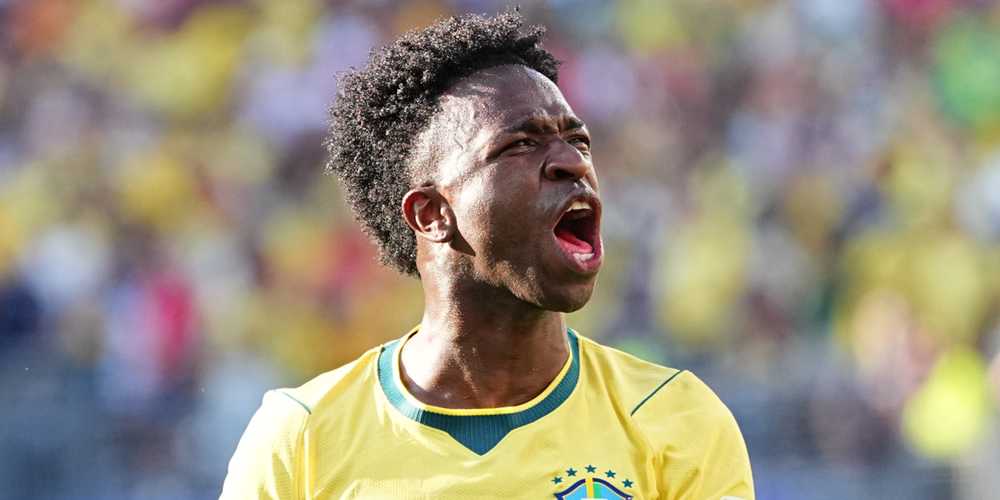
Deniz Undav has only played 57 minutes, but the former Brighton man has scored three goals and registered two assists, almost certainly earning him a starting place going into the knockouts. Despite more goal contributions in fewer minutes, though, Michael Olise has proven his special talent once again so far and ranks sixth, just behind Vinicius Junior who has finally started putting numbers up on the board for Brazil.
You scored
out of 20
Both those wingers will be vying for a Ballon d’Or come October. The same can’t be said for Cody Gakpo, who seems to do much better for country than he does club, earning a place in at fourth as he averages a score of 8.54. That’s still a decent amount behind Kylian Mbappe (8.61) and Erling Haaland (8.87), but nobody ius even close to reaching Messi’s pedestal, with his score of 9.66 reflecting the fact he’s still one of the best in the world, scoring all five of Argentina’s goals so far as he eyes immortality once again.
.
|
30 Best Players at 2026 World Cup Based on Stats (10-1) |
||
|---|---|---|
|
Rank |
Player (country) |
Rating |
|
10. |
Alireza Beiranvand (Iran) |
8.12 |
|
9. |
Felix Nmecha (Germany) |
8.14 |
|
8. |
Pedro Porro (Spain) |
8.15 |
|
7. |
Deniz Undav (Germany) |
8.22 |
|
6. |
Michael Olise (France) |
8.23 |
|
5. |
Vinicius Jr (Brazil) |
8.29 |
|
4. |
Cody Gakpo (Netherlands) |
8.54 |
|
3. |
Kylian Mbappe (France) |
8.61 |
|
2. |
Erling Haaland (Norway) |
8.87 |
|
1. |
Lionel Messi (Argentina) |
9.66 |
Stats courtesy of Whoscored (correct as of 25/06/2026)


Police arrest two suspected kidnappers connected to failed abduction in Delta
Eye-Opening Health Update Emerges After UFC White House
Cristiano Ronaldo’s Reaction to Lionel Messi’s Argentina Retirement in 2016

Simi Sanya and Femi Dapson Are Now Legally Married and It Is Beautiful to See

FCT Area Council Election: Live results from polling units

Premier League Set-Piece Goals (2025/2026)
-
 Sports2 days ago
FIFA Want to Change Rule For World Cup Penalty Shootouts
-
 Sports2 days ago
World Cup Commentator Banned by FIFA After Epic On-Air Meltdown During Game
-
 Sports2 days ago
Djed Spence Refuses Thomas Partey Handshake
-
 Sports18 hours ago
Why Austria and Algeria May Both Want to Lose Their Final Group Game
-
 Sports16 hours ago
Bastian Schweinsteiger Sparks Outrage With Comments Ahead of Germany v Ivory Coast
-
 Sports2 days ago
Why Senegal and Iraq Haven’t Been Eliminated Despite Being on 0 Points
-
 Sports2 days ago
‘Real Reason’ Behind Ibrahimovic and Lalas’ World Cup ‘Hatred’
-
 Sports1 day ago
Jude Bellingham Avoids Red Card For Banned Gesture vs Ghana