
Politics
APC drops Suswam, 25 other National Assembly candidates


By Omeiza Ajayi
ABUJA — The National Working Committee (NWC) of the ruling All Progressives Congress (APC) has dropped former Benue State Governor, Gabriel Suswam, former House of Representatives member, Gbenga Elegbeleye, and 24 other National Assembly candidates from the party’s final list submitted to the Independent National Electoral Commission (INEC).
The affected candidates include seven senatorial nominees and 19 House of Representatives candidates who emerged from the party’s primary elections held in May.
The changes were conveyed in a letter jointly signed by APC National Chairman, Nentawe Yilwatda, and National Secretary, Ajibola Basiru, and forwarded to INEC.
According to the correspondence, the replacements followed the recommendations of the party’s Primary Election Appeal Committee.
Titled “Forwarding of Approved List of Senatorial and House of Representatives Candidates,” the letter stated that the NWC reviewed and approved the Appeal Committee’s report, making it the party’s final position on the affected constituencies.
The letter read in part: “Following the determination of appeals from the recently concluded primary elections, the reports of the Appeal Committee were reviewed and subsequently considered and approved by the NWC of the APC as the party’s final position on the affected constituencies.
“In accordance with the Electoral Act 2022 (as amended) and INEC’s regulations and guidelines, we hereby transmit the enclosed list of the approved candidates for seven senatorial districts and 19 House of Representatives constituencies for your records and necessary action.”
Among the changes in the senatorial category, Senator Sunday Karimi replaced Aro Samuel Bamidele in Kogi West, while Prince Paul Ikonne took over from Edinburgh Uchenna Erondu in Abia South.
In Benue North-East, Suswam lost the ticket to Emmanuel Memga Udende, while Titus Tartenger Zam replaced Benjamin T. Aber in Benue North-West.
Shuibu Isa Lau replaced Mohammed Kabir Bello in Taraba North, Adeniyi Adegbonmire succeeded Taiwo Fasoranti in Ondo Central, while Elegbeleye lost the Ondo North ticket to Olajide Ipinsagba.
Benue recorded the highest number of changes in the House of Representatives category, with five constituencies affected. Dickson Tarkighir replaced Ikper Chris Terfa in Makurdi/Guma, Sesoo Ikpagher replaced Livinus Tsar Adzor in Vandeikya/Konshisha, Terser Ugbor succeeded Kohol Shedrach Iornem in Kwande/Ushongo, Sekav Dzua Iyortyom replaced Gideon Inyom in Buruku, while Austin Asema Achado displaced Nongo David in Gwer East/Gwer West.
In Taraba, Peter Abel Diah replaced Sanusi Mohammed Galadima in Gashaka/Kurmi/Sardauna Federal Constituency.
Niger State also witnessed two changes, with Abubakar Lado Abdullahi replacing Adamu Tanko in Suleja/Tafa/Gurara, while Adamu Suleiman replaced Adamu Usman in Lavun/Edati/Mokwa.
In Kwara, Raheem Tunji Olawuyi replaced Olasumbo Florence Oyeyemi in Ekiti/Irepodun/Oke-Ero Federal Constituency, while Mohammed Mamman succeeded Bello Tauheed Abubakar in Edu/Patigi/Moro.
Ondo State recorded six changes. Donald Ojogo replaced Akingboye Leke in Ilaje/Ese-Odo, Festus Olarewaju succeeded Rasaq Obe in Idanre, Oluwatimehin Akintomide replaced Kayode Ijalana in Owo/Ose, Okunjinmi John Odimayo displaced Olumuyiwa Daramola in Okitipupa/Irele, Michel Olamidotun Akintomide replaced Abiola Makinde in Ondo West/Ondo East, while Festus Ayodele Adefiranye succeeded Oyerinmade Matthew in Ile-Oluji/Oke-Igbo/Odigbo.
Other changes include Abdulazeez Kaka replacing Samaila Abdu Suleiman in Kaduna North, Samuel Okezie taking over from Chris Nkwonta in Ukwa East/Ukwa West Federal Constituency of Abia State, and Ekumankama Joseph Nkama replacing Iduma Igariwey Enwo in Afikpo North/Edda Federal Constituency of Ebonyi State.
www.vanguardngr.com
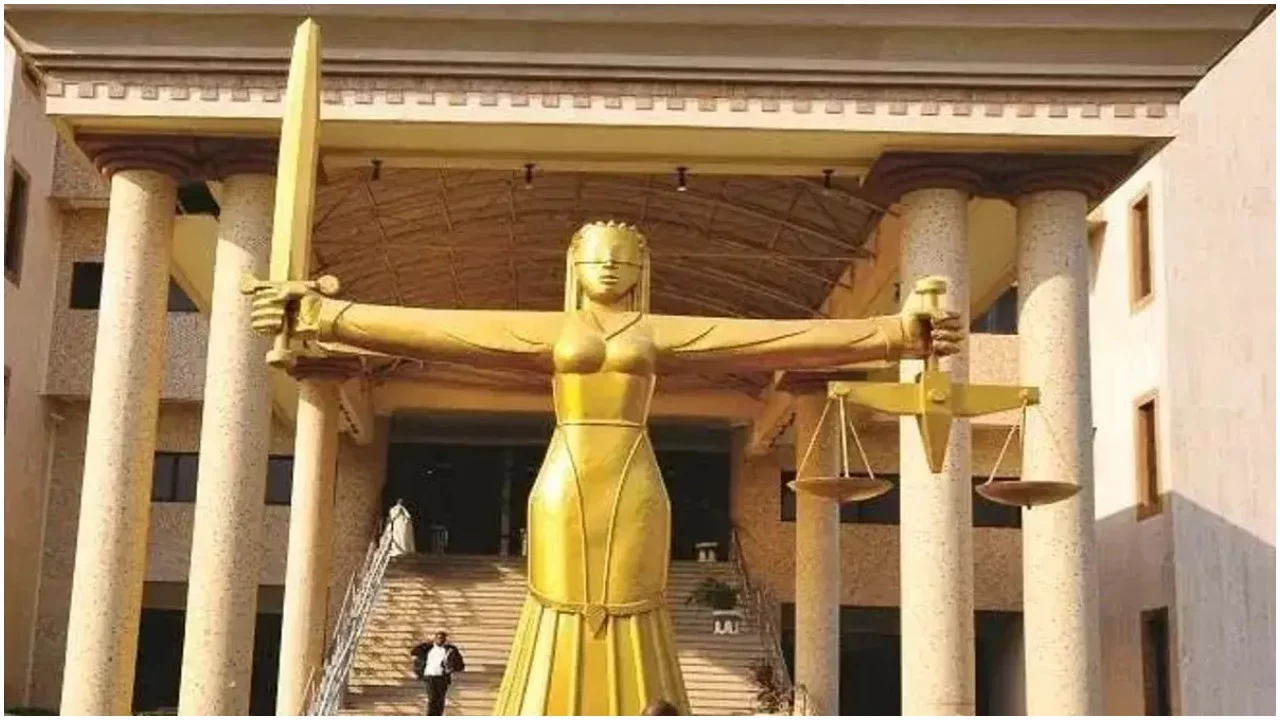
The Abuja Division of the Court of Appeal has reserved judgement in two separate appeals over the timetable for the conduct of the 2027 elections released by the Independent National Electoral Commission, INEC.
Justice Adebukola Bankole, who led the panel that heard the appeals, reserved judgement in the the cases.
The judge said the date of the judgement will be communicated to parties in the appeal
Two political parties, Youth Party of Nigeria, YPN, and Social Democratic Party, SDP, had approached the Federal High Court in Abuja, to nullify the timetable released for the elections by INEC.
While Justice Mohammed Umar granted the reliefs sought in the suit by YPN and nullified the election guidelines released by INEC, Justice James Omotosho, in the suit filed by SDP, granted some reliefs in favour of the party and some others in favour of the electoral umpire.
Not satisfied by the two judgments, INEC approached the Court of Appeal to set aside the judgments of Justice Umar and parts of the judgement of Justice Omotosho which limits its power regarding the elections.
Dr Alex Izinyon, SAN, led two other SANs from INEC to argue the appeals.
Izinyon in his submission before the court contended that INEC has the power as provided by the law under the provisions of the 1999 Constitution and the Electoral Act to issue guidelines.
Izinyon said, “The Constitution, specifically, empowered INEC to organize, supervise and undertake elections and other political activities as provided and that the timetable provided is in consonance with the power donated by the 1999 Constitution and the enabling act for INEC to do what it did in issuing elections timetables.
“The trial court erred in law because it failed to interpret, using the Supreme Court authorities and Court of Appeal decisions on the power already donated by the 1999 Constitution to INEC to arrange for elections including pre-election matters.
“Supreme Court and Court of Appeal have held that INEC has the power to organize and supervise elections and this include timetable for elections to carry out political activities preceeding the elections.
“The trial court failed to give effect to the phrase “not later than 120days and not more than 90days”, which was a subject of contention at the trial court and that not less than 120 days means it should not be more than but it can be less than but for the court to say that it must be exactly 120days, was too mathematical and not the intendment of the lawmakers as any of the activities can be done before the 120days and not more than. For the trial court to say it must be exactly 120 days is a mechanical application of the statue which is contrary to the decisions of the apex court and the Court of Appeal.”
He said the same goes for the 90 days provisions adding that the reliefs sought by the respondent at the trial court were declarative in nature. “There was no evidence by way of affidavit to show that they have commenced any primary or taken steps or that they have suffered any injury. Therefore the Court ought not to have granted any relief.
“The second appeal was filed by SDP in a judgement delivered by Justice James Omotosho, who granted some reliefs to the SDP and granted some also to the INEC.
“INEC appealed part of the judgement in that case which limits their powers by saying that the days were short by few numbers of days that INEC should go back and rectify this,” Izinyon added.
Before the main appeal was argued, Izinyon moved three applications, one of which urged the court to close the door against YPN on the ground that the party failed to file its respondent brief after service of the appellant briefs on them five days.
He argued that the court should hold that they have no written briefs in opposition to the appellants briefs as they are prohibited by paragraph 13 of the practice direction of the pre-election proceedings issued by the President of the Court of Appeal, which states that no time shall be extended for default under the same paragraph.
YPN counsel, Akinwale Irokosun, when asked by the panel if the party filed any response to the motion, answered in the negative.
The lead counsel later moved his application and the court reserved ruling to be delivered alongside the main appeal.
In the second motion the YPN counsel prayed the court for an extension of time to file the respondent brief out of time but the application was opposed by the INEC lead counsel, Izinyon, on the ground that there is no extension of time to file respondent brief when the time provided by the rules has elapsed.
Izinyon cited a plethoria of Supreme Court and Court of Appeal cases to back his argument, that no discretion can be exercised in that regard once you fail to file respondent brief.
He said the third motion was an application that the purported brief was filed after they had received notice of hearing of the appellant brief saying that the motion was incompetent because there is no time that can be extended for them to file their brief.
According to him, the brief was incompetent because it was filed put of the five days period.
“The brief was more than the lawfully required 25-page limit provided by the rules as it was 37 pages,” Izinyon said.
dailypost.ng

The Peoples Democratic Party, PDP, Kwara State chapter, has announced Reverend Cornelius Fawenu as the running mate to its governorship candidate, Bolakale Kawu, ahead of the 2027 elections.
The announcement was contained in a statement issued by the party’s Publicity Secretary in the state, Olusegun Adewara, on Wednesday in Ilorin.
The party described. Fawenu as a person of proven integrity, humility, compassion, and exceptional leadership qualities.
“Rev. Fawenu is a man of proven integrity, humility, compassion and exceptional leadership whose emergence reflects the party’s commitment to presenting a competent, inclusive and people-oriented ticket capable of restoring purposeful governance to Kwara State,” the statement read in part.
According to the PDP, the decision followed extensive consultations, deliberations, and a rigorous selection process involving the governorship candidate and key stakeholders across the three senatorial districts of the state.
“The emergence of Reverend Fawenu followed extensive consultations, deliberations and a rigorous selection process involving the party’s governorship candidate and critical stakeholders from the three senatorial districts of the state.
“The Kawu-Fawenu ticket combines experience, innovation, grassroots engagement and religious balancing. The party has positioned itself to rescue and secure Kwara and its people from the current misgovernance and insecurity.
“The Kawu/Fawenu ticket embodies the competence, integrity, experience and inclusive leadership required to rescue Kwara State from the last eight years of hardship and insecurity and place it firmly on the path of sustainable development, economic prosperity, social justice and accountable governance.
“The Peoples Democratic Party therefore calls on all members of the party, supporters and indeed all well-meaning Kwarans to rally behind this formidable ticket as the movement to reclaim and reposition Kwara State gathers momentum ahead of the 2027 general elections,” the statement added.
dailypost.ng

Presidential candidate of the Nigeria Democratic Congress, NDC, Peter Obi, has outlined his reasons for contesting the presidential election, saying his ambition is driven by a vision of building a “productive and prosperous Nigeria” and placing the country on the path of unity and national transformation.
Obi disclosed this in a statement released on Wednesday via his official X handle.
According to him, in the coming weeks and months, he would unveil a comprehensive roadmap aimed at curbing abuse in government, improving the quality of life of Nigerians, and fostering unity, peace, sustained progress, and prosperity.
The former Anambra governor stated that his vision is anchored on the principles of unity, inclusion, social justice, equity and the freedom of every Nigerian to pursue lawful aspirations.
The statement titled ‘My Vision for a productive and prosperous Nigeria’ read, “Today, being the 1st of July, 2026, I wish to humbly recall that when I decided to contest for the office of President of Nigeria, I pledged to place Nigeria on the path of unity and national transformation.
“Now, as the Nigeria Democratic Congress (NDC) candidate, I will, in the coming weeks and months, provide insights into the roadmap that I am confident will help curb abuse in government, halt the decline in the quality of life of Nigerians at all levels, and usher in an era of unity, peace, sustained progress, and prosperity.
“This vision is anchored on a commitment to unity, inclusion, social justice, equity, and the freedom of every citizen to pursue lawful dreams.
“Central to this proposed roadmap are significant reforms in education and healthcare, which are at the core of human capital development.
“Robust human capital is indispensable infrastructure for national progress. It serves as the fundamental capital upon which daily life, economic expansion, and the delivery of essential public services depend.
“These are foundational areas that we must reform with energy and determination if we are to reap the demographic dividend of our youthful population.
“From the outset of my presidency, we will establish a task force dedicated to drastically reducing the menace of out-of-school children.
“We will place greater emphasis on Technical and Vocational Education and Training (TVET) to support our drive for massive industrialisation, anchored on our agricultural endowments and value addition across value chains organised around industrial parks to be located in development zones across the geopolitical regions of the country.
“Funding and improving the equipment of TVET institutions, through partnerships among government, the private sector, and social entrepreneurs such as faith-based educators, will facilitate apprenticeship opportunities in the private sector, similar to the German dual education system.
“The situation in which unemployment remains high while Nigerian entrepreneurs establish businesses elsewhere because skilled labour is scarce must be confronted decisively. Doing so is essential for the common good and for facilitating our transition from a consumption-driven economy to a production-driven one.
“Character and civic education, emphasising the values that foster trust – an essential ingredient for enterprise and leadership – as well as shared national values, will receive significant attention within the tripartite approach to governance that we propose.”
dailypost.ng


Conor McGregor Stars in Truly Bizarre Advert Just Days Before Return

Police rescue abducted Ondo woman, recover stolen vehicle after gun battle

2027: Court reserves judgment in INEC’s appeal on election guidelines

Simi Sanya and Femi Dapson Are Now Legally Married and It Is Beautiful to See

FCT Area Council Election: Live results from polling units

Premier League Set-Piece Goals (2025/2026)
-
 Sports1 day ago
Kevin Pietersen Causes Stir With Tweet About His International Cricket Retirement
-
 Sports1 day ago
Virgil van Dijk Slammed For Comments After Netherlands’ World Cup Exit v Morocco
-
 Sports1 day ago
Carlo Ancelotti Explains Why He Didn’t Celebrate Brazil’s Winner v Japan
-
 Sports1 day ago
Zlatan Ibrahimovic Blames Netherlands’ Shock World Cup Exit on Ronald Koeman
-
 Sports23 hours ago
Leon Goretzka Slammed For Not Taking Penalty in Germany vs Paraguay
-
 Sports1 day ago
Virgil van Dijk Blasted For Not Taking a Penalty in Netherlands’ World Cup Exit v Morocco
-
 Sports2 days ago
Roger Federer Names His Top 5 Tennis Players of All Time
-
 Sports2 days ago
FIFA Make Decision on Investigating 2026 World Cup ‘Match-Fixing’