
Politics
Rule of law ahead of 2027: NDC deregistration judgment exhumes 2023 controversies over Tinubu, Shettima


•ActionAid report: Politicians’ appetite for litigations raised number of election cases from 2 in 1999 to 1,996 in 2023
•‘If we cannot get it right at the polls, if we cannot trust INEC, should we still be apprehensive of the judiciary?’
By Nnamdi Ojiego and Kennedy Mbele
The judgment of the Federal High Court Lokoja reversing itself on the order it gave to the Independent National Electoral Commission (INEC) to register the National Democratic Congress (NDC) is expectedly stoking controversy, especially since it affects the ambitions of two key opposition figures in the country in the 2027 polls.
NDC is the platform on which Mr Peter Obi is contesting the January 2027 election as its presidential candidate.
Another top opposition figure and a former governor of Kano State, Senator Rabiu Kwankwaso, is his running mate.
Justice Isah Dashen, who delivered the ruling, penultimate Friday, held that the court’s December 10, 2025, judgment adversely affected the rights of the Peace Movement Party (PMP), which was not joined as a party in the suit despite claiming ownership of the logo relied upon in obtaining the judgment.
Counsel for the applicant, C. S. Ekeocha, said the PMP approached the court after discovering that the NDC’s registration was based on a logo it had previously submitted to INEC before the commencement of the suit.
According to Ekeocha, the court agreed that the applicant’s rights had been affected and consequently vacated the earlier judgment.
“The court has ordered all parties to return to the position they occupied before the judgment of December 10, 2025, and directed the claimants to join all necessary parties to ensure the issues in dispute are effectually and completely determined,” he said.
The counsel explained that the implication of the ruling was that every action taken by INEC in compliance with the now-vacated judgment stands reversed.
“The recognition of the Nigeria Democratic Congress, the issuance of its certificate of registration, its inclusion in INEC’s records, and any appearance on ballot papers arising from that judgment must be withdrawn pending the final determination of the substantive suit,” Ekeocha stated.
He, however, clarified that the substantive case remains before the court and has not been decided.
“The matter has not been concluded. The court merely set aside its previous judgment and directed that the party whose interests were affected be joined so that all sides can be heard before a fresh decision is reached”, the counsel said.
Ekeocha also dismissed suggestions that the court merely ordered parties to maintain the status quo, insisting that the ruling specifically directed a restoration of the position that existed before the December 10, 2025 judgment.
The ruling effectively returns the dispute over the registration of the NDC to the Federal High Court for a fresh hearing, with all relevant parties expected to participate before a new determination is made.
NDC has rejected the ruling, calling it bizarre.
Appeal
On Monday, Seriake Dickson, national leader of the NDC, said the party had filed an appeal against the ruling of the Lokoja court.
In a post on his X page, Dickson said his name and that of Obi had been uploaded to the INEC portal following the legal move.
Dickson said NDC had appealed the ruling and INEC had granted the party access to upload the names of its candidates.
“Today, the NDC has filed an appeal against the ruling as well as a stay of execution/injunction, which has been served with a covering letter to the INEC chairman and his team to do what is right according to law and what is legally sensible,” he said.
“What is left is the administrative process of submitting the names to INEC, and we have been granted access to the portal to upload our qualified candidates.
“My name and that of the presidential candidate have been uploaded to the INEC portal, while that of the vice presidential candidate will be done tomorrow upon completion of the deposition. The process is also ongoing for other candidates.”
Dickson said the party is acting in tandem with the timelines provided by INEC for the submission of candidates for various elective positions.
Suspicion
The court decision came at a time suspicion is high that the ruling party at the federal level, All Progressives Congress (APC), is out to use all measures at its disposal to keep opposition parties out of the 2027 presidential election to give its candidate, President Bola Tinubu, a walkover.
Besides, it is creating a storm as some commentators faulted the judge’s decision to reverse itself, saying the matter should have been done on appeal at the higher court, that is, Court of Appeal.
In a reaction, former Vice President Atiku Abubakar said the ruling reinforced what he believed was an orchestrated effort to frustrate the emergence of viable opposition platforms capable of challenging the ruling APC in the 2027 elections.
He warned that attempts to deny Nigerians a broad range of political choices could undermine democratic governance and erode public confidence in the electoral process.
According to Atiku, who is the presidential candidate of the African Democratic Congress (ADC) ahead of 2027, democracy thrives when citizens are free to associate politically, support parties of their choice and participate in elections without intimidation or institutional obstacles.
He argued that any move perceived as limiting political competition or shrinking the democratic space could have serious consequences for national stability.
Also reacting, Mr Femi Falana (SAN) faulted the court’s ruling, insisting that a judge lacks the power to overturn his or her own final decision.
Falana maintained that once a court has delivered a judgment or made a final order, the judge becomes functus officio.
This legal doctrine bars a court from revisiting or reversing its own final determination except in limited circumstances provided by law.
According to him, any party dissatisfied with such a judgment ought to challenge it before a higher court rather than asking the same judge to reverse his own decision.
The senior lawyer also argued that all actions taken pursuant to the earlier judgment remain legally valid and cannot be invalidated retrospectively by the same court.
He specifically maintained that the primary elections conducted by the NDC under the authority of the earlier judgment cannot, in law, be set aside through the subsequent ruling.
“All the actions taken pursuant to the earlier order of the judge are deemed proper in law. The court cannot retrospectively set aside the primary elections of the NDC,” he added.
Falana also expressed concern about what he described as a disturbing trend within the Federal High Court, alleging that certain judicial decisions threaten Nigeria’s multi-party democratic system.
He alleged that some judges of the Federal High Court were taking actions that could reduce Nigeria to a one-party state by facilitating the deregistration of opposition political parties. At the same time, the ruling All Progressives Congress (APC) remained unaffected.
Beyond that, the development has resurrected cases in the past which generated controversies in a manner that suggested that some political figures would prefer resolving strictly political issues using the judiciary because the decisions may favour them.
But some analysts say this is an anomaly in a society where there is rule of law.
According to them, the situation borders on the accountability of the judiciary in a democratic setting, citing the 2023 litigations against the candidature of Tinubu, former Senate President Lawan and some lawmakers in Plateau State who had been elected but had their elections voided by court decisions in controversial circumstances.
A civil society group, ActionAid, putting a controversy of this nature in view, in a presentation, called for judicial accountability to save democracy in Nigeria.
In a position paper presented at a conference organized by the Nigerian Guild of Editors (NGE) in Yenagoa, Bayelsa State, it noted: “Election is the most preferred process of leadership recruitment in most democracies and Nigeria is no exception. Nigeria has had seven cycles of elections vis-à-vis 1999, 2003, 2007, 2011, 2015, 2019 and 2023”, and then asked exasperatedly: “Have the pronouncements by the judiciary in recent times been in the interest of Nigeria’s democracy?”
The paper was titled, ‘Post-election Judicial Accountability and Reforms in Nigeria’, with a sub-title, ‘Go to Court’.
The group argued that due to the belief in many quarters that compromised judges would give favourable judgment in election cases, politicians would rather prefer the court to adjudicate rather than relying on polls’ results.
ActionAid noted that following this belief, the number of election cases has risen from two in 1999 to 1, 926 in 2023.
‘Do we have a democracy in Nigeria?’
“There has been an upsurge in post-election litigations and the judiciary plays a significant role in adjudicating the litigations”, it stressed.
It illustrated its position with the controversial judgments from Plateau State.
“Here, while some panels in the state sacked some elected members of the House of Assembly and National Assembly on the ground that the PDP to which they belonged did not hold a valid primary election, some other panels disregarded that point and held that issue concerning primaries of a political party was a pre-election matter and could not be raised to challenge the declared winner at an election petition tribunal (which has always been the legal position)”, the group said.
“When the matter went on appeal, the Court of Appeal surprisingly disregarded the settled principle of law that a pre-election matter cannot be raised at the post-election stage and affirmed the decisions of the tribunal which nullified the return of several PDP members on the ground that there was no validly conducted PDP primaries leading up to the general election, and while setting aside the decision of the panel that applied the known position. The decision of the Court of Appeal affected the current governor.
“But luckily for the governor, he had a right of appeal to the Supreme Court, which he exercised and got the Supreme Court to restate the position of the law, set aside the decision of the Court of Appeal and restored his mandate.
“Unfortunately for the members of the House of Reps from the state and members of the state House of Assembly who were elected under the umbrella of PDP, they lost their mandate since the Court of Appeal is their final level of appeal”.
Lawan Supreme Court judgment
On the Bashir Sheriff Machina VS Ahmed Ibrahim Lawan (then-Senate President) case, ActionAid said: “It would be recalled that then-Senate President did not participate in the primaries for the National Assembly election for Yobe North Senatorial District and Machina was returned unopposed.
“Shockingly, when Lawan lost out in the presidential primaries, his name was submitted by his party to INEC as the candidate for the Yobe North Senatorial Election.
“This led to the case instituted by Machina at the Federal High Court through in line with the Electoral Act. He won both at the Federal High Court and at the Court of Appeal.
“When the matter got to the Supreme Court in an appeal filed by Lawan, the Supreme Court took a different turn by holding that the process used by Machina to commence the case at the Federal High Court was wrong.
“Rather than commencing his case by use of Originating Summons, (the court said) he ought to have used a Writ of Summons in light of the criminal allegations contained in the affidavit.
“This saw Machina losing out and Lawan being adopted as the party’s candidate since his name had already been submitted to INEC.
“In giving this judgment, the Supreme Court disregarded its earlier judgments where it clearly held that only a party who took part in the primaries can contest the result of the primaries.
“The decision of the court sounds strange as the court abandoned the substance of the case despite the ample evidence that Lawan never contested the primaries for Yobe North, which should have disqualified him, but relied on undue technicalities on the mode of commencing the action at the Federal High Court”.
2023 election petitions tribunal
The group then analysed the Tinubu/Atiku/Obi cases: “The presidential election petitions filed against APC and President Bola Tinubu by Alhaji Abubakar Atiku and Mr Peter Obi present a case filed with several issues which left citizens more confused than convinced that the tribunal was unbiased in its decision.
“A few of the grey areas were:
a. The allegation of double nomination against Vice-President Kashim Shettima
It was argued that Shettima’s nomination as the running mate to Tinubu was in breach of the provisions of Sections 29(1), 33, 35 and 84{1)}(2)} of the Electoral Act, 2022 (as amended), claiming that Shettima had double nominations.
Having been nominated as a vice presidential candidate, he had not resigned or withdrawn his nomination as candidate for the Borno Central senatorial poll.
Despite the decision of the court refusing the argument, the general feelers have been that Section 35 of the Electoral Act was violated by the double nomination of Shettima.
The Section provides that: “Where a Candidate knowingly allows himself to be nominated by more than one political party or in more than one constituency, his nomination shall be void.
“The court was, however, more concerned with who raised the issue, holding that such issues have to come from APC and not any third party.
b. Civil forfeiture sufficient to disqualify a candidate
“There was a lot of noise about the American case against Bola Tinubu where there was an order against him forfeiting certain amount of money which were proceeds of crime.
“Citizens saw this issue as very germane due to an earlier decision of the Supreme Court delivered on the 17th of January 2014 by the CJN Ariwoola (as then was) in a case between Mohammed Abacha, the second child of Sani Abacha, a former head of state; and the Federal Republic of Nigeria.
“One of the seven men on the panel of justices, Walter Onnoghen, a former CJN, also held that forfeiture means “the loss of a right, privilege or property because of a crime”.
“How come the presidential tribunal disregarded this known position in the case of Tinubu to find that this particular forfeiture was not one anticipated by the Constitution?
“This (‘Go to Court’) has become a normal parlance in Nigeria, without much thought to the implications, given the absence of infrastructures that enable justice”.
Edo election
The group also spoke on the last Edo governorship election which produced Governor Monday Okpebholo, saying it shows that there is still so much work to be done by citizen groups.
“If we cannot get it right at the polls, if we cannot trust INEC, should we still be apprehensive of the judiciary?” ActionAid asked.
‘What is the hope of a Nigerian?’
Speaking on the political economy analysis of judicial accountability in post-election justice in Nigeria, it said: “The complex interplay between political, economic, and institutional factors that shape the functioning of the judiciary, particularly in handling election disputes helps to understand the urgency for intervention by social movements, CSOs etc. to hold the judiciary accountable.
“Here’s a breakdown of the key components and considerations:
a. Political Factors
Electoral System: Nigeria operates a multi-party system, with elections often highly competitive, leading to frequent disputes. “The judiciary plays a crucial role in adjudicating post-election petitions.
“Political Actors and Influence: The political elites, especially those in power, may attempt to exert influence over the judiciary to secure favorable judgments.
“Understanding how political interference affects judicial independence is critical.
“Judicial Independence: The Nigerian Constitution guarantees judicial independence, but we can see an obvious erosion of its independence. Political pressure, corruption, and executive is undermining the judiciary’s role.
“Electoral Tribunals: These are specifically set up to handle election-related disputes. “The functioning and integrity of
b.Economic Factors
“Resource Allocation: Adequate funding is necessary for the judiciary to function effectively.
“Financial dependence on the executive is limiting judicial autonomy, making the courts vulnerable to manipulation.
“Judicial Corruption: Economic incentives, such as bribery, may influence judicial decisions, especially in high-stakes election disputes.
“Political Economy of Patronage: Post-election periods in Nigeria are often characterized by political patronage systems, where those in power distribute economic resources to maintain loyalty.
“The judiciary is pressured to align with this system.
c.Institutional Factors
Legal Framework: The Nigerian Constitution and the Electoral Act provide the legal basis for post-election dispute resolution.
“However, loopholes in the law and delays in the judicial process are hindering accountability.
“Judicial Oversight Bodies: Bodies like the NJC play a role in ensuring accountability within the judiciary by sanctioning corrupt judges.
“However, the effectiveness of these oversight bodies is in question.
d. Institutional Factors
Electoral Tribunals and Courts: The efficiency and transparency of electoral tribunals are central to post-election justice.
“Delays in the adjudication process, non-compliance with tribunal rulings, and conflicting judgments can undermine the integrity of these mechanisms.
“Enforcement of Judgments: Even when courts make rulings in election disputes, the enforcement of these judgments is sometimes met with resistance from political rulers”.
Editors’ role
According to the group, engaging with the NGE can significantly enhance its efforts in its judicial accountability programs.
“Here’s why:
a. Media Influence on Public Awareness: Editors play a crucial role in shaping public opinion.
Through their reach and influence, they can help bring attention to issues surrounding judicial accountability, ensuring these topics reach a broader audience. By partnering with the NGE, ActionAid can gain visibility and foster a greater public
understanding of judicial reform needs.
b.Editorial Expertise in Advocacy: Editors in the NGE are skilled at presenting complex information clearly and compellingly. They can help convey the nuances of judicial accountability, including technical details and case studies, in ways that resonate with the general public and policymakers alike, supporting ActionAid’s advocacy goals.
c. Strengthened Narrative and Credibility: The backing of respected media outlets, spearheaded by editors, can add credibility to ActionAid’s initiatives. The NGE’s engagement can amplify ActionAid’s message, validating its calls for transparency and accountability within the judiciary.
d. Catalyst for Policy Reform: With direct access to policymakers and influencers, editors are well-positioned to drive conversations that can lead to policy change. Their editorial support could generate pressure on decision-makers to act on judicial reforms, aligning with ActionAid’s objectives.
e.Investigative Journalism Support: The NGE includes journalists skilled in investigation, which can uncover and report on judicial corruption or misconduct. Collaborative efforts with these editors could help ActionAid expose issues within the judicial system, providing concrete examples that justify reform”.
It concluded its presentation by saying “partnering with the NGE, ActionAid Nigeria can leverage media influence to mobilize public opinion, elevate discussions on judicial accountability, and push for meaningful reforms”.
www.vanguardngr.com

The presidential candidate of the Nigeria Democratic Congress (NDC), Peter Obi, has accused the administration of President Bola Tinubu of gross corruption following claims that ₦8.83 trillion in 2025 expenditure was not captured in the national budget.
Obi made the allegation in a statement posted on his X (formerly Twitter) account on Sunday, citing what he described as findings from the International Monetary Fund (IMF) consultation report.
According to him, the reported expenditure was not appropriated in the 2025 budget and was therefore outside legislative oversight and administrative scrutiny.
“The recent report from the IMF consultation further raises concerns about the scale of grand corruption under the Tinubu government. The IMF now reveals that about ₦8.83 trillion in expenditure undertaken in 2025 is not reflected in the budget. This expenditure is not budgeted and is therefore not under legislative oversight or administrative scrutiny. This is horrible,” Obi said.
He argued that the amount represents about two per cent of Nigeria’s Gross Domestic Product (GDP) and over 35 per cent of the country’s ₦23.96 trillion capital expenditure budget for 2025.
Obi also claimed that the sum exceeds the combined allocations to the education and health sectors in the 2025 budget, saying it could have been used to improve public services, create jobs and support economic development if properly managed.
The former Anambra State governor alleged that the development reflected a pattern of financial mismanagement under the current administration.
He further accused the government of failing to uphold basic principles of public financial management, warning that such practices could undermine national stability and deepen poverty.
Describing the administration as “grossly corrupt, incompetent and insensitive,” Obi argued that the reported expenditure underscored the need for greater accountability in the management of public resources.
He also reiterated his earlier call for President Tinubu to resign, citing what he described as incompetence, failure to fulfil campaign promises and alleged lack of commitment to the welfare and security of Nigerians.
Obi urged citizens to hold the government accountable through lawful and democratic means.
The Presidency and the Federal Government had not responded to Obi’s claims as of the time of filing this report.
www.vanguardngr.com

Presidential candidate of the Nigeria Democratic Congress, NDC, Mr Peter Obi, has accused the administration of President Bola Tinubu of presiding over what he described as “grand corruption,” citing an alleged N8.83 trillion in unbudgeted expenditure highlighted in a recent International Monetary Fund consultation report.
In a statement titled “Grand Corruption: Nigeria’s Greatest Threat,” posted on his X account on Sunday, Obi claimed the reported expenditure was not captured in the 2025 budget, arguing that it was therefore outside legislative oversight and administrative scrutiny.
According to him, the N8.83 trillion represents about two per cent of Nigeria’s Gross Domestic Product (GDP), more than 35 per cent of the country’s 2025 capital budget of N23.96 trillion, and exceeds the combined allocations for education and health.
Obi said the funds, if properly utilised and accounted for, could have significantly improved public healthcare, education and job creation through the establishment of cottage industries.
He alleged that the development was not an isolated case but part of a broader pattern of corruption under the current administration.
The former Anambra State governor further accused the government of disregarding public finance management rules, warning that such practices threaten national security, deepen poverty and weaken state institutions.
Describing the All Progressives Congress (APC)-led administration as “grossly corrupt, incompetent and insensitive,” Obi argued that the alleged mismanagement of public resources had worsened the country’s economic and social challenges.
Reiterating an earlier call for Tinubu to resign, Obi said recent developments had reinforced his position that the President should step down over what he described as incompetence, lack of compassion and failure to fulfil campaign promises.
“The recent report from the IMF consultation further raises concerns about the scale of grand corruption under the Tinubu government.
“The IMF now reveals that about N8.83 trillion in expenditure undertaken in 2025 is not reflected in the budget. This expenditure is not budgeted and is therefore not under legislative oversight or administrative scrutiny. This is horrible.
“N8.83 trillion is as follows:
“About 2% of our GDP.
Over 35% of Nigeria’s 2025 N23.96 trillion capital project budget. In fact, the amount is more than the actual released capital funding for 2025.
“It is more than the entire combined budget for education (N3.52 trillion) and health (N2.38 trillion).
“If such an amount is properly used and accounted for, it could transform Nigeria’s public health and education sectors. It could create hundreds of cottage industries that can provide jobs for thousands of graduates and build a solid foundation for economic development. But we cannot account for it. This is not an isolated incident.
“This is a pattern of grand corruption that has become part of this administration.
“We have a lot to worry about regarding the state of corruption under President Tinubu.
“The sort of corruption that is ingrained in total disregard of elementary rules of public finance management poses a grave danger to national security and the stability of the Nigerian state,” part of the statement read.
dailypost.ng
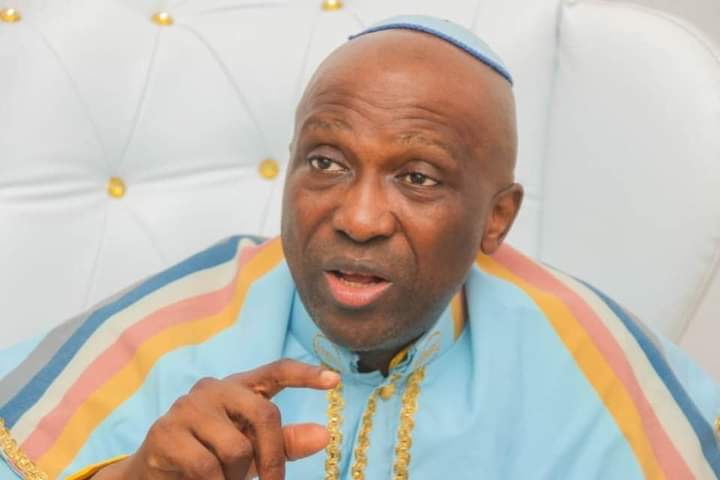
The Leader of INRI Evangelical Spiritual Church, Primate Elijah Ayodele, has hinted on the emergence of a new Vice President, Secretary to the Government of the Federation, SGF, and Senate President.
Primate Ayodele also warned of underground plans to rig the 2027 general elections.
He disclosed this during the release of the 32nd edition of his annual prophecy book, ‘Warnings To The Nations’.
The presentation was done during a world press conference on Saturday at his Lagos headquarters church.
According to Primate Ayodele: “I foresee a new Vice President, a new Secretary to the Government of the Federation, SGF, Senate President and a new Federal Minister.
“I foresee a lot of underground plans to rig the 2027 elections. I foresee a former Head of State will not support Tinubu.”
The popular Nigerian prophet also disclosed that the North would be angry with President Bola Tinubu ahead of the 2027 elections.
He warned that Tinubu’s victory in the 2027 elections is not yet certain, stressing that a lot of Nigerians will rise up against him.
“The Northern parts of the country will be angry with Tinubu. The ruling party will be struggling to sustain their federal or the seat at the Centre.
“I foresee that the Tinubu victory is not yet certain except Tinubu takes a bold step.
“A lot of people will rise up against Tinubu. Tinubu will want to do last minute changes even of the Service Chiefs,” he said.
The clergyman further disclosed that Governor Ademola Adeleke of Osun State will win the forthcoming governorship election in the state.
“The present Osun governor will win but must be on top of the election so that the polls results will not be rigged.
“I foresee the Ruling party is putting pressure on INEC as to what should be done by the electoral body,” Primate Ayodele said.
dailypost.ng


Why Michael Olise Was ‘Kicked Out’ of Chelsea’s Academy
Alleged N8.83trn: ‘Tinubu government is grossly corrupt’ — Obi

Crysencio Summerville Only Wants to Join Man Utd This Summer

Simi Sanya and Femi Dapson Are Now Legally Married and It Is Beautiful to See

FCT Area Council Election: Live results from polling units

Premier League Set-Piece Goals (2025/2026)
-
 Sports2 days ago
What Cristiano Ronaldo Told Croatia Star After Controversy in World Cup Game
-
 Sports12 hours ago
Vozinha Reveals What Lionel Messi Told Him After Argentina 3-2 Cape Verde
-
 Sports2 days ago
FIFA Set to Change England vs Mexico World Cup Kick-Off Time
-
 Sports1 day ago
Footage Shows What Happened After Lionel Messi’s Post-Match Interview v Cape Verde
-
 Sports8 hours ago
Joe Hart Slams ‘Disgrace’ France vs Paraguay Referee
-
 Sports2 days ago
8 Tunisia Players Fail Drug Tests As Mexican Food Contamination Suspected
-
 Sports1 day ago
Egypt Stars Watch Kylian Mbappe Footage as Penalty Tactic vs Australia
-
 Sports1 day ago
Zlatan Ibrahimovic Has Theory on Croatia VAR Controversy vs Portugal