
Entertainment
Want to Look Chic and Professional? Serve Black Monochrome Like Bimbo Ademoye


Professional dressing does not always have to mean a blazer over trousers or a plain office outfit. Sometimes, all it takes is a sleek black monochrome look with thoughtful styling to leave a lasting impression. Bimbo Ademoye embraces that idea in a look that feels polished, confident and effortlessly chic from head to toe.
A structured black blazer and short skirt sets the tone. The sharp shoulders create a strong presence, while the fitted waist softens the silhouette and keeps it feminine. It carries the polish of classic tailoring but feels current enough for fashion events, business brunches and stylish evening outings.
The all black styling never feels boring because of the mix of textures. The patterned tights add a stylish touch that breaks up the outfit and gives it a richer, more fashionable look. The accessories complete the look perfectly. Her black top handle bag adds a classy touch, while the pointed pumps make the look feel even sharper. The matching black hat is another standout detail. It gives the outfit a stylish twist and adds a hint of vintage charm while still keeping the overall look modern.
Her makeup is simple but makes a big difference. The bold red lipstick adds a pop of colour against the all black outfit, making the look feel more lively. Soft glam makeup keeps everything fresh, while the silver hoop earrings add just the right amount of shine to finish the look.
Black monochrome has always been a favourite for power dressing, and this look shows exactly why. It feels timeless, sophisticated and easy to wear, whether you are heading to an important meeting, a fashion event or a dinner where you want your style to speak before you do.
If your next event calls for a professional look with a fashionable edge, let this outfit be your guide.
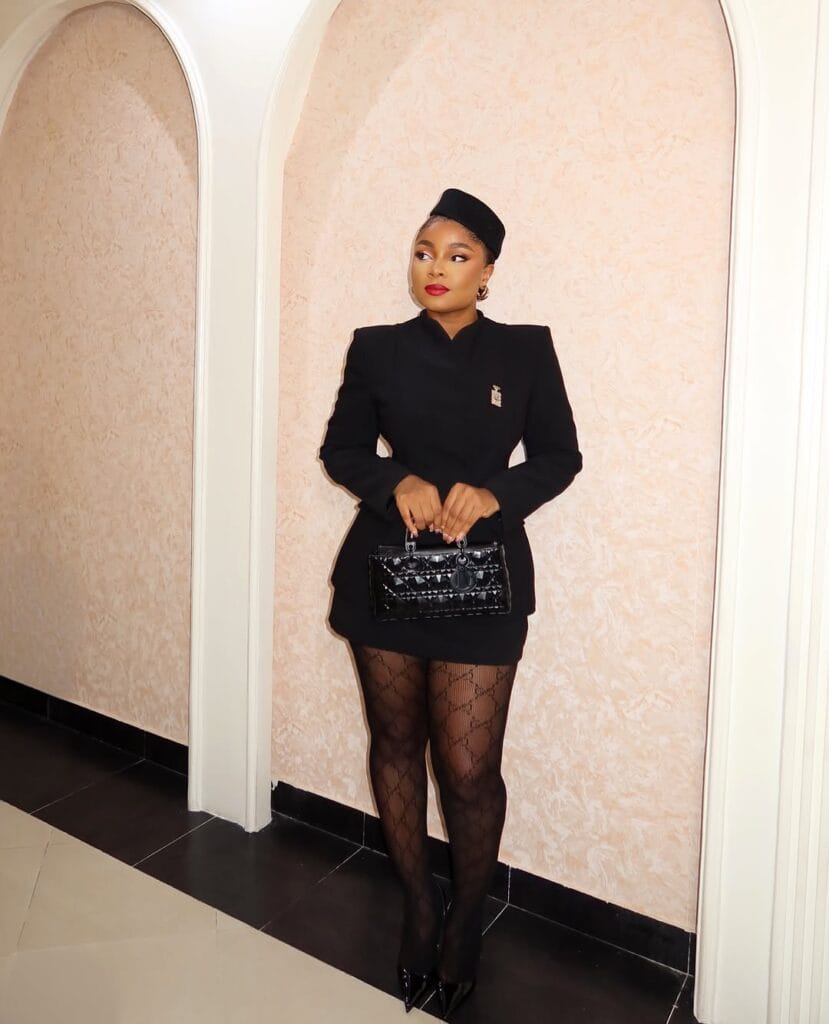
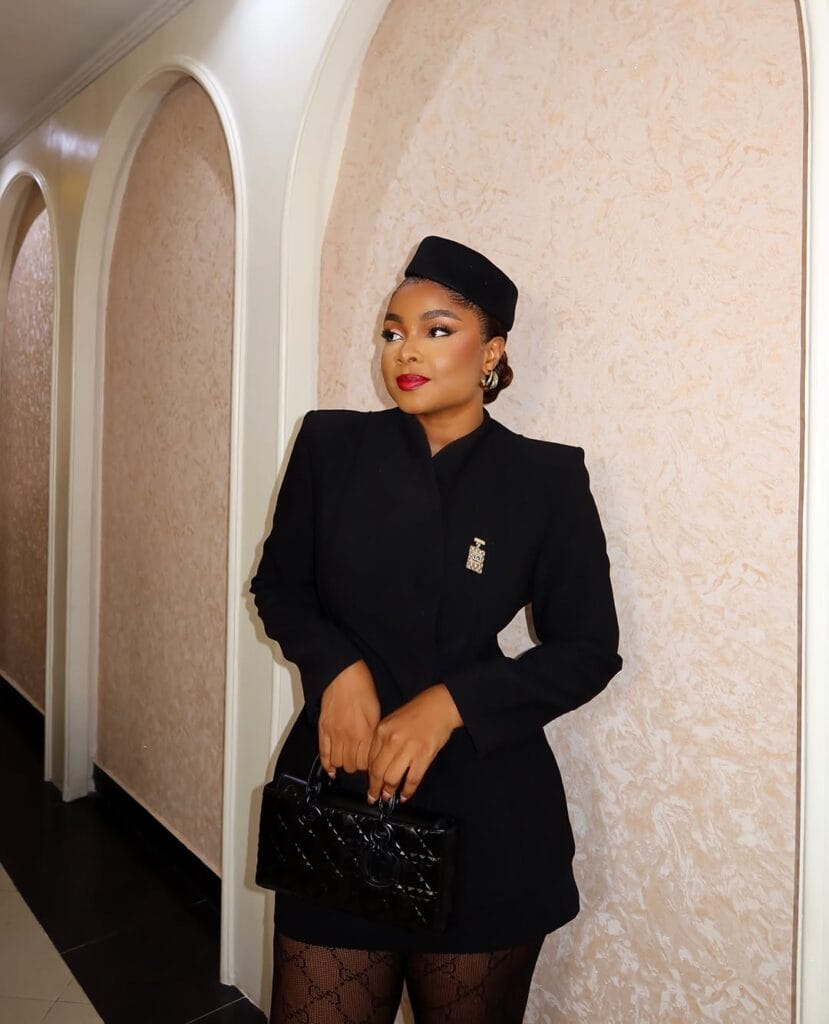
photo: @bimboademoye | Instagram


Ask a Nigerian fashion brand owner how the business is going and they will almost always tell you about the orders. The clients they dressed last month. The collection that got attention. The celebrity placement that had everyone asking questions. What they will rarely tell you, what some of them will go out of their way to avoid telling you, is what the numbers actually look like. How much came in. How much went out. What is sitting in the account right now. Whether any of it is actually working financially.
This is not dishonesty. It is avoidance. And it is one of the habits that quietly holds Nigerian fashion brands back for years longer than necessary. The money conversation is uncomfortable. It forces you to look at things you might not be ready to see. It asks questions that do not have flattering answers yet. But it is also the conversation that separates the Nigerian fashion brands that build something lasting from the ones that stay talented and struggling indefinitely.
Why Fashion Brand Owners Avoid Talking About Money
Before getting into the numbers it is worth understanding why this avoidance happens in the first place because it does not come from nowhere.
Nigerian fashion brand owners who came into this industry through passion, and many of them did, often find that the business side feels like an intrusion on something they genuinely love. They built this from creativity, from an eye for detail, from the satisfaction of making something beautiful for someone. Looking too closely at spreadsheets and profit margins can feel like it takes something away from that.
There is also the fear of what the numbers might say. If you have been running your fashion brand for two years and you sit down to honestly calculate what it has made versus what it has cost you, the answer might be uncomfortable. And so long as you do not look too closely you can keep telling yourself that things are going well because the orders are coming in and the clients are happy.
But the orders coming in and the business being financially healthy are not the same thing. And the longer you avoid looking at the difference between them the harder it becomes to close the gap.
The Number Some Fashion Brands Have Never Actually Calculated
Here is a question worth sitting with. Do you know your profit margin? Not roughly. Not approximately. Do you know, for each piece you produce and sell, exactly how much of the selling price is actual profit after every single cost has been accounted for?
Some Nigerian fashion brand owners have never done this calculation properly. They know what they charge. They know roughly what the fabric costs. But the full picture, every material, every hour of labour, every transport cost, every packaging expense, every portion of their monthly overheads, every minute of their own time, totalled up and subtracted from the selling price to give a true profit number, that has never been honestly mapped out.
And that gap in knowledge creates a problem. Because without knowing your real profit margin you cannot make good decisions about anything. You cannot know whether taking on more orders will actually make you more money or just make you busier at the same level of income. You cannot know which pieces in your range are worth your time and which ones you are essentially producing at a loss. You cannot know how many orders you need per month to cover your costs, pay yourself properly and still have something left over to invest back into the business.
You are flying blind. And flying blind in business always costs more than the discomfort of looking at the numbers honestly would have.
The Difference Between Revenue and Profit
This distinction is so important and so often confused in the Nigerian fashion space that it deserves its own section.
Revenue is everything that comes in. Every deposit, every balance payment, every order completed and paid for. It is the total number that goes into your account from the business.
Profit is what is left after everything that went out has been subtracted. Every material cost, every labour payment, every transport expense, every utility bill, every packaging cost, every marketing spend, every tool or equipment purchase, your own time valued at a fair rate, all of it gone from the revenue figure. What remains is your actual profit.
A Nigerian fashion brand can have impressive revenue and almost no profit. A brand taking in ₦500,000 a month in orders sounds like a successful business. But if ₦480,000 of that is going straight back out in costs the brand is effectively running on ₦20,000 a month of actual profit. That is not a sustainable business. That is an illusion of one.
The revenue number feels good. It is the number that tends to come up when people ask how the business is doing. But profit is the only number that actually tells you whether the business is working.
Paying Yourself Is Not Optional
This one makes some Nigerian fashion brand owners uncomfortable so it needs to be said very directly.
If you are not paying yourself a regular salary from your fashion brand, you are not running a business. You are running a charity that benefits your clients.
There is a pattern that plays out in this industry where the brand owner reinvests everything back into the business, buys more fabric, upgrades equipment, spends on marketing, and treats their own financial needs as something to be addressed eventually when the business is doing better. But eventually never arrives because a business that does not build the cost of its founder’s time and income into its financial model is a business that will always feel like it is not quite there yet.
Your time has a value. Your skill has a value. The hours you put into every piece, every client consultation, every late night finishing a delivery, those hours deserve to be compensated at a rate that reflects what you are worth. And that compensation needs to be built into your pricing and drawn from your revenue consistently. Not occasionally. Not when there is enough left over. As a fixed commitment every single month.
When you start paying yourself properly something interesting happens. The business becomes more honest. Because now the real question is not whether the orders are coming in. It is whether the orders are generating enough genuine profit to pay you, cover all your costs and still have something left to grow with. And that question leads to much better decisions about pricing, about which clients to take on and about how to structure the business going forward.
The Cost of Chaotic Cash Flow
Cash flow is the movement of money in and out of your business. And in Nigerian fashion, chaotic cash flow is one of the reasons promising brands stall or collapse even when the work is genuinely good.
Here is how it tends to play out. Money comes in from a new order deposit. Before it can be allocated properly it gets spent on materials for that order plus a few outstanding costs from previous orders. Another client pays a balance. Part of it covers the tailor, part covers a delivery that needs to go out today and part disappears into personal expenses because the line between business and personal money has never been clearly drawn. By the end of the month there is very little left and the cycle starts again.
In this model the business is always reacting. Always scrambling. Never building. And a brand in this situation can be taking in significant amounts of money every month and still feel perpetually broke because the money never stays long enough to do anything meaningful.
The fix starts with separation. Business money and personal money must be in different accounts. Not eventually. Now. Every naira that comes into the business goes into the business account and only moves to personal when it has been properly allocated as your salary. That one discipline alone will change how clearly you can see what your business is actually doing financially.
From there tracking every transaction, every income, every expense, in a simple spreadsheet or a free tool like Wave, starts to build a picture that you can actually make decisions from. You start to see patterns. You start to see which months are historically slow and plan for them. You start to see which costs are eating more than they should. You start to see the business clearly instead of through the fog of constant financial reaction.
The Slow Season Nobody Plans For
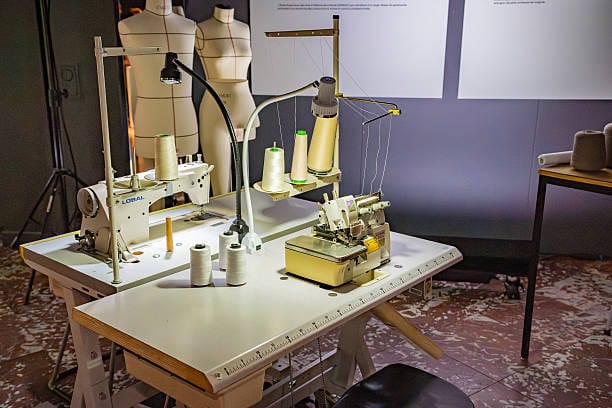
Every Nigerian fashion brand has slow seasons. The months when the Owambes thin out, the weddings slow down and the inquiries drop to a trickle. Every brand owner knows this is coming because it comes every year. And yet it is possible to arrive at that slow season completely unprepared for it financially, even after years in the business.
The result is panic. Desperate discounting to attract any order at all. Taking on clients that the red flags said to avoid because the income is needed. Stress that affects the quality of work and the health of the brand owner. All of it entirely predictable and almost entirely preventable with basic financial planning.
Planning for slow seasons is not complicated. It just requires the discipline to look ahead and set money aside during the busy months specifically to cover the costs of the quiet ones. It requires knowing your monthly baseline costs well enough to calculate how much buffer you need to get through a slow period without the business going into distress.
That knowledge only comes from tracking your numbers consistently. Which is why the money conversation is not just about the present. It is about building the kind of financial visibility that protects your business from the future it can already see coming.
Debt and the Fashion Brand That Cannot Say No to an Order
This one is real and it does not get talked about enough. There are Nigerian fashion brands carrying some form of debt right now. Money borrowed to buy fabric for an order before the deposit came in. Supplier credit that stretched further than it should have. Personal loans taken out to cover a production cost the business could not afford. And because fashion is a passion business that debt often gets carried quietly, with the assumption that the next good month will clear it.
Debt in itself is not a crisis. Used strategically, credit can be a tool for growth. The problem is debt taken on reactively, to cover a gap that better financial planning would have prevented, and serviced by taking on more orders at prices that cannot actually sustain the business, just to keep money moving.
The way out of this cycle is not more orders. It is better orders at better prices with a clearer understanding of what each one actually costs and contributes. It is the willingness to say no to an order that does not make financial sense even when the pressure to say yes is high. It is building the financial buffer that means the next slow season or unexpected cost does not immediately send you back to borrowing.
None of that is possible without facing the money conversation honestly.
What the Business Actually Needs From You
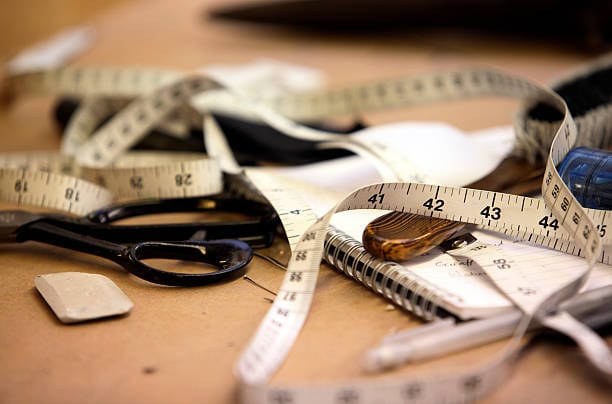
Your fashion brand does not need you to be a financial expert. It does not need you to understand complex accounting or build sophisticated financial models. What it needs is for you to stop treating the money side of the business as something other people worry about.
It needs you to know your numbers. Not perfectly but honestly. What comes in, what goes out, what stays. What each piece actually costs to produce. What your real profit margin is. What you need to make every month to sustain the business and pay yourself properly.
It needs you to track those numbers consistently even when it is uncomfortable to look at them. Especially when it is uncomfortable to look at them.
It needs you to make pricing decisions based on what the business actually needs to be sustainable rather than what you think clients want to hear. It needs you to build a financial buffer for the slow seasons you already know are coming. It needs you to pay yourself like the skilled professional you are instead of treating your own income as whatever is left after everything else.
None of this is about becoming a different kind of person or abandoning the creative passion that brought you to this industry in the first place. It is about giving that passion a structure that can actually sustain it for the long term.
Because the Nigerian fashion brands that last are not just the talented ones. They are the ones where the person running the business decided to face the money conversation honestly and build something that the numbers could actually support.
When was the last time you sat down and looked at your fashion brand numbers honestly? Drop a comment or share this with a fashion brand owner who needs to read it today.
Photo: Getty images

When the invite says “dress to impress,” these are the looks worth saving. From rich owambe glamour to polished dinner outfits, unforgettable premiere fashion and wedding guest slay, this lineup proves that great style comes in different moods.
This collection is packed with looks for every kind of celebration. Whether you’re attending an owambe, showing up as the best-dressed wedding guest, heading to a glamorous dinner or dressing up for a special night out, you’ll find ideas that fit the mood. Some outfits play with bold colours, while others prove that simple styling can leave the biggest impression.
There is something for every personal style, whether you love classic elegance or enjoy stepping out in fashion that gets people talking.
Instead of giving you one idea, these celebrities show ten completely different ways to own a special occasion. You will spot clever colour combinations, beautiful styling tricks, standout handbags, and striking jewellery that complete each outfit effortlessly. They also show how the right fit and thoughtful details can completely change the feel of a look.
If your calendar is filling up with weddings, owambes, premieres, cocktail parties or glamorous dinner dates, consider this your style cheat sheet.
Scroll through every look, pick your favourites and save the ones that match the event you have coming up. You might just find your next outfit before you reach the last slide.
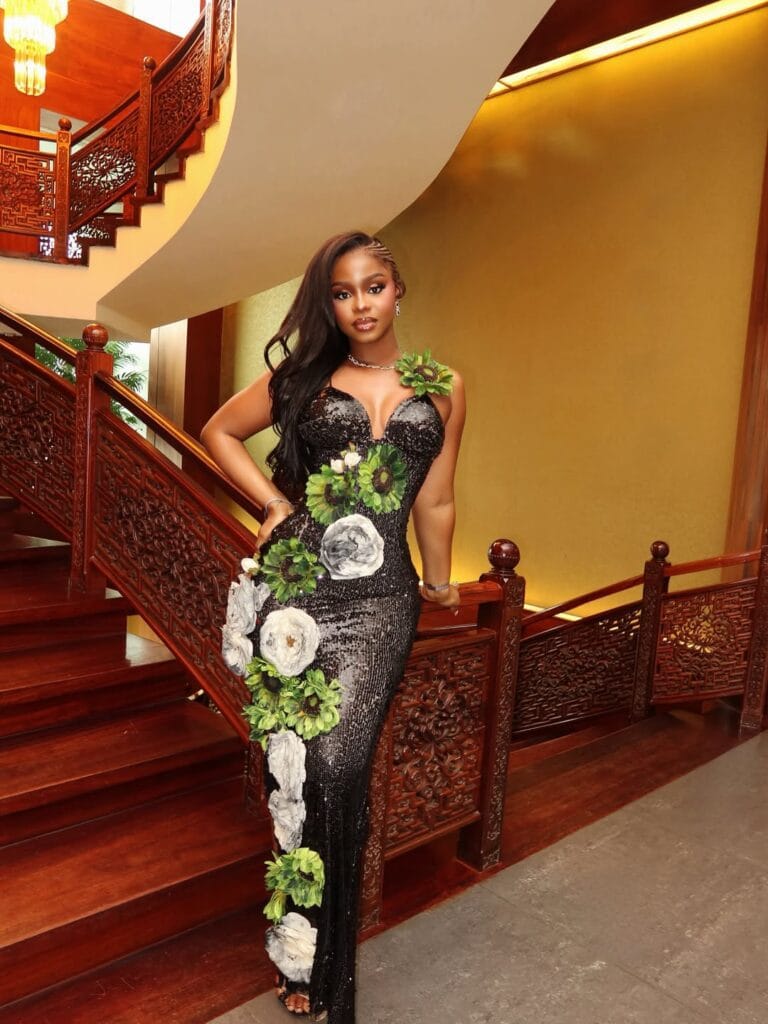
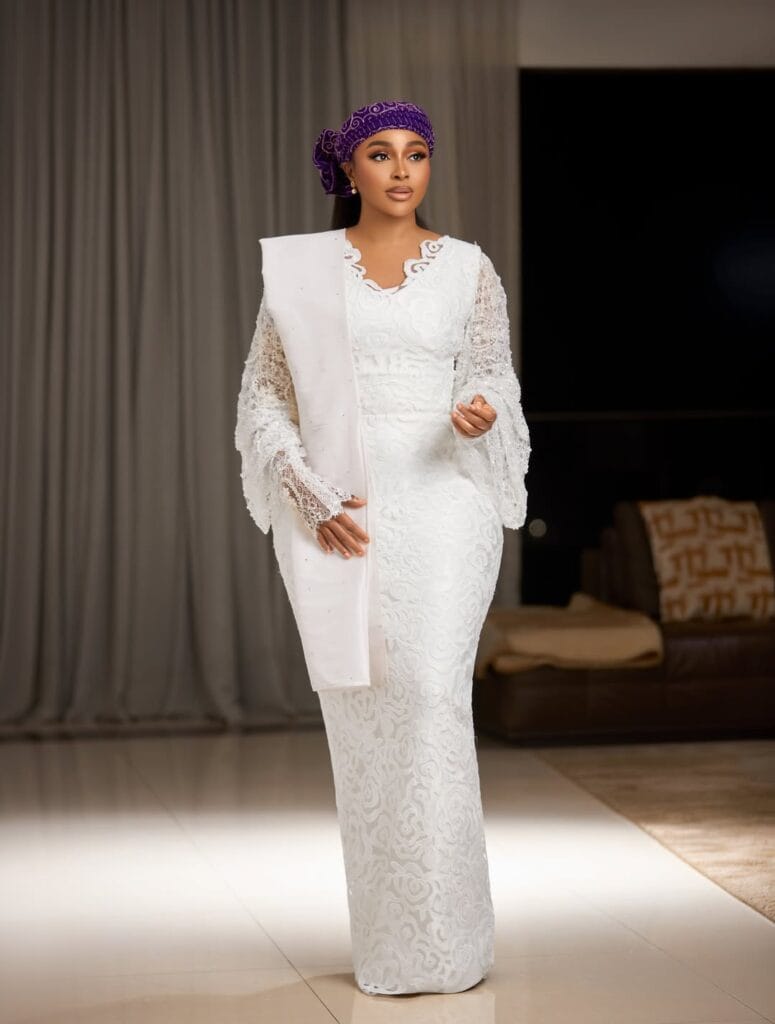
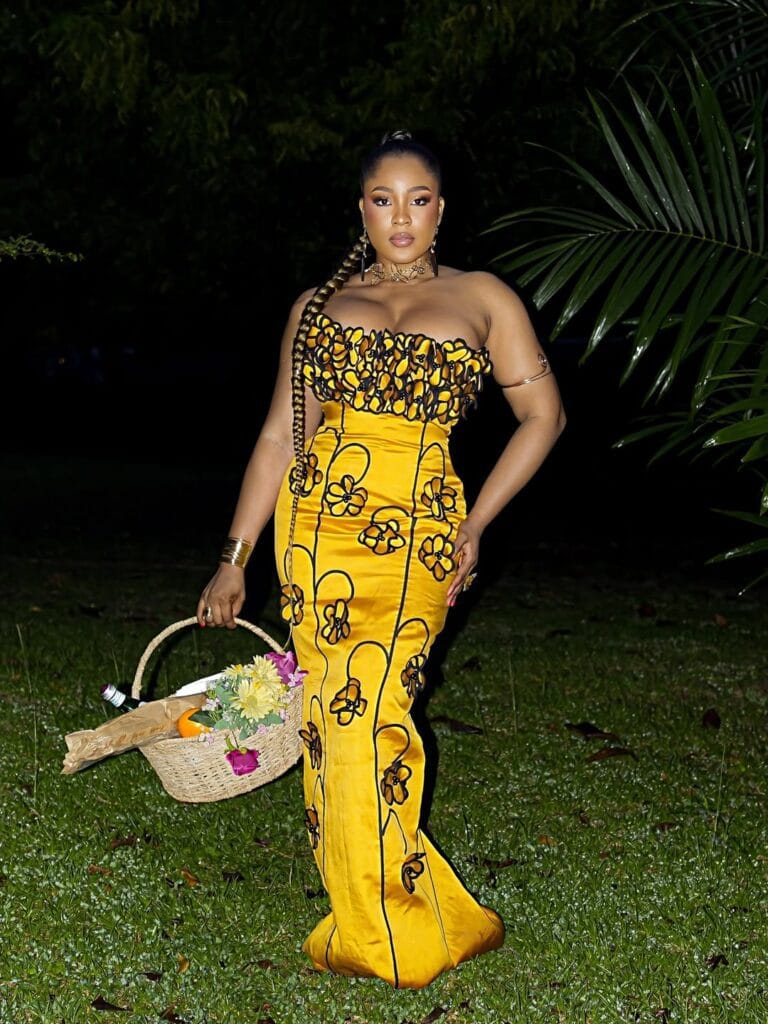
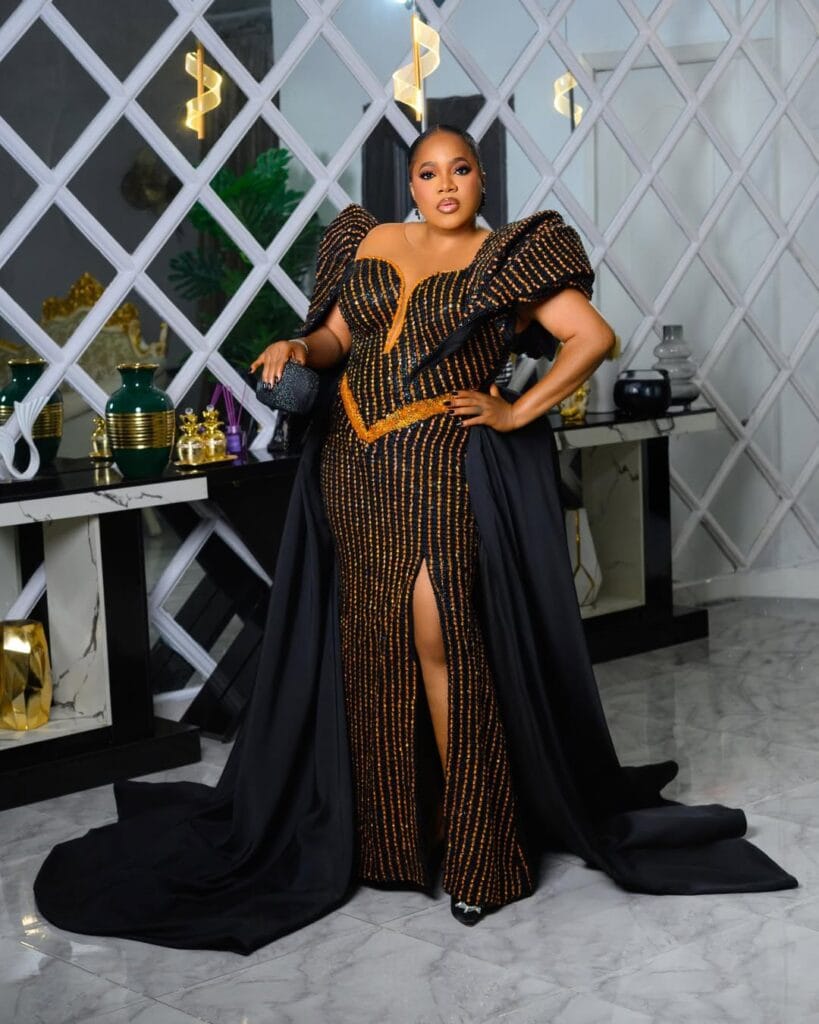
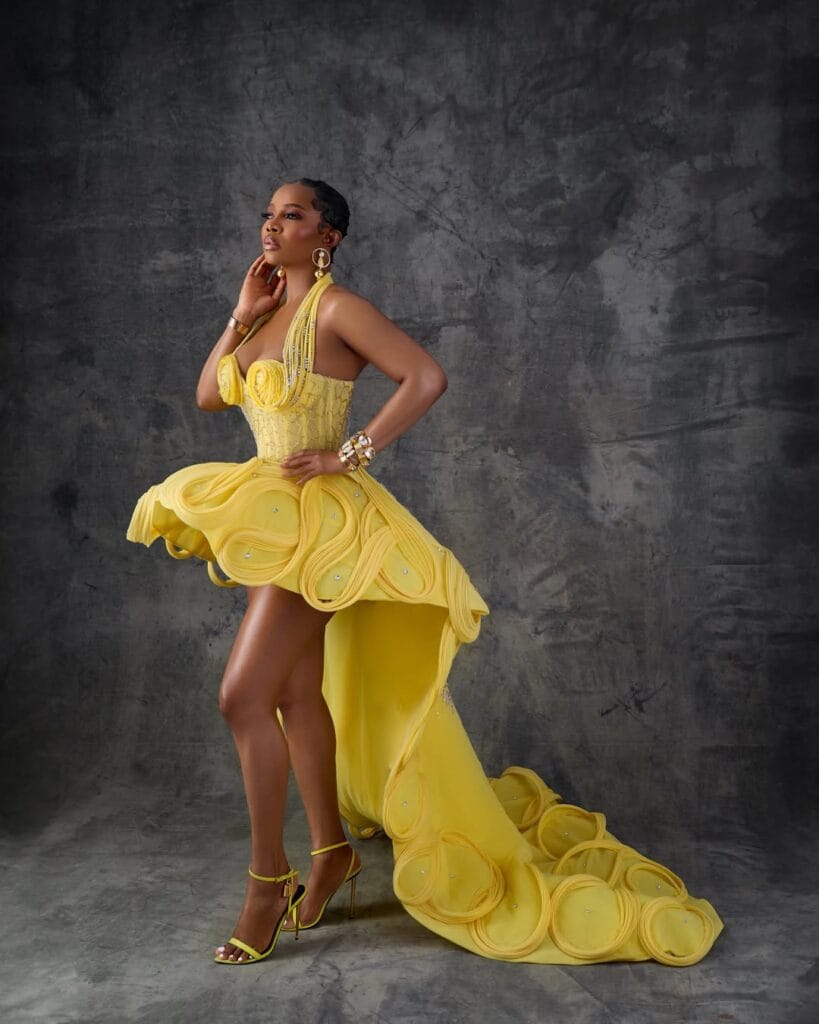
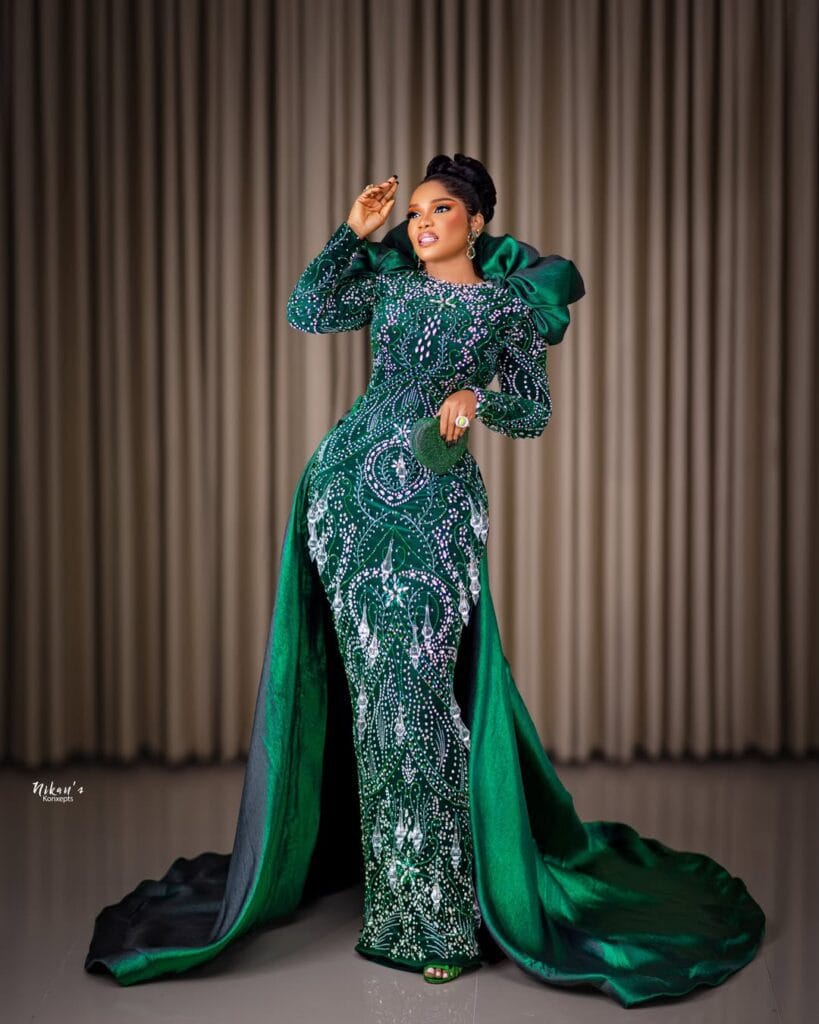

The Hollywoodbets Durban July has never been just about horse racing. Every year, it becomes one of Africa’s biggest fashion stages where designers tell stories through clothes. For 2026, the theme is Country Allure, inviting creatives to draw inspiration from wide landscapes, equestrian culture, natural textures and timeless elegance instead of taking a costume approach. The idea is to celebrate the beauty of the countryside through modern fashion.
This look understands that assignment from the very first glance. Instead of reaching for denim, boots or obvious country references, the designer builds the story through texture. The animal print fabric immediately brings nature into the conversation, while the dramatic white fringe gives the dress movement that feels almost like tall grass blowing across an open field. It is bold, artistic and impossible to ignore.
The sculpted shoulders deserve their own moment. They create a powerful shape that gives the gown confidence without making it feel heavy. As the fringe flows down the body and spreads into the train, the dress becomes more than evening wear. It becomes wearable art.
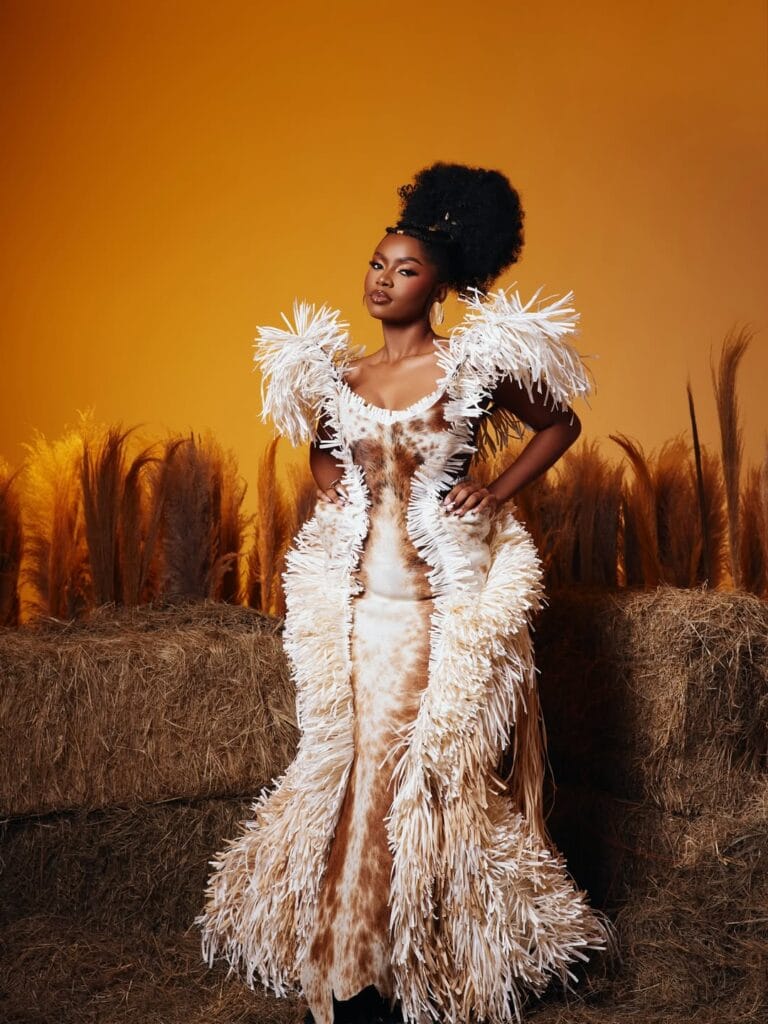
The warm brown and ivory tones also fit perfectly with the spirit of Country Allure. They echo the colours of dry landscapes, horses and natural materials, proving that the theme is not only about what you wear but also about the feeling your outfit creates.
What makes this outfit stand out is its restraint. It does not try to explain the theme in an obvious way. It translates it into couture through craftsmanship, texture and silhouette. That is often where the strongest Durban July fashion moments come from.
If you are looking for inspiration from this year’s red carpet, this is the kind of look worth saving. It reminds us that the best theme dressing is not about copying an idea. It is about transforming that idea into something fresh, elegant and unique.
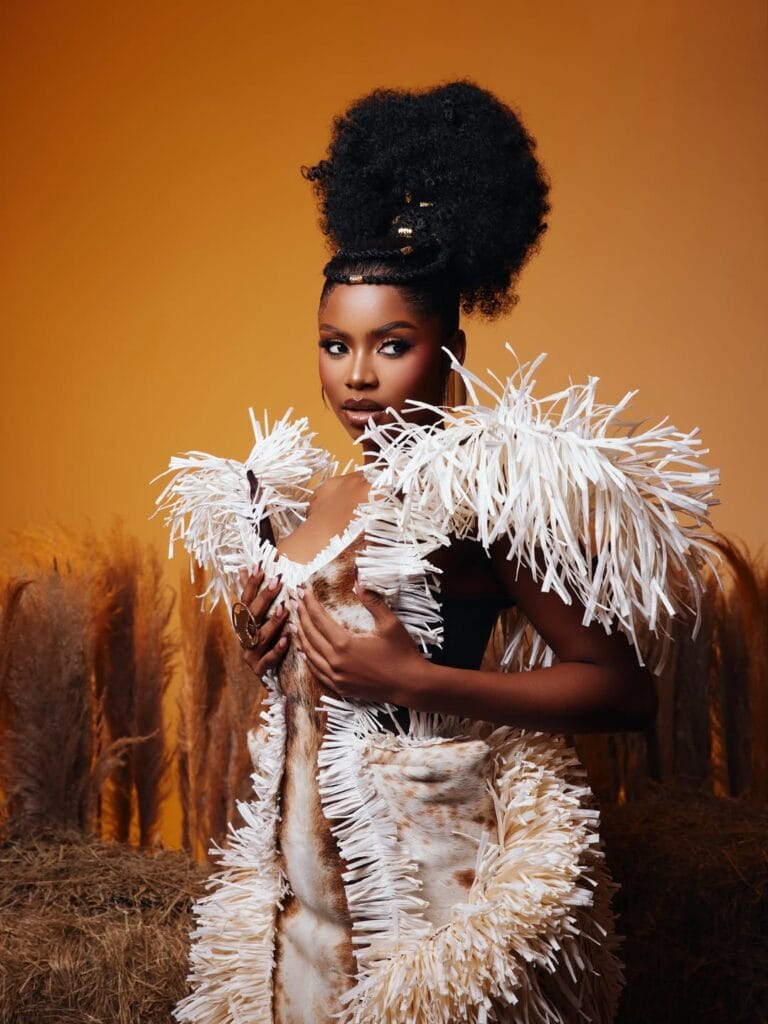
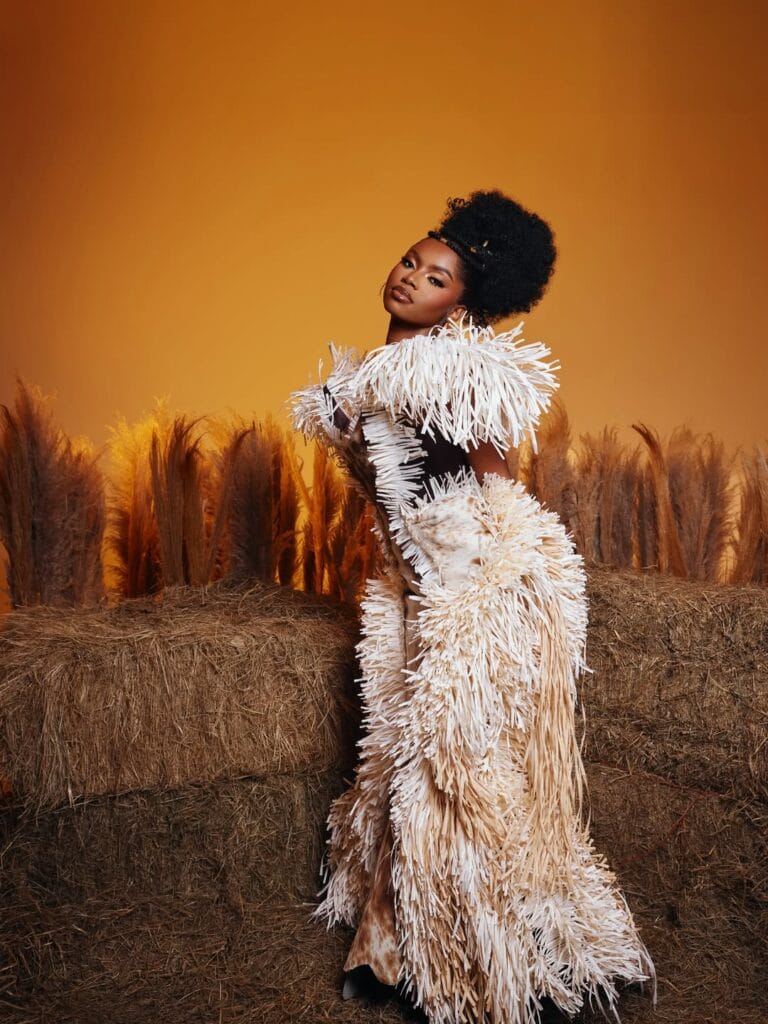
Photo:@s.crumptious | Instagram


Why Referee Overturned Free-Kick During Spain’s World Cup Win vs France

Over 10,000 ADC, PDP members defect to APC in Kebbi

William Saliba Reveals His ‘Back Is Gone’ During France vs Spain

Meaning Behind Egypt Manager’s ‘X’ Gesture vs Argentina

Simi Sanya and Femi Dapson Are Now Legally Married and It Is Beautiful to See

Premier League Set-Piece Goals (2025/2026)
-
 Sports14 hours ago
England vs Argentina: Referee and Assistants Announced
-
 Sports1 day ago
Alfie Haaland’s 6-Word Insult to Roy Keane After England vs Norway
-
 Sports1 day ago
Lionel Messi Missed Training Session Ahead of Argentina vs England
-
 Sports1 day ago
Argentina ‘Make Special Request to FIFA’ Before England World Cup Clash
-
 Sports2 days ago
Alexander Sorloth’s Girlfriend Releases Statement After Online Backlash
-
 Sports1 day ago
Concerning Jude Bellingham Footage Sparks England Injury Fears
-
 Politics2 days ago
2027: Nafiu Bala’s ADC faction uploads presidential candidate, others on INEC portal
-
Metro2 days ago
Bandits kidnap Oyo school headmaster, demand N30m ransom