
Politics
Gombe-led ADC asks INEC to immediately remove Mark’s NWC from portal, warns Atiku


The faction of the African Democratic Congress, ADC, under the leadership of Bala Gombe, has called on the Independent National Electoral Commission, INEC, to promptly remove the National Working Committee, NWC, led by David Mark from its official portal.
Gombe pointed out that a court ruling required the electoral commission to withdraw its recognition of the NWC headed by David Mark and declare all decisions, resolutions, and actions made by that committee as null and void.
In a statement issued on Tuesday, Gombe stressed that INEC should only publish and recognize what he termed the legitimate National Working Committee of the party, in line with the court’s ruling.
The faction also warned former Vice President Atiku Abubakar against positioning himself as the ADC’s presidential candidate for the forthcoming 2027 general election.
In his statement, he said, “The rightful leadership of the African Democratic Congress (ADC), led by Hon. Nafiu Bala Gombe, formally requests the Independent National Electoral Commission (INEC) to immediately remove the names of Senator David Mark and his NWC members from the Commission’s portal.
“INEC is also urged to upload and recognize exclusively the authentic members of the National Working Committee of the ADC, in strict compliance with the court’s ruling. This ruling directed INEC to withdraw recognition from the David Mark-led NWC and further invalidated all decisions, resolutions, and actions taken by that Committee.
“Moreover, the leadership of the African Democratic Congress formally and unequivocally warns Alhaji Atiku Abubakar to immediately refrain from presenting himself as the ADC’s Presidential Candidate. We reiterate our earlier position that His Excellency, Alhaji Atiku Abubakar, is neither the current nor has he ever been the Presidential Candidate of the ADC for the 2027 General Elections.
“We call upon Alhaji Atiku Abubakar to promptly cease using the Party’s name, logo, and emblem to spread falsehoods and misinformation regarding the African Democratic Congress.
“Additionally, we provide him with a 7-day ultimatum to publicly apologize to the members and stakeholders of the ADC for making unauthorized statements on behalf of the Party. Should he fail to comply with this demand within the specified timeframe, we will pursue appropriate legal action.
“Furthermore, we wish to bring to the attention of the Inspector General of Police, IGP, and the Director General of the Department of State Services, DSS, the actions of Mallam Bolaji Abdullahi.
“We urge the pertinent security agencies to ensure his immediate arrest and prosecution for the dissemination of false information that could mislead the public and incite public unrest, thereby jeopardizing the relative peace we currently enjoy.”
dailypost.ng
Politics
2027: Afenifere, Adebayo, Bakita Bello, Arabambi, Ogunsuyi, others react to APC Muslim-Muslim ticket

Dayo Johnson, Olasunkanmi Akoni, Rotimi Ojomoyela, Shina Abubarka, James Ogunnnaike & Deola Badru
Stakeholders have expressed divergent views over the All Progressives Congress (APC)’s decision to retain its Muslim-Muslim presidential ticket ahead of the 2027 general election, with some arguing that competence should take precedence over religion, while others called for greater inclusiveness and a stronger focus on governance.
The renewed debate follows growing speculation that President Bola Tinubu and Vice President Kashim Shettima will again fly the APC’s presidential ticket in the next election.
Afenifere: Nigerians should focus on governance, not religion
The National Organising Secretary of Afenifere, Abagun Kole Omololu, said: “The attention of Afenifere has been drawn to renewed attempts by certain political interests to rekindle controversy over the APC’s Muslim-Muslim presidential ticket. We consider it necessary to restate our principled position on this matter.
“Afenifere is not a religious organisation. It is a pan-Yoruba socio-political movement established to protect, promote and advance the collective interests of the Yoruba people wherever they reside across the globe.
“Our enduring commitment has always been to justice, equity, constitutional democracy, good governance and the welfare of the people, irrespective of religious affiliation.
“While some politicians may seek to weaponise religion for partisan advantage, the overwhelming majority of Nigerians are far more concerned about security, economic opportunities, affordable living, quality education, healthcare and accountable leadership than the faith of those entrusted with public office.
“History offers ample evidence that Nigerians have consistently demonstrated political maturity by placing competence above creed.
“Alhaji Lateef Jakande, widely regarded as one of the finest governors Nigeria has produced, was a Muslim, as was his deputy, Alhaji Rafiu Jafojo, notwithstanding the overwhelmingly Christian population of Lagos State.
“Their administration remains an enduring benchmark for visionary and people-centred governance.
“Likewise, in 1979, Chief Obafemi Awolowo chose Chief Philip Umeadi, a Christian from the South-East, as his presidential running mate, despite the substantial Muslim voting population in Northern Nigeria.
“In 1993, Chief M.K.O. Abiola and Ambassador Babagana Kingibe, both Muslims, secured an unprecedented nationwide mandate because Nigerians judged them on character, competence and vision.
“Across Nigeria today, there are states where the governor, deputy governor and the overwhelming majority of commissioners profess the same religion, whether Christianity or Islam.
“Yet no objective observer can honestly argue that such religious uniformity has automatically translated into better governance, greater security or stronger economic development.
“The quality of leadership has never been determined by the religion of those in office, but by their integrity, competence, vision and commitment to public service.
“President Bola Ahmed Tinubu and Vice-President Kashim Shettima have not exhibited religious bigotry in the discharge of their constitutional responsibilities.
“Therefore, the continued preoccupation with the religious composition of the presidential ticket is both misplaced and unhelpful.
“Nigeria’s pressing challenges remain insecurity, corruption, weak public institutions and, above all, the centralisation of power instead of genuine federalism.
“These are the issues that deserve the nation’s collective attention. Leadership should therefore be assessed by measurable results, constitutional fidelity and service to the people, not by religious identity.”
Bakita Bello: Leadership should be judged by competence, not faith
A former Speaker of the Ondo State House of Assembly, Rt. Hon. Bakita Bello, said the APC presidential Muslim-Muslim ticket would ordinarily not be a concern to him as a humanist and naturalist.
He said: “Humanity abhors discrimination, racism or injustice. Human beings, however, could be unjust, racial and discriminatory. Many men can be very callous, terribly repressive, oppressive and denying to others.
“So many men are bigots, cheats, insensitive and treacherous. The reality facing all or many is such that inhuman treatments being suffered from other fellows located together or associated with them are oftentimes on the grounds of not belonging to the same class, creed, tribe, tongue, faith or associations.
“Man’s inhumanity to fellow men has been so demeaning that trust, confidence and reliability have been eroded from our societal and political values.
“So, competencies, capacities, capabilities, compassion and courage, which should have been the determining considerations for selecting or evolving political leadership, have been misplaced for mundane interests, thereby shortchanging societies and mortgaging the development of most African nations.
“The APC presidential Muslim-Christian ticket of Buhari/Osinbajo could not prevent the influx into Nigeria of Fulani marauders and territorial expansionists from other Sahelian states of Africa.
“Neither did that ticket prevent the massive looting of the national treasury, nor did it discourage the culture of corruption that has brought Nigeria to its knees.
“Has the APC presidential ticket, in whichever marriage of faith-based groups, been genuinely concerned, considerate, competent, courageous and compassionate about improving the plight of the masses as well as establishing citizen-focused government at all levels?
“What noticeable consequential positive impact has the last three years of the APC presidential Muslim-Muslim ticket brought upon the generality of Nigerians, irrespective of tribe, class, creed or religion?
“Has this all-Muslim ticket prevented the escalation of Boko Haram, ISWAP or ISIS terrorist and banditry attacks or ended their onslaughts? Has food, fuel, fees, bills and services gotten cheaper or become more accessible on any religious consideration?
“However, has corruption, conspiracies, callousness or terrorism not thrived in religious, tribal, class, creed, racial and cultural cliques when such are schemed into political governance and administration of any nation or society?
“Answers to these questions, sincerely and knowledgeably provided, would lead voters and citizens alike to make informed decisions about whom or which party to vote for.
“The APC has not met my aspirations through any of their tickets. Maybe the party and its tickets should be more sincere, committed, compassionate and conscientiously dedicated to Nigeria and Nigerians, irrespective of differences.”
Arabambi: Competence should override religion
The National Vice Chairman (South-West) of the Julius Abure-led faction of the Labour Party, Comrade Abayomi Arabambi, dismissed renewed criticism of the All Progressives Congress (APC) Muslim-Muslim ticket ahead of the 2027 presidential election, saying competence should override religious considerations.
Arabambi said President Tinubu’s decision should be viewed from the perspective of political realities and governance rather than religion.
According to him, competence and national interest should remain the overriding considerations ahead of the next general election.
He said he saw nothing controversial about the party’s decision to retain the Muslim-Muslim ticket for 2027.
Arabambi maintained that the debate surrounding the religious composition of the APC ticket had outlived its relevance, insisting that Nigerians should evaluate the administration based on its performance over the last three years.
He said religion should not be the defining issue in assessing leadership, arguing that governance should be measured by competence and delivery.
He added that the realities of Northern Nigerian politics also played a role in such decisions.
According to him: “Well, as far as I’m concerned, I don’t see any issue in that. It’s just as clear as snow, as bright as snow, and as clear as air that the President will soon form his vice-presidential candidacy.
“You have to be very cautious of the way the northerner thinks.
“If you even go to say, ‘I want to pick a northern Christian,’ they will tell you they are a minority. And that’s a fact. They tell you they are a minority, and that’s a fact.
“So the President will not just want to go against the wind.”
Arabambi explained that replacing a northern Muslim with a northern Christian might not necessarily produce the expected political outcome because of the demographic realities in the region.
He also rejected suggestions that the Muslim-Muslim ticket had contributed to insecurity or discrimination against Christians, arguing that criminality affects Nigerians irrespective of religion.
He said: “The banditry in Nigeria, as they are killing Muslims, they are killing Christians also. So it’s not a question of the Muslim-Muslim ticket having any positive or mostly negative effects on Christians.
“All of us are partakers, whether you worship the local deity, whether you are a Christian, whether you are a Muslim.”
Arabambi maintained that criminal groups do not discriminate based on religion when carrying out attacks.
He said: “Most of these criminal bandits, whosoever they see within their area, they will just pick the person, wait for announcement to know whether they have the big fish, and they will now make their demand.”
Arabambi: Tinubu should be judged by performance
Defending the APC’s choice further, Arabambi said selecting another Muslim from the South would have been more politically problematic than retaining a northern Muslim.
He argued that Northern Nigeria remains predominantly Muslim and that political leaders cannot ignore existing realities.
According to him, President Tinubu’s decision was influenced by those realities.
He said: “It’s not a question of a Muslim-Muslim ticket because it’s coming from the North. If a northern person is a Muslim, you are here. To now come and pick a Muslim from the South, that might be somehow counterproductive.”
Asked whether concerns raised by critics of the Muslim-Muslim ticket had been addressed through appointments and governance over the past three years, Arabambi insisted that the administration should be judged by its achievements.
He argued that several economic reforms had been introduced despite the challenges inherited by the government and urged Nigerians to focus on outcomes rather than religious sentiments.
He said: “I don’t think anybody should introduce religious sentiment. The government has performed well on the economy. We now have a unified exchange rate in Nigeria.”
Arabambi also cited developments in the downstream petroleum sector as one of the administration’s achievements.
According to him, fuel scarcity has reduced significantly compared with previous years, describing it as a measurable outcome of government policy.
He said: “Whether we like it or not, we don’t queue to buy our fuel.”
He further argued that the Tinubu administration inherited severe fiscal challenges, particularly relating to debt servicing.
According to him, progress has been made in improving government finances, adding that the President deserves recognition for stabilising the economy.
Arabambi concluded that while political debates would continue ahead of the 2027 elections, Nigerians should place greater emphasis on governance, economic management and national development rather than religious identity.
He maintained that competence, not faith, should remain the deciding factor in leadership selection.
Yoruba Progressive Forum: Muslim-Muslim ticket is political strategy
The Coordinator of the Yoruba Progressive Forum, Lateef Olalekan, said the APC Muslim-Muslim ticket should be viewed from the perspective of political strategy and continuity.
He said: “Considering the sensitive nature of religious issues in the country, the APC’s Muslim-Muslim ticket raises some concern. But since the ticket reflects strategy and continuity, I think we will continue to have stability on the issues of religion.
“For about four years of the administration so far, there has been no major debate over the faith of the leaders of the administration, which speaks to the fact that religion is not a major concern but economic issues.
“However, the situation around Benue, Plateau and some North-Central states breeds concern among the Christian population and should be tackled headlong.
“What I believe inspired the Muslim-Muslim ticket again is political strategy targeted at winning elections, not something meant to disrupt the unity of the country.”
Ebiseni: Tinubu has not governed on religious considerations
The Secretary-General of Afenifere, Chief Olusola Ebiseni, said Nigeria’s established political culture since 1999 has been based on the consensus of rotational presidency between the Southern and Northern regions of the country.
He said religion remains a sensitive and potentially divisive issue, noting that it was a major campaign issue during the 2023 general election, just as it was during the 1993 Abiola/Kingibe presidential ticket.
According to him: “Well, talking about the position of Afenifere, you will remember that throughout the 2023 campaign, we refused to be dragged into the religious campaign because religion has never been an issue in Yorubaland where all faiths peacefully coexist, even within the same family.
“Remember, Chief Ayo Adebanjo, our leader, was a product of a Christian father and a mother who was an Alhaja, and so are several families in Yorubaland.
“On the Tinubu/Shettima ticket, my personal view is that President Bola Ahmed Tinubu has not acted in any manner suggesting that he administers the country on religious considerations.
“In contrast, I think it is members of the religion with which his first name is associated that seem to think he is not practising it enough.”
Ebiseni said if he were in President Tinubu’s position, he would maintain the same ticket as it was in 2023.
He explained that the decision would not necessarily be because it guaranteed victory but because Tinubu, as President, could not afford to destabilise his administration and the country through what he described as careless political choices.
He recalled that misunderstandings between former President Olusegun Obasanjo and his Vice-President, Atiku Abubakar, affected their second-term administration.
Ebiseni also referred to an APC gathering in Gombe State where an endorsement of Tinubu’s second-term bid without mentioning Shettima reportedly led to tension.
He added: “Besides, you must be conscious of the ethnic and religious diversity of the North and the implications of removing a loyal Kanuri Vice President for a candidate of another ethnic group a few months to the election.”
Ogunsuyi: APC internal politics fuelling Muslim-Muslim ticket debate
A former Commissioner for Information in Ekiti State under the administration of former Governor Ayodele Fayose, Lanre Ogunsuyi, said the renewed debate over the All Progressives Congress (APC)’s Muslim-Muslim presidential ticket ahead of the 2027 general election was being driven largely by internal forces within the ruling party.
Ogunsuyi said the strongest opposition to the retention of President Bola Tinubu and Vice-President Kashim Shettima on the same ticket was coming from interests within the APC, arguing that many of the agitations were rooted in political ambition rather than genuine concerns over religious balance.
According to him, politicians seeking the vice-presidential slot have continued to fuel opposition to the Muslim-Muslim ticket, noting that the controversy surrounding the arrangement predates the current political season.
He maintained that while opposition parties may use the issue as a campaign tool in 2027, it was unlikely to be the deciding factor for Nigerian voters.
Ogunsuyi identified insecurity, inflation, unemployment and the declining fortunes of businesses as the major issues that should dominate political campaigns ahead of the next general election.
He lamented the growing cases of kidnapping for ransom and other violent crimes, saying insecurity had spread beyond specific regions of the country.
His words: “The inter-democratic elements in the APC themselves are the ones challenging the APC Muslim-Muslim ticket.
“When politicians are talking in Nigeria, it is often about their personal interests. Many people are angling for the position of the Vice-President, not that of the President.
“So, when they complain about the Muslim-Muslim ticket, it is largely an attempt to get Vice-President Kashim Shettima out.
“The Muslim-Muslim ticket is not a new phenomenon. Nigerians have lived with it for over two and a half years. People are more interested in the performance of the President and Vice-President, their cohesion in government and how their policies affect citizens.
“What Nigerians want to hear is how the opposition intends to govern differently. They should tell Nigerians what they will do in education, agriculture, security and the economy instead of merely criticising the ruling party.
“We have to look beyond which church or mosque a politician attends before electing them. The real issues are the ability to perform, transparency in office and commitment to improving the lives of Nigerians.”
Yoruba Council Worldwide: Leaders must promote inclusive politics
The President of the Yoruba Council Worldwide, Aare Oladotun Hassan, said the issue of the APC’s Muslim-Muslim ticket should be approached with maturity, fairness and a commitment to Nigeria’s unity.
He said while political parties have the constitutional right to determine their candidates, democracy is strengthened when every segment of society feels represented and included.
According to him: “The issue of the APC’s Muslim-Muslim ticket remains one that should be approached with maturity, fairness and a deep commitment to Nigeria’s unity.
“While political parties have the constitutional right to determine their candidates, our democracy is strengthened when every segment of society feels represented and included.
“Rather than allowing religious or ethnic considerations to deepen divisions, political leaders should focus on competence, equity, justice and policies that improve the lives of Nigerians.
“I also encourage Yoruba leaders across the states, as well as opposition parties, to express their views responsibly and constructively, ensuring that our political discourse promotes national cohesion rather than unnecessary polarisation.
“At this critical period, Nigeria needs inclusive leadership, mutual respect and issue-based politics above every other consideration.”
Adebayo: Religion should not determine electoral choices
The presidential candidate of the Social Democratic Party (SDP) for the 2027 general election, Prince Adewole Adebayo, said history had shown that the Muslim-Muslim ticket was not a major issue in Nigeria’s politics.
Adebayo recalled that the SDP introduced a Muslim-Muslim ticket in the 1993 presidential election with the pairing of Chief M.K.O. Abiola and Ambassador Babagana Kingibe.
According to him, Nigerians did not judge the duo solely through the religious prism because leadership should be assessed from a broader perspective.
He said: “History has shown that it is not a major issue in Nigeria because, even for my party especially, when we were talking about Muslim-Muslim ticket last time, why the SDP was not involved in the discussion about it was that in 1993, we introduced Muslim-Muslim ticket. M.K.O. Abiola and Baba Gana Kingibe, they were both Muslims.
“But because we had introduced them well to the country, people don’t look at them from the religious prism only, because a human being is a multidimensional person.
“So, you have your religion, you also have your social life, your economic life, your general professional life, so people can look at you from a well-rounded picture.”
Adebayo, who said he is a Christian, argued that Nigerians who interact with him focus more on his patriotism, honesty, consistency, fairness and leadership qualities rather than his religious identity.
He said religion cannot be completely separated from society but should not become the dominant factor in political decisions, particularly in a country facing challenges such as insecurity and poverty.
“You cannot isolate, you cannot eliminate religion, but it cannot be a dominant factor in a country really in poverty, insecurity and the general common experiences.
“So, if we are not united by well-organised, unified leadership, at least we should be united by our problems.
“We have common problems of insecurity, whether you are Christian or Muslim. Serious problem of poverty, whether you are Christian or Muslim or other religions.”
Adebayo: Nigerians seek justice, not religious symbolism
Adebayo said the country’s common challenges, including insecurity, poverty, poor education and economic hardship, affect citizens irrespective of their religious affiliations.
He argued that victims of insecurity come from different faith backgrounds, making religion an unsuitable basis for determining political choices.
He said: “Those who were captured, kidnapped, maltreated in Orire, if you listen to their names, you will see Christians there, you will see Muslims there.
“So, on what basis, therefore, will you go to your religion as a basis for your political decision?
“I think the issues are the survival issues, the justice issues. All of those things unite us.”
The SDP candidate said politicians sometimes emphasise religion because they believe it can influence voters, but insisted that more important issues should guide electoral decisions.
According to him: “People don’t interrogate me based on my religion, but certain politicians, if they do the calculation and realise that religion could be used as a sentiment, as a factor, they can emphasise that.
“But we tend to go around and emphasise other things that are more relevant.”
Adebayo recalled that during the previous debate on the Muslim-Muslim ticket, he explained that Nigerians should judge leaders based on justice and competence rather than religious identity.
He said: “Even when the contraption was brought up four years ago, and I was in Kano and I was asked the same question, I was then mingling with the ulamas, and I let them know that if you are hoping for a Muslim-Muslim ticket in President Tinubu and Vice-President Shettima, you will be lucky to even have a single Muslim out of the two.
“And it turned out now that it’s not a Muslim-Muslim ticket from the point of view of Muslims in Nigeria; it’s a zero-zero ticket.
“Because in Islam, what is expected in Islamic jurisprudence, what is expected of a leader, is not the religion of that leader; it is justice.”
He said the essence of political participation in Islam was to build a just society, adding that leadership should be based on suitability, competence and fairness.
According to him: “In Islam, it is expected that if you are a good Muslim, you will not give public office or responsibility to anyone who is not fit for that.
“You look among yourselves for the most suitable person, the most competent person.
“Second, you don’t give power based on favouritism or bias. And three, you don’t give power based on expectation of reward.”
Adebayo argued that the original debate around the Muslim-Muslim ticket was driven by political interests rather than genuine concern for Nigerians.
He cited the recent experience of former Kaduna State Governor Nasir El-Rufai as an example, arguing that political leaders ultimately seek justice regardless of the religious composition of government.
He said: “The whole concept from the beginning was just to defraud the populace by using religious sentiment.
“What the North, what Muslims, what all Nigerians are looking for is a righteous leader, no matter that person’s religion.
“When you say you are looking for a Muslim-Muslim ticket and there’s no justice anywhere, even one of the proponents and advocates of Muslim-Muslim ticket, who was celebrating it, Nasir El-Rufai, he and his family are now crying for justice. That is the biggest irony you can have.
“And nobody was more of a supporter of Muslim-Muslim ticket, celebrating it after the victory, than El-Rufai.
“Now he can’t get justice under his so-called Muslim-Muslim ticket. So, I don’t think Nigerians are interested in that at all.”
Adebayo maintained that Nigerians were more concerned about leadership that guarantees justice, honesty, accountability and compassion than the religious identities of political office holders.
He added: “The Prophet and all the leaders of Islam want Muslims against this kind of leadership, where there’s no justice, where there’s no truth, where there’s no honesty, no kindness and no charity.
“I don’t think that ship can come and rob the people one more time. It doesn’t make any sense.”
www.vanguardngr.com
Politics
Taraba APC crisis: Electoral victories should not breed arrogance, exclusion – Kefas tells candidates
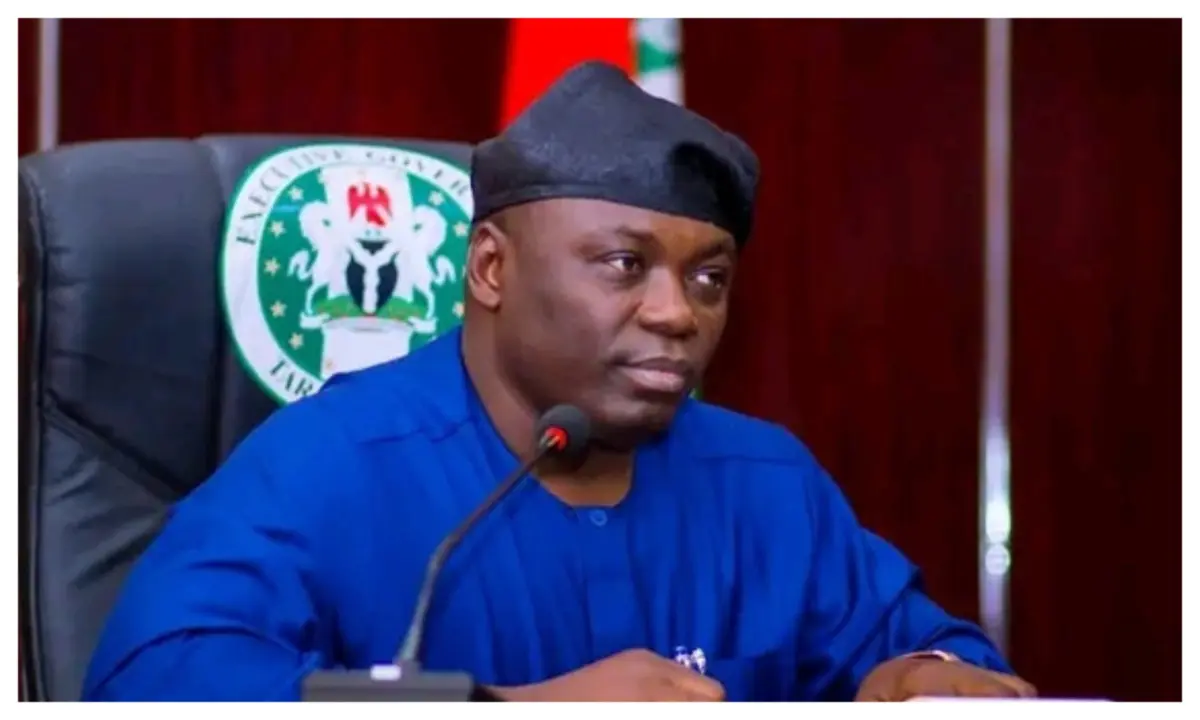
Governor Agbu Kefas of Taraba State has urged party members who secured the All Progressives Congress (APC) ticket ahead of the upcoming elections to demonstrate humility by reaching out to those who were unsuccessful, saying electoral victories should not breed arrogance or exclusion.
The governor made the appeal on Tuesday during a reconciliation dinner with APC stakeholders in Jalingo, describing the gathering as a “family meeting,” aimed at healing divisions, rebuilding trust, and strengthening the party.
He called on APC members in the state to put aside grievances arising from the party’s congresses and primary elections and work together ahead of future electoral contests.
Kefas acknowledged that the process leading to his defection from the Peoples Democratic Party (PDP) to the APC, as well as the ward, local government, and state congresses and subsequent primaries, had generated mixed feelings among party members.
He admitted that while some members were satisfied with the outcome of the exercises, others felt disappointed or excluded from the process.
“Wherever this happened, I sincerely regret the pain or misunderstanding that may have arisen,” the governor said, adding that his decisions were never intended to suppress legitimate political ambitions or diminish the contributions of party stakeholders.
“The decisions taken during the political process were aimed at preventing prolonged internal conflicts that could have weakened the party and divided the people of Taraba State,” Kefas said.
The governor stressed that reconciliation should now take precedence over political differences, noting that party contests should not create permanent enemies or destroy long-standing relationships.
He urged party members who secured the APC ticket to demonstrate humility by reaching out to those who were unsuccessful, saying electoral victories should not breed arrogance or exclusion.
“No candidate can succeed alone,” he said, urging successful aspirants to carry every stakeholder along, regardless of the outcome of the primaries.
Kefas also appealed to aspirants who did not emerge victorious to remain committed to the party, assuring them that political opportunities extend beyond a single election cycle.
He pledged to deepen consultations with party leaders and stakeholders across the state, saying reconciliation would not end with the dinner but would continue through sustained dialogue at the ward, local government, senatorial, and state levels.
The governor said reconciliation should go beyond appointments and political positions, stressing that respect, consultation, inclusion, and recognition were essential to building a stronger party.
He called for an end to divisions between old and new members of the APC, insisting that there should be “only one APC in Taraba State.”
Kefas further pledged to lead with humility, listen to constructive criticism, and broaden consultations in decision-making, while urging all stakeholders to place the collective interest of the party above personal grievances.
He reminded party members that politics should ultimately focus on improving the lives of citizens through better security, education, healthcare, infrastructure, electricity, employment, and agricultural development rather than internal disputes.
The governor urged party leaders, aspirants, and supporters to embrace forgiveness, rebuild trust, and unite ahead of future elections.
“Let tonight mark the beginning of a new chapter founded on respect, forgiveness, consultation, discipline, and shared purpose,” he said.
Kefas expressed confidence that a united APC would be better positioned to earn the confidence of the people of Taraba State and achieve electoral success while adv
dailypost.ng

The decision by the All Progressives Congress, APC, to go into the 2027 presidential election with a Muslim-Muslim ticket has re-opened the debate that dominated the 2023 election.
President Tinubu, had, last week, renominated Vice President Kashim Shettima as his running mate for the 2027 presidential election, a decision that is again generating mixed feelings among Nigerians.
While for the ruling party and their supporters it is a political master-stroke that would ensure stability and continuity, other Nigerians argue that in a multi-religious country like Nigeria, the same faith ticket is akin to discarding the feelings of the adherents of other faiths.
Before now, there had been uncertainty, different views, opinions, intensive debates and controversy over Shettima’s candidacy as vice president and the possibility of the ruling APC retaining the same faith ticket against the impression of many Nigerians, who opposed it prior to the 2023 election.
Groups like the Middle Belt Forum, MBF, Northern Christian Elders’ Forum, NOSCEF, and Arewa Consultative Forum, ACF, as well as individuals, have all expressed their views on the development.
Commenting on the development, the Senator representing Plateau Central, Diket Plang, applauded the decision, describing it as a demonstration of the recognition of loyalty, stability, courage and continuity in governance.
He said he was pleased that President Tinubu resisted pressures from different quarters to change his running mate, describing the decision as one that would strengthen national unity and policy continuity.
“I thank God that President Tinubu has remained steadfast and retained Shettima as his vice president.
“That is stability at the highest level of leadership. I am proud of that decision because Shettima has been loyal, active, accessible and committed to the success of this administration,” he said.
He advised Nigerians to be willing to make personal sacrifices in support of the Tinubu administration, insisting that his vision, courage, inclusiveness and commitment to infrastructure development deserved broad national backing.
Also, a retired military officer and professor of law, Major Bello M. Magaji threw his weight behind the Muslim-Muslim ticket, describing it as a strategic and commendable decision.
“In my view, beyond political symbolism, it reinforces continuity in governance, which is critical at this stage of Nigeria’s development.
“First, retaining the same ticket preserves institutional memory and policy consistency. The administration has already initiated key reforms in the economy, security and governance architecture; changing the leadership configuration midway could disrupt momentum and dilute the ongoing efforts.
“Continuity, in this sense, provides stability and allows policies sufficient time to mature and yield measurable outcomes.
“Also, the Tinubu–Shettima partnership has, over time, developed a working synergy that is essential for effective executive coordination. Governance at the highest level benefits greatly from trust, familiarity, and a shared strategic vision; qualities that are not easily rebuilt in a new political pairing.
“Third, from a political management perspective, the decision projects confidence and internal cohesion within the ruling structure. It signals that performance, loyalty and alignment with the administration’s agenda are being rewarded, which can strengthen discipline and focus within the government,” he said in an interview.
But for a chieftain of the National Rescue Movement (NRM), Rev. Emmanuel Olorunmagba, APC’s decision to run on the same faith ticket is a missed opportunity to promote national inclusion and unity.
He said the reported reaffirmation of the Muslim-Muslim presidential ticket reflected political convenience over national inclusion, arguing that while the Nigerian Constitution does not prohibit such an arrangement, political leadership should demonstrate sensitivity to the country’s religious and ethnic diversity.
He noted in a statement that Nigeria’s current socio-economic and security challenges require leadership that fosters national cohesion and one that reassures all segments of the population that they are adequately represented in the government.
He argued that the APC could have sent a stronger message of unity by adopting a more religiously and regionally inclusive ticket for the 2027 general election.
“Nigeria’s strength lies in its diversity. Our federation is built on mutual respect among people of different faiths, ethnicities, and regions. A leadership that consciously reflects this diversity strengthens national confidence and reinforces the principle that no group should feel excluded from the highest levels of governance,” he said.
He, however, urged Nigerians not to focus solely on political symbolism or personalities as the country approaches the 2027 elections but to evaluate candidates based on their competence, track records, policy proposals and capacity to address the country’s pressing challenges.
He said issues such as economic recovery, insecurity, unemployment, accountability and good governance should dominate the political discourse as the country prepares for another electoral cycle.
The NRM chieftain added that Nigeria deserves leadership that is capable of inspiring confidence across religious, regional and ethnic lines, while governing fairly and promoting national development. In the same vein, the Middle Belt Forum, MBF, has expressed disappointment over the development, describing it as a continuation of a strategy that has failed to reflect Nigeria’s religious and regional diversity.
In a statement by its national spokesperson, Luka Binniyat, the forum said the decision represented another missed opportunity to acknowledge the strategic importance of the Middle Belt in Nigeria’s political landscape.
It noted that the reaffirmation of the Tinubu-Shettima ticket means the continuation of the Muslim-Muslim presidential ticket that excludes even Muslims from the Middle Belt.
The forum, which said it was established in 1954 to protect the socio-political interests of more than 300 ethnic nationalities across 14 northern states and the Federal Capital Territory, argued that the region had continued to demonstrate goodwill and support for the Tinubu administration despite its predominantly Christian population.
“We believe this is another missed opportunity to recognise the strategic importance of the Middle Belt, a region that today gives Tinubu’s administration tremendous goodwill and support despite having a majority Christian population,” the statement said.
It contended that the President’s decision could be interpreted as a lack of appreciation for the region’s political significance, saying,
“By overlooking the Middle Belt once again, it would appear that the President does not place much value on the region and its 60 per cent voting population of Northern Nigeria, especially in our move to produce the 2031 President,” he stated.
The forum maintained that Nigeria’s highest political offices should reflect the country’s religious and cultural diversity.
“The MBF has always maintained that the Nigerian presidency should reflect the country’s religious and cultural diversity where Muslims and Christians do not have a clear majority.
“In a multi-religious nation like Nigeria, with Muslims, Christians and people of other faiths, the highest offices of government should promote inclusion, fairness and national unity,” Binniyat said.
Despite its criticism of the composition of the presidential ticket, the forum said it had not taken a definitive political position for the 2027 election.
“However, the Middle Belt Forum will not rush into taking a political position on the 2027 presidential election.
“Our position will be guided by the decisions of our Board of Trustees, BoT, and the National Working Committee (NWC), which will carefully consider which political party and candidate will best protect and promote the interests of the Middle Belt and the unity of Nigeria,” the group submitted.
The Northern Christian Elders Forum, NOSCEF, has also kicked against the APC’s decision.
Chairman of the christian group, Elder Sunday Oibe, argued that the proponents of Muslim-Muslim presidential ticket should tell Nigerians how far the current same faith ticket had gone to grow and develop Nigeria and her citizens since 2023.
He said: “I don’t have much of a comment for now rather than to wish them well. Nigerians should judge how well they had fared with the Muslim Muslim ticket of Tinubu/Shetima ticket.
“The question to the proponents of Muslim Muslim tickets should be ‘how market?’ Nigerians will speak at the appropriate time.”
The Arewa Consultative Forum (ACF), on its part, has not taken any official position on the development.
The ACF’s national publicity secretary, Prof. Tukur Muhammad-Baba, said the forum has only received reports of the development and has not met to deliberate on the matter.
He said the choice of a running mate remains the prerogative of President Tinubu and the APC, but added that the Forum would observe how the implications of the decision unfold before making any formal pronouncement.
“The ACF has only received the news about President Bola Tinubu’s reappointment of Vice President Kashim Shettima as his running mate and is yet to debate and take a concrete position on the matter.
“For now, the Forum only wants to note that the decision remains that of the President and the APC. The ACF will watch as the implications of the decision unfold,” Muhammad-Baba said.
On concerns surrounding the Muslim-Muslim presidential ticket, he said the more important issue should be whether any candidate combination delivers good governance and addresses the country’s challenges.
He noted that, ultimately, it is the electorate that will determine which ticket to support at the polls.
However, ACF’s former scribe, Mr. Anthony Sani is of the opinion that Tinubu cannot be faulted if he sees Muslim-Muslim ticket as his winning game plan for the ruling party.
He also said: “If the move, to some people, is not a winning game plan, they are at liberty to counteract it with their superior game plan.
“After all, we are in a multiparty democracy which allows political parties to devise their own strategies. Democracy in action, one might say,” he responded during an interview.
Some analysts argue that while the Muslim–Muslim ticket remains a subject of debate, it is equally important to assess leadership based on competence, delivery and national impact.
For APC supporters, Shettima’s reappointment as a vice presidential candidate is more about sustaining direction, consolidating gains and ensuring that the administration’s long-term objectives are not derailed.
dailypost.ng


Kwara police arrest suspected cultist, recover firearm

Ruben Amorim Holds Talks to Sign Man Utd Star Noussair Mazraoui

Man Utd’s Strongest Starting XI After Santos and Tielemans Signings

Meaning Behind Egypt Manager’s ‘X’ Gesture vs Argentina

Simi Sanya and Femi Dapson Are Now Legally Married and It Is Beautiful to See

Premier League Set-Piece Goals (2025/2026)
-
 Sports1 day ago
England vs Argentina: Referee and Assistants Announced
-
 Sports2 days ago
Alfie Haaland’s 6-Word Insult to Roy Keane After England vs Norway
-
 Sports2 days ago
Lionel Messi Missed Training Session Ahead of Argentina vs England
-
 Sports2 days ago
Argentina ‘Make Special Request to FIFA’ Before England World Cup Clash
-
 Sports2 days ago
Concerning Jude Bellingham Footage Sparks England Injury Fears
-
Metro2 days ago
Bandits kidnap Oyo school headmaster, demand N30m ransom
-
 Sports2 days ago
UFC 329 Salaries For Conor McGregor, Max Holloway, Paddy Pimblett
-
 Sports2 days ago
World Cup Referee Rob Dieperink, 38, Dies After Being Dropped By FIFA