
Business
DIVERSIFICATION: Manufactured goods export up 46.8% to N1.1trn in H1’25


By Yinka Kolawole
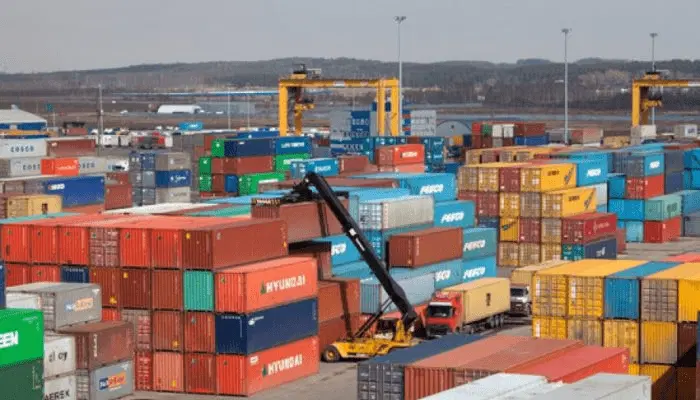
The move to diversify Nigeria’s export portfolio seems to be yielding results as the value of manufactured goods exported from the country in the first half of 2025 (H1’25) surged by 46.76 percent to N1.1 trillion from N749.5 billion in the corresponding period of the previous year (H1’24).
Analysis of reports of Foreign Trade in Goods by the National Bureau of Statistics (NBS) over the last 5 years shows a rising trend from 2021.
But there has been a significant jump from 2023, coinciding with the Naira depreciation occasioned by the unification of the foreign exchange (forex) market by the Central Bank of Nigeria (CBN) in June 2023.
A breakdown of available data from NBS revealed that manufactured goods exports stood at N304.09 billion in H1’21; N338.61 billion in H1’22; N343.29 billion in H1’23; jumped to N749.52 billion in H1’24; and N1.10 trillion in H1’25.
Further analysis indicates that the N1.1 trillion worth of manufactured goods exports in H1’25 represents 6.67 percent of the total manufactured goods traded in the period which stood at N16.49 trillion.
This shows a marginal increase in the export component of the total manufactured goods in the period under review when compared to the corresponding period of the previous year (H1’24), which was 6.21 percent.
Analysts have attributed the apparent increase in export of manufactured goods to depreciation of the naira.
According to them, the depreciation of the naira has made some goods produced in Nigeria to become cheaper, while CFA franc – a legal tender in Benin, Burkina Faso, Côte d’Ivoire, Guinea-Bissau, Mali, Niger, Senegal and Togo – continue to appreciate in value.
President of the Nigerian Economic Society, Adeola Adenikinju, noted that devaluation of currency helps to make export of goods cheaper.
“One of the reasons why countries devalue their currencies is to make exports cheaper relative to other goods so they can sell more,” he said.
Corroborating this view, Chief Executive Officer of the Centre for the Promotion of Private Enterprise (CPPE), Dr. Muda Yusuf, also attributed the increase in exports partially to the naira depreciation.
“I think it is because of the naira depreciation. Devaluation normally creates opportunities for exports. And the surge in exports would have been more if it included the ones that are not officially captured.
“There are a lot more incentives for exporters, not the physical ones but the ones inherent in the currency devaluation.
“Once you have this depreciation, the export opportunities increase because our goods are cheaper,” Yusuf stated.
The post DIVERSIFICATION: Manufactured goods export up 46.8% to N1.1trn in H1’25 appeared first on Vanguard News.

By Rosemary Iwunze
Commissioner for Insurance, National Insurance Commission, NAICOM, Mr. Olusegun Ayo Omosehin, has charged the Nigerian Insurers Association, NIA, to lead the rebuilding of public trust in insurance as the industry enters a new phase of transformation.
He gave the charge at the Investiture Ceremony of Mrs. Ebelechukwu Nwachukwu as the 27th Chairman of the NIA in Lagos on Tuesday. Nwachukwu is also the first woman to lead the Association in its history.
Describing her emergence as historic and timely, Omosehin said the new leadership is coming at a defining phase following the signing of the Nigerian Insurance Industry Reform Act, NIIRA 2025, and the impending close of the recapitalisation exercise on 31st July 2026.
“The foundation is set. NIIRA 2025 gave us the legal framework. Recapitalisation is giving us stronger, better capitalised institutions. Now, leadership must build,” he stated.
He outlined three key responsibilities for the NIA under the new leadership, which are: Leadership in Trust: to make claims excellence a market-wide culture. Publish claims ratios and compete on service. Leadership in Enforcement: compliance with the six classes of compulsory insurance in partnership with state governments and law enforcement agencies. As well as Leadership in Innovation: Scale digital channels, microinsurance, Takaful, and parametric covers to grow penetration beyond 1%.
Omosehin reaffirmed NAICOM’s commitment to risk-based supervision, stronger governance, and consumer protection under NIIRA 2025.
He charged the new Chairman to unite the market, raise the bar, and expand the pie by taking insurance to the over 100 million Nigerians who have never owned a policy.
“The Nigerian insurance industry stands at a defining inflection point. The laws have changed. The capital base is changing. Now we must transform how we serve the Nigerian people,” he concluded.

•Says Nigeria’s development hinges on gas utilisation
By Ediri Ejoh
The Federal Government has reaffirmed its commitment to expanding gas utilisation, saying it is targeting five million households to transition from firewood, kerosene and other biomass fuels to Liquefied Petroleum Gas (LPG) as part of efforts to cut carbon emissions and improve public health.
Speaking at the 2026 Nigeria Oil and Gas (NOG) Conference and Exhibition, the Minister of State for Petroleum Resources (Gas), Ekperikpe Ekpo, said Nigeria’s economic development depends largely on harnessing its vast gas resources.
According to him, “Nigeria sees gas as its transition fuel. We are not opposed to the global energy transition, but every country must transition based on its available resources. For Nigeria, that resource is natural gas.”
He added, “Gas is essential because its utilisation cuts across power generation, industrialisation, fertiliser production, household energy and transportation. Gas is the solution for Nigeria. That is why Mr. President created the office of the Minister of State for Gas and provided incentives under the Petroleum Industry Act (PIA) to deepen gas utilisation.”
Ekpo said, “In the past, gas was undervalued, but today it has become central to addressing climate change. We are intentionally deploying technologies that reduce carbon emissions through greater gas utilisation.”
He further stated, “Under the Decade of Gas Initiative, we have identified key projects that will bring gas closer to Nigerians. We are targeting about five million homes to switch from firewood, kerosene and biomass to LPG. This will improve household health while reducing carbon emissions. We are driving this because Nigeria has enormous gas reserves.”
Also speaking, the Minister of State for Petroleum Resources (Oil), Heineken Lokpobiri, said ongoing fiscal and sector reforms have strengthened investor confidence.
He said, “Nigeria is strategically positioned for growth. Investors can be assured that their capital is safe and will generate returns. We are positioning the country for global competitiveness.”

By Progress Godfrey
The Federal Government has suspended the enforcement of new regulations affecting internet platforms, online intermediaries and other cross-cutting digital economy issues pending the completion of a national policy review.
The directive was contained in a statement issued by the Minister of Communications, Innovation and Digital Economy Dr Bosun Tijani, on Tuesday, after a strategic meeting with the leadership of the Nigerian Communications Commission (NCC), National Information Technology Development Agency (NITDA), and Nigeria Data Protection Commission (NDPC).
Tijjani said the decision aimed to maintain the current regulatory position while work continues on a harmonised national policy and governance framework for the digital economy.
He explained that the rapid growth of the digital economy has created overlaps in the responsibilities of sector regulators, making closer coordination necessary to provide legal certainty and support investment, innovation and consumer confidence.
As part of the directive, agencies have been asked to defer the implementation or enforcement of any recently issued regulation, code, guideline, framework, directive or administrative requirement relating to internet platforms, online intermediaries and other cross-cutting digital economy issues that are under policy harmonisation.
Tijani said: “The existing regulatory status quo shall be maintained with respect to matters relating to internet platforms, online intermediaries and other cross-cutting digital economy issues currently undergoing inter-agency policy harmonisation under the Ministry’s coordination.
“Relevant agencies are to defer the implementation or enforcement of any recently issued regulation, code, guideline, framework, directive or administrative requirement relating to Internet platforms, online intermediaries or other cross-cutting digital economy matters, to the extent that such provisions concern areas currently undergoing policy harmonisation under the Ministry’s coordination.
“The above direction is without prejudice to the statutory responsibilities of the respective institutions. Accordingly, all other provisions of existing regulations, guidelines, codes and directives that fall squarely within the express mandates of the relevant agencies under extant laws shall remain fully operational and enforceable, provided they are consistent with the policy direction issued by the Minister.” The minister also announced the establishment of a Joint Technical Coordination Committee comprising representatives of the NCC, NITDA and NDPC under the Office of the Minister.


Ukrainian Athlete Condemns Russia Being Allowed Back in 2028 Olympics
NAICOM charges NIA to rebuild public trust in insurance
Suspected kidnappers abduct four, kill one in fresh attack on Bauchi’s Dass LG

Meaning Behind Egypt Manager’s ‘X’ Gesture vs Argentina

Simi Sanya and Femi Dapson Are Now Legally Married and It Is Beautiful to See

Premier League Set-Piece Goals (2025/2026)
-
Sports1 day ago
Meaning Behind Egypt Manager’s ‘X’ Gesture vs Argentina
-
 Sports23 hours ago
Ian Wright Claims Argentina Winning Goal vs Egypt Should Have Been Disallowed
-
 Sports2 days ago
‘Real Reason’ Why Sami Zayn Lost His Title to CM Punk
-
 Sports19 hours ago
Arsene Wenger Says Only Spain Can Stop France Winning the 2026 World Cup
-
 Sports1 day ago
VAR Expert Claims Egypt Should Have Had Penalty vs Argentina
-
 Sports8 hours ago
France Boss Didier Deschamps Praises Argentina vs Egypt Referee
-
 Sports14 hours ago
Thierry Henry Drops Verdict on Lionel Messi’s Argentina Tears vs Egypt
-
 Sports1 day ago
The ‘Real Reason’ Roger Federer Was Sitting Alone at Wimbledon