
Business
FG pays out N330bn cash transfers to poor Nigerians — Edun


…Says to be provisioned in annual budgets
By Emma Ujah, Abuja Bureau Chief
The federal government has paid poor Nigerians the sum of N330 billion in cash transfers through the National Social Safety-net Coordinating Office.
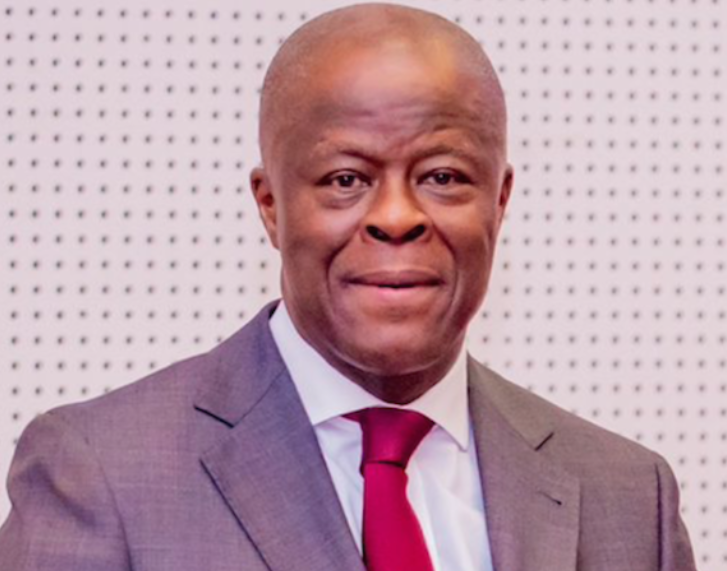
The Minister of Finance and Coordinating Minister of the Economy, Mr. Wale Edun, disclosed this while briefing the press, in Abuja, yesterday.
He disclosed that there were about 19.7 million poor and vulnerable households and over 70 million individuals on the National Social Register.
The cash transfers are being done from an $800 million facility of the World Bank.
According to Edun, the cash transfers are part of President Bola Tinubu’s strategies to help poor Nigerians cope with rising prices brought about by the fuel subsidy removal and the floating of the Nigeria.
He said, “This is part of plan by Mr. President to get the social protection programme that he had in mind to help the poorest and most-vulnerable through the difficulties caused by the increase in the price level, as we all know, as part of the necessary reforms that were put in place.
“We are pleased to report that the social protection programme, the putting in place of a safety-net to help people, to cope with the rising price level is now firmly back on track. “Of the 20 million households on the Social Register, covering about 75 million Nigerians, the programme was for 15 million households, covering 75 million Nigerians, 8.5 million households have now been paid at least one tranche of the funds that were promised to them- N25,000 Naira.
“They have two more payments to go. Some have received two, and some have received three. And following from that, because what has been put in place is a very robust system.
“People are identified biometrically by their NIN- National Identity Number. Secondly, they are paid digitally through their bank accounts or their mobile wallets. So it’s a very robust and sustainable system.”
The minister added that household yet to be paid would receive theirs before the end of the year.
“The expectation is that the other 7 million or so households will be paid by the end of the year,” he said.
Edun described social safety net as an important aspect of every modern economy.
He said, “What Nigeria now has is a robust system of reaching whichever targeted set of people that we want to reach to help the poorest and the most vulnerable on a long-term basis.”
Inclusion in annual budgets
The minister indicated that special funds would be provided in federal government budgets, going forward, to manage the programme sustainability.
His words, “We expect that there will be the ability to budget each year for assistance for people to be paid directly to help them at any given point in time with an intervention.
“So Nigeria now has the basis for a modern social protection system that was the promise of Mr. President. That is what he is now putting in place. Alongside all the other improvements in the economy, there is the creation and the establishment of a very robust system of reaching the poor.”
Why payment staggered — Olotu
Providing further clarification, on the payments, the National Coordinator of the National Social Safety-net Coordinating Office, Funmi Olotu, said some beneficiaries received one, two or even three payments because the President insisted that payments be linked to NIN to ensure the transparency of the programme.
“We do direct-debit transfer. Mr. President said no more traditional mode of payment of cash to people. He said we must pay directly to their bank accounts. That is why we have first tranche, second tranche and third tranche.”
The post FG pays out N330bn cash transfers to poor Nigerians — Edun appeared first on Vanguard News.

•As diesel prices rises across major depots
By Udeme Akpan
The Dangote Petroleum Refinery on Wednesday trimmed its ex-depot price of Premium Motor Spirit (PMS), commonly known as petrol, by ¦ 1 per litre, even as diesel prices climbed across several petroleum depots in Lagos, reflecting mixed trends in Nigeria’s downstream petroleum market.
Meanwhile, the global crude oil prices suddenly surged sharply on Wednesday, with international benchmark Brent crude climbing close to the $80 per barrel mark, signalling renewed strength in the oil market amid heightened geopolitical tensions and expectations of tighter supply.
Latest market data showed that Brent crude rose by $5.43, or 7.32 per cent, to $79.59 per barrel, while West Texas Intermediate (WTI) gained $4.78, or 6.79 per cent, to $75.22 per barrel, showing that the prices of petroleum products could rise again if the crude oil prices continue to rise in the global market.
The latest mid-day depot price report showed that Dangote reduced its petrol loading price to N1.075 per litre from N1,076 per litre, joining a handful of marketers that lowered prices marginally to remain competitive.
Similarly, MRS Oil Nigeria reduced its petrol depot price by N2 per litre, to N1,074 per litre from N1,076 per lire, making it one of the cheapest suppliers in the Lagos market.
However, most other major marketers, including NIPCO, Sahara Energy, Aiteo and African Terminal, maintained their previous petrol prices, signalling relative stability in the petrol segment despite increasing competition among suppliers.
In Lagos, depot prices for petrol remained largely within a narrow band of N1,074 to N1,075 per litre, indicating a stable wholesale market despite fluctuations in international crude oil prices.
Unlike petrol, diesel, the market recorded widespread increases across Lagos depots.
African Terminal increased its diesel price from N1,410 to N1,450 per litre, while Duport, Ibachem, Ibeto and T-Time implemented similar N40 per litre increases to N1,450.
In contrast to Lagos, the Port Harcourt market witnessed a notable reduction in diesel prices.
Matrix Depot reduced its AGO price by N50 per litre, from N1,550 to N1,500, providing some relief to industrial users and transport operators.
Sigmund also adjusted its diesel price downward by N3 per litre, from N1,463 to N1,460.
Petrol prices in Port Harcourt, however, remained stable, with Matrix maintaining its PMS price at N1,100 per litre.
In Warri, competition also resulted in slight petrol price reductions. Nepal and Optima each reduced petrol prices by N2 per litre to N1,083, while Parker lowered its price by N1 to N1,084.
Other marketers, including Matrix, Rain Oil, Prudent and A.Y.M Shafa, maintained prices at N1,085 per litre.
On the diesel side, Prudent raised its diesel price sharply by N70 per litre, from N1,480 to N1,550, while A.Y.M Shafa maintained its diesel price at N1,435 per litre.
In Calabar, Soroman held its PMS price steady at N1,100 per litre, while Fynfield increased its diesel price by N30 per litre, from N1,450 to N1,480.

By Rosemary Iwunze
Commissioner for Insurance, National Insurance Commission, NAICOM, Mr. Olusegun Ayo Omosehin, has charged the Nigerian Insurers Association, NIA, to lead the rebuilding of public trust in insurance as the industry enters a new phase of transformation.
He gave the charge at the Investiture Ceremony of Mrs. Ebelechukwu Nwachukwu as the 27th Chairman of the NIA in Lagos on Tuesday. Nwachukwu is also the first woman to lead the Association in its history.
Describing her emergence as historic and timely, Omosehin said the new leadership is coming at a defining phase following the signing of the Nigerian Insurance Industry Reform Act, NIIRA 2025, and the impending close of the recapitalisation exercise on 31st July 2026.
“The foundation is set. NIIRA 2025 gave us the legal framework. Recapitalisation is giving us stronger, better capitalised institutions. Now, leadership must build,” he stated.
He outlined three key responsibilities for the NIA under the new leadership, which are: Leadership in Trust: to make claims excellence a market-wide culture. Publish claims ratios and compete on service. Leadership in Enforcement: compliance with the six classes of compulsory insurance in partnership with state governments and law enforcement agencies. As well as Leadership in Innovation: Scale digital channels, microinsurance, Takaful, and parametric covers to grow penetration beyond 1%.
Omosehin reaffirmed NAICOM’s commitment to risk-based supervision, stronger governance, and consumer protection under NIIRA 2025.
He charged the new Chairman to unite the market, raise the bar, and expand the pie by taking insurance to the over 100 million Nigerians who have never owned a policy.
“The Nigerian insurance industry stands at a defining inflection point. The laws have changed. The capital base is changing. Now we must transform how we serve the Nigerian people,” he concluded.

•Says Nigeria’s development hinges on gas utilisation
By Ediri Ejoh
The Federal Government has reaffirmed its commitment to expanding gas utilisation, saying it is targeting five million households to transition from firewood, kerosene and other biomass fuels to Liquefied Petroleum Gas (LPG) as part of efforts to cut carbon emissions and improve public health.
Speaking at the 2026 Nigeria Oil and Gas (NOG) Conference and Exhibition, the Minister of State for Petroleum Resources (Gas), Ekperikpe Ekpo, said Nigeria’s economic development depends largely on harnessing its vast gas resources.
According to him, “Nigeria sees gas as its transition fuel. We are not opposed to the global energy transition, but every country must transition based on its available resources. For Nigeria, that resource is natural gas.”
He added, “Gas is essential because its utilisation cuts across power generation, industrialisation, fertiliser production, household energy and transportation. Gas is the solution for Nigeria. That is why Mr. President created the office of the Minister of State for Gas and provided incentives under the Petroleum Industry Act (PIA) to deepen gas utilisation.”
Ekpo said, “In the past, gas was undervalued, but today it has become central to addressing climate change. We are intentionally deploying technologies that reduce carbon emissions through greater gas utilisation.”
He further stated, “Under the Decade of Gas Initiative, we have identified key projects that will bring gas closer to Nigerians. We are targeting about five million homes to switch from firewood, kerosene and biomass to LPG. This will improve household health while reducing carbon emissions. We are driving this because Nigeria has enormous gas reserves.”
Also speaking, the Minister of State for Petroleum Resources (Oil), Heineken Lokpobiri, said ongoing fiscal and sector reforms have strengthened investor confidence.
He said, “Nigeria is strategically positioned for growth. Investors can be assured that their capital is safe and will generate returns. We are positioning the country for global competitiveness.”

Dangote effects another cut in petrol price

Tension in Abia oil producing communities over APC House of Reps ticket

Ukrainian Athlete Condemns Russia Being Allowed Back in 2028 Olympics

Meaning Behind Egypt Manager’s ‘X’ Gesture vs Argentina

Simi Sanya and Femi Dapson Are Now Legally Married and It Is Beautiful to See

Premier League Set-Piece Goals (2025/2026)
-
Sports1 day ago
Meaning Behind Egypt Manager’s ‘X’ Gesture vs Argentina
-
 Sports24 hours ago
Ian Wright Claims Argentina Winning Goal vs Egypt Should Have Been Disallowed
-
 Sports2 days ago
‘Real Reason’ Why Sami Zayn Lost His Title to CM Punk
-
 Sports20 hours ago
Arsene Wenger Says Only Spain Can Stop France Winning the 2026 World Cup
-
 Sports1 day ago
VAR Expert Claims Egypt Should Have Had Penalty vs Argentina
-
 Sports8 hours ago
France Boss Didier Deschamps Praises Argentina vs Egypt Referee
-
 Sports14 hours ago
Thierry Henry Drops Verdict on Lionel Messi’s Argentina Tears vs Egypt
-
 Sports1 day ago
The ‘Real Reason’ Roger Federer Was Sitting Alone at Wimbledon