
Sports
Dana White Fires Ex-World Champion From Zuffa Boxing By Email


Zuffa Boxing’s ambitious entry into the sport has already produced plenty of controversy. From poaching fighters from other promoters to refusing to recognise world championships from sanctioning bodies, the newest company in boxing has certainly left its mark.
Now, the Dana White-backed venture has hit the headlines again, this time centred around their treatment of former WBC light heavyweight champion Oleksandr Gvozdyk.
The Ukrainian veteran, signed as one of the promotion’s most high-profile additions, saw his contract terminated after his knockout defeat to Radivoje Kalajdzic in February.
The decision wasn’t based on performance alone; it was triggered by a clause allowing Zuffa to release fighters following any single loss, regardless of context. Gvozdyk’s case is particularly striking because he appeared to be on the verge of victory, dropping Kalajdzic twice and pressing for a stoppage before being caught by a decisive seventh-round punch.
His experience offers an early glimpse into the unforgiving nature of Zuffa’s developing structure and raises questions about how fighters will navigate a system where a single mistake can reshape their entire career.
Gvozdyk’s Promising Debut That Ended In One Punch

Gvozdyk’s Zuffa debut initially looked like a showcase performance. He controlled the action, scoring two knockdowns and believed he was just moments away from forcing Kalajdzic to bow out. Via WBN, Gvozdyk said: “I could see in his eyes that he was already looking for a corner to capitulate.
In moments like these, you sometimes start to neglect defence. And light heavyweight is a division where people hit hard. I wanted to finish the fight. It seemed like a stoppage victory was just around the corner. It turned out that wasn’t the case.”
In chasing the finish, Gvozdyk’s neglect in defence led to a seventh-round shot from Kalajdzic that forced a massive comeback.
Following Gvozdyk’s defeat, he said that his contract was terminated by Zuffa, who had a clause in the contract allowing them to terminate deals if a fighter loses just once.
Gvozdyk said: “They terminated the contract in February after a loss. They have the option that if a boxer loses, they have the right to terminate the contract. That’s exactly what they did.”
The Ukrainian fighter later revealed that he received an email in April from Zuffa, notifying the fighter that he had been released.
Zuffa’s ‘One Loss And You’re Out’ Clause Under Scrutiny

The clause used to dismiss Gvozdyk mirrors the roster-cut philosophy long associated with the UFC, where a single defeat can carry career-level consequences. Critics have already questioned the level of control fighters may surrender when signing their Zuffa contracts. The organisation, led by UFC CEO Dana White, has previously come under scrutiny, with former fighter Oscar De La Hoya warning athletes to examine the fine print before putting pen to paper.
Gvozdyk’s situation highlights the risk, as the former world champion entered and nearly secured himself a knockout win, and now finds himself out of a contract after one punch from his opponent.

The Ballon d’Or is the most prestigious individual award in football, and its winners have come in all different shapes and sizes. From Lionel Messi to Fabio Cannavaro to Rodri, players with vastly different physical profiles and skill sets have been recognised as the best in the world.
Height, however, is an interesting anomaly in football. While towering players such as Peter Crouch and diminutive stars like Andrei Arshavin have enjoyed outstanding careers, extreme height is rarely associated with the very best players in the world.
But does size really matter when it comes to winning the Ballon d’Or? A look at the tallest and shortest players to claim the award suggests perhaps not. As per the official Ballon d’Or website, these are the tallest and shortest winners.
The Tallest Ballon d’Or Winners
5. Cristiano Ronaldo/Rivaldo – 1.87m (6’1.5”)

Among the tallest players to ever win the Ballon d’Or are Cristiano Ronaldo and Rivaldo — two prolific forwards who utilised their height to score a number of goals in the air.
Ronaldo has claimed the accolade five times, although he’s not won it since 2017. The Portuguese forward might have been tall, and while his aerial threat has always been a part of his game, his quality has extended far beyond just what he’s been able to do whilst jumping.
As for Rivaldo, the Brazilian legend wasn’t renowned for his ability in the air despite his size. He might have used his height to fend off defenders, but his skill was rooted in his superb technique.
4. Marco van Basten – 1.88m (6’2″)

It’s unsurprising that a big striker who operated as a multi-faceted target man makes this list. Standing at 6’2″, Van Basten was rangy, and this lent itself to being aerially dominant, even against the most physically aggressive centre-backs.
That said, this heading prowess wasn’t what made Van Basten special, like Ronaldo and Rivaldo. The Ajax and AC Milan sensation was elite technically, graceful with the way he moved, and boasted exceptional agility. This blend of attributes led him to three separate Ballon d’Ors in the late 80s and early 90s, and saw him score over 300 goals for club and country throughout his career.
3. Lev Yashin – 1.89m (6’2.5″)

It would be strange if the only goalkeeper to ever win the Ballon d’Or wasn’t among the tallest to collect the award. Lev Yashin, standing at 1.89 metres, won the accolade in 1963 after excelling for a dominant Dynamo Moscow side that won the Soviet Top League.
Ironically not especially tall for a keeper, Yashin’s outstanding reflexes and ability to command his box with authority are what caught the eye. He was a trailblazer for modern goalkeeping techniques back in the 60s, although his revolutionary methods haven’t resulted in more shot-stoppers being recognised as the best player in the world since he was.
2. Rodri – 1.9m (6’3″)

Rodri controversially won the Ballon d’Or back in 2024, usurping Vinicius Junior, who many felt was the deserving recipient, for the accolade. The Spaniard had come off the back of an outstanding season for Manchester City, winning a fourth straight Premier League title with the Citizens.
Surprisingly, only one Ballon d’Or winner has been taller than the deep-lying playmaker. As is a recurring theme on this list, Rodri hasn’t really relied on his height for his greatness, instead using his technical ability and intelligence to dominate the best midfielders on the planet.
That said, being 6’3″, his size has probably helped him have a greater picture of what’s going on around him, reigning over the majority of his opponents.
1. Ruud Gullit – 1.91m (6’3″)

Unlike many others on this list, Chelsea, AC Milan and PSV Eindhoven legend Ruud Gullit used his height and physical prowess to his advantage. The Dutchman was known for his imposing stature and powerful athleticism, overrunning his opponents by using these physical talents.
He won the Ballon d’Or in 1987, shortly after signing for European powerhouse Milan. This was at a time when athleticism and stature were becoming more important at the top level, as players started taking more care of their bodies, sports science was developing and being out of shape was becoming less acceptable, and Gullit was the embodiment of this.
The Shortest Ballon d’Or Winners
5. Luka Modric – 1.72m (5’7″)

Nowadays, Luka Modric is viewed through the lens of being diminutive and being outstanding largely because he has less prominent physical gifts. For a player to be as good as the Croatian has been at his size, stature and with his relative lack of physicality, they have to be astonishingly proficient technically.
That said, while he still makes the top five smallest players to have won the Ballon d’Or, he’s not that short in the grand scheme of things in football history. However, in the modern day, Modric’s size at the very top level is something of an anomaly, and he defied what everyone believes a footballer needs to have athletically by being so good.
4. Lionel Messi – 1.7m (5’7″)

Surprisingly, there are three players shorter than Lionel Messi who have won the Ballon d’Or. Like Modric, part of what has made the eight-time Ballon d’Or winner so special is how his size hasn’t prevented him from running rings around some of the most powerful athletes in the world.
In a way, Messi is the archetypal diminutive playmaker, yet few have come close to even remotely matching his level.
The Argentine could add to his collection of Ballon d’Or later this year after mesmerising fans at the World Cup earlier this summer. He’ll be among the favourites for the award, alongside the likes of Lamine Yamal, Rodri and Kylian Mbappe.
3. Raymond Kopa – 1.68m (5’6″)

Raymond Kopa is one of the greatest players to have ever played the game, despite being so short. The forward used his size to weave in and out of rigid defensive units, and this tricky playing style led to him scoring 147 career goals.
Winning the Ballon d’Or in 1958, he also made the podium in 1956, 1957 and 1958, making him the most coveted footballer of the late 50s, alongside Alfred Di Stefano.
Kopa was so good that an award was named in his honour in 2018, the Kopa Trophy — handed to the best young player on the planet every year.
2. Allan Simonsen – 1.65m (5’5″)

Not a name many will be familiar with, Allan Simonsen won the Ballon d’Or in 1977 after leading Borussia Monchengladbach to the Bundesliga title and the European Cup (Champions League) final. He was the star player in this great Glabach side, scoring over 100 goals throughout his time at the German club.
This form earned him a move to Barcelona in 1979, where he continued to excel and earned another spot on the Ballon d’Or podium in 1983. Simonsen may not have been blessed with height, but he used this to his advantage as his pace and timing of runs saw him constantly find the back of the net with late darts in behind the opposition defence.
1. Omar Sivori – 1.63m (5’4″)
In the modern day, a 5’4″ player might struggle to reach the very highest level. While players of this size can certainly still have excellent careers, it’s difficult to envisage someone of this stature ever being good enough to win the Ballon d’Or, given how important physicality is today.
When Omar Sivori won the award in 1961, people were slighter and shorter on the whole. That said, he still stood out among the best athletes of the time, bobbing and weaving his way past thuggish defenders in Argentina and Italy.
Sivori scored 180 goals in Serie A, wining the Italian title three times with the Old Lady.
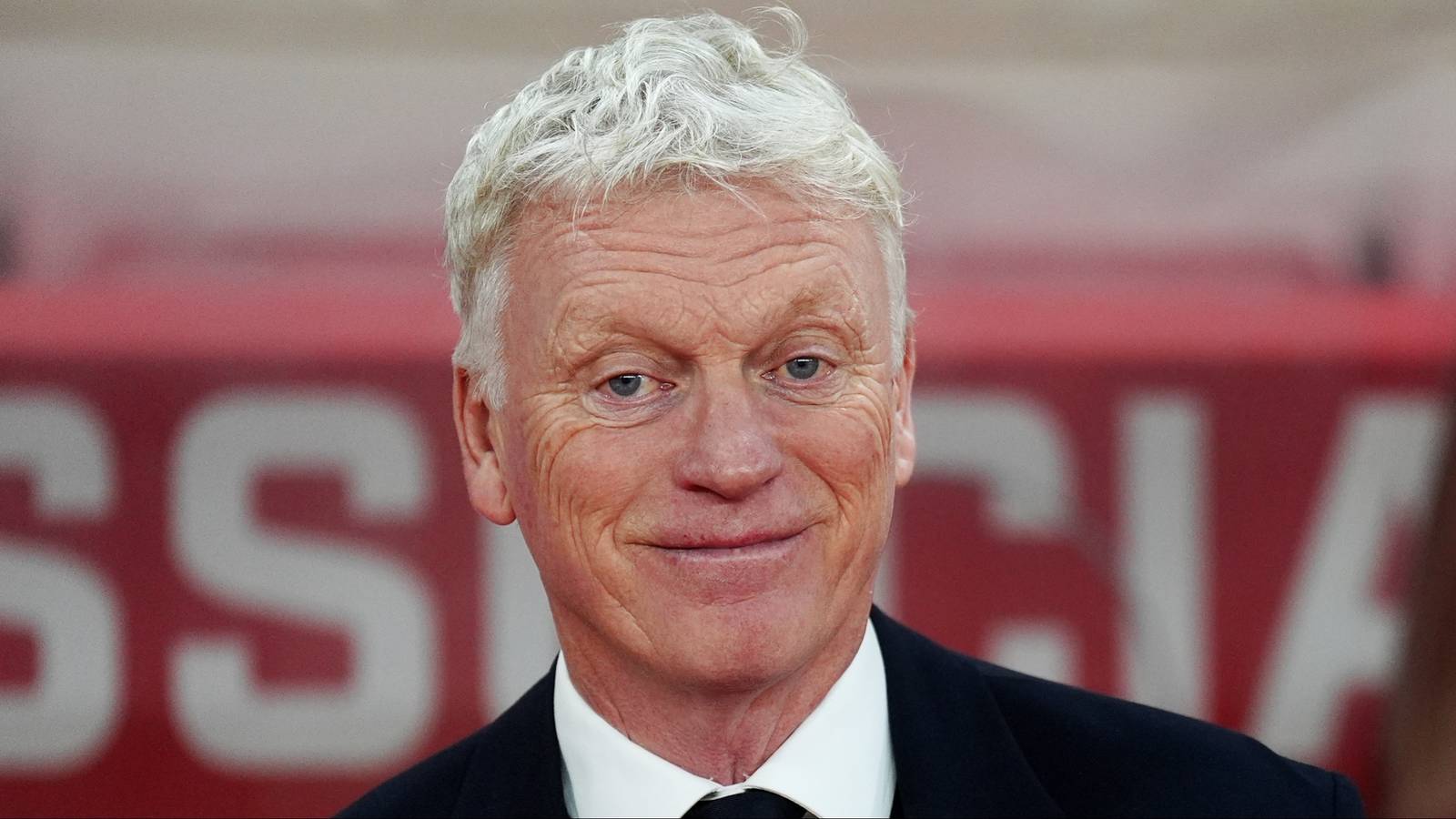
Everton are reportedly frontrunners in the race to sign a Chelsea star whom Xabi Alonso is happy to sell this summer.
David Moyes has been backed with five new signings so far this summer, the latest being Brennan Johnson from Crystal Palace. The Welsh attacker joined the Toffees in a swap deal with Dwight McNeil heading in the opposite direction.
Johnson will hope to get his career back on track at Hill Dickinson Stadium after a disastrous spell at Selhurst Park. Moyes could be the ideal manager to help the former Tottenham Hotspur return to his best and that might be the thinking behind swooping for a Chelsea star who has flopped at Stamford Bridge.
Everton Best Placed to Sign Liam Delap

Liam Delap’s days in West London are numbered, and Chelsea and Alonso have agreed to offload the English striker. He only joined the Blues last summer from Ipswich Town for £30 million but has endured a nightmare.
According to TEAMtalk, Everton are in pole position to sign Delap and have held talks over a possible £40m deal. They aren’t the only ones linked with the 23-year-old, as Manchester United, Nottingham Forest, and Newcastle United have been approached by intermediaries.
Delap also has interest from abroad, with Como, Villarreal, and Benfica all thought to be keeping an eye on the situation. But the former Manchester City youngster is looking to remain in England and keen on a return up North.
While Delap has failed to convince since joining Chelsea, his stock was sky-high ahead of the move. He finished the 2024-25 campaign with 12 goals in 37 league games at Ipswich.
Everton transfer targets
The Englishman’s potential arrival could have a knock-on effect on Moyes’ two current frontmen. There’s a chance either Beto or Thierno Barry are sold if the transfer happens.
Fees correct prior to summer 2026
All 10 found — excellent!
Moyes Clearly Wants Delap

Delap looks to have retained a fan in Moyes despite his disappointing spell at Chelsea and the Scot had previously confirmed his interest in the striker. He suggested that Everton would miss out on the striker to one of the Premier League’s bigger clubs when speaking in May 2025:
“He would be one who we would certainly have an interest in. I think what he probably has to look at will probably be bigger than what we are. So, we would certainly be interested if he was interested in us. That’s for sure.”
|
Liam Delap (Premier League 2025-26) |
|
|
Matches Played |
28 |
|
Starts |
12 |
|
Minutes Played |
1,107 |
|
Goals |
1 |
|
Assists |
0 |
|
Expected Goals (xG) |
4.47 |
|
Total Shots |
36 |
|
Shots on Target |
11 |
|
Headed Shots |
8 |
|
Chances Created |
3 |
|
Successful Dribbles |
10 |
|
Dribble Success Rate |
76.9% |
Delap ended up at Stamford Bridge, and Everton turned to Barry, who arrived from Villarreal for £27m. The young Frenchman had a tough start to life at Hill Dickinson but found his feet as the season progressed and has impressed during pre-season.
Moyes could be keen to add another attacking profile to his frontline and Delap is the type of aggressive striker he relishes working with. We’ve seen the Scot’s effect on underperforming players in the past, namely Jesse Lingard at West Ham United and Jack Grealish last season.

Jose Mourinho has dedicated his life to football and is of an age where he’s witnessed – either in-person or on television – most of the sport’s greatest players.
The revered Portuguese coach was seven when Pele won the 1970 World Cup, in his 20s when Diego Maradona inspired Argentina to glory at the 1986 World Cup, and has been very close to the careers of modern-day greats Lionel Messi and Cristiano Ronaldo over the past two decades.
Mourinho managed Ronaldo for three seasons at the Bernabeu. During that time, the Portuguese forward scored an astonishing 168 goals in 164 games.
But it wasn’t all sunshine and rainbow between the compatriots. Luka Modric once revealed: “I saw him [Jose Mourinho] make Cristiano Ronaldo cry in the locker room, a man who gives his all on the pitch, because for once he didn’t chase the opposing full-back. Mourinho is very direct with the players, but he’s honest. He treated Sergio Ramos and the new arrivals the same way: if he had to tell you something, he’d tell you.”
And when Mourinho named his three greatest players in football history in 2016, Ronaldo missed the cut. Mourinho said:
“For me, the top three players in history are Messi, Pele and Maradona.”

And just a few years later, in 2019, Mourinho went further: describing Messi as the “God of Football” after a typical masterclass for Barcelona while playing against Liverpool in the Champions League.
“Liverpool was brave in the approach,” Mourinho told Russia Today. “I don’t think in the past 20 years many teams in the Champions League beat Barcelona in ball possession in the Champions League.
“God of Football made it completely different. Of course [Barca] have a good team, phenomenal players, but that player is absolutely incredible.”
Mourinho: Messi Was a Nightmare

On Netflix’s three-part docu-series MOURINHO, the Real Madrid boss admits Messi gave him “a nightmare” as he struggled to come up with a plan to thwart the Argentina genius.
Mourinho said: “I was having a nightmare. What can we do to stop him?”
Sami Khedira, one of Real Madrid’s midfielders who had the unenviable task of playing against peak Messi, added: “Preparing the games was so funny because we spoke for two minutes about Barcelona, then like 40 minutes about Lionel Messi.” Watch the clip below:
While Mourinho may have had some minor spats with Messi, he was acutely aware that he was witnessing greatness in front of his very eyes.
And it’s the eight-time Ballon d’Or winner who, in Mourinho’s eyes, has reached God-like status in the game.

The 5 Tallest and 5 Shortest Players to Win the Ballon d’Or

Police launch ‘Operation Velvet’ to enforce traffic laws in Jigawa

Osun guber: NGF congratulates Gov Adeleke on re-election for second term

Meaning Behind Egypt Manager’s ‘X’ Gesture vs Argentina

Premier League Set-Piece Goals (2025/2026)

Simi Sanya and Femi Dapson Are Now Legally Married and It Is Beautiful to See
-
Politics1 day ago
Osun Election Results 2026 LIVE: Polling unit-by-unit, LGA updates
-

 Metro1 day ago
Osun election: Police arrest officer over tear gas incident
-
 Politics1 day ago
Osun Decides: Live Updates, Results from Governorship Election
-
 Sports1 day ago
Islam Makhachev vs Ian Machado Garry Exact UK Start Time
-
 Metro1 day ago
Kano police arrest armed robbery suspects, recover arms, stolen livestock
-
 Sports1 day ago
Why Community Shield is Not at Wembley in 2026
-
Politics20 hours ago
Osun Decides: Accord heads for victory as Adeleke leads Oyebamiji by over 66,000 votes
-
 Politics1 day ago
Osun election: Adeleke arrives polling unit to cast his vote [Photos]