
Business
Dollar to Naira exchange rate today, October 2, 2025

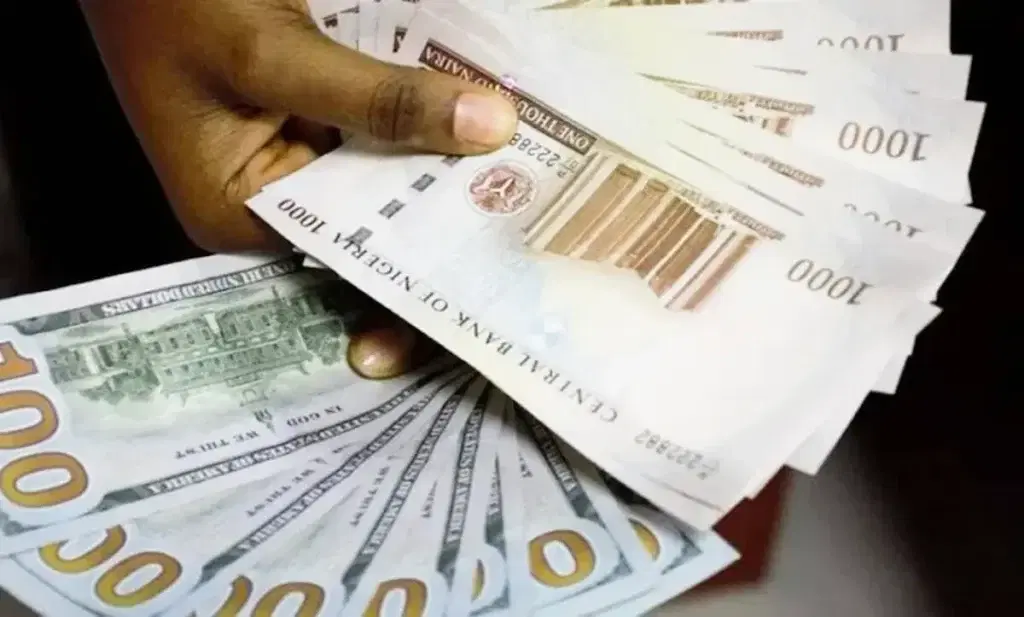
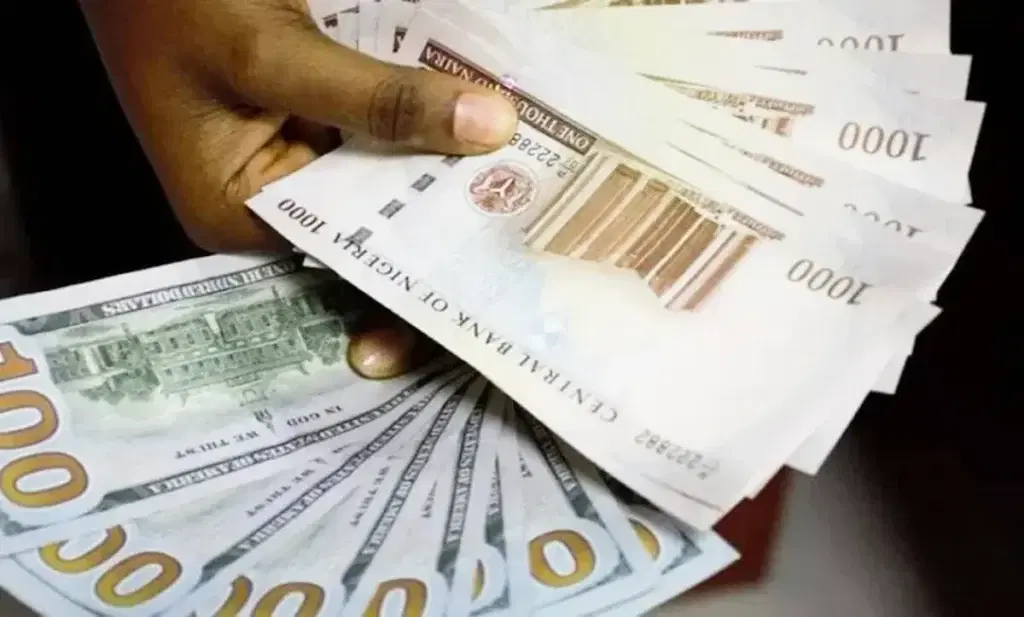
The Nigerian naira held a broadly fragile tone on Thursday, trading with a modest gap between the official Nigerian Foreign Exchange Market (NFEM) and the parallel market as market participants weighed improved dollar flows against persistent demand pressures.
Key rates (today):
- NFEM (official): ₦1,483 per US$1.
- Parallel market: ₦1,490 per US$1.
The official NFEM rate – the volume-weighted figure derived from interbank trading and published by authorities – showed the naira trading around ₦1,483 to the dollar on Thursday, a small move from levels seen in the immediate prior session. Traders say the official window remains sensitive to CBN liquidity operations and order flows on the electronic matching system.
In the parallel market, market-aggregators put the naira at roughly ₦1,490 to the dollar, leaving a spread of about ₦7 between the two windows. That spread is materially smaller than the double-digit differentials seen during earlier bouts of market stress, and points to a partial convergence between the formal and informal segments — though the parallel market continues to serve customers who cannot access the formal window.
Market analysts attributed today’s relative calm to a mix of modest foreign currency inflows (including diaspora remittances and import receipts) and CBN interventions that have helped cap sharp intraday swings. Global currency moves also played a role: the US dollar was broadly steady in international trade on Thursday after recent volatility in global markets.
What traders are saying:
Dealers contacted by business desks said demand from importers, students and travellers remains the dominant driver of volumes in the parallel market, even as banks and authorised dealers manage most corporate flows through NFEM. Several analysts warned that the convergence is fragile and will require sustained inflows, deeper FX liquidity and clearer policy signals for the naira to stabilise sustainably.
Outlook:
Short-term forecasts from market commentators expect the dollar to trade in a narrow band around ₦1,480–₦1,495 in the official window and ₦1,485–₦1,500 in the parallel market over the coming days — contingent on steady dollar supply and no abrupt change in demand.
Policymakers’ ability to continue measured interventions and to deepen FX market liquidity will be key to keeping volatility in check.
The post Dollar to Naira exchange rate today, October 2, 2025 appeared first on Vanguard News.

By Yinka Kolawole
Dangote Cement Plc has reaffirmed its commitment to driving low-carbon cement production, with Group Managing Director, Arvind Pathak, urging African producers to accelerate decarbonisation while expanding capacity to meet the continent’s growing infrastructure demand.
Pathak made the call after participating in the Global Cement and Concrete Association (GCCA) CEO Strategic Dialogue in Madrid, Spain, where chief executives from leading global cement companies mapped out strategies for achieving net-zero emissions and promoting sustainable growth across the cement and concrete value chain.
The two-day summit focused on key industry priorities, including low-carbon construction, climate policy, financing for decarbonisation and the deployment of innovative technologies required to achieve net-zero emissions without slowing economic development.
Speaking after the meeting, Pathak said Africa is uniquely positioned to lead the next phase of sustainable industrial growth by balancing rising infrastructure needs with climate commitments.
“With Africa’s infrastructure demand continuing to rise, the sector must pursue growth while embracing innovative pathways to reduce carbon emissions,” he said.
He noted that a major outcome of the dialogue was the industry’s shared resolve to fast-track decarbonisation through greater adoption of alternative fuels, lower clinker content in cement and investments in innovative technologies tailored to local operating realities.
“A key takeaway, especially for the African cement sector in the context of the evolving global economic and regulatory landscape, is the need to accelerate our decarbonisation pathway through increased utilisation of alternative fuels, reduction of clinker content in cement and investment in innovative cement technologies suited to local realities,” Pathak added.

By Peter Egwuatu & Yinka Kolawole
Nigeria’s capital market has received a significant boost after S&P Dow Jones Indices (S&P DJI) placed the country on its 2027 Country Classification Watchlist for potential reclassification from a Standalone Market to a Frontier Market, citing improvements in the country’s regulatory environment and market integrity.
This is even as Bloomberg ranked Nigerian stock market as the world’ best performing stocks, overtaking that of South Korea.
The decision, announced in S&P DJI’s annual Country Classification Watchlist, positions Nigeria among markets under formal review for a possible change in classification next year.
While the announcement does not constitute an immediate upgrade, it signals that the country’s recent regulatory and structural reforms are gaining recognition from one of the world’s leading index providers.
In its assessment, S&P DJI said: “The Nigerian regulatory environment has modernized to improve transparency, enforcement, and market integrity,” adding that consistent policy implementation and operational resilience will be critical in determining whether Nigeria qualifies for Frontier Market classification during the 2027 review.
The development comes as Nigeria’s capital market continues to implement wide-ranging reforms led by the Securities and Exchange Commission (SEC), in collaboration with Nigerian Exchange Group (NGX Group), Central Securities Clearing System (CSCS) and other market stakeholders. These reforms have focused on strengthening investor protection, enhancing market transparency, improving operational efficiency, modernising post-trade infrastructure and aligning Nigeria’s market with international standards.
According to the Director-General of the Securities and Exchange Commission (SEC), Dr. Emomotimi Agama, the Commission’s reform agenda is focused on building a forward-looking market structure capable of supporting intelligent investing through faster settlement systems, tokenised securities and deeper derivatives markets.
“At SEC, our priority is to sustain a fair, orderly and transparent market that protects investors and supports long-term capital formation,” Agama added. Commenting on the development, Group Managing Director and Chief Executive Officer of NGX Group, Temi Popoola, said the announcement reinforces growing international confidence in the direction of Nigeria’s capital market reforms.
“This is an encouraging development for Nigeria’s capital market and an acknowledgement of the collective efforts of regulators, market infrastructure institutions and market operators to build a more transparent, efficient and globally competitive marketplace,” he stated.
Meanwhile, Nigerian equities have overtaken South Korea’s stock market to become the world’s best-performing equity market in dollar terms this year, buoyed by macroeconomic reforms, improved foreign exchange liquidity and renewed investor confidence.
According to a Bloomberg report yesterday, Nigeria’s benchmark stock index has returned 67 percent in dollar terms since the beginning of the year. The performance edged South Korea’s Kospi index, which has gained 66 percent, among the 92 global stock exchanges tracked by the publication.
The report said South Korea lost its lead after the Kospi slipped into a technical bear market this week, falling 22 percent from its June 19 peak as investors reassessed the outlook for artificial intelligence (AI)-related stocks.
According to the publication, financial services companies listed on the Nigerian Exchange (NGX) have driven much of the market’s gains, with Fortis Global Insurance Plc delivering a return of about 1,400 percent in dollar terms this year. Also, unlike South Korea’s equity market, where technology and AI-related stocks dominate, Nigeria’s rally has been driven largely by domestic macroeconomic factors.

By Udeme Akpan, Energy Editor
Pump price of Automotive Gas Oil (AGO), otherwise known as diesel, have recorded significant hikes in Lagos, Port Harcourt and Warri.
This comes against a relatively stable prices for Premium Motor Spirit (PMS) otherwise known as petrol despite fears of pressure from a renewed hostility in the Middle-east war between US and Iran, the main source of previous pump price increases.
In Lagos, African Terminal increased its diesel loading price by N50 per litre to N1,500 per a litre, with Gulftreasure, Ibachem, Ibeto and T.Time also selling at N1,500 per litre.
In Port Harcourt, Matrix raised its diesel price by N50 per litre to N1,550 per litre, making it one of the highest-priced major depots for the product.
Diesel prices in Warri were equally higher, with A.Y.M Shafa increasing to N1,545 per litre from N1,500 per litre, while Prudent Energy maintained N1,550 per litre.
In Calabar, Fynfield quoted diesel at N1,480 per litre, although no comparable previous price was available.
In the petrol market the latest mid-day depot price report indicated that intense competition among marketers and the Dangote Petroleum Refinery has kept the product prices relatively stable despite pockets of marginal increases,
In Lagos, which remains Nigeria’s largest petroleum trading hub, Dangote Petroleum Refinery retained its ex-depot petrol price at N1,075 per litre, matching prices offered by Ardova, Nipco and Sahara, underscoring the fierce competition among suppliers.
African Terminal and Aiteo, however, raised their petrol loading prices marginally to N1,075 per litre from N1,074 per litre, limiting room for aggressive price undercutting while maintaining competitiveness in the market.
However, in Port Harcourt, Matrix raised its petrol price sharply by N50 per litre to N1,150 per a litre from N1,100 per a litre, making it one of the highest-priced major depots for the product.
Matrix raised its PMS price by N40 to N1,125 per litre, Nepal increased to N1,098 per a litre from N1,080 per a litre, Optima moved to N1,100, while Prudent and Rain Oil also implemented upward adjustments and Soroman maintained a petrol quotation of N1,100 per litre.
The pricing trends highlight the increasingly regional nature of Nigeria’s downstream market, with logistics costs, depot inventories, transportation expenses and local demand conditions influencing prices outside Lagos.


Emir of Ilorin gives royal blessings to candidates backed by Gov Abdulrazaq

Thibaut Courtois Claims He Could Have Played Despite Injury vs Spain

Danny Murphy Claimed Thibaut Courtois Faked His Injury

Meaning Behind Egypt Manager’s ‘X’ Gesture vs Argentina

Simi Sanya and Femi Dapson Are Now Legally Married and It Is Beautiful to See

Premier League Set-Piece Goals (2025/2026)
-
 Sports19 hours ago
Mbappe’s Brutal Comments About Hakimi After Morocco 0-2 France Go Viral
-
 Sports1 day ago
Erling Haaland Fumes at World Cup Decision During France vs Morocco
-
 Sports17 hours ago
Spain’s Luis de la Fuente Issues Strong Verdict on Argentina vs Egypt Referee
-
 Sports2 days ago
Where Morocco Players Were Born
-
 Sports2 days ago
New Footage Showing Mo Salah’s Actions After Argentina 3-2 Egypt Emerges
-
 Sports2 days ago
Fabrizio Romano Issues Ederson to Man Utd Transfer Update
-
 Sports22 hours ago
Michael Olise Stopped From Celebrating France Goal Due to Little-Known Rule
-
 Sports11 hours ago
Lineker Brings Up Falklands Ahead of Potential England vs Argentina Tie