
Business
Nigeria at 65 and Tinubunomics: Pathways to economic resurgence or looming rigmarole?

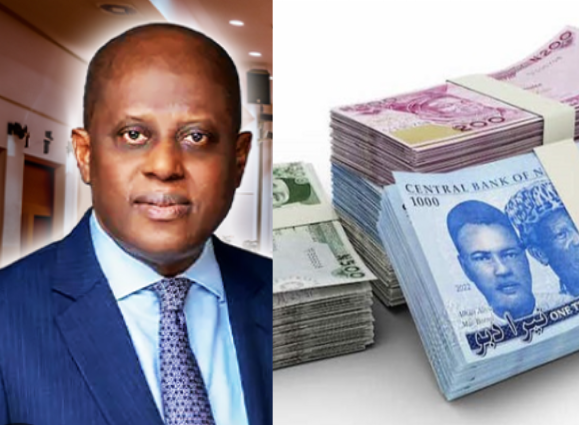
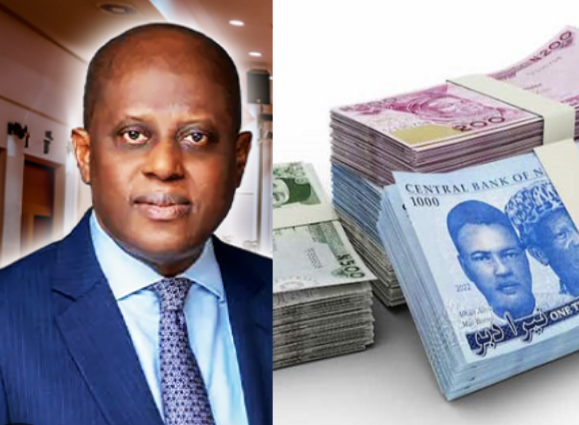
After 65 years, Nigeria appears set on a trajectory of progress, but the troubling signs of reckless borrowing and wasteful spending may pour cold water on the efforts
By Emeka Anaeto, Business Editor
At 65 many public affairs commentators believe Nigeria has come of age to show significant milestones in its match to development. But so many realities on ground indicate that so much more still needs to be done to pull the nation out of the brink, especially in the area of the economy.
BROKEN PROMISES, MISSED OPPORTUNITIES: Nigeria’s economic journey, 1960-1999
Most reports on Nigeria’s post-independence economic history have painted the picture of a bright prospect and promises which spiraled into missed opportunities and failed dreams.
The period between Nigeria’s independence in 1960 and the return to democracy in 1999 tells a complex story of negative economic transformation, from a promising agricultural powerhouse to an oil-dependent state plagued by instability.
This era, largely defined by military rule and a dramatic shift in national priorities, laid the foundation for many of the economic challenges Nigeria faces today.
What really happened, according to the reports, can be summarized in four landmark narratives as follows: Agronomics foundation laying (1960s); The oil boom and the “Dutch Disease” (1970s); The economic crisis and structural adjustment (1980s); and The stagnation and corruption (1990s).
Agricultural Foundation (1960s)
At independence, Nigeria’s economy was built and sustained on a solid agricultural foundation. Major cash crops like cocoa, groundnuts, palm oil, and rubber were the primary sources of export earnings, contributing over 75% of the country’s foreign exchange. The First National Development Plan (1962-1968) focused on investing in agriculture, industrialization, and infrastructure to fast-track economic growth. The regional structure of the country meant that each region could specialize and thrive on its unique agricultural produce, fostering a sense of economic competition and development. The industrial sector, though nascent, was growing through an import-substitution strategy.
Oil boom and “Dutch Disease” (1970s)
The discovery and subsequent explosion in global oil prices in the early 1970s completely reshaped Nigeria’s economic profile. The country went from a diverse, agrarian economy to a monolith driven by crude oil exports. By 1980, oil accounted for over 96% of total export earnings and a significant portion of the country’s GDP. This sudden wealth led to what economists call the “Dutch Disease” – a phenomenon where a resource boom causes a decline in other sectors. Agriculture was largely abandoned, and food imports surged, while the manufacturing sector, unable to compete with cheap imports, stagnated. The government’s public expenditure rose dramatically, leading to costly infrastructure projects and a growing dependence on oil revenues.
Economic crisis and structural adjustment (1980s)
The 1980s brought a harsh reality check. A collapse in global oil prices exposed the fragility of Nigeria’s oil-dependent economy. Foreign exchange earnings plummeted, external debt grew rapidly, and the manufacturing sector, which relied heavily on imported raw materials, saw a sharp decline in capacity utilization. In response, the military government of General Ibrahim Babangida introduced the Structural Adjustment Programme (SAP) in 1986, a set of reforms recommended by the International Monetary Fund (IMF) and the World Bank.
The key objectives of SAP were to diversify the economy, reduce dependence on oil and imports, and achieve fiscal stability. The policies included devaluing the naira, removing petroleum subsidies, and privatizing public enterprises. While these measures were intended to stimulate economic growth and self-reliance, they had a painful impact on the populace. Inflation soared, unemployment rose, and poverty deepened, leading to widespread social unrest.
Stagnation and corruption (1990s)
The final decade of the 20th century was largely a period of economic stagnation and political instability. A lack of consistent, long-term economic policies hindered any meaningful progress. The economic reforms of SAP were often reversed or poorly implemented, leading to policy inconsistencies and a lack of investor confidence. The country’s infrastructure continued to deteriorate, and corruption became an increasingly significant impediment to development.
By 1999, as Nigeria transitioned to civilian rule, its economy was a shadow of its potential. While it had a massive oil industry, the benefits had not translated into broad-based development. The legacy of this period was a nation with a wealth of resources but a deeply rooted set of structural problems, a weak private sector, and a reliance on a single commodity that left it vulnerable to global price fluctuations.
The last 25 years
Most of the attention is focused on eras and regimes especially in the last 25 years representing one of the greatest achievements in the match to a stable nationhood with an unbroken 25-year history of democratic governance.
In this connection some public affairs analysts would rather portray a mixed bag of development strides and challenges in the past 25 years.
But the most robust and captivating moments, according to them, are best captured in the current economic trajectories, the onset of President Bola Tinubu’s economic reform measures, the era of Tinubunomics, clearly unprecedented in the 65 years of Nigeria’s post-independent economy, and totally outdoing what all the previous regimes through the 25 years of unbroken democratic governance may have done.
Era of sweeping reforms
Nigeria’s economy has been on a rollercoaster ride over the last two and a half years, marked by bold and disruptive policy reforms. The period has seen a new administration take a radical approach to long-standing economic distortions, leading to both significant challenges and emerging opportunities.
From its first day (first hour instead) in office, mid-2023, the Tinubu government has pushed through a series of unprecedented policy changes aimed at stabilizing the economy and attracting investment.
On our top 15 list are:
Subsidy is gone!
The removal of petrol subsidies tops the list. This subsidy, fueled by widespread corruption, which had cost the government trillions of naira, was a major drain on public finances. However, its removal led to an immediate and sharp increase in fuel prices, driving up transportation and food costs and fueling a surge in inflation.
Till date, though the retail prices of the petrol has declined significantly from the high point average of N1,200 per litre to about N865, the adverse impact on cost and standard of living for average Nigerian has remained stubbornly harsh, with the government yet to find its footing on how to ameliorate the adversity.
Foreign exchange reform
On the heels of the petrol subsidy removal came the Central Bank of Nigeria (CBN) move to unify the foreign exchange market and allow the Naira to float. This policy ended the multiple exchange rate system that had created arbitrage opportunities and foreign currency shortages as well as corruption.
While the Naira initially experienced a massive devaluation, this move has been credited with improving liquidity and attracting foreign portfolio investment.
However, though the exchange rate has moderated to N1,495 to USD1.0 as at mid-September 2025, from the high point of N1,800, the impact of the massive depreciation of the local currency brought further economic meltdown with the Gross Domestic Product (GDP) at abysmal N372.8 trillion (based on N1,530/ USD1.0 official exchange rate) at end of 2024, down from N477.4 trillion in 2022. A slight recovery has been recorded in a GDP rebase as at first quarter 2025.
Some of the adverse fallouts of the exchange rate crises was a build-up of further pressure on cost of living with more Nigerians slipping into poverty.
High interest rate regime
The CBN has also adopted an aggressive monetary policy tightening stance, repeatedly hiking interest rates to combat persistent inflation and bring it under control. With the benchmark rate at 27 percent, real lending rate and average cost of funds in the economy went up to an unprecedented mark of over 35 percent, one of the highest in the world.
Consequently, though recording three consecutive months of slight moderation, inflation has remained high despite nearly two years of implementing the anti-inflation policy, with food inflation being a particularly pressing concern due to rising costs of transportation, insecurity in food-producing regions, and a weak naira that makes imports more expensive.
While the government’s measures have shown some recent success in moderating the inflation rate, it remains a significant challenge for households.
Era of financialisation
Many analysts have debated whether the financialisation of the economy was a deliberate official policy or just another unintended outcome of the fiscal and monetary policy reforms. But what has come out clear in the past two and half years is that the financial sector has emerged predominant with the bulk of domestic and foreign capital flowing to the sector. The investors have equally reaped unprecedented returns in the sector.
The development came at the backdrop of declining or at best a sluggish growth in the real sector. Consequently, the nation’s economy is now dangerously skewed in favour of less productive sectors – financial and services sectors. But the ICT sector has also fared well.
Debt pile-up returns
Another key policy shock that marks the high point of the current regime is the borrowing spree with public debt at an all time high of N149 trillion in September 2025, up by over 200 percent from N46.2 trillion as at 2022.
Though the regime claims the purpose of the borrowing is to drive economic development with infrastructure investment, the view of independent public policy analysts is that the debt service and repayment obligation would overwhelm whatever gains the government hopes to achieve.
They argue that the high cost of debt servicing remains a major burden on the national budget.
Consequently, the combination of rising borrowings amidst the Naira devaluation may have ballooned Nigeria’s debt exposure far beyond the position it held as at 2005 when the Federal Government liquidated almost all its outstanding external indebtedness under the Paris Club Debt Relief program.
Tax reform
The government has also enacted tax reforms to streamline tax administration and increase non-oil revenue, with a focus on improving the country’s overall fiscal position. On the surface the new tax regime, set to commence in January 2026, is expected to usher in a tax efficient economy with considerable improvement in a key macroeconomic index, the tax-to-GDP ratio.
Emergence of private petrol refinery
Dangote Refinery is a game-changer in Nigeria’s economy in general and the petroleum sector in particular. This mega-project is expected to significantly reduce Nigeria’s reliance on imported petroleum products, easing pressure on foreign exchange reserves and potentially stabilizing local energy prices in the long term. This development is seen as a major step toward energy security for the country.
The Pre-Tinubu landmarks
But before Tinubunomics, Nigeria’s 25 years of unbroken civil rule has recorded other major economic landmarks. While some represented solid grounds on which the current regime is standing, others have been swept away as unfit for purposes designed by the Tinubu regime.
The eight key policies that complete the big 15 in 25 years are as follows:
The post Nigeria at 65 and Tinubunomics: Pathways to economic resurgence or looming rigmarole? appeared first on Vanguard News.

By Yinka Kolawole
Dangote Cement Plc has reaffirmed its commitment to driving low-carbon cement production, with Group Managing Director, Arvind Pathak, urging African producers to accelerate decarbonisation while expanding capacity to meet the continent’s growing infrastructure demand.
Pathak made the call after participating in the Global Cement and Concrete Association (GCCA) CEO Strategic Dialogue in Madrid, Spain, where chief executives from leading global cement companies mapped out strategies for achieving net-zero emissions and promoting sustainable growth across the cement and concrete value chain.
The two-day summit focused on key industry priorities, including low-carbon construction, climate policy, financing for decarbonisation and the deployment of innovative technologies required to achieve net-zero emissions without slowing economic development.
Speaking after the meeting, Pathak said Africa is uniquely positioned to lead the next phase of sustainable industrial growth by balancing rising infrastructure needs with climate commitments.
“With Africa’s infrastructure demand continuing to rise, the sector must pursue growth while embracing innovative pathways to reduce carbon emissions,” he said.
He noted that a major outcome of the dialogue was the industry’s shared resolve to fast-track decarbonisation through greater adoption of alternative fuels, lower clinker content in cement and investments in innovative technologies tailored to local operating realities.
“A key takeaway, especially for the African cement sector in the context of the evolving global economic and regulatory landscape, is the need to accelerate our decarbonisation pathway through increased utilisation of alternative fuels, reduction of clinker content in cement and investment in innovative cement technologies suited to local realities,” Pathak added.

By Peter Egwuatu & Yinka Kolawole
Nigeria’s capital market has received a significant boost after S&P Dow Jones Indices (S&P DJI) placed the country on its 2027 Country Classification Watchlist for potential reclassification from a Standalone Market to a Frontier Market, citing improvements in the country’s regulatory environment and market integrity.
This is even as Bloomberg ranked Nigerian stock market as the world’ best performing stocks, overtaking that of South Korea.
The decision, announced in S&P DJI’s annual Country Classification Watchlist, positions Nigeria among markets under formal review for a possible change in classification next year.
While the announcement does not constitute an immediate upgrade, it signals that the country’s recent regulatory and structural reforms are gaining recognition from one of the world’s leading index providers.
In its assessment, S&P DJI said: “The Nigerian regulatory environment has modernized to improve transparency, enforcement, and market integrity,” adding that consistent policy implementation and operational resilience will be critical in determining whether Nigeria qualifies for Frontier Market classification during the 2027 review.
The development comes as Nigeria’s capital market continues to implement wide-ranging reforms led by the Securities and Exchange Commission (SEC), in collaboration with Nigerian Exchange Group (NGX Group), Central Securities Clearing System (CSCS) and other market stakeholders. These reforms have focused on strengthening investor protection, enhancing market transparency, improving operational efficiency, modernising post-trade infrastructure and aligning Nigeria’s market with international standards.
According to the Director-General of the Securities and Exchange Commission (SEC), Dr. Emomotimi Agama, the Commission’s reform agenda is focused on building a forward-looking market structure capable of supporting intelligent investing through faster settlement systems, tokenised securities and deeper derivatives markets.
“At SEC, our priority is to sustain a fair, orderly and transparent market that protects investors and supports long-term capital formation,” Agama added. Commenting on the development, Group Managing Director and Chief Executive Officer of NGX Group, Temi Popoola, said the announcement reinforces growing international confidence in the direction of Nigeria’s capital market reforms.
“This is an encouraging development for Nigeria’s capital market and an acknowledgement of the collective efforts of regulators, market infrastructure institutions and market operators to build a more transparent, efficient and globally competitive marketplace,” he stated.
Meanwhile, Nigerian equities have overtaken South Korea’s stock market to become the world’s best-performing equity market in dollar terms this year, buoyed by macroeconomic reforms, improved foreign exchange liquidity and renewed investor confidence.
According to a Bloomberg report yesterday, Nigeria’s benchmark stock index has returned 67 percent in dollar terms since the beginning of the year. The performance edged South Korea’s Kospi index, which has gained 66 percent, among the 92 global stock exchanges tracked by the publication.
The report said South Korea lost its lead after the Kospi slipped into a technical bear market this week, falling 22 percent from its June 19 peak as investors reassessed the outlook for artificial intelligence (AI)-related stocks.
According to the publication, financial services companies listed on the Nigerian Exchange (NGX) have driven much of the market’s gains, with Fortis Global Insurance Plc delivering a return of about 1,400 percent in dollar terms this year. Also, unlike South Korea’s equity market, where technology and AI-related stocks dominate, Nigeria’s rally has been driven largely by domestic macroeconomic factors.

By Udeme Akpan, Energy Editor
Pump price of Automotive Gas Oil (AGO), otherwise known as diesel, have recorded significant hikes in Lagos, Port Harcourt and Warri.
This comes against a relatively stable prices for Premium Motor Spirit (PMS) otherwise known as petrol despite fears of pressure from a renewed hostility in the Middle-east war between US and Iran, the main source of previous pump price increases.
In Lagos, African Terminal increased its diesel loading price by N50 per litre to N1,500 per a litre, with Gulftreasure, Ibachem, Ibeto and T.Time also selling at N1,500 per litre.
In Port Harcourt, Matrix raised its diesel price by N50 per litre to N1,550 per litre, making it one of the highest-priced major depots for the product.
Diesel prices in Warri were equally higher, with A.Y.M Shafa increasing to N1,545 per litre from N1,500 per litre, while Prudent Energy maintained N1,550 per litre.
In Calabar, Fynfield quoted diesel at N1,480 per litre, although no comparable previous price was available.
In the petrol market the latest mid-day depot price report indicated that intense competition among marketers and the Dangote Petroleum Refinery has kept the product prices relatively stable despite pockets of marginal increases,
In Lagos, which remains Nigeria’s largest petroleum trading hub, Dangote Petroleum Refinery retained its ex-depot petrol price at N1,075 per litre, matching prices offered by Ardova, Nipco and Sahara, underscoring the fierce competition among suppliers.
African Terminal and Aiteo, however, raised their petrol loading prices marginally to N1,075 per litre from N1,074 per litre, limiting room for aggressive price undercutting while maintaining competitiveness in the market.
However, in Port Harcourt, Matrix raised its petrol price sharply by N50 per litre to N1,150 per a litre from N1,100 per a litre, making it one of the highest-priced major depots for the product.
Matrix raised its PMS price by N40 to N1,125 per litre, Nepal increased to N1,098 per a litre from N1,080 per a litre, Optima moved to N1,100, while Prudent and Rain Oil also implemented upward adjustments and Soroman maintained a petrol quotation of N1,100 per litre.
The pricing trends highlight the increasingly regional nature of Nigeria’s downstream market, with logistics costs, depot inventories, transportation expenses and local demand conditions influencing prices outside Lagos.


Eli Junior Kroupi Tells Tottenham He Wants to Join After Positive Talks

Lagos court jails man, fines company over N822m oil supply fraud

Lineker Brings Up Falklands Ahead of Potential England vs Argentina Tie

Meaning Behind Egypt Manager’s ‘X’ Gesture vs Argentina

Simi Sanya and Femi Dapson Are Now Legally Married and It Is Beautiful to See

Premier League Set-Piece Goals (2025/2026)
-
 Sports2 days ago
France Boss Didier Deschamps Praises Argentina vs Egypt Referee
-
 Sports2 days ago
English Referees Are Banned From Officiating Two World Cup Nations
-
 Sports21 hours ago
Erling Haaland Fumes at World Cup Decision During France vs Morocco
-
 Sports9 hours ago
Mbappe’s Brutal Comments About Hakimi After Morocco 0-2 France Go Viral
-
 Sports2 days ago
'Here We Go' – Crystal Palace Agree 'Secret' Deal to Sign Oscar Mingueza
-
 Sports1 day ago
New Footage Showing Mo Salah’s Actions After Argentina 3-2 Egypt Emerges
-
 Sports1 day ago
Where Morocco Players Were Born
-
 Sports1 day ago
World Cup 2026 Goal Songs: Every Team’s Celebration Music