
Business
Functioning steel industry key to Nigeria’s maritime development — SEREC

By Providence Ayanfeoluwa
The Sea Empowerment and Research Center, SEREC,has emphasized the importance of a functioning steel industry to an efficient maritime sector in Nigeria.
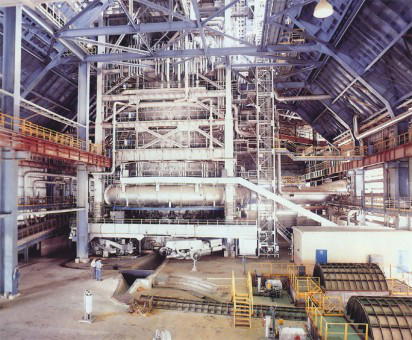
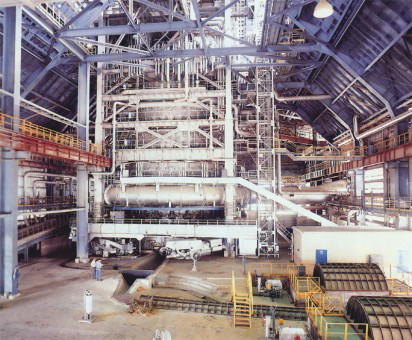
In a report titled, “Nigeria at 65: The Maritime Scorecard We Cannot Ignore”, Head of Research at SEREC, Eugene Nweke, said without a functioning steel industry, Nigeria’s shipyards will remain import-dependent, uncompetitive, and unable to support large-scale ship repair or new building.
“Nigeria must link maritime development with industrialisation by reviving steel, through modular mini-mills which is essential for a credible shipbuilding and repair industry,” the report stated.
Nweke described the celebration of 65 years of nationhood as a milestone that should invite sober reflection, especially on sectors that anchor economic survival, chief among which is the maritime sector which he described as the lifeline through which over 80 percent of Nigeria’s trade flows.
He stated: “Multimodal transport is not optional. Until rail, barge and inland port integration become functional, Apapa and Tin Can will remain choke points undermining trade efficiency. Revenue agencies must move from celebrating “record collections” to proving impact: port costs must fall, cargo must flow faster, and trade competitiveness must rise.
“Without a functioning steel industry, Nigeria’s shipyards remain import-dependent, uncompetitive, and unable to support large-scale ship repair or new building.”
Lamenting that some things are yet to be fixed in the sector he said, “One national operator alone does not make a maritime nation. Sustainability requires governance free from political capture and backed by private capital; Ports remain road-dependent, with rail and inland waterways underdeveloped — a drag on competitiveness.
“Environmental sustainability has not been mainstreamed into port concessions. Nigeria risks lagging global decarbonisation standards; we import machinery, food, and refined fuel in volumes that dwarf non-oil exports, draining scarce forex and worsening our balance of trade; despite progress, Gulf of Guinea transits remain overpriced due to lingering piracy premiums and war-risk insurance.
“In 65 years, Nigeria has made undeniable strides – the expansion of Apapa, Tin Can, Calabar and Onne ports; regional leadership in the Gulf of Guinea anti-piracy campaign; and a growing pool of trained Nigerian seafarers through public–private training pipelines. The recent re-emergence of a national container shipping operator also signals a renewed ambition to reclaim a national maritime identity.
“Yet, the sector’s story is still defined more by its unrealised potential than its achievements.”
The post Functioning steel industry key to Nigeria’s maritime development — SEREC appeared first on Vanguard News.

By Yinka Kolawole
Dangote Cement Plc has reaffirmed its commitment to driving low-carbon cement production, with Group Managing Director, Arvind Pathak, urging African producers to accelerate decarbonisation while expanding capacity to meet the continent’s growing infrastructure demand.
Pathak made the call after participating in the Global Cement and Concrete Association (GCCA) CEO Strategic Dialogue in Madrid, Spain, where chief executives from leading global cement companies mapped out strategies for achieving net-zero emissions and promoting sustainable growth across the cement and concrete value chain.
The two-day summit focused on key industry priorities, including low-carbon construction, climate policy, financing for decarbonisation and the deployment of innovative technologies required to achieve net-zero emissions without slowing economic development.
Speaking after the meeting, Pathak said Africa is uniquely positioned to lead the next phase of sustainable industrial growth by balancing rising infrastructure needs with climate commitments.
“With Africa’s infrastructure demand continuing to rise, the sector must pursue growth while embracing innovative pathways to reduce carbon emissions,” he said.
He noted that a major outcome of the dialogue was the industry’s shared resolve to fast-track decarbonisation through greater adoption of alternative fuels, lower clinker content in cement and investments in innovative technologies tailored to local operating realities.
“A key takeaway, especially for the African cement sector in the context of the evolving global economic and regulatory landscape, is the need to accelerate our decarbonisation pathway through increased utilisation of alternative fuels, reduction of clinker content in cement and investment in innovative cement technologies suited to local realities,” Pathak added.

By Peter Egwuatu & Yinka Kolawole
Nigeria’s capital market has received a significant boost after S&P Dow Jones Indices (S&P DJI) placed the country on its 2027 Country Classification Watchlist for potential reclassification from a Standalone Market to a Frontier Market, citing improvements in the country’s regulatory environment and market integrity.
This is even as Bloomberg ranked Nigerian stock market as the world’ best performing stocks, overtaking that of South Korea.
The decision, announced in S&P DJI’s annual Country Classification Watchlist, positions Nigeria among markets under formal review for a possible change in classification next year.
While the announcement does not constitute an immediate upgrade, it signals that the country’s recent regulatory and structural reforms are gaining recognition from one of the world’s leading index providers.
In its assessment, S&P DJI said: “The Nigerian regulatory environment has modernized to improve transparency, enforcement, and market integrity,” adding that consistent policy implementation and operational resilience will be critical in determining whether Nigeria qualifies for Frontier Market classification during the 2027 review.
The development comes as Nigeria’s capital market continues to implement wide-ranging reforms led by the Securities and Exchange Commission (SEC), in collaboration with Nigerian Exchange Group (NGX Group), Central Securities Clearing System (CSCS) and other market stakeholders. These reforms have focused on strengthening investor protection, enhancing market transparency, improving operational efficiency, modernising post-trade infrastructure and aligning Nigeria’s market with international standards.
According to the Director-General of the Securities and Exchange Commission (SEC), Dr. Emomotimi Agama, the Commission’s reform agenda is focused on building a forward-looking market structure capable of supporting intelligent investing through faster settlement systems, tokenised securities and deeper derivatives markets.
“At SEC, our priority is to sustain a fair, orderly and transparent market that protects investors and supports long-term capital formation,” Agama added. Commenting on the development, Group Managing Director and Chief Executive Officer of NGX Group, Temi Popoola, said the announcement reinforces growing international confidence in the direction of Nigeria’s capital market reforms.
“This is an encouraging development for Nigeria’s capital market and an acknowledgement of the collective efforts of regulators, market infrastructure institutions and market operators to build a more transparent, efficient and globally competitive marketplace,” he stated.
Meanwhile, Nigerian equities have overtaken South Korea’s stock market to become the world’s best-performing equity market in dollar terms this year, buoyed by macroeconomic reforms, improved foreign exchange liquidity and renewed investor confidence.
According to a Bloomberg report yesterday, Nigeria’s benchmark stock index has returned 67 percent in dollar terms since the beginning of the year. The performance edged South Korea’s Kospi index, which has gained 66 percent, among the 92 global stock exchanges tracked by the publication.
The report said South Korea lost its lead after the Kospi slipped into a technical bear market this week, falling 22 percent from its June 19 peak as investors reassessed the outlook for artificial intelligence (AI)-related stocks.
According to the publication, financial services companies listed on the Nigerian Exchange (NGX) have driven much of the market’s gains, with Fortis Global Insurance Plc delivering a return of about 1,400 percent in dollar terms this year. Also, unlike South Korea’s equity market, where technology and AI-related stocks dominate, Nigeria’s rally has been driven largely by domestic macroeconomic factors.

By Udeme Akpan, Energy Editor
Pump price of Automotive Gas Oil (AGO), otherwise known as diesel, have recorded significant hikes in Lagos, Port Harcourt and Warri.
This comes against a relatively stable prices for Premium Motor Spirit (PMS) otherwise known as petrol despite fears of pressure from a renewed hostility in the Middle-east war between US and Iran, the main source of previous pump price increases.
In Lagos, African Terminal increased its diesel loading price by N50 per litre to N1,500 per a litre, with Gulftreasure, Ibachem, Ibeto and T.Time also selling at N1,500 per litre.
In Port Harcourt, Matrix raised its diesel price by N50 per litre to N1,550 per litre, making it one of the highest-priced major depots for the product.
Diesel prices in Warri were equally higher, with A.Y.M Shafa increasing to N1,545 per litre from N1,500 per litre, while Prudent Energy maintained N1,550 per litre.
In Calabar, Fynfield quoted diesel at N1,480 per litre, although no comparable previous price was available.
In the petrol market the latest mid-day depot price report indicated that intense competition among marketers and the Dangote Petroleum Refinery has kept the product prices relatively stable despite pockets of marginal increases,
In Lagos, which remains Nigeria’s largest petroleum trading hub, Dangote Petroleum Refinery retained its ex-depot petrol price at N1,075 per litre, matching prices offered by Ardova, Nipco and Sahara, underscoring the fierce competition among suppliers.
African Terminal and Aiteo, however, raised their petrol loading prices marginally to N1,075 per litre from N1,074 per litre, limiting room for aggressive price undercutting while maintaining competitiveness in the market.
However, in Port Harcourt, Matrix raised its petrol price sharply by N50 per litre to N1,150 per a litre from N1,100 per a litre, making it one of the highest-priced major depots for the product.
Matrix raised its PMS price by N40 to N1,125 per litre, Nepal increased to N1,098 per a litre from N1,080 per a litre, Optima moved to N1,100, while Prudent and Rain Oil also implemented upward adjustments and Soroman maintained a petrol quotation of N1,100 per litre.
The pricing trends highlight the increasingly regional nature of Nigeria’s downstream market, with logistics costs, depot inventories, transportation expenses and local demand conditions influencing prices outside Lagos.


Football Finance Expert Provides Fresh Update

World Cup Legend Pele Named Sir Alex Ferguson as Personal ‘Idol’

Osun Guber: ADC rejects vote buying, illegal sharing of people’s commonwealth

Meaning Behind Egypt Manager’s ‘X’ Gesture vs Argentina

Simi Sanya and Femi Dapson Are Now Legally Married and It Is Beautiful to See

Premier League Set-Piece Goals (2025/2026)
-
 Sports1 day ago
Mbappe’s Brutal Comments About Hakimi After Morocco 0-2 France Go Viral
-
 Sports2 days ago
Erling Haaland Fumes at World Cup Decision During France vs Morocco
-
 Sports24 hours ago
Spain’s Luis de la Fuente Issues Strong Verdict on Argentina vs Egypt Referee
-
 Sports1 day ago
Michael Olise Stopped From Celebrating France Goal Due to Little-Known Rule
-
 Sports2 days ago
Where Morocco Players Were Born
-
 Sports2 days ago
World Cup 2026 Goal Songs: Every Team’s Celebration Music
-

 Metro21 hours ago
Police restrict movement ahead of Edo local government elections
-
 Sports17 hours ago
Lineker Brings Up Falklands Ahead of Potential England vs Argentina Tie