
Business
Nigeria expands oil export capacity with 365,000 bpd Otakikpo terminal



By Obas Esiedesa, Abuja
The Federal Government has declared that the commissioning of the $400 million Otakikpo Oil Export Terminal in Rivers State will ease crude evacuation challenges and boost Nigeria’s oil export capacity.
Located in Ikuru Town, Andoni Local Government Area, the facility has a capacity of 365,000 barrels per day and is the first onshore oil terminal built in Nigeria in 50 years.
President Bola Tinubu, represented by the Minister of State for Petroleum Resources (Oil), Senator Heineken Lokpobiri, described the project as a major milestone in the nation’s effort to improve crude oil production and export infrastructure. He said the terminal would also serve as an evacuation route for crude from Ogoniland and nearby fields.
“This project aligns with our administration’s core priorities to ramp up oil production, expand export infrastructure, and promote indigenous investment under the PIA and Presidential Directives 40 and 41,” Tinubu said. “The terminal will unlock billions of barrels of reserves and create value for the economy.”
Chairman and CEO of Green Energy International Limited (GEIL), Professor Anthony Adegbulugbe, said the project was conceived, designed, and delivered entirely by Nigerians within two years and ahead of schedule.
He explained that the terminal has a storage capacity of 750,000 barrels, expandable to three million barrels, and a pumping capacity of 360,000 barrels per day. Since operations began in June 2025, over one million barrels of crude have been exported through the facility.
Adegbulugbe added that the terminal could unlock more than 40 stranded oil fields in the region, holding about three billion barrels of reserves, potentially adding 200,000 barrels per day to national output.
Nigerian Upstream Petroleum Regulatory Commission (NUPRC) Chief Executive, Engr. Gbenga Komolafe, described the project as a breakthrough for indigenous players. He noted that the terminal provides an alternative export hub, reduces dependence on aging terminals, lowers costs for local producers, and enhances Nigeria’s overall crude evacuation efficiency.
The post Nigeria expands oil export capacity with 365,000 bpd Otakikpo terminal appeared first on Vanguard News.
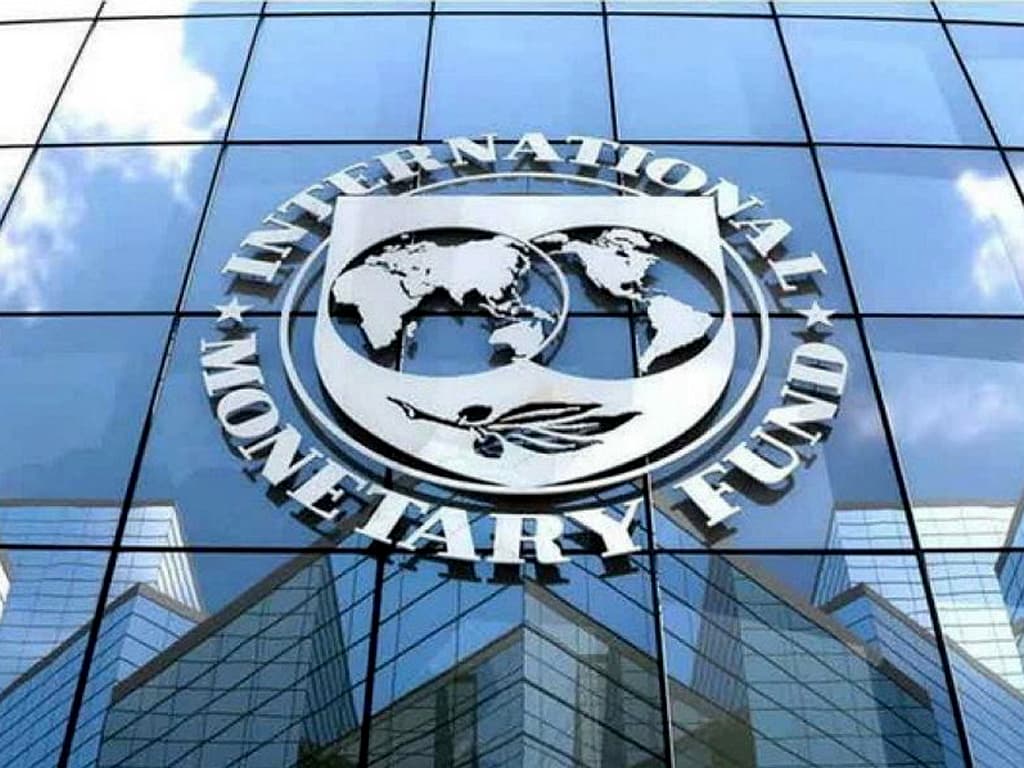
•Maintains forecast for Nigeria’s GDP at 4.1% in 2026, 4.3% in 2027
•Says improved macroeconomic stability supports Nigeria’s economy
By Babajide Komolafe, Economy Editor
The International Monetary Fund, IMF, has warned that rising prices of essential goods will deepen poverty and food insecurity in Nigeria despite improved macroeconomic stability, even as it maintained growth forecasts for the economy in 2026 and 2027 at 4.1 per cent and 4.3 per cent.
In its July 2026 World Economic Outlook Update, the IMF also lowered its forecast for global economic growth to 3.0 per cent in 2026 from the average 3.5 per cent recorded in 2024 and 2025, citing the impact of the Middle East conflict and uneven benefits from the artificial intelligence-driven technology boom.
Commenting on Nigeria and Sub-Saharan Africa, the IMF stated: “Growth in sub-Saharan Africa is expected to remain broadly stable at 4.3 percent in 2026, though this masks substantial divergence across countries, reflecting differences in policy space, reform implementation, and exposure to external shocks.
“Oil-importing, non-resource-intensive economies are more adversely affected by higher energy and food prices, whereas some larger economies continue to benefit from earlier stabilization and reform efforts, even though they are largely absent from the AI-driven global technology upswing and face headwinds from the decline in official development assistance.
“Nigeria is supported by improved macroeconomic stability and favorable terms-of-trade effects, though higher prices for essentials are expected to further aggravate poverty and food insecurity.”
The IMF projected Nigeria’s economy to expand by 4.1 per cent in 2026 and 4.3 per cent in 2027, while Sub-Saharan Africa is expected to record growth of 4.3 per cent in 2026 and 4.5 per cent in 2027.
On the global economy, the IMF said: “Global growth is projected to be 3.0 percent in 2026 and 3.4 percent in 2027, down from the average of 3.5 percent observed in 2024–25.”
“The modest slowdown reflects the effects of the war in the Middle East being partly offset by accelerated demand-driven momentum in the global technology cycle thanks to advances in artificial intelligence (AI) and its adoption.”
The IMF further warned: “Global headline inflation is expected to increase from 4.1 percent in 2025 to 4.7 percent in 2026 before declining to 3.9 percent in 2027,” adding that the earlier disinflation trend has stalled.
Highlighting risks to the outlook, the IMF said: “The possibility of renewed Middle East conflict looms large and could extend commodity price volatility, further threaten supply chains, raise prices, and weigh on financial conditions.”
It added that “Trade fragmentation could accelerate, possibly hurting output and increasing prices,” stressing that governments should restore price stability, rebuild fiscal buffers and pursue structural reforms to strengthen energy security, AI readiness and international cooperation.”

Laments poor financing, weak governance in the sector
By Cynthia Alo
The Cooperative Federation of Anambra State Limited, COFAS, has called on the State Government to establish a Cooperative Development Fund, CDF, and integrate cooperatives into the state’s economic planning.
COFAS also disclosed that poor access to finance, weak governance structures, and low digital literacy among member societies are threatening the growth of cooperatives across the state.
President of COFAS, Dr. Ogochukwu Soludo, who spoke at the 2026 International Day of Cooperatives in Awka, Anambra State capital, said the proposed fund would help unlock affordable, tailored financing for the state’s many micro and small cooperative enterprises.
Representing cooperatives drawn from 179 communities across the state’s 21 local government areas, Soludo added that fragmented market access, regulatory bottlenecks, youth disengagement, and barriers facing persons with disabilities pose as challenges limiting the sector’s impact.
He warned that these constraints, if left unresolved, would prevent cooperatives from contributing meaningfully to the state’s Gross Domestic Product (GDP).
According to him, to close the gaps, COFAS had drawn up a three-year roadmap built around six priority areas, including governance and capacity building, inclusive access to finance, market linkages, youth and women inclusion, digital transformation, and advocacy for stronger partnerships.
He noted that the federation was already in talks with microfinance banks, community finance institutions and impact investors to design cooperative-friendly loan products with flexible collateral terms, particularly for women, youth and persons with disabilities.
Soludo, also disclosed plans to pilot affordable digital tools for member registration, accounting and mobile-based savings tracking in selected local government areas before a statewide rollout.
He urged financial institutions, development partners, and the private sector to design flexible credit products, support governance training, and open up supply chains to cooperative-produced goods.
He stated further: “We will measure our success by increased incomes, jobs created, businesses formalized, and communities transformed.
“Cooperatives are instruments of social cohesion and shared prosperity. With urgency, discipline, and imagination, they can be central to Anambra’s inclusive growth strategy delivering development from the grassroots upward.”

By Emma Ujah, Abuja Bureau Chief
The Central Bank of Nigeria (CBN) has stated that the Standard N100 note is still a legal tender and must be accepted for all transactions.
The apex bank, in a statement by its Ag. Director, Corporate Communications, Mrs. Hakama Sidi-Ali, yesterday, said the clarification became necessary, following reports that some members of the public were rejecting the note.
The statement reads in full, “The attention of the Central Bank of Nigeria (CBN) has been drawn to reports of the rejection of the standard N100 banknote by some members of the public, businesses, and other stakeholders, apparently due to doubts about its continued legal tender status.
“For the avoidance of doubt, the CBN hereby reiterates that both the commemorative N100 banknote and the standard N100 banknote remain legal tender in Nigeria and must be accepted for all transactions nationwide.
“The commemorative N100 banknote, which was introduced to mark Nigeria’s centenary, did not replace the existing standard N100 banknote. The CBN strongly cautions individuals, businesses, financial institutions, and other economic agents against rejecting the standard N100 banknote. Such rejection constitutes a violation of the provisions of the CBN Act and undermines confidence in the national currency.
“The Bank will not hesitate to apply appropriate enforcement measures against any person or entity found to be in breach. The Bank remains committed to safeguarding the integrity of the Naira, ensuring confidence in all duly issued banknotes, and promoting smooth currency circulation across the country. Accordingly, members of the public are urged to accept and transact with all banknotes legally issued by the Central Bank of Nigeria.”


Romano says Arsenal will need to pay £90m to sign Bruno Guimaraes

Rising cost of essentials to push more Nigerians into poverty — IMF
COFAS calls for Cooperative Development Fund in Anambra

Meaning Behind Egypt Manager’s ‘X’ Gesture vs Argentina

Simi Sanya and Femi Dapson Are Now Legally Married and It Is Beautiful to See

Premier League Set-Piece Goals (2025/2026)
-
Sports1 day ago
Meaning Behind Egypt Manager’s ‘X’ Gesture vs Argentina
-
 Sports1 day ago
Ian Wright Claims Argentina Winning Goal vs Egypt Should Have Been Disallowed
-
 Sports2 days ago
‘Real Reason’ Why Sami Zayn Lost His Title to CM Punk
-
 Sports20 hours ago
Arsene Wenger Says Only Spain Can Stop France Winning the 2026 World Cup
-
 Sports1 day ago
VAR Expert Claims Egypt Should Have Had Penalty vs Argentina
-
 Sports9 hours ago
France Boss Didier Deschamps Praises Argentina vs Egypt Referee
-
 Sports15 hours ago
Thierry Henry Drops Verdict on Lionel Messi’s Argentina Tears vs Egypt
-
 Sports2 days ago
The ‘Real Reason’ Roger Federer Was Sitting Alone at Wimbledon