
Tech
OpenAI’s Atlas is more about ChatGPT than the web

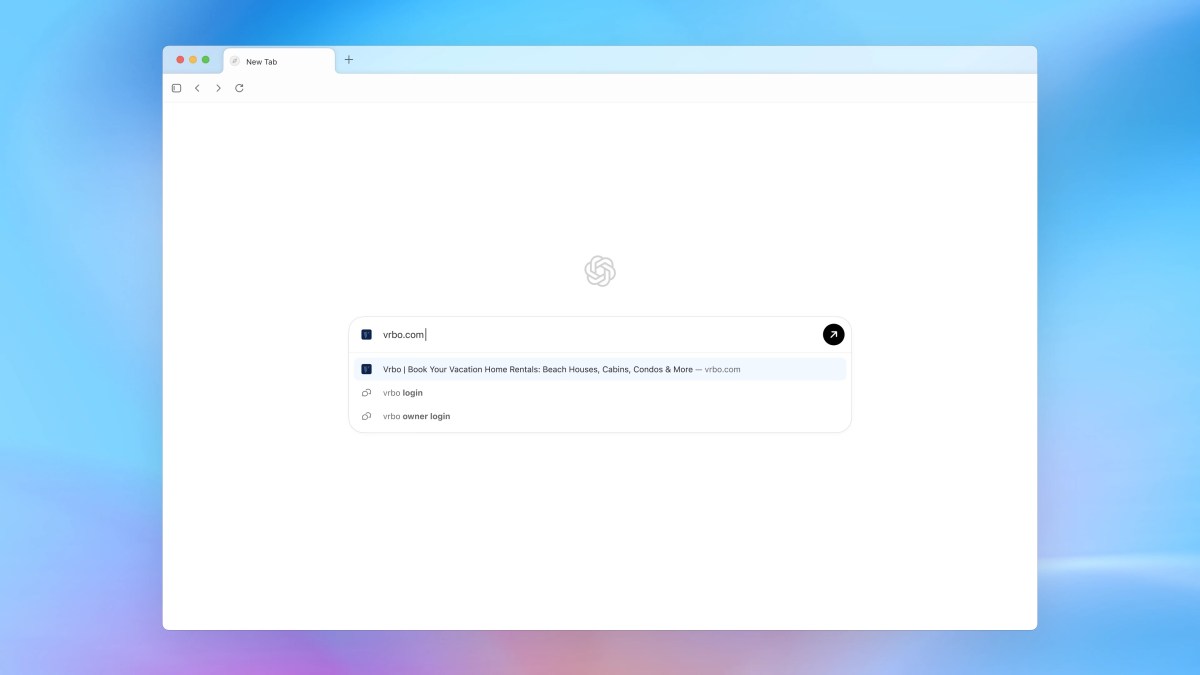
OpenAI unveiled its AI browser ChatGPT Atlas during a livestream on Tuesday. There have been other AI browsers such as The Browser Company’s Dia, Opera’s Neon, Perplexity’s Comet, and General Catalyst-backed Strawberry. OpenAI’s launch is notable because of the sheer scale of reaching potentially 800 million of its weekly ChatGPT consumers. For the company, the browser is much more about keeping ChatGPT central than making web browsing better.
While Atlas is currently available only on the Mac, the company is already working on bringing it to Windows, iOS, and Android — all the surfaces where ChatGPT already exists. OpenAI has also made the browser available to all users instead of opting for an invite system like its rivals. The core proposition of the browser is for you to think of ChatGPT as the first interaction surface for search and answers instead of Google.
All the AI browsers have a similar idea about search and Q&A. Instead of performing a search query, you would type something in your address bar in order to get answers from an AI chatbot, instead of looking at pages of links.
And OpenAI, just like other browser makers, think that Atlas will change the way you browse the web, as Sam Altman made clear at the launch. “We think AI represents once in a decade opportunity to rethink what a browser can be, how to use one, and how to most productively use the web. Tabs were great but there hasn’t been a lot of innovation since then,” Altman said in his opening speech.
Tech leaders, including Sundar Pichai and Satya Nadella, have talked about AI as a platform shift. However, for consumer phones and desktop operating systems are still the primary way to get to their AI tools. OpenAI wants to own the pipes of distribution of ChatGPT as much as it can. Last week, we saw Meta shut their doors to third-party chatbots, including ChatGPT and Perplexity on WhatsApp, which has over 3 billion monthly users. This essentially means that the platform owners could put the brake on distribution at any point in time.
For OpenAI, Atlas will also present an opportunity to deeply integrate ChatGPT and other products better as compared to other platforms. People can directly reference multiple websites instead of posting links to ChatGPT. The company already used a headless browser for its agent. With Atlas, it might have more control over the feature. It has already integrated a writing assistant hover that shows up in text fields.

What’s more, the company is working on integrating its App SDK, which lets you call other apps within ChatGPT, to improve discoverability.
Techcrunch event
San Francisco
|
October 27-29, 2025
The memory feature is also key for ChatGPT’s power users. The feature takes in account the browsing history, along with your ChatGPT history, to provide answers with that context in mind. You can possibly ask, “What was the work document I had my presentation plan on?” and ChatGPT will fetch that link for you. This also means that ChatGPT gets more context about you as you spend more time in the browser. OpenAI can use this context and provide it to other apps when it starts rolling out Sign in with ChatGPT widely.
Both ChatGPT as a default option in the address bar and the memory feature are designed to give more data to OpenAI, so it has more context on you, and in turn, can serve you better products. The browser doesn’t have an ad-blocker, or VPN, a reading mode, or a translate feature to make my browsing experience better for a site. Rather, I have to ask ChatGPT to summarize content or find something on a page. As if opening a page is designed to give ChatGPT more context rather than having me consume the content on the page.
In contrast, The Browser Company’s Arc had some useful ideas around revamping browser experience, like using AI to rename downloaded files or customize a web page by letting you remove elements.

The result is more than a browser; it’s a broader canvas for ChatGPT itself. OpenAI’s CEO of applications, Fidji Simo, laid out this idea in her blog outlining the Atlas launch.
“When we first released ChatGPT, we weren’t sure how people would use it. Now that we have feedback and signals from hundreds of millions of people around the world, it’s clear ChatGPT needs to become so much more than the simple chatbot it started as. Over time, we see ChatGPT evolving to become the operating system for your life: a fully connected hub that helps you manage your day and achieve your long-term goals,” Simo said.
The big question for OpenAI is to make people, whose default browser is Chrome, Safari or Edge, switch to their own browser and get some market share out of Google, Apple, and Microsoft’s hands. OpenAI is seeing steady growth in the number of people using ChatGPT. But it is not clear if an average user would want to mix their browser and chatbot experience just yet. Chrome succeeded because it was fast, and people wanted to use Google queries as the default starting experience of the internet. ChatGPT Atlas is perfect for users who have replaced Google with ChatGPT, but to replace Chrome, OpenAI needs to make sure that billions of users fall into that habit.

Waymo is adding another four cities to its growing list of robotaxi rollouts. The company announced Wednesday it has begun testing its autonomous vehicles (with a safety monitor) in Philadelphia, and that it will start manual driving to collect data in Baltimore, St. Louis, and Pittsburgh.
Waymo did not offer a timeline for when it plans to launch commercial services in those locations, nor do we know whether the Alphabet-owned company will partner with other companies to operate robotaxis in each one. That has been the move in cities like Atlanta and Austin, for example, where Waymo has partnered with Uber to advance its robotaxi rollout.
But the new locations join a list of over 20 cities where the company is either offering rides, prepping a commercial launch, or testing. Waymo is also now offering rides on freeways in Los Angeles, Phoenix, and the San Francisco Bay Area. The company plans to be doing one million rides per week by the end of 2026.
Waymo has done all this while claiming to be operating at a level five times safer than humans, according to data the company recently released.
But the expansion has not come without its issues. The National Highway Traffic Safety Administration is investigating how the company’s vehicles operate near school buses, after a Waymo was filmed driving around a stopped bus in Atlanta in September.
This week, Austin news outlet KXAN published a report showing Waymo’s vehicles have driven past school buses that were in the process of unloading or loading children multiple times — including after Waymo claims to have shipped software updates to address the problem.
Techcrunch event
San Francisco
|
October 13-15, 2026

Spotify Wrapped is back. After last year’s widely criticized flop that included an AI podcast as its highlight, the streamer’s highly anticipated annual review feature has returned to its roots. This year, Spotify is doubling down on what it knows works best: deep dives into your streaming data, creative experiences, messages from favorite artists, and other social features.
The company claims that Wrapped 2025 is its biggest, as it’s introducing nearly a dozen new features in addition to its old standbys, like top songs and artists. Plus, it’s offering more visibility into users’ data than in years past. For the first time, Spotify Wrapped is adding a live multiplayer feature to compare your listening data with friends.
Wrapped Party, Wrapped’s first live interactive experience, allows you to invite up to nine friends to compare listening stats.

Also new this year, your Top Songs Playlist will include the play counts for each of the top songs, so you can actually see how much time you spent with your favorite tracks.
Other standout features this year include an interactive Top Song Quiz, a Listening Age feature, and Wrapped Clubs, which match you to one of six unique listening styles.
The company believes these additions will not only bring back the personalized, engaging experience that users have long expected from Wrapped, but will take it a step further by making it more interactive than before.
In the Top Song Quiz, for instance, you can try to guess which top song soundtracked your year before seeing the results.
Techcrunch event
San Francisco
|
October 13-15, 2026

The new interactive Wrapped Party feature isn’t just about comparing the personal streaming data you’ve already received to your friends’ data, as that’s something people already do on social media. Instead, the feature presents unique data stories for your group, like who’s the “most obsessed fan,” the “early bird,” the most “picky listener,” or even something as nice as the “dinner table explainer,” meaning the person who listens to the most news podcasts.

Spotify says these awards update dynamically every time you join a Wrapped Party, so no two sessions are ever the same — even if you run through them again with the same group of friends.
The new Wrapped Clubs, meanwhile, will group you into one of half a dozen listening styles, like the “Soft Hearts Club,” the “Club Serotonin,” the “Full Charge Crew,” the “Cosmic Stereo Club,” and others. You’ll also receive a role in the club based on your listening data. You might be a club leader if your listening choices strongly matches the club’s values, a scout if you’re always seeking out new releases, or an archivist if you listen to music from past eras.

Another feature, Listening Age, compares your 2025 music listening to others in your age group. To calculate your age, the feature considers the release years of the tracks you listen to most. From there, it identifies the five-year span of music that you engaged with more than other listeners your age.

As in prior years, you’ll see your top songs, top artists, top genres, and, for the first time, top albums. If you engaged with audiobooks and podcasts, you’ll see metrics for those as well. Artists, writers, and podcasters will have their own version of Wrapped as before. And top fans will again receive video messages from their favorite artists, podcasters, and, now, authors.
You’ll also receive a playlist of your top songs of the year, as before.

What you won’t find in this year’s Wrapped is any feature that advertises it was made with AI.
In a press briefing on Tuesday, Spotify’s Senior Director of Global Marketing, Matt Luhks, admitted the company received a “lot of feedback” about its 2024 AI-focused Wrapped experience, saying it was a “mix of positive and ‘more constructive feedback,’” despite the feature driving more engagement than prior years.
“We take all of that in. We use that as information, insights, [and] inspiration for how we approached Wrapped this year,” he said in a press event ahead of today’s launch.
“What our users tell us about Wrapped means a lot to us, so it was really informative in how we approached Wrapped this year. And what we tried to build was the most creative, most innovative, most engaging Wrapped ever,” he added, setting a high bar for the 2025 edition of the now 11-year-old annual year-in-review feature.
“We’re the original and, we believe, still the best,” Luhks said.

Still, AI was a part of the Wrapped experience. Though the company claims the overall experience was not made with AI, it does leverage a LLM (large language model) to add a storytelling layer to Wrapped’s facts and figures, and natural language summaries in other parts of its experience, looking back on your data.
Spotify’s attempt to fix Wrapped after a notable stumble comes as the streamer faces increased competition from Apple, Amazon, YouTube, and others, which have all launched their own annual review features, inspired by Wrapped.
“Everyone seems to have their own version of Wrapped. Now, there’s a lot of reviews and replays and rewinds out there, but we believe that Wrapped still sets the bar for these year-end recaps,” Luhks said.
Along with the consumer experience, Spotify shared its top artists, songs, albums, podcasts, and audiobooks for the year, with top winners that included, respectively, Bad Bunny (top song and album), Joe Rogan (“The Joe Rogan Experience” podcast), and Rebeca Yarros (author of “Fourth Wing”).

Hardware maker Nothing is letting its user base buy its stock as part of a new community investment round of $5 million. The new round, which opens on December 10, will enable consumers to buy the company’s shares at its Series C valuation of $1.3 billion.
The company said it has so far raised $8 million in total from over 8,000 people across two previous community investment rounds. It held its first community funding event in 2021, aiming to raise $1.5 million.
“This isn’t about raising capital, it’s about giving our community/fans a chance to invest while we’re private and join us on the journey,” a spokesperson for Nothing told TechCrunch.
Community investors have a rotating seat on the company’s board, but it is unclear what else they get for investing in the company through such rounds.
Nothing raised $200 million in its Series C back in September from investors including Tiger Global, GV, Highland Europe, EQT, Latitude, I2BF and Tapestry. The company has raised $450 million to date.
The community round comes as Nothing makes changes to its corporate structure as it tries to increase its share of a smartphone market dominated by giants like Samsung and Apple. The company is spinning off its budget CMF brand, and plans to explore AI-centric devices while it keeps building smartphones and audio products. And Nothing claims it crossed $1 billion in cumulative revenue this year, up 150% from 2024.
The startup is working to be “IPO-ready” in three years, CEO Carl Pei told TechCrunch in an email. “The timing will depend on market conditions and what makes sense for the business at that point in time,” he said.
Techcrunch event
San Francisco
|
October 13-15, 2026
“What’s important is that we’re already operating with that discipline now. We’re building the systems, the governance, the financial discipline that a public company needs. It forces us to think longer-term and make smarter decisions that prioritise sustainable growth,” Pei added.
It’s not clear if Nothing aims to raise another round before an IPO. When asked about its fundraising plans, a Nothing spokesperson said the company is not thinking about raising capital immediately, but it wouldn’t be averse to those conversations.
Those interested in investing in the community round can use platforms like Wefunder and Crowdcube to participate.


16 Top Goalscorers Predicted By AI

Police arrest suspect over abduction of three siblings in Adamawa

NDC criticises FG over resurgence of banditry in Zamfara

Simi Sanya and Femi Dapson Are Now Legally Married and It Is Beautiful to See

FCT Area Council Election: Live results from polling units

Premier League Set-Piece Goals (2025/2026)
-
 Sports1 day ago
Ilia Topuria Said Just 9 Words to His Agent After Justin Gaethje Defeat
-
 Sports20 hours ago
Thierry Henry’s Viral Analysis on Cristiano Ronaldo For Portugal
-
 Sports19 hours ago
Thomas Tuchel Lost it With England Star Jordan Pickford vs Croatia
-
 Sports11 hours ago
Wayne Rooney Causes Stir With Cristiano Ronaldo Analysis at World Cup
-
 Sports1 day ago
Clip of Zinedine Zidane in the Stands During Argentina 3-0 Algeria Goes Viral
-
 Sports1 day ago
Piers Morgan Causes Stir With Lionel Messi Tweet After World Cup Hat-Trick
-
 Sports2 days ago
Petition Demands FIFA Probe into Scotland 1-0 Haiti World Cup Match
-
 Sports9 hours ago
Cristiano Ronaldo is Wearing Special Shirt That Only 5 Players Can Wear