
Tech
TechCrunch Mobility: The ‘robot army’ argument

Welcome back to TechCrunch Mobility — your central hub for news and insights on the future of transportation. To get this in your inbox, sign up here for free — just click TechCrunch Mobility!
I am sure you are waiting to learn the results of last week’s poll. (Reminder: Sign up for the Mobility newsletter to participate in our polls!) Here is what I asked: “What is the best business model for autonomous vehicle tech? (Keep profitability in mind.)”
Far and away, readers think longer-haul delivery is the best bet, with 40% picking this option. Robotaxis came in next with 25.5% of the vote, followed by licensing tech to automakers at 19.1% and last-mile delivery with 14.9%. One reader emailed to point out that I didn’t include warehouse applications like autonomous forklifts. The longer-haul delivery category can be broken down further, though, and is worth another poll, which we included in this week’s newsletter.
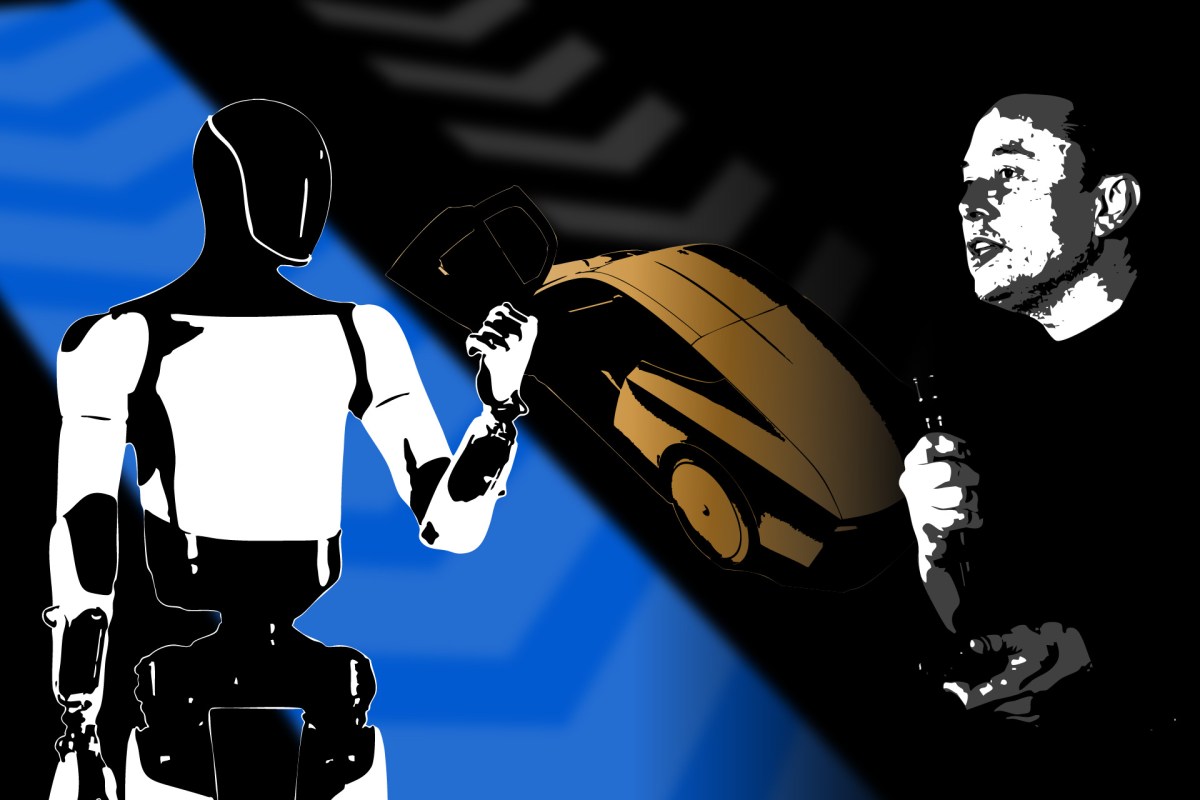
In the long list of arguments one might make to justify a $1 trillion compensation package, having control over a robot army was certainly not on my mind. And yet, this is the argument Elon Musk made during Tesla’s third-quarter earnings call.
Here’s the rundown: On November 6, shareholders will vote whether to approve a board-endorsed compensation package that would grant Musk up to 12% of Tesla’s stock. If the company hits its target market value of $8.6 trillion, that package would be worth about $1 trillion.
The board and Musk have spent weeks lobbying shareholders to approve the measure, even as proxy advisers Institutional Shareholder Services and Glass Lewis have recommended that investors reject it. Musk is now in attack mode, which was on display at the end of the earnings call when he called the firms corporate terrorists and made his final pitch. His robot army argument centers on power and control, not so much money. Although, hey, money can provide both.
“My biggest concern line: If we build this robot army, do I have a strong influence over that robot army? I don’t feel comfortable building a robot army if I don’t have a strong influence,” Musk said during the earnings call. He was referring to Tesla’s Optimus robot program and used it as an example of products he wants full control over.
Techcrunch event
San Francisco
|
October 27-29, 2025
That argument will hardly persuade Musk’s critics, particularly in the wake of his role as head of the Department of Government Efficiency. But Musk doesn’t need to convince his growing list of critics, unless, of course, they own Tesla shares.
A little bird

This week, General Motors dropped the ax on the BrightDrop electric van program after four short years. It was not the biggest surprise in the world; after all, hundreds of unsold vans have been sitting untouched in lots in Michigan and Canada for months now. (One little bird reached out to tell us that hundreds of them are in a lot in Flint, Michigan.) GM cited a slower-than-expected market for commercial electric vans, but it didn’t go into detail about why, exactly, BrightDrop failed so miserably.
Another little bird has given us a clue, though. The vans are pricey but well-liked and should save fleet owners money over time. And electric drivetrains are a great fit for last-mile delivery. What GM appears to have missed was the infrastructure piece, according to one insider. The company leaned hard on outside partnerships to build out so-called depot charging, instead of offering it as part of the fleet purchases. That turned a number of potential customers away and just generally caused headaches.
Got a tip for us? Email Kirsten Korosec at kirsten.korosec@techcrunch.com or my Signal at kkorosec.07, or email Sean O’Kane at sean.okane@techcrunch.com.
Deals!

The big deal this week is about EVs and AI data centers. Yes, there is a connection.
Redwood Materials raised $350 million in a Series E round led by venture firm Eclipse, and included a new strategic investment by Nvidia’s venture capital arm, NVentures. The company’s valuation was not disclosed, but a source familiar with the round told TechCrunch it was about $6 billion, a billion dollars higher than its previous valuation.
The chunk of this money is going toward Redwood’s new energy storage business, which is giving a new purpose to EV batteries it has collected and that have too much life left to put through the recycling process. The company ties these retired EV batteries to renewable energy sources like wind and solar, or the grid, to power AI data centers or industrial sites.
Other deals that got my attention this week …
Avride secured strategic investments and other commitments of up to $375 million, backed by Uber and Nebius. None of these companies gave me specifics when asked if this was all equity. One insider did say to pay attention to the “other commitments” bit, which suggests it was not a straight cash injection.
Spiro, the African electric motorbike startup headquartered in Dubai, raised $100 million in a round led by the Fund for Export Development in Africa (FEDA), the development arm of Afreximbank. This is the largest raise ever for African e-mobility.
Notable reads and other tidbits

General Motors made several announcements at an event in NYC that were meant to show where it’s headed. And, yes, AI plays a central role. Before AI could take the stage, GM said it will overhaul the electrical and computational guts of its future vehicles. The company will roll out a new electric architecture and centralized computing platform in new vehicles, starting with the Cadillac Escalade IQ in 2028. That foundation will allow the company to deliver faster software; more capable automated driving features, including eyes-off driving; and a custom, conversational AI assistant.
Earnings season is upon us, and this quarter I am watching for data and executive commentary that helps me understand how tariffs and the expired EV tax credit are affecting the automotive sector. I don’t have any clear takeaways yet — and probably won’t until the next quarter.
Tariffs are hitting, Q3 reports from GM and Ford indicate. For instance, GM forecast that tariffs will reduce its 2025 profits by $2.3 billion and Ford said it would take a $2 billion bite out of the bottom line. But both of those projections are billions of dollars better than the automakers predicted earlier this year, and the automakers hope to offset those costs. CEOs from both automakers thanked President Trump for extending a relief measure from tariffs on automotive parts sourced from Canada and Mexico.
Some other GM and Ford news: Ford will continue to pause production of its F-150 Lightning trucks as it prioritizes gas and hybrid F-Series versions in a bid to recover from a fire at its primary aluminum supplier Nevolis. Meanwhile, GM CEO Mary Barra told the Verge’s Decoder podcast that the company will drop support for Apple CarPlay and Android Auto from all of its vehicles. Oh, and late-breaking: GM has laid off 200 salaried workers from its Warren Tech Center.
Tesla delivered a record number of vehicles in the third quarter of 2025, results buoyed by U.S. customers who took advantage of the expiring federal EV tax credit. That didn’t translate to greater earnings. Tesla’s third-quarter profit was $1.4 billion, 37% lower than it was in the same quarter last year.
The National Highway Traffic Safety Administration opened an investigation after seeing footage from early October of a Waymo autonomous vehicle maneuvering around a stopped school bus that was unloading kids in Atlanta.
Rivian is undergoing a bit of a shake-up that includes cutting 600 people from its workforce (its third round of layoffs this year), and its founder and CEO is taking on yet another position: chief marketing officer. Rivian also agreed this week to pay $250 million to settle a class-action shareholder lawsuit filed after the company suddenly hiked prices on its R1 pickup truck and SUV in 2022.
Meanwhile, I spent some time in the Bay Area with executives from Rivian’s micromobility spinout company Also. The company revealed three new products, and if Also president Chris Yu and Rivian CEO RJ Scaringe (and Also board member) are to be believed, there will be even more coming. For now, it’s a slick modular pedal-assist e-bike and two pedal-assist quad vehicles — the delivery van version that Amazon has already agreed to buy. The big compelling tech story here is vertical integration and software.

Waymo is adding another four cities to its growing list of robotaxi rollouts. The company announced Wednesday it has begun testing its autonomous vehicles (with a safety monitor) in Philadelphia, and that it will start manual driving to collect data in Baltimore, St. Louis, and Pittsburgh.
Waymo did not offer a timeline for when it plans to launch commercial services in those locations, nor do we know whether the Alphabet-owned company will partner with other companies to operate robotaxis in each one. That has been the move in cities like Atlanta and Austin, for example, where Waymo has partnered with Uber to advance its robotaxi rollout.
But the new locations join a list of over 20 cities where the company is either offering rides, prepping a commercial launch, or testing. Waymo is also now offering rides on freeways in Los Angeles, Phoenix, and the San Francisco Bay Area. The company plans to be doing one million rides per week by the end of 2026.
Waymo has done all this while claiming to be operating at a level five times safer than humans, according to data the company recently released.
But the expansion has not come without its issues. The National Highway Traffic Safety Administration is investigating how the company’s vehicles operate near school buses, after a Waymo was filmed driving around a stopped bus in Atlanta in September.
This week, Austin news outlet KXAN published a report showing Waymo’s vehicles have driven past school buses that were in the process of unloading or loading children multiple times — including after Waymo claims to have shipped software updates to address the problem.
Techcrunch event
San Francisco
|
October 13-15, 2026

Spotify Wrapped is back. After last year’s widely criticized flop that included an AI podcast as its highlight, the streamer’s highly anticipated annual review feature has returned to its roots. This year, Spotify is doubling down on what it knows works best: deep dives into your streaming data, creative experiences, messages from favorite artists, and other social features.
The company claims that Wrapped 2025 is its biggest, as it’s introducing nearly a dozen new features in addition to its old standbys, like top songs and artists. Plus, it’s offering more visibility into users’ data than in years past. For the first time, Spotify Wrapped is adding a live multiplayer feature to compare your listening data with friends.
Wrapped Party, Wrapped’s first live interactive experience, allows you to invite up to nine friends to compare listening stats.

Also new this year, your Top Songs Playlist will include the play counts for each of the top songs, so you can actually see how much time you spent with your favorite tracks.
Other standout features this year include an interactive Top Song Quiz, a Listening Age feature, and Wrapped Clubs, which match you to one of six unique listening styles.
The company believes these additions will not only bring back the personalized, engaging experience that users have long expected from Wrapped, but will take it a step further by making it more interactive than before.
In the Top Song Quiz, for instance, you can try to guess which top song soundtracked your year before seeing the results.
Techcrunch event
San Francisco
|
October 13-15, 2026

The new interactive Wrapped Party feature isn’t just about comparing the personal streaming data you’ve already received to your friends’ data, as that’s something people already do on social media. Instead, the feature presents unique data stories for your group, like who’s the “most obsessed fan,” the “early bird,” the most “picky listener,” or even something as nice as the “dinner table explainer,” meaning the person who listens to the most news podcasts.

Spotify says these awards update dynamically every time you join a Wrapped Party, so no two sessions are ever the same — even if you run through them again with the same group of friends.
The new Wrapped Clubs, meanwhile, will group you into one of half a dozen listening styles, like the “Soft Hearts Club,” the “Club Serotonin,” the “Full Charge Crew,” the “Cosmic Stereo Club,” and others. You’ll also receive a role in the club based on your listening data. You might be a club leader if your listening choices strongly matches the club’s values, a scout if you’re always seeking out new releases, or an archivist if you listen to music from past eras.

Another feature, Listening Age, compares your 2025 music listening to others in your age group. To calculate your age, the feature considers the release years of the tracks you listen to most. From there, it identifies the five-year span of music that you engaged with more than other listeners your age.

As in prior years, you’ll see your top songs, top artists, top genres, and, for the first time, top albums. If you engaged with audiobooks and podcasts, you’ll see metrics for those as well. Artists, writers, and podcasters will have their own version of Wrapped as before. And top fans will again receive video messages from their favorite artists, podcasters, and, now, authors.
You’ll also receive a playlist of your top songs of the year, as before.

What you won’t find in this year’s Wrapped is any feature that advertises it was made with AI.
In a press briefing on Tuesday, Spotify’s Senior Director of Global Marketing, Matt Luhks, admitted the company received a “lot of feedback” about its 2024 AI-focused Wrapped experience, saying it was a “mix of positive and ‘more constructive feedback,’” despite the feature driving more engagement than prior years.
“We take all of that in. We use that as information, insights, [and] inspiration for how we approached Wrapped this year,” he said in a press event ahead of today’s launch.
“What our users tell us about Wrapped means a lot to us, so it was really informative in how we approached Wrapped this year. And what we tried to build was the most creative, most innovative, most engaging Wrapped ever,” he added, setting a high bar for the 2025 edition of the now 11-year-old annual year-in-review feature.
“We’re the original and, we believe, still the best,” Luhks said.

Still, AI was a part of the Wrapped experience. Though the company claims the overall experience was not made with AI, it does leverage a LLM (large language model) to add a storytelling layer to Wrapped’s facts and figures, and natural language summaries in other parts of its experience, looking back on your data.
Spotify’s attempt to fix Wrapped after a notable stumble comes as the streamer faces increased competition from Apple, Amazon, YouTube, and others, which have all launched their own annual review features, inspired by Wrapped.
“Everyone seems to have their own version of Wrapped. Now, there’s a lot of reviews and replays and rewinds out there, but we believe that Wrapped still sets the bar for these year-end recaps,” Luhks said.
Along with the consumer experience, Spotify shared its top artists, songs, albums, podcasts, and audiobooks for the year, with top winners that included, respectively, Bad Bunny (top song and album), Joe Rogan (“The Joe Rogan Experience” podcast), and Rebeca Yarros (author of “Fourth Wing”).

Hardware maker Nothing is letting its user base buy its stock as part of a new community investment round of $5 million. The new round, which opens on December 10, will enable consumers to buy the company’s shares at its Series C valuation of $1.3 billion.
The company said it has so far raised $8 million in total from over 8,000 people across two previous community investment rounds. It held its first community funding event in 2021, aiming to raise $1.5 million.
“This isn’t about raising capital, it’s about giving our community/fans a chance to invest while we’re private and join us on the journey,” a spokesperson for Nothing told TechCrunch.
Community investors have a rotating seat on the company’s board, but it is unclear what else they get for investing in the company through such rounds.
Nothing raised $200 million in its Series C back in September from investors including Tiger Global, GV, Highland Europe, EQT, Latitude, I2BF and Tapestry. The company has raised $450 million to date.
The community round comes as Nothing makes changes to its corporate structure as it tries to increase its share of a smartphone market dominated by giants like Samsung and Apple. The company is spinning off its budget CMF brand, and plans to explore AI-centric devices while it keeps building smartphones and audio products. And Nothing claims it crossed $1 billion in cumulative revenue this year, up 150% from 2024.
The startup is working to be “IPO-ready” in three years, CEO Carl Pei told TechCrunch in an email. “The timing will depend on market conditions and what makes sense for the business at that point in time,” he said.
Techcrunch event
San Francisco
|
October 13-15, 2026
“What’s important is that we’re already operating with that discipline now. We’re building the systems, the governance, the financial discipline that a public company needs. It forces us to think longer-term and make smarter decisions that prioritise sustainable growth,” Pei added.
It’s not clear if Nothing aims to raise another round before an IPO. When asked about its fundraising plans, a Nothing spokesperson said the company is not thinking about raising capital immediately, but it wouldn’t be averse to those conversations.
Those interested in investing in the community round can use platforms like Wefunder and Crowdcube to participate.


Tim Ream Ignored Donald Trump’s Phone Call With USMNT

Full text of President Bola Ahmed Tinubu’s Democracy Day address on Friday

Referee Michael Oliver Out of 2026 World Cup Match Due to Injury

Simi Sanya and Femi Dapson Are Now Legally Married and It Is Beautiful to See

FCT Area Council Election: Live results from polling units

Premier League Set-Piece Goals (2025/2026)
-
 Sports18 hours ago
Fox Break FIFA Broadcasting Rule During Mexico v South Africa
-
 Sports19 hours ago
Lewis Hamilton’s Awkward Response to Kimi Antonelli Trolling Kim Kardashian
-
 Sports2 days ago
‘I’m a 10-Handicap Golfer – Here’s What I Scored Around Shinnecock Ahead of the 2026 US Open’
-
Sports6 hours ago
Referee Michael Oliver Out of 2026 World Cup Match Due to Injury
-
 Sports2 days ago
Thierry Henry Names Two ‘Surprise’ Teams That Can Win the 2026 World Cup
-
 Sports14 hours ago
England Fan Denied World Cup Access After Breaking Trump Rule
-
 Sports1 day ago
Gary Neville and Roy Keane Slam the US For Banning World Cup Referee
-
 Sports8 hours ago
12 Hardest Football Competitions to Win [Ranked]