
Sports
PGMOL Release VAR Audio For Disallowed Virgil van Dijk Goal

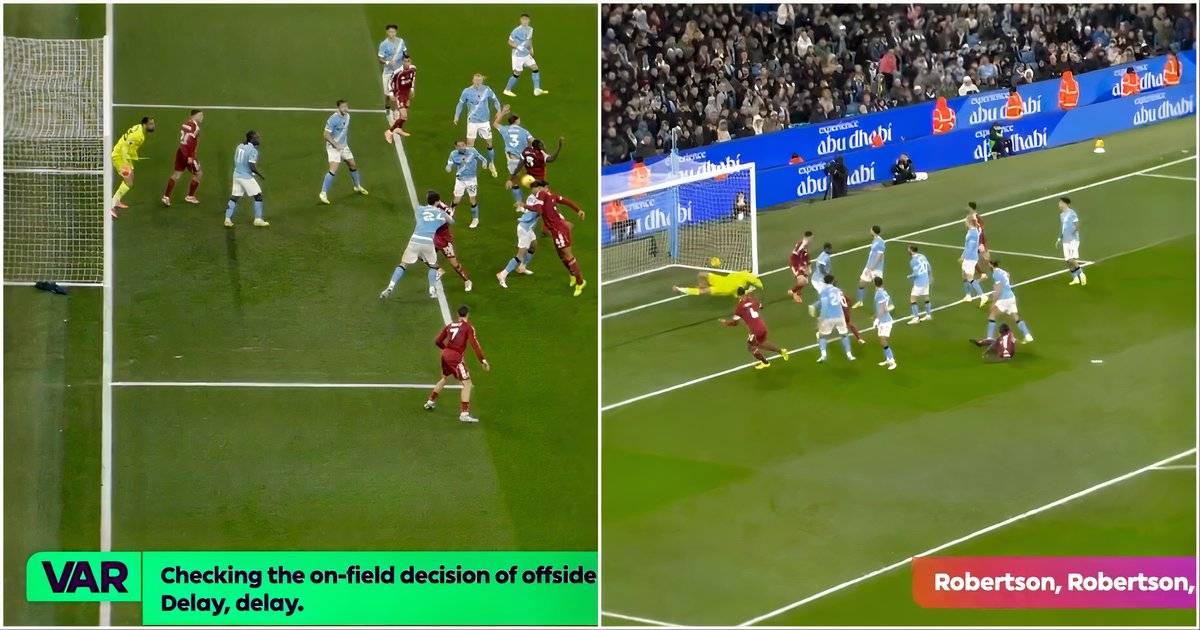
Manchester City were well worth their 3-0 win over Liverpool on Sunday but Virgil van Dijk controversially had a first-half equaliser ruled out for offside after Andy Robertson was claimed to have blocked Gianluigi Donnarumma’s line of vision.
If the goal had been awarded, then the two sides may have been heading in at half-time at 1-1 despite the hosts’ dominant performance and the visitors rarely having a look in. But Van Dijk found the back of the net with a glorious header in the 38th minute and thought he’d levelled matters until referee Chris Kavanagh ruled the goal out.
Arne Slot looked perplexed at the decision, and it was yet another of a long list of questionable calls made by VAR and the PGMOL this season. VAR referee Michael Oliver and his assistants were on duty at the time and their discussions between themselves and with Kavanagh have been released.
VAR’s Intervention: What Was Said in Stockley Park?

The latest edition of Sky Sports’ Match Officials Mic’d Up with Howard Webb saw the PGMOL chief and Michael Owen reflect on Van Dijk’s disallowed goal and whether the right decision was reached. During their analysis, the VAR intervention audio was played, providing insight into the thought process.
The assistant video assistant referee (AVAR) could be heard stating:
“Robertson, Robertson, Robertson, Robertson. Robertson’s in line of vision, right in front of the keeper. He’s ducked under the ball. He’s very, very close to him. I think he’s in line of vision. I think he’s been impacted mate.”
On-field Referee Kavanagh responded:
“Ok, so offside then… I think offside.”
Oliver, fronting VAR on the day used the technology to rewind and go over the potential offside against Robertson:
“Checking the on field decision of offside against Andy Robertson. Delay, delay… So you’ve got a clear offside position. You’ve got a movement… Have you got a high-behind to show how high he is in terms of line of vision?”
The AVAR replied:
“I agree with the on-field decision, I think it’s offside…It’s a clear, obvious action that clearly impacts the goalkeeper.”
Oliver then spoke to Kavanagh to give a final decision:
“Chris, it’s Michael, confirming the on-field decision of offside against Andy Robertson. He is in an offside position, very close to the goalkeeper and makes an obvious movement directly in front of him.”
Reports claim that Liverpool have contacted the PGMOL with “serious concerns” regarding Van Dijk’s goal being disallowed over Robertson perceived to have been in an offside position and impacting the goalkeeper. They are said to have spoken to the organisation’s technical director, Webb, but he doesn’t seem to share their opinion on the matter.
PGMOL Chief Howard Webb’s Verdict

Webb pointed out that offside decisions involving players who don’t make contact with the ball but interfere with play are highly subjective. He suggested that Robertson was still impacting Donnarumma because he ducks after Van Dijk’s header whilst in an offside position:
“Interfering with an opponent where the offside position player doesn’t play the ball and the officials have to make a judgment whether the actions of that player impact an opponent, are some of the most subjective decisions that we have to make,” said Webb. Therefore, it’s no surprise that some people believe this goal should have stood, so I think it’s important that we look at the facts of what actually happened in this situation.”
Webb added:
“We know the corner comes in and the ball reaches Van Dijk. As the ball’s coming across the penalty area, the Manchester City players move out, they leave Robertson in that offside position in the heart of the six-yard box. When Van Dijk heads the ball forward, that’s the moment when we have to make an offside judgment about Robertson and about what he’s doing there. We know he doesn’t touch the ball but what does he do? Well, as the ball moves towards him, three yards out from goal, right in the middle of the six-yard box, he makes that clear action to duck below the ball.”
He continued:
“The ball goes just over his head, and the ball finds the goal in the half of the six-yard box where he is. Then, the officials have to make a judgment – did that clear action impact on Donnarumma, the goalkeeper, and his ability to save the ball? And that’s where the subjectivity comes into play.”
The PGMOL chief suggested that it was reasonable to go with the on-field decision:
“Obviously that’s the conclusion they drew on that. They looked at that position, they looked at that action, so close to the goalkeeper, and they formed that opinion. I know that’s not a view held by everybody but I think it’s not unreasonable to understand why they would form that conclusion.”
Webb further explained that the distance between the Liverpool full-back and the City goalkeeper was important:
“The player is so close to the goalkeeper, the ball’s coming right towards him and he has to duck to get out of the way of the ball – and they form the conclusion that that impacts Donnarumma’s ability just to dive towards the ball and make that save.”
He concluded:
“And then, of course, once they’ve made that on-field decision, the job of the VAR is to look at that and decide, was the outcome of offside clearly and obviously wrong? Only Donnarumma truly knows if he was impacted by this and, of course, we have to look at the factual evidence, and when we see that factual evidence of that position of the player ducking below the ball, so close to the goalkeeper, the VAR determines that the outcome of offside is not clearly and obviously wrong, and they stay out of it.”

City prevailed at the Etihad courtesy of goals from Erling Haaland (29′), Nico Gonzalez (45+3′) and Jeremy Doku (63′). But had Van Dijk’s goal stood, it would have been a vital equaliser in the 39th minute with the Reds second best and given a lifeline to build on a goal at that stage.
Slot made it clear that he felt it was the “wrong decision” not to award the goal and that it could have influenced the game in a “positive way” for his side. Their defeat means they sit eighth after 11 games with 18 points in a sorry start to their Premier League title defence.

Retiring a shirt number isn’t something that’s overly common in football. While American sports like basketball and baseball frequently use this as a sign of respect for players who have played for their franchises, or in some cases have just made a major impact on the sport in general, it’s not something that’s done so often in Britain.
Yet, there are still some specific circumstances where such action is called for and taken, and that conversation was sadly brought to the forefront in July 2025 following the tragic death of Liverpool star Diogo Jota. Fans immediately called for the Reds to commemorate the Portuguese by retiring his number 20 – something that would later be confirmed by the club.
It made Jota only the 13th person in English football to receive such an honour, joining a list of true greats of the game, as well as a few other modern-day names who have also been immortalised.
1
Jude Bellingham (Birmingham City)
Shirt number: 22

Let’s start with Jude Bellingham, who is now widely recognised as one of the best midfielders in the world. Years before starring for Real Madrid, Bellingham was a highly-rated youngster playing in the Championship with his boyhood club Birmingham City.
Jude’s time at Birmingham was a short-lived romance. His undeniable talent, coupled with a maturity that was far beyond his years, saw him making waves in English football’s second tier. The teenager earned admiration not just from the Blues’ faithful, but from pundits globally, and was catching the attention of scouts across the world – including those from Liverpool and Manchester United.
It was Borussia Dortmund who secured his signature, bringing the midfielder to Germany in 2020, and Birmingham opted to retire Bellingham’s number 22 shirt as a result, despite his young age.
Jude hadn’t even played 50 league games for Birmingham at that stage, but was widely recognised as one of the best and most talented players the side had ever had, explaining why they opted to retire his shirt number, despite the critics. It’s a decision that will no doubt be vindicated even more if England manage to win their first major honour in over 60 years with the Stourbridge-born lad playing a leading role.
2
Billy Kee (Accrington Stanley)
Shirt number: 29

Billy Kee’s journey with Accrington Stanley was nothing short of inspirational. He joined the club on a one-year deal in 2015 after being released by Scunthorpe United, having previously been on loan during the 2009/10 season, scoring 77 league goals in 211 domestic games across his two spells at the club.
In 2019, four years after joining the club, Kee missed Accrington’s pre-season training camp due to personal reasons, and a few months later, it was revealed that the Northern Irishman was seeking treatment for depression, anxiety and bulimia. In January 2020, the decision was made by both Stanley and Kee for his contract to be terminated, and he announced his retirement from football the following month, on January 29.
Following the decision, and because of his incredible goalscoring record whilst at the club, Accrington made the decision to retire Kee’s number 29 shirt, and no one has taken on the football league icon’s number since.
3
Jack Lester (Chesterfield)
Shirt number: 14

Chesterfield and Jack Lester’s relationship can best be described as iconic. With a knack for finding the net and an unyielding commitment to the club, Lester etched his name in the annals of Chesterfield’s history.
His goals, having scored 83 in just under 200 league games, his leadership, and his incredible bond with fans turned the number 14 shirt into an iconic one for the club, and in recognition of his service, Chesterfield announced that they were going to retire his number when he left the club, after six years, in 2013, and he even came back to manage them for a lone season in the 2017/18 campaign just to add another notch to his belt of successes at the Recreation Ground.
4
Michael Maidens (Hartlepool United)
Shirt number: 25
Maidens broke into Hartlepool’s first team in 2004, at the age of 17, and was seen as a bright midfield prospect. However, tragedy struck in 2007 when, at the age of just 20, Maidens passed away in a road traffic accident. He was a passenger in a vehicle which lost control and hit a metal post near a roundabout on the A174 in October of that year.
Hartlepool’s youth game, and their match with Swansea City, were postponed as a mark of respect following Michael’s death, and both sides paid tribute to the midfielder on October 21, two days after his passing. Maidens’ shirt number, 25, was then retired by Hartlepool, and the side renamed their Goal of the Season Award to ‘The Michael Maidens Goal of the Season Award’ as a tribute to the player, who was given the honour the year prior.
5
Richard Butcher (Macclesfield Town)
Shirt number: 21

Butcher’s time at Macclesfield was brief, as he only played 15 league games and scored three goals, but he definitely left his mark on the side. The midfielder joined the club on loan in February 2010, and scored on his debut in a 2-1 defeat to Bury, before making his move permanent a few months after his deal with Lincoln City expired.
Butcher’s final game came in January 2011, when Macclesfield lost to Rotherham. Just six days after the loss, Butcher was found dead at his home in Salford after failing to turn up for training on Monday morning. Butcher’s wife had been away, and the midfielder passed away in his sleep overnight. His death was made even more tragic as it came less than a year after the passing of Macclesfield boss Keith Alexander, who was also Butcher’s manager at Lincoln City and Peterborough United.
Macclesfield paid various tributes to Butcher in the weeks that followed, and even made the decision to retire the number 21 shirt in his memory.
6
Marc-Vivien Foe (Manchester City)
Shirt number: 23

Years before Rodri and Fernandinho were the anchor in the midfield of Manchester City, that job was given to Marc-Vivien Foe, who played for the club on loan during the 2002/03 season. Foe scored nine goals in 35 games for the club, a very impressive tally for a defensive-minded midfielder, and was due to return to his parent club Lyon ahead of the 2003/04 season.
He was selected to play for Cameroon in the 2003 Confederations Cup, but on June 26, during the semi-final against Colombia, Foe collapsed in the centre circle during the 72nd minute and had to be stretched off the field after medics attempted to resuscitate him.
Doctors worked on Foe for 45 minutes, attempting to restart his heart, and he passed away shortly after reaching the stadium’s medical centre. An autopsy later revealed that Foe’s tragic death was because of a heart-related issue. Man City’s manager at the time, Kevin Keegan, announced that the club would no longer use the number 23 shirt, which he wore during his season in England. Maine Road, the club’s old ground, also features a small memorial to him in its garden, and on the walls of the players’ tunnel.
7
Ray Jones (Queens Park Rangers)
Shirt number: 31

QPR fans were really excited about Ray Jones when the young Englishman began to break through into the first team at Loftus Road. His pace, agility, and goal-scoring ability hinted at a bright future, but things unfortunately didn’t pan out that way.
Jones tragically died in a car crash during the early hours of the morning on August 25 2007, when he was just 18. The vehicle he was driving collided with a bus and all three people inside the car were killed. QPR postponed their game against Burnley, and also decided to retire the number 31 shirt in memory of Jones, who used the squad number during his time at the club.
8
Dale Roberts (Rushden & Diamonds)
Shirt number: 1

Dale Roberts was more than just a goalkeeper for Rushden & Diamonds. His saves, leadership, and undeniable presence made him a cornerstone of the team. At the age of just 24, Dale passed away, with the announcement being made just hours before his side were set to play against Eastwood Town, his former club, in the FA Trophy.
The cause of death, which took place in December 2010, was reported to be suicide by hanging, with a coroner stating that the goalkeeper took his own life after struggling to come to terms with an injury, and media speculation about his private life. Rushden retired the number one shirt following the tragic incident, meaning that despite passing away 15 years ago, Roberts will never be forgotten by the fans and players of his former side.
9
Bobby Moore (West Ham United)
Shirt number: 6

Bobby Moore is one of the most famous players on this list and remains the only captain to lift the World Cup with England following the country’s triumph in 1966. Moore led by example, both for England and West Ham, and was the bedrock of the defences of both his club and country, so much so that in 2008, 15 years after his death, the Hammers made the decision to retire the number six shirt.
There truly will never be another Bobby Moore, with him also forever immortalised in the upper echelons of lists depicting the greatest British footballers of all time.
10
Dylan Tombides (West Ham United)
Shirt number: 38

West Ham, with Bobby Moore and Dylan Tombides, are the only English club to have two squad numbers retired at the time of writing. While coming through the ranks at West Ham in mid-2011, Tombides was diagnosed with testicular cancer, and the Australian passed away in April 2014 after the cancer metastasised to his liver.
The day after his passing, before a Premier League game with Crystal Palace at Upton Park, Dylan’s father and brother laid Tombides’ shirt on the centre spot, with West Ham announcing afterwards that the number had been retired in his memory.

Cristiano Ronaldo could be playing his final World Cup game in tonight’s Round of 32 meeting between Portugal and Croatia.
The legendary forward’s sister, Katia Aveiro, has dropped a massive bombshell about the 41-year-old’s plans once his World Cup campaign ends. He is captaining Portugal and looking to finally win the one trophy that has eluded him throughout his illustrious career.
Ronaldo remains a starter for his nation and has played every minute of his team’s tournament thus far. He scored a brace in a 5-0 win over Uzbekistan amid criticism over his starting role in Roberto Martinez’s frontline.
Cristiano Ronaldo’s Sister Drops Retirement Bombshell

There had been an expectation that this would be Ronaldo’s last World Cup campaign given his age. Some speculate that he may be enticed to continue playing international football until 2030 because the tournament is co-hosted by Portugal.
Ronaldo’s sister has claimed that the Al-Nassr striker will be closing the book on his international career. Aveiro told Portuguese outlet SPORT TV: “We have to enjoy these moments. It’s the last dance for two players, both for Croatia and for Portugal. The most important thing is to enjoy these 20-odd years that we’ve lived, won, and come so far.”
Aveiro added when asked about seeing him potentially captain his nation at Euro 2028:
“From the information I have, they can say goodbye. Enjoy it while it lasts. It’s not today that they’re saying goodbye, but it’s soon. I believe this is their farewell.”
Ronaldo is the greatest goalscorer in football history and is Portugal’s all-time top goalscorer. He has bagged 145 goals in 231 games for his country and won his first major trophy, the European Championship, back in 2016.
The former Manchester United star has yet to win the World Cup and watched longtime rival Lionel Messi lift the trophy in 2022. The closest he has come to doing so was in 2006 when his nation reached the semi-finals.

Should Ronaldo announce his retirement from international football, his sole focus will be on club football with Al-Nassr. The Portuguese hero signed a record-breaking new two-year contract with the Saudi giants in June 2025.
The Real Madrid icon previously vowed to continue playing football until he reaches 1000 goals. He said back in June:
“It’s hard to continue playing, but I am motivated. My passion is high, and I want to continue. It doesn’t matter where I play, whether in the Middle East or Europe.”
Ronaldo currently sits on 969 goals for club and country, which could mean he’ll look to use his last season to try and reach the 1000 milestone. He has enjoyed an incredible career, which includes winning five Champions League trophies and rivalling Messi for the Ballon d’Or and in El Clásico.
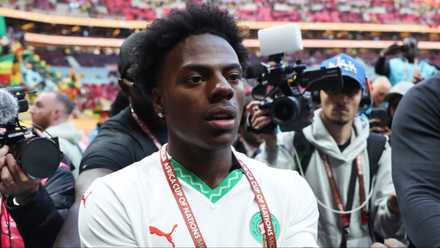
World Cup: IShowSpeed Breaking Strict Canada Rule to Watch Cristiano Ronaldo
The American streamer wants to attend Portugal vs Croatia.

Spain eased into the last 16 of the World Cup with a comfortable 3-0 win over Austria in Los Angeles, goals from Mikel Oyarzabal and Pedro Porro doing the damage as Luis de la Fuente’s side finally found the fluency that had eluded them for much of the group stage.
Ralf Rangnick’s Austria, appearing in their first World Cup knockout tie since 1954, gave a spirited account of themselves without ever truly threatening an upset, and Spain now turn their attention to a round of 16 clash against either Portugal or Croatia.
Spain took the lead in the 38th minute when Marc Cucurella picked out Mikel Oyarzabal inside the box, and the forward made no mistake in guiding a composed finish beyond Alexander Schlager. Austria pushed for an equaliser without ever really testing Unai Simon, before Pedro Porro’s header and Oyarzabal’s tap-in put the game out of reach.
Spain Player Ratings

Marc Cucurella was one of the standout performers for La Roja, grabbing two assists and being a constant menace down the left throughout.
Oyarzabal and Porro took their chances well when they arrived, while Alex Baena caught the eye with his energy and the assist for the second goal. Lamine Yamal had flashes of brilliance without quite hitting his ceiling, nutmegging Austrians at will, and Spain’s defence was rarely troubled behind a dominant midfield. Off the bench, Mikel Merino added fresh legs late on to help Spain see out the closing stages with minimal alarm.
|
Player |
Rating |
|
Unai Simon |
6.5 |
|
Pedro Porro |
8 |
|
Aymeric Laporte |
7 |
|
Pau Cubarsi |
7 |
|
Marc Cucurella |
9 |
|
Rodri |
6.5 |
|
Pedri |
7.5 |
|
Dani Olmo |
6.5 |
|
Alex Baena |
7.5 |
|
Mikel Oyarzabal |
9 |
|
Lamine Yamal |
7.5 |
|
Mikel Merino (sub) |
6 |
|
Ferran Torres (sub) |
6 |
Austria Player Ratings

Marcel Sabitzer was the standout performer among those who weren’t wearing a Spain shirt. He was a constant source of quality deliveries from the left and the architect of Austria’s most dangerous moments throughout.
Sasa Kalajdzic almost snatched a goal within seconds of coming on, glancing a header narrowly over the bar from a Sabitzer cross, and Austria can leave the tournament with their heads held high after reaching the knockout stages in a World Cup for the first time since 1954.
|
Player |
Rating |
|
Alexander Schlager |
6 |
|
Stefan Posch |
6 |
|
David Alaba |
6.5 |
|
Kevin Danso |
6 |
|
Konrad Laimer |
6.5 |
|
Nicolas Seiwald |
6 |
|
Xaver Schlager |
6 |
|
Marcel Sabitzer |
7.5 |
|
Romano Schmid |
6 |
|
Paul Wanner |
6 |
|
Michael Gregoritsch |
6 |
|
Florian Grillitsch (sub) |
6 |
|
Carney Chukwuemeka (sub) |
6 |
|
Sasa Kalajdzic (sub) |
6.5 |
|
Marko Arnautovic (sub) |
6 |
Cucurella and Oyarzabal Combine To Break The Deadlock

Spain were the dominant force for the best part of 40 minutes without ever really threatening, before Cucurella’s quality finally told. The left-back did the legwork down the flank, picking out Oyarzabal inside the box, and the forward guided it beyond Schlager to break Austria’s resistance. It could have been more before that, with Cucurella having a strike ruled out for interference on the Austrian goalkeeper when we reacted fast to a loose ball following a corner.
Pedro Porro’s First International Goal

Spain put the game to bed midway through the second half, when Cucurella again started the move, feeding Baena on the left, and the Villarreal man put in a cross for Porro to head home his first international goal. Kalajdzic almost pulled one back moments later, but Austria’s resistance ultimately broke, with de la Fuente’s substitutions helping Spain see out the closing stages in complete control.

13 English Football Clubs That Have Retired Shirt Numbers
Cristiano Ronaldo to Retire From International Duty After the World Cup

NDP, party to beat come 2027 – Imo chairman, Amadi

Simi Sanya and Femi Dapson Are Now Legally Married and It Is Beautiful to See

FCT Area Council Election: Live results from polling units

Premier League Set-Piece Goals (2025/2026)
-
 Sports2 days ago
Rayan Cherki Appears to Ignore Didier Deschamps After 3-0 Win vs Sweden
-
 Sports1 day ago
Gary Neville Names Only Team That Can Stop France From Winning the 2026 World Cup
-
 Sports20 hours ago
VAR Expert Casts Clear Verdict on Folarin Balogun Red Card vs Bosnia
-
 Sports2 days ago
FIFA Issue Statement After Controversial Germany vs Paraguay VAR Call
-
 Sports1 day ago
Roy Keane Names the Two Teams That Will Contest the 2026 World Cup Final
-
 Sports2 days ago
Serena Williams Slammed For Actions After Losing to Maya Joint
-
 Sports14 hours ago
Real Reason Serena Williams Broke Strict Rule as $50,000 Fine Decision Made
-
 Sports11 hours ago
US Icon Brad Friedel Blasts Mexico Ahead of England Match